
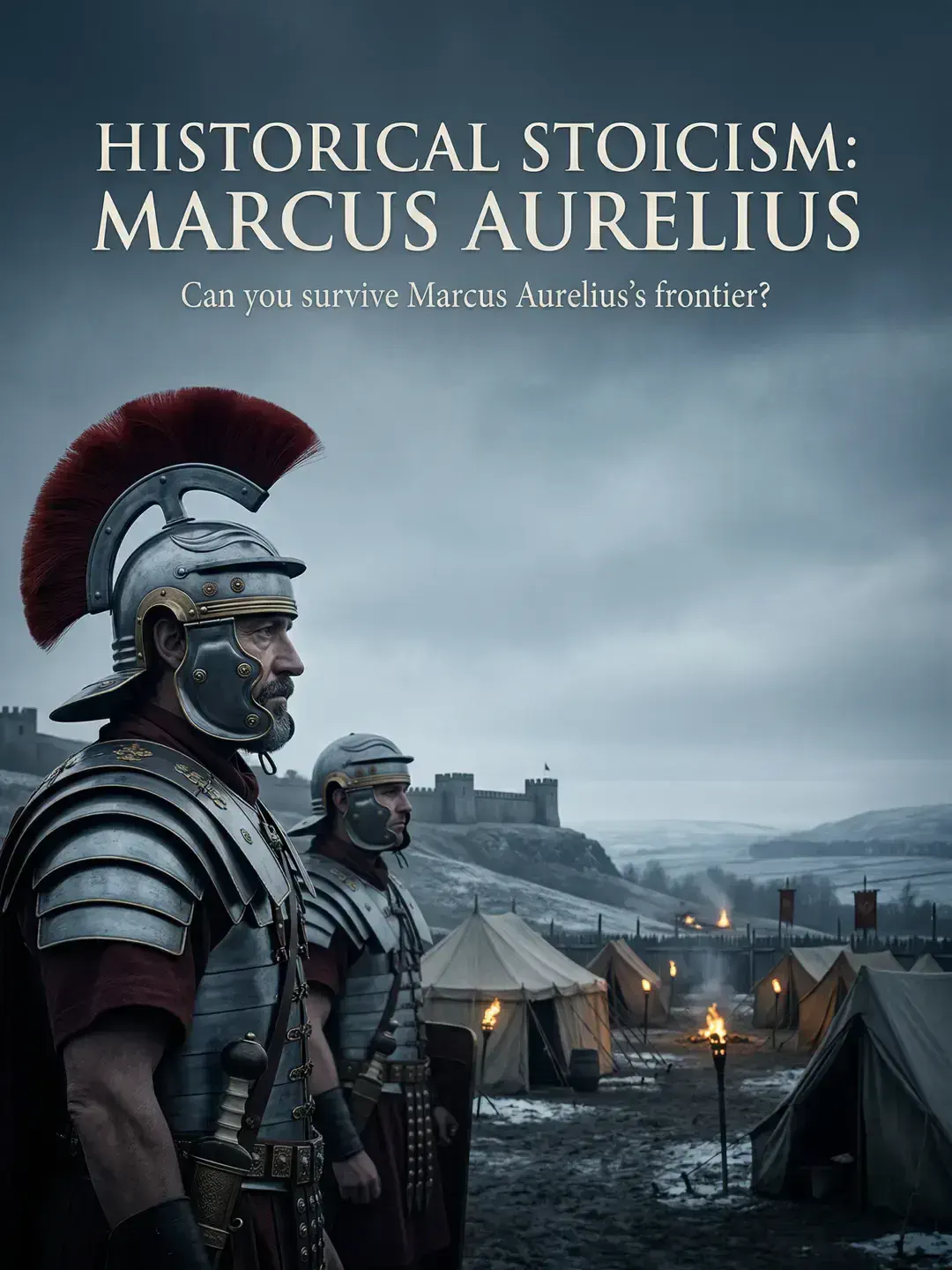
Historical Stoicism: Marcus Aurelius
179 CE. The Danube frontier is collapsing under plague, winter, fear, and war. As Tribune Decimus, can you keep your men alive, hold the line, and prove that Stoicism still means something in the real world?




By starting, you agree to our Terms of Service, Privacy Policy and Refund Policy.
Nobody asks whether you can quote Marcus Aurelius
You play Tribune Decimus on the Danube in 179 CE, and the story never once tests whether you know the philosophy. It tests how you decided. Every ending here turns on the same question asked four different ways: when the evidence was thin, the men were frightened and someone above you was wrong, did you reach for judgment or for something that only felt like it — a scapegoat, an obedient silence, a grand gesture, the road south. Decimus arrives already suspecting the answer is bleak. He lost his family to the plague in Rome before they sent him north, and he has begun to believe that when real suffering starts, philosophy is decoration and men die for nothing. The scenario takes that suspicion seriously instead of arguing with it.
Castra Regina, and everything wrong with it
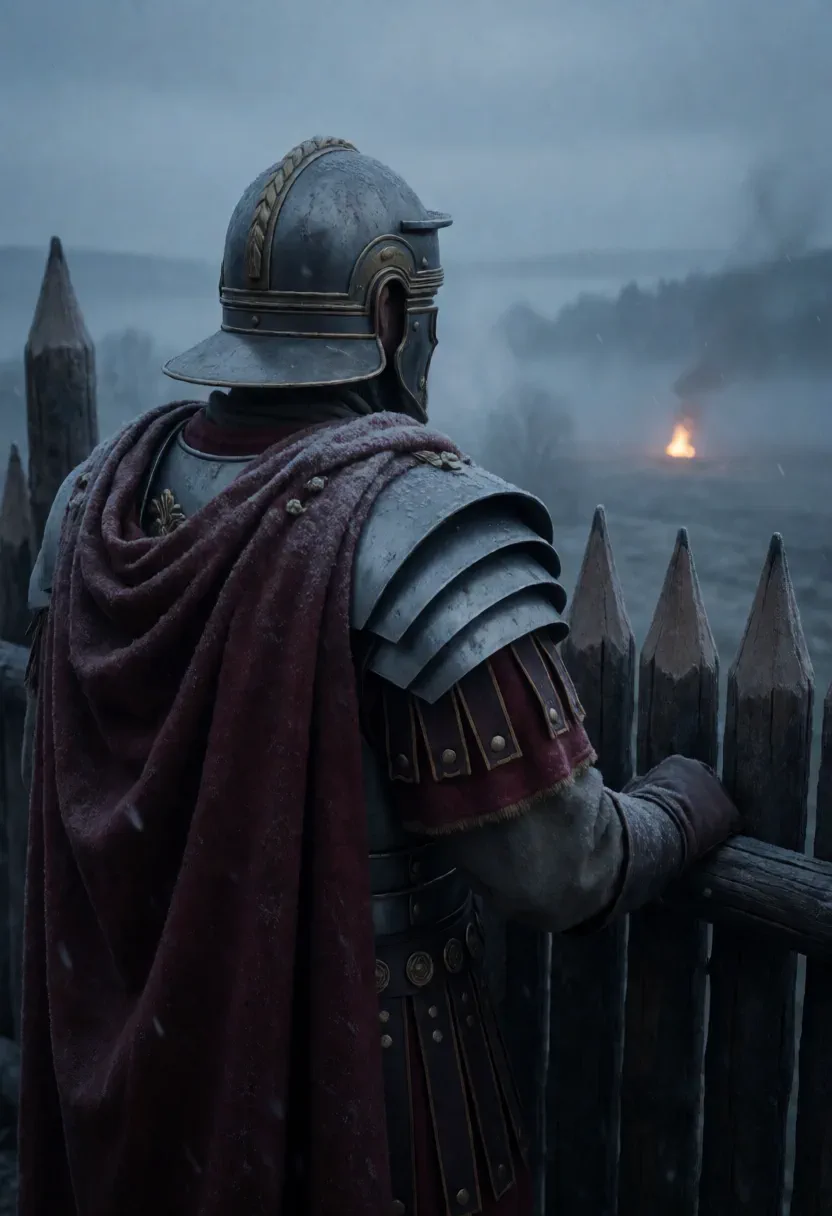
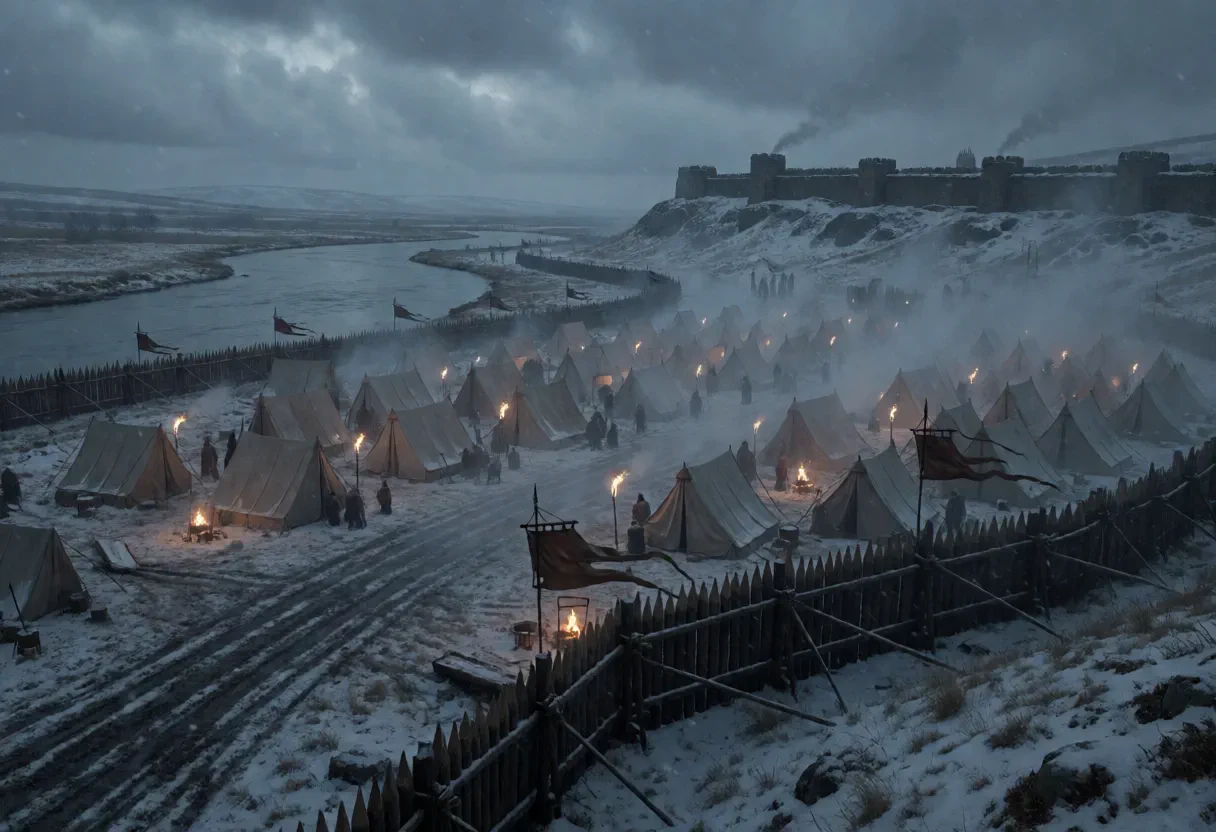
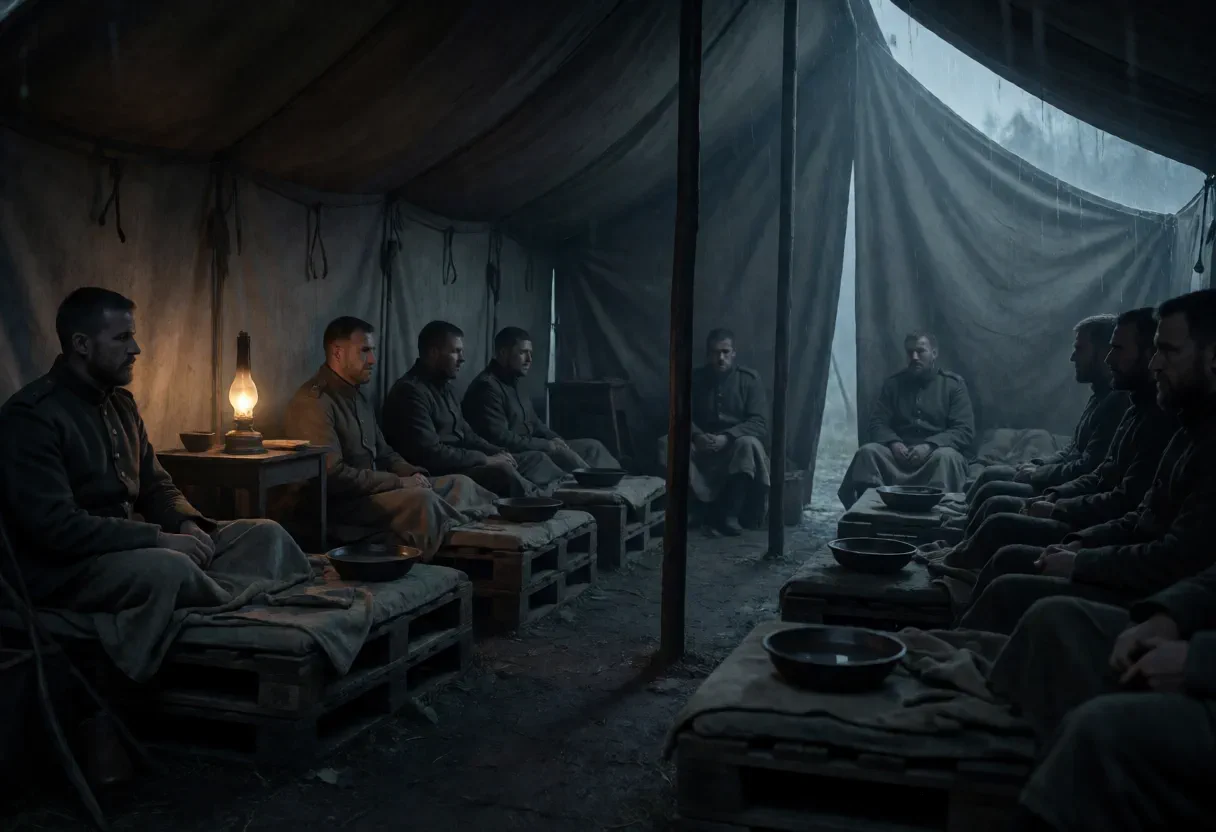
The camp is a new legionary fortress in Raetia at the edge of imperial order, near what is now Regensburg. Mud, smoke, wet wool, horse dung, and the sweet rot of sickness sit in every lane. It is also overcrowded and not properly settled: the drainage is bad, the burial details are rushed, and the same narrow routines that keep an army functioning are quietly moving disease through it faster than any enemy could.
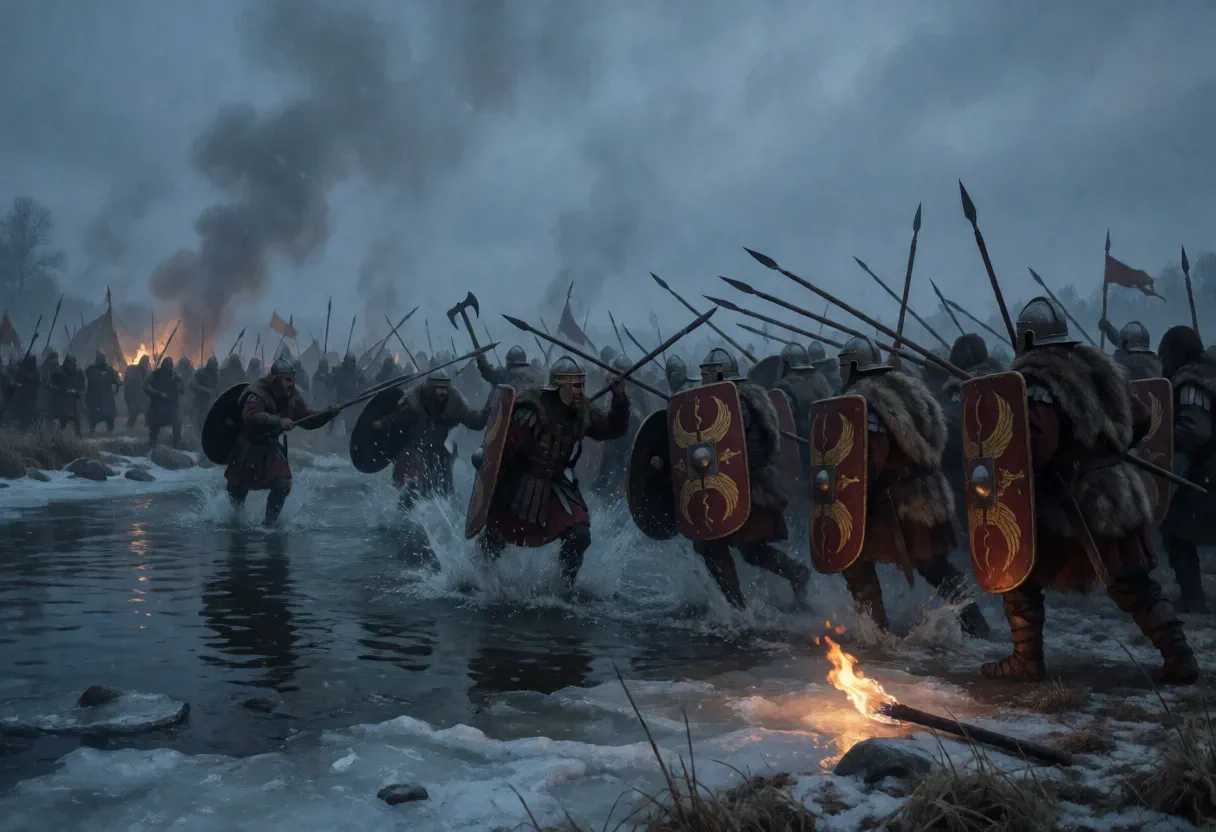
Beyond the cleared roads is the Whispering Forest, a belt of dark pine where soldiers have started hearing intention in ordinary wind. Past that, a burned Iazyges settlement with ash marks on the standing walls. And at the end of it, the Frozen Danube Crossing — sleet, drift ice, carts, frightened men, a choke point that functions as a machine for turning confusion into death.
There is no monster, and that is the hard part
Something is killing this legion, and every explanation in camp is wrong. The plague is not a curse; it is epidemic disease amplified by crowding, bad drainage, winter movement, hunger and fear. The detachment that vanished was not taken by anything — it lost cohesion in snow and darkness, misread the local warnings, and came apart under exposure and pursuit. The markings the men call witchcraft are a practical code: unsafe wells, burial ground, houses no one should re-enter, paths that must stay open. Roman ignorance turned public health into sorcery.
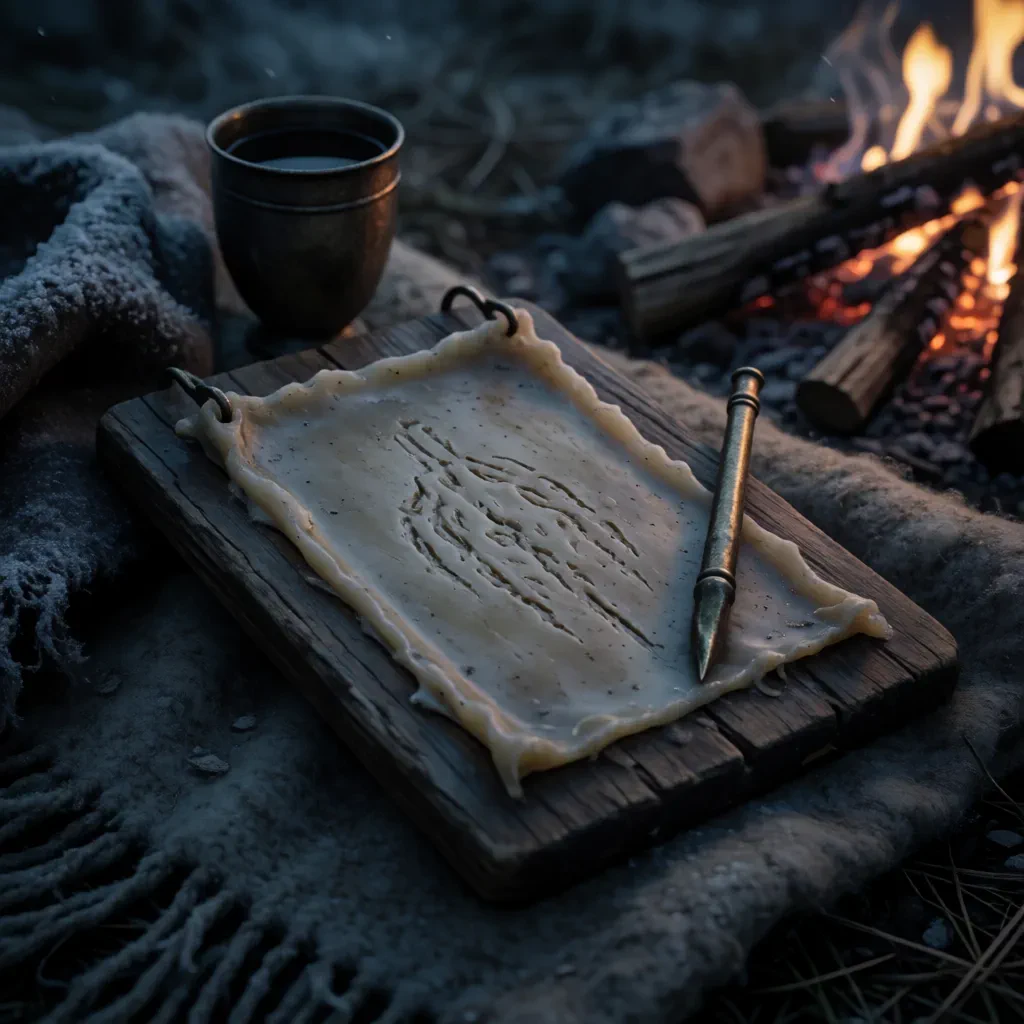
Which means the strongest thing you can become here is not more initiated. It is harder to deceive. Your wax tablet — issued for orders and inventories — quietly turns into the best instrument you own, because symptom notes, route sketches and copied wall-markings are how you win an argument against a rumour.
Three people who each need you to be someone different
Legate Gaius Vindex commands you and is already feverish, hiding it, and pushing harder every day because he cannot bear to be remembered as the commander who weakened at the decisive moment. He wants one unmistakable victory badly enough to confuse it with duty. Option Lucius Varro, your veteran subordinate, has begun caching food, boot leather and coin for a desertion he has not admitted to yet; he talks about rations and burial duty and officers who love speeches more than living men, and he is not entirely wrong. Valeria is a captive Iazyges noblewoman, healer and interpreter, and she is the only person in the story who can actually read the frontier — which is exactly why the camp would rather she were the cause of the sickness.
Above all of them, in dispatch traffic and then in person, the emperor. Marcus Aurelius appears here as a campaigning field commander, not a fantasy sage: calm, unhurried, difficult to impress, testing people with questions. Pompeianus's letters make plain that the experienced generals are choosing delay, supply discipline and containment over dramatic attacks, whatever Rome would rather hear. Stories about Pertinax circulate because men want to believe severe competence can still impose order on bad conditions.
What actually changes when you play
The pressure builds in a straight line and then breaks. A patrol shows you that sickness is travelling through supply routines and burial habits, not through battle. Varro's cynicism forces a choice between enforcing discipline hard and hearing what the men are actually afraid of. You scout either the forest or the ruined village, and the two teach you different halves of the same truth. Then Vindex collapses, temporary command lands on you, and interrogating Valeria becomes useful only if you can get past your own side's pride.
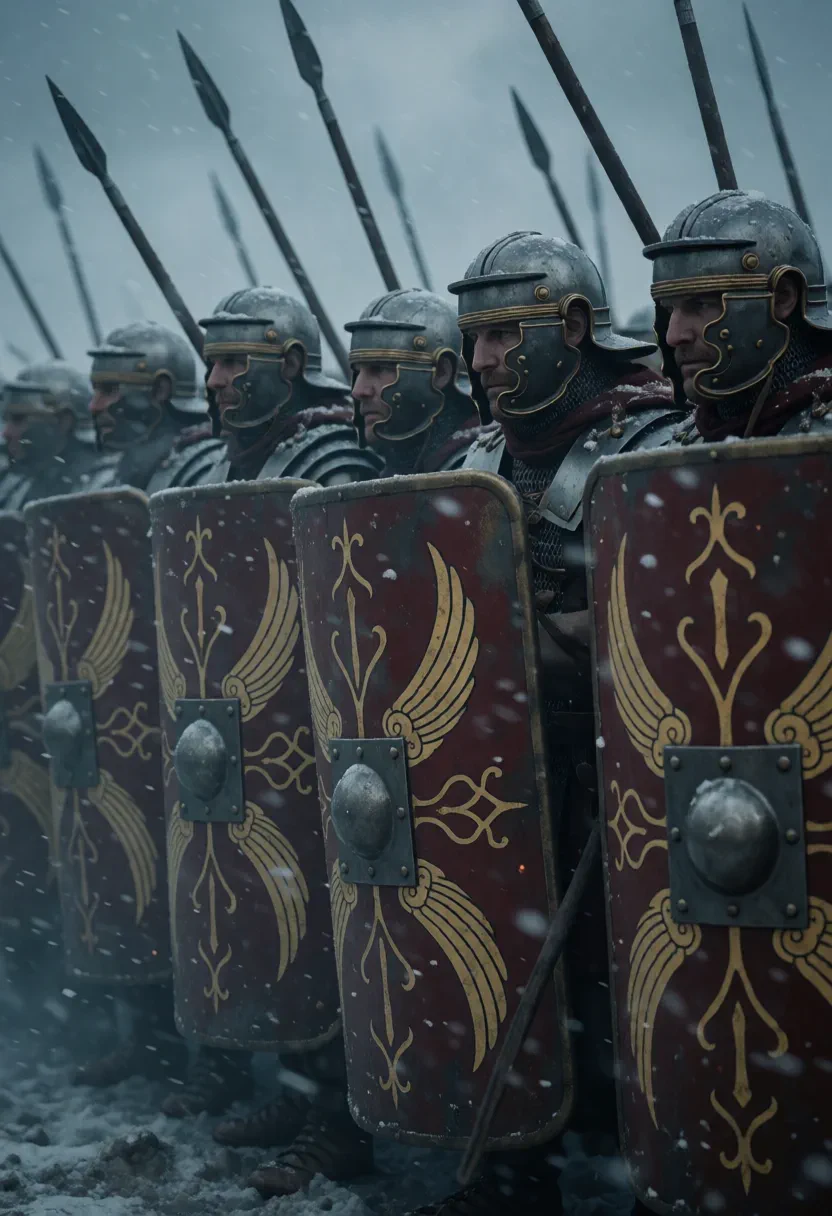
The break comes when Vindex, delirious and humiliated by his own weakness, orders a suicidal attack. Obey him, reorganise around containment and a controlled withdrawal, or take Varro's road and desert. The crossing tests whatever you chose, and then Marcus tours the line and summons you to account for it. That final conversation is the scoring: not cleverness, not loyalty, but judgment, restraint, honesty, and whether you learned to look at suffering without superstition or self-deception. Hold to evidence and proportion and the line holds through winter at terrible cost but without moral collapse. Let fear and vanity run command and you take the crossing in blood, lose it in disorder, and get promoted into emptiness. The narrator works from this canon rather than inventing a world each turn, which is why Vindex's fever and Varro's cache stay true underneath you while you are still deciding what to do about them.
Before you start
Do I need to have read the Meditations?
No. Marcus occasionally echoes a line from his notebooks, but the scenario never quizzes you and never rewards quoting. It is Stoicism as a working method under pressure, not as a subject.
Is this a battle story?
Only at the end, and even then the enemy is mostly cold, ice, bad visibility and shouting across languages. Most of the danger is administrative and human: contaminated routines, rumour, a commander hiding symptoms, a camp looking for someone to blame.
Can I get it wrong?
Yes, in more than one direction. There is an ending where you become the Butcher of the Danube and one where you simply leave and live with it badly, and a death that is cold, costly and useful. Sessions are resumable, so a hard run is not a lost afternoon.
If this is your kind of story
This one is for players who want historical fiction that stays gritty and administrative rather than heroic, and who read philosophical as a pressure test rather than a mood. If the survival frame is the draw, Vikings: The Raid on Frankia puts the same loyalty problem inside a warband, and Before the First Fire strips it back to people, cold, and what they do not know yet. Start on the Danube, though. A dying legate, a deserting veteran, a captive who is right, and an emperor who will ask you to explain yourself.
