
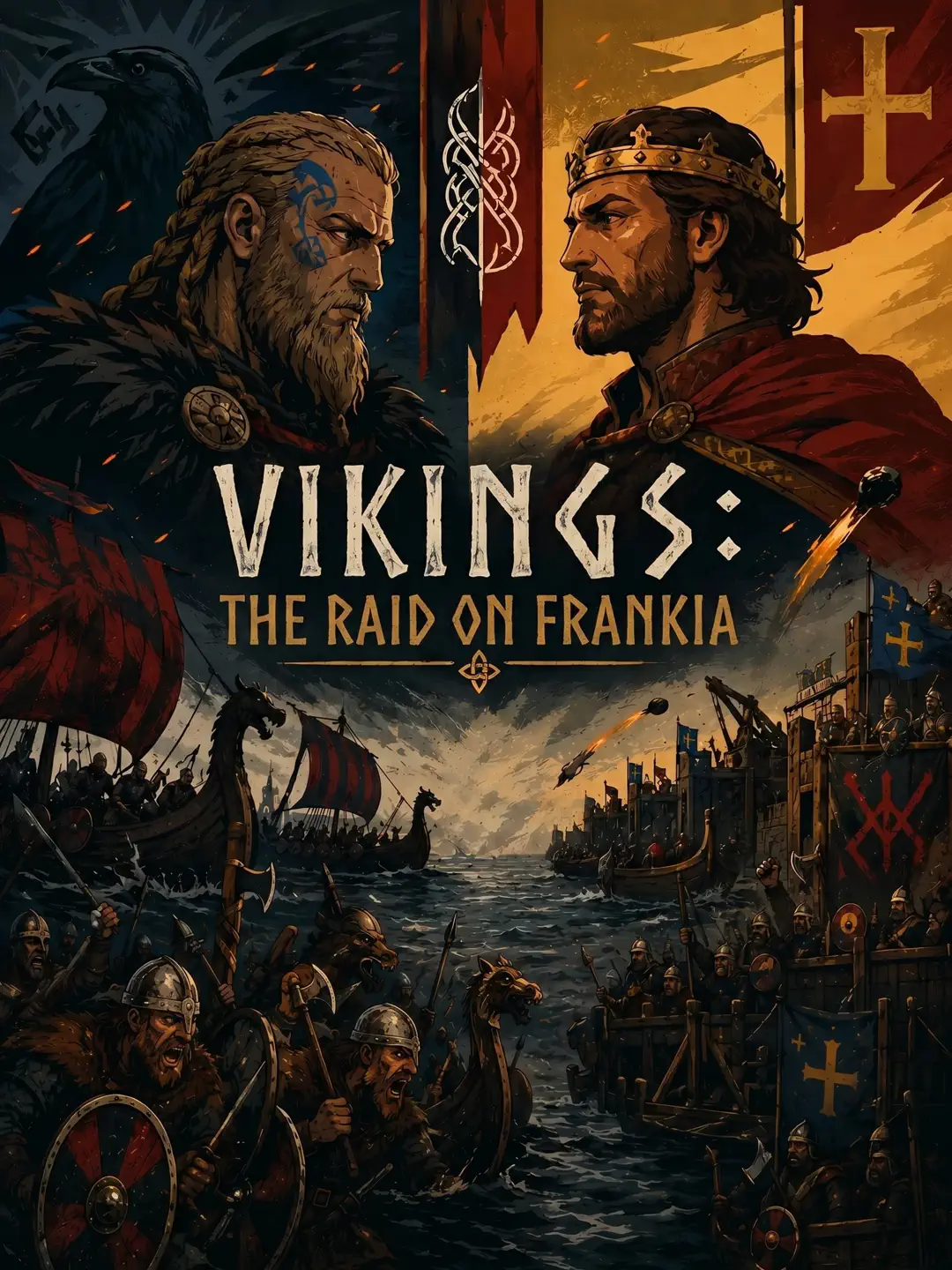
Vikings: The Raid on Frankia
The river Seine becomes a trap for three thousand Northmen when the fleet of Frankia, led by Rollo, blocks the road to Paris. Rollo betrayed the pagan gods for a Frankish crown, and now he turns his brother's mastery of tactics against him to destroy his army. As the longships founder under catapult fire, the ailing King Ragnar Lothbrok — weakened by his earlier raid — secretly loses his faith in Valhalla and, by doing so, provokes a religious mutiny among his own warriors. How this bitter clash of two brothers and two religions will end, what fate awaits the heroes, and how history will be written depends on your decisions alone.


By starting, you agree to our Terms of Service, Privacy Policy and Refund Policy.
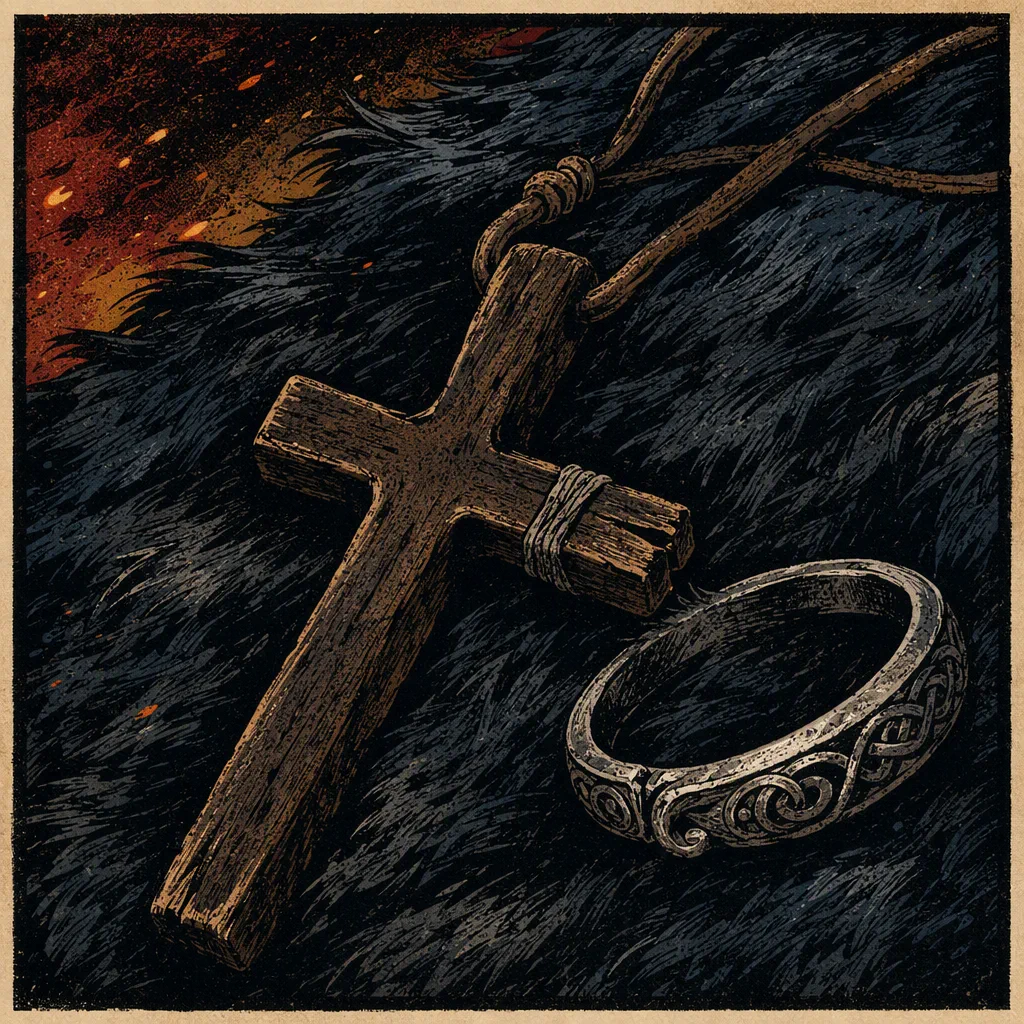
The king stopped believing in Valhalla and cannot tell a single man about it
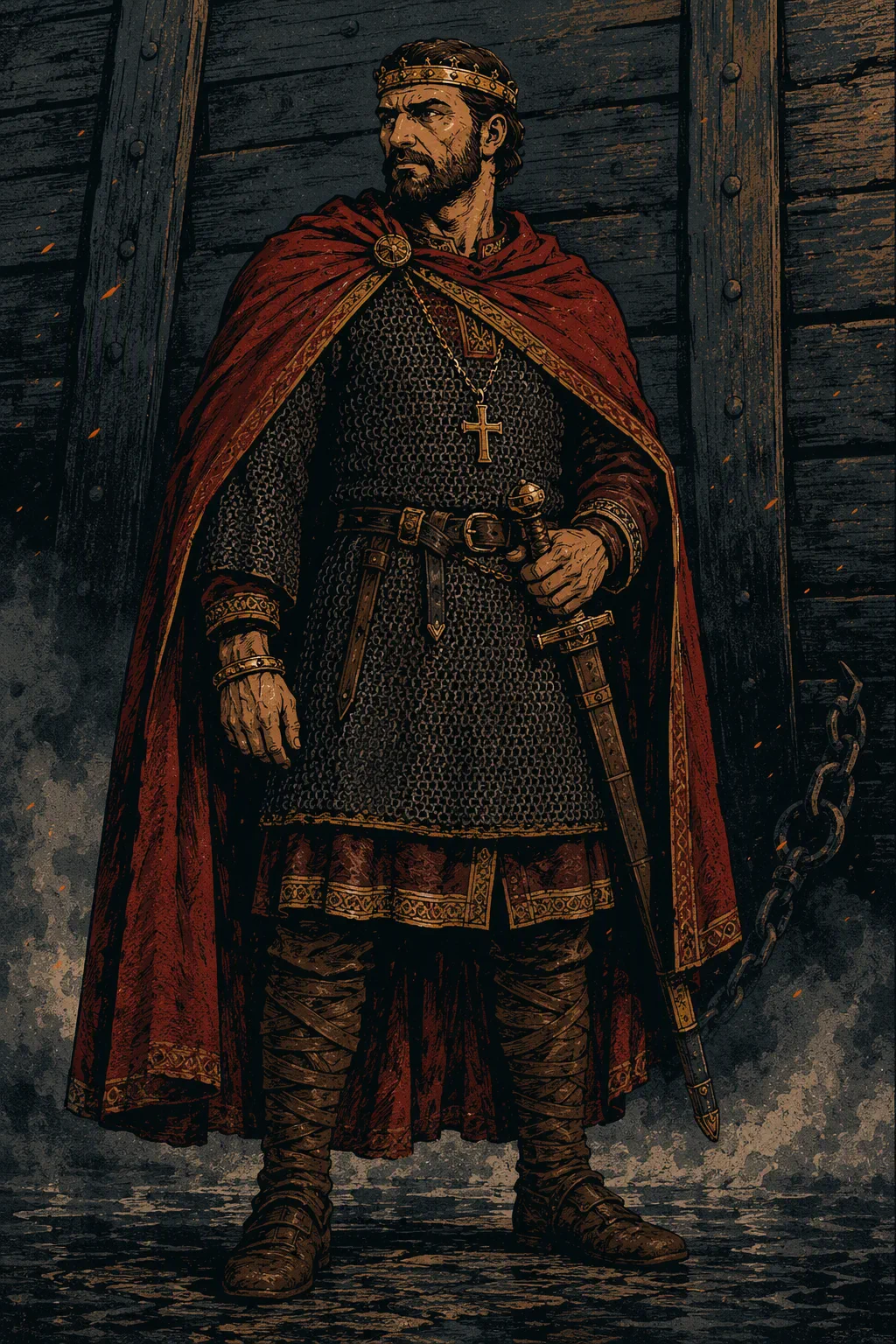
A Viking story usually promises its hero a seat at a long table after death. This one opens with a man who has quietly worked out that there is no table, no feasting hall, no valkyries, nothing at all past the last breath — and who must still walk out of his tent and order three thousand Northmen up a narrowing river for the sake of the hall he no longer believes in. Ragnar Lothbrok is ailing. His brother commands the barricade waiting upstream. His shipwright murdered his dearest friend. What the two nights on the Seine are actually about is the arithmetic a commander does once glory has stopped being a currency and the only figure left worth counting is how many of his warriors draw breath tomorrow.
Two nights on the Seine, and almost no way back under oars
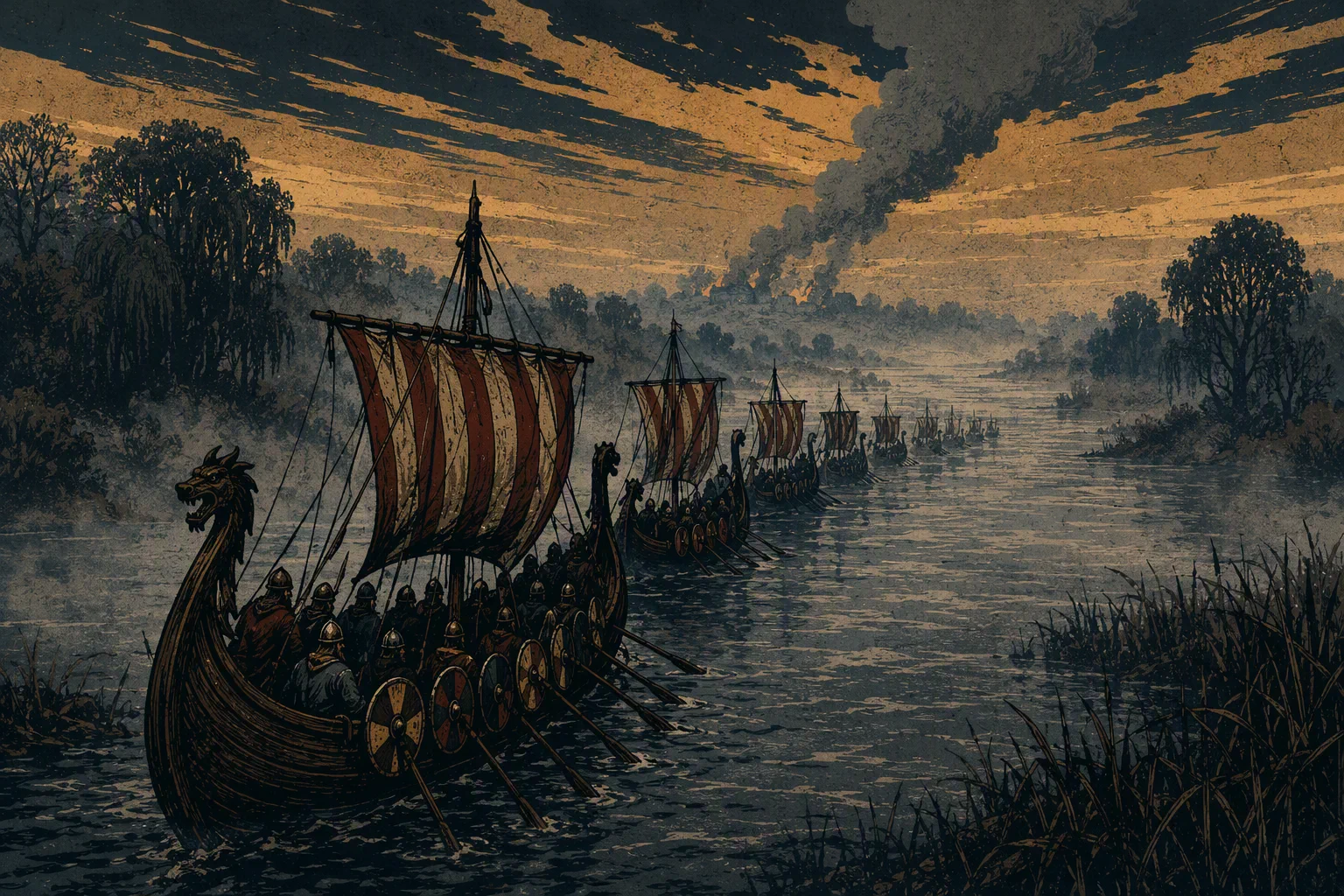
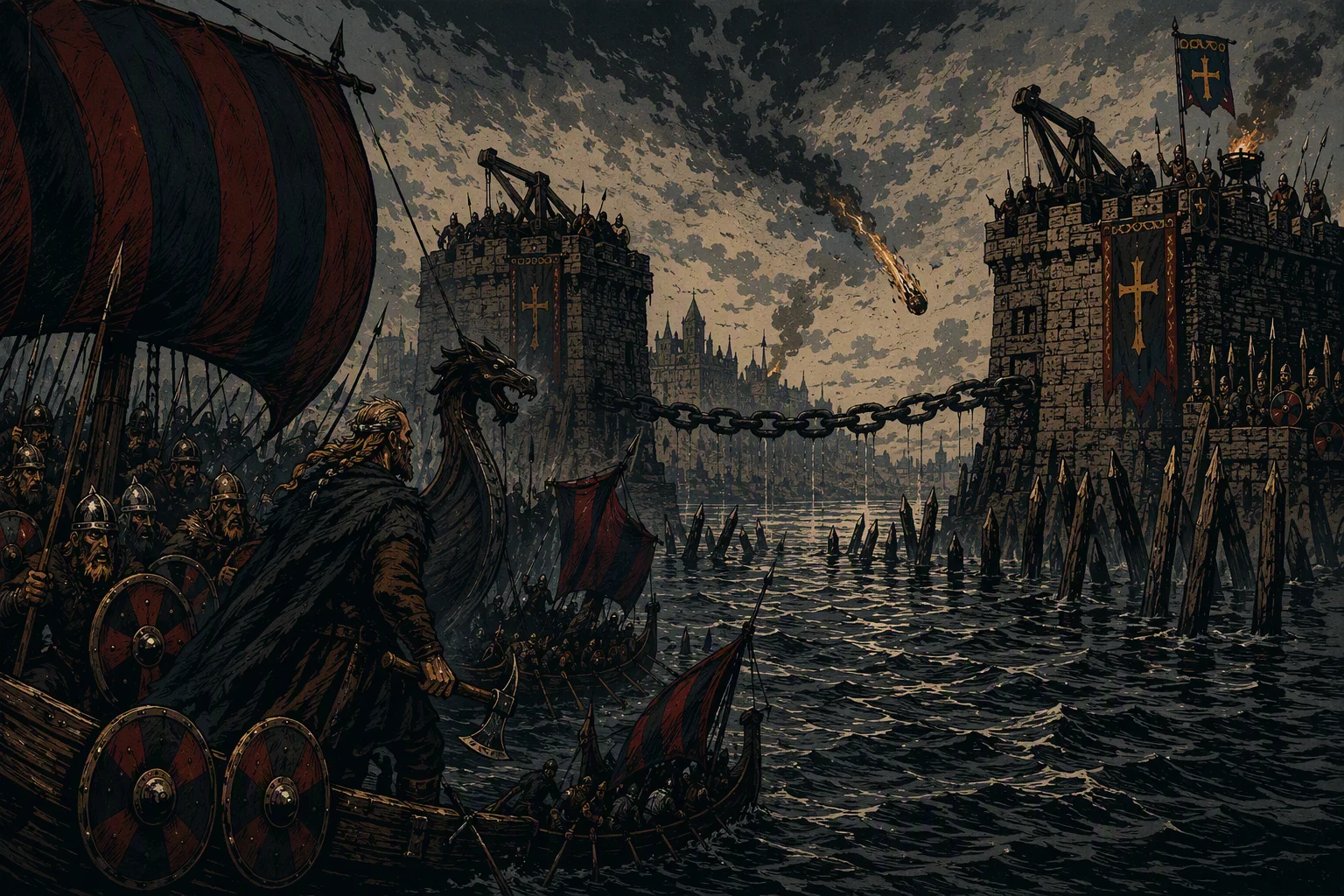
The fleet rows upstream at dawn through mist on lead-grey water, oars beating in time, hundreds of longships packed hull to hull. The closer Paris comes, the narrower the channel grows and the more quietly the warriors speak. A force that was unbreakable at sea becomes, in a river corridor, a crowded target — and the current makes retreat under oars something close to impossible.
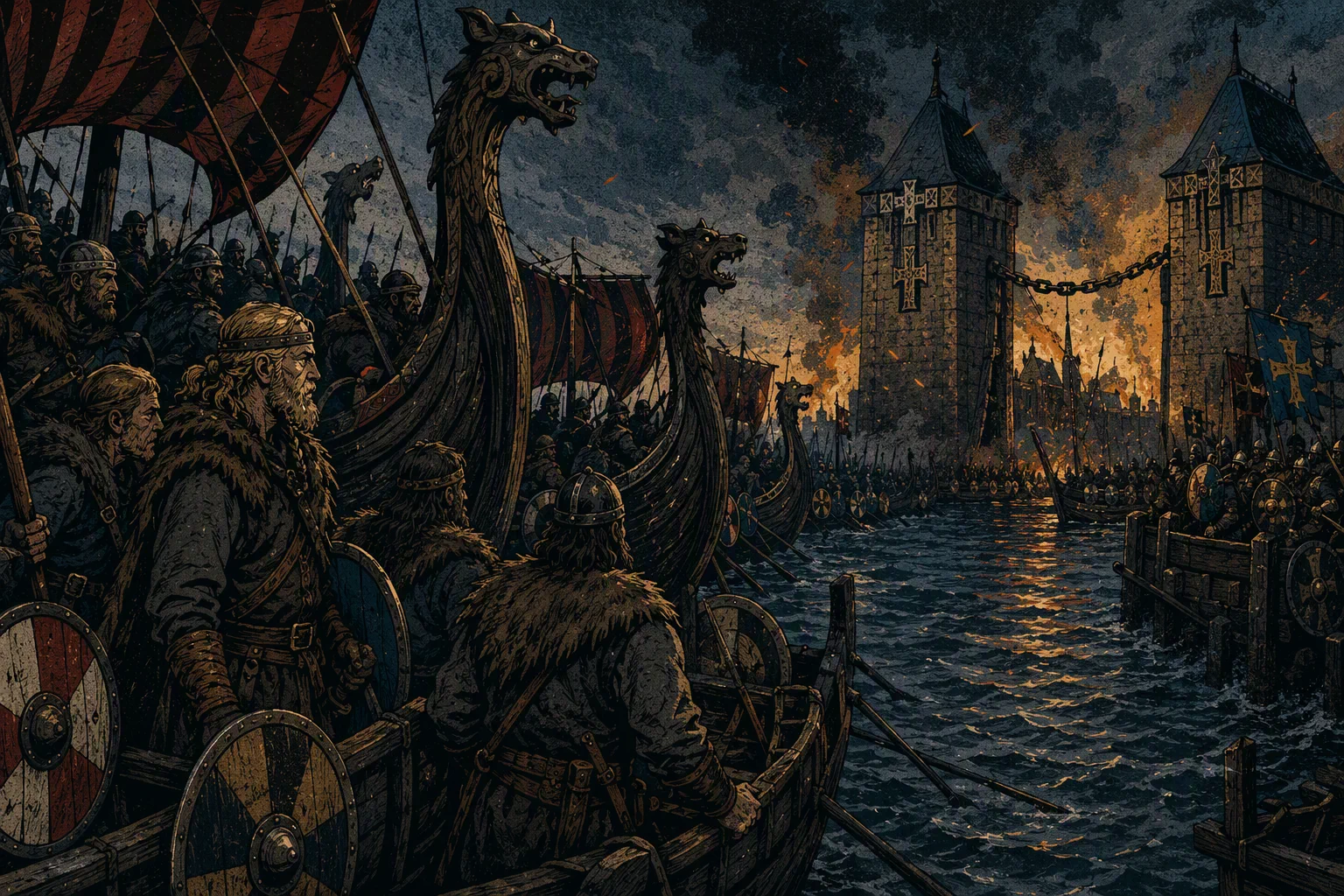
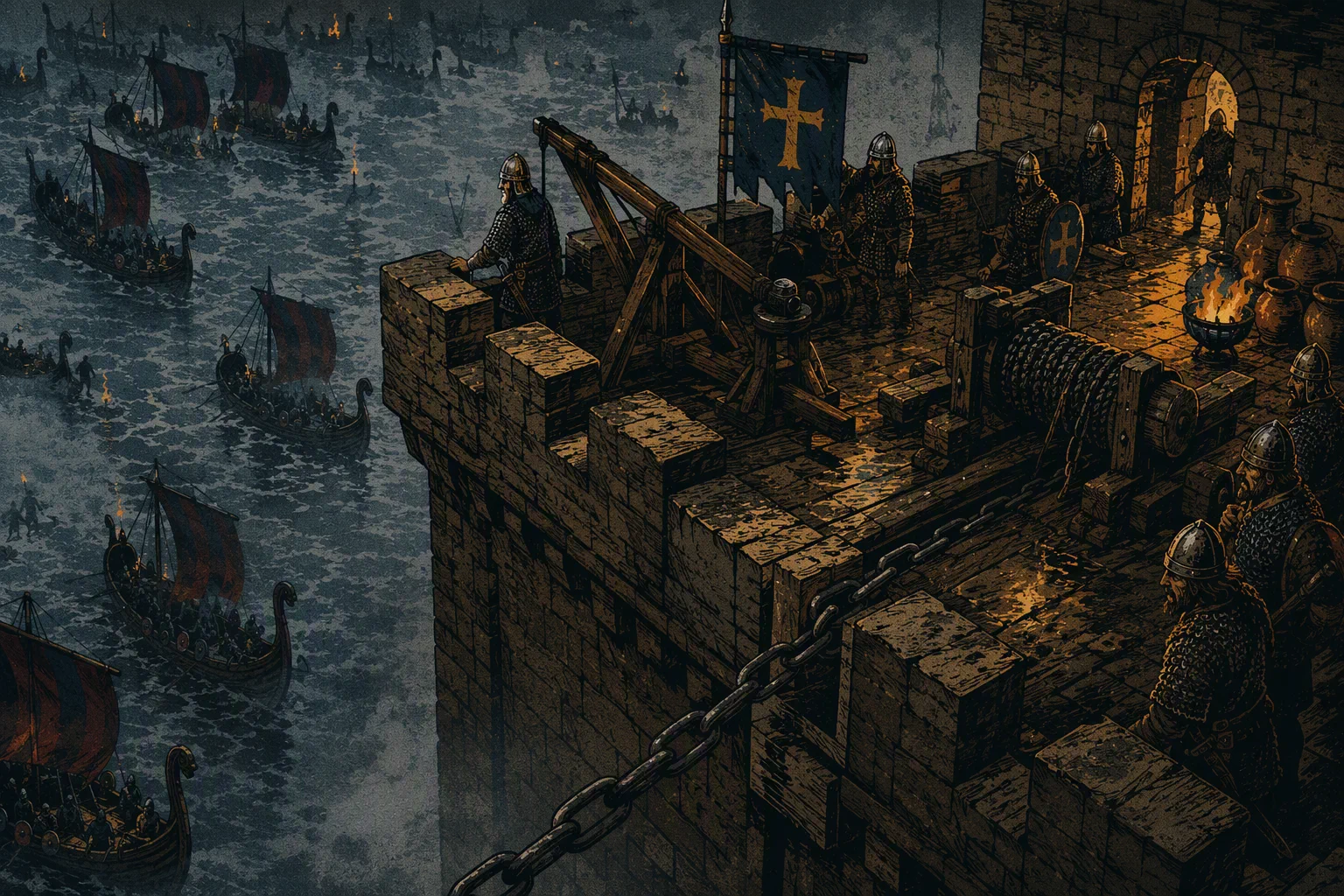
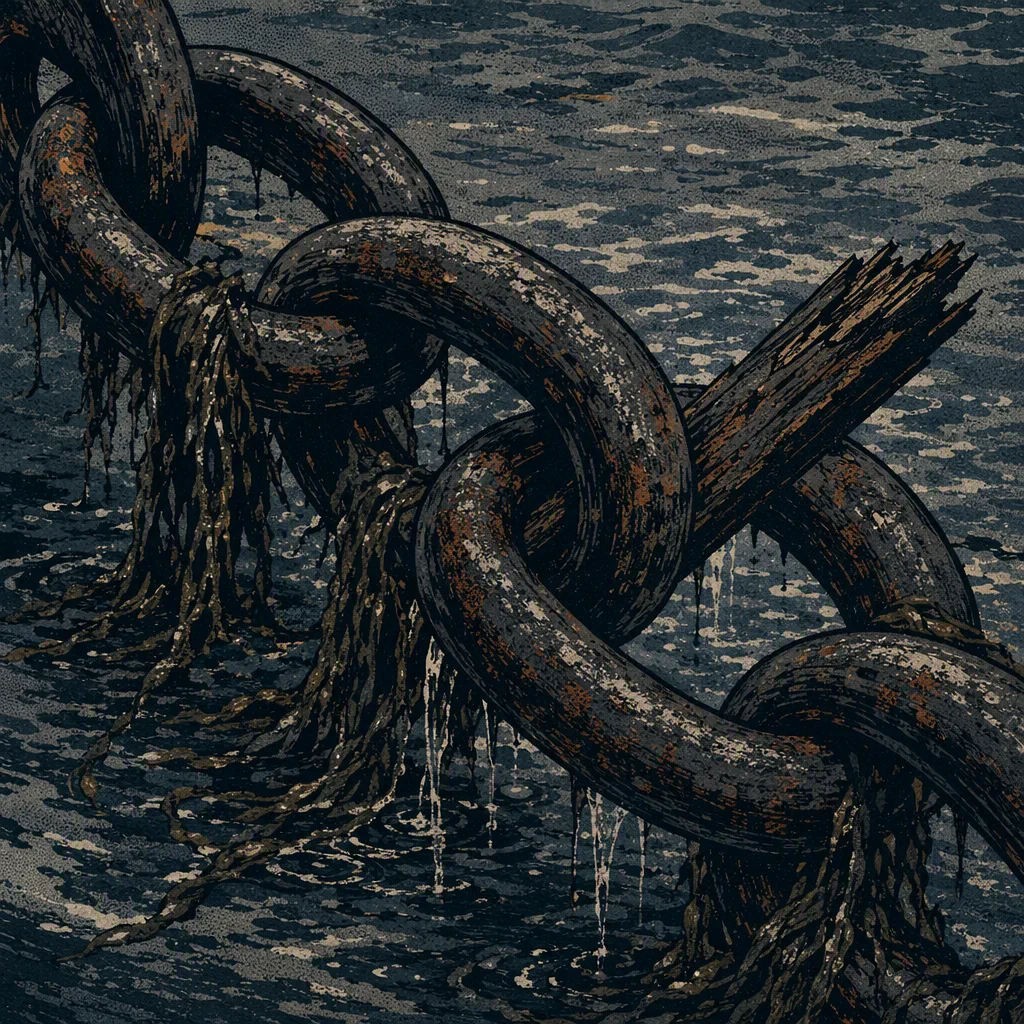
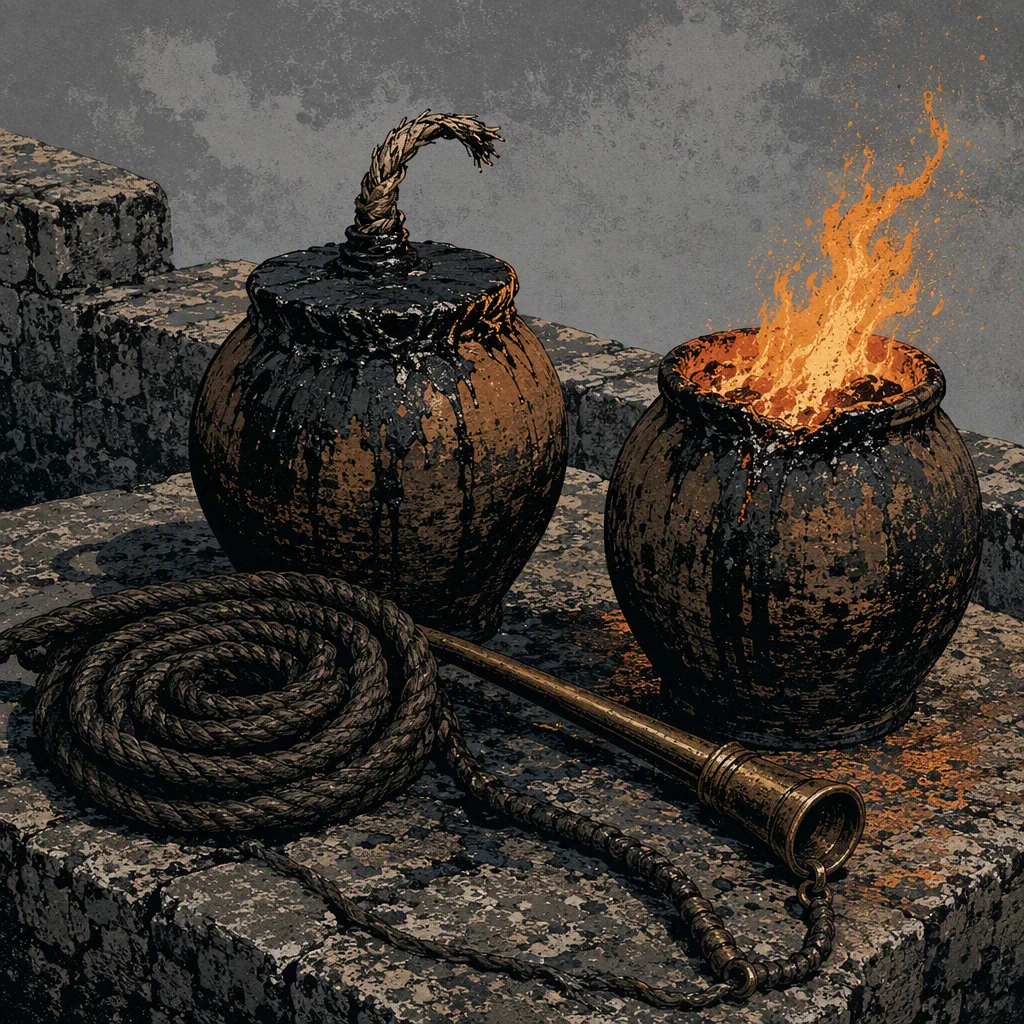
Ahead of them is the gate. Between two massive stone towers on opposite banks lies a colossal iron chain, invisible under the surface until it is drawn taut and rising, capsizing ships along its length. Before the chain, sharpened stakes stand driven into the riverbed to open a keel. The towers are crammed with ballistae and with catapults loaded with Greek fire, which burns even on water. Nobody in the fleet knew the road was barred. Now everyone can see it, and there are two nights in which to answer it.
Rollo aims this at everything he knows about you
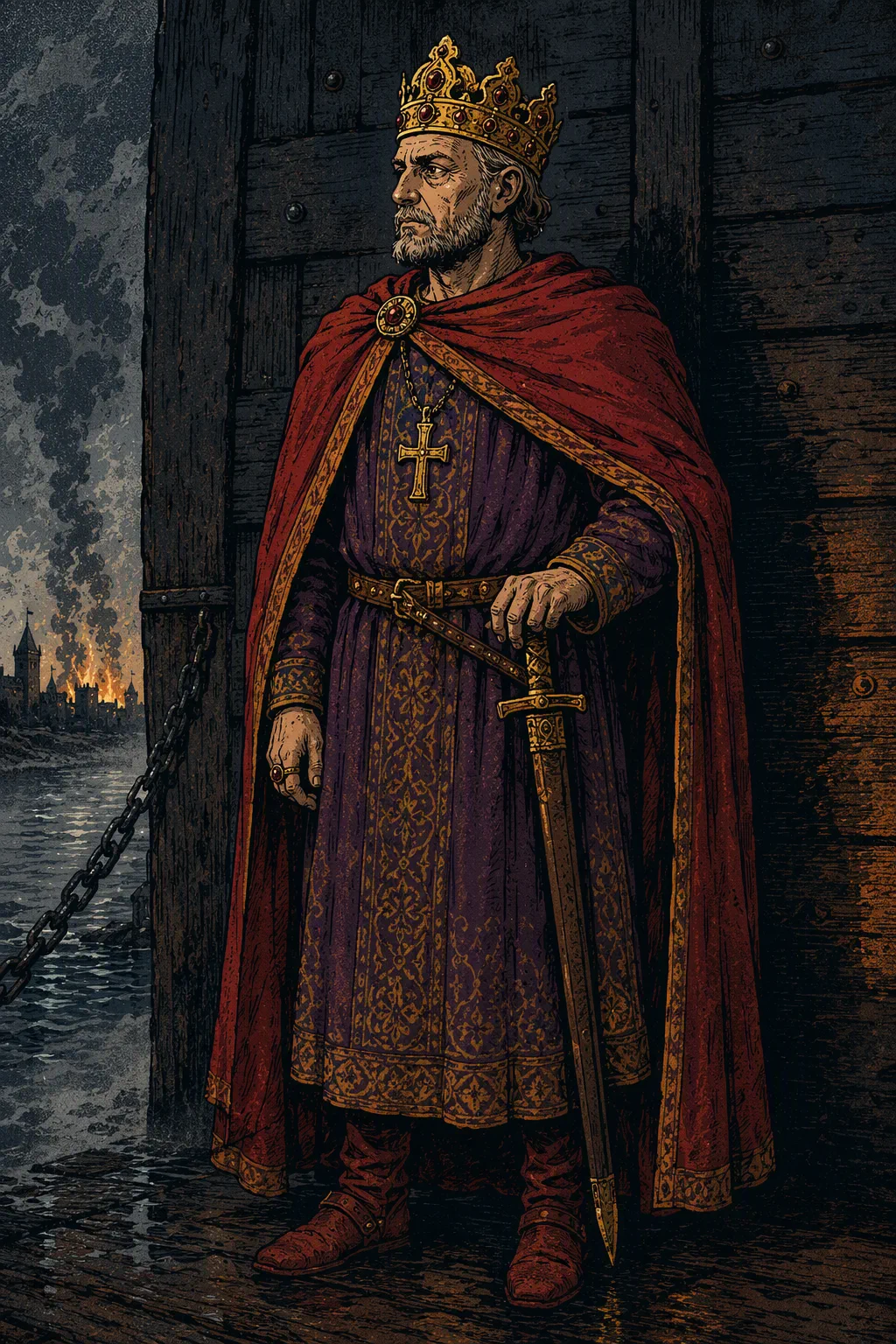
The duke charged with the defence of Paris is Ragnar's own brother. Rollo traded blood for a title and a Frankish princess, and the chain and the towers are now his responsibility — which means his weapon is not the ballistae but knowledge from the inside. He helped build these ships. He knows how they move, where they are weak, how to catch them. He is Ragnar's mirror: the same blood, the opposite choice, and underneath the ducal cloak a brotherhood that could still be redeemed or betrayed a second time.
Behind him stands Charles the Bald, who demanded the heathens be stopped at any cost and bought the finest possible defender for his city by handing Rollo his daughter, Princess Gisla. Charles does not fight with a sword; he governs by fear of a Christian hell. To a king who has just lost his gods, that looks uncomfortably like what the jarls have always done with Odin. The war on the river sits on top of a colder argument about who invented the afterlife, and who collects.
What actually changes when you play
Two scales move under every scene, and neither is shown to you as a number: the trust of a host that can feel its king is no longer the man they were used to heeding, and the strength of Floki's fanatics. Every council by the fire, every word spoken to Björn, to Lagertha, to Floki, to Charles's envoys, tilts them. Let the unbelief show and the revolt ripens faster. Clamp down hard on your authority and the night bends toward calculation or toward a bargain instead.
The clock is the tide, and it does not wait for you. The chain is not going anywhere, the catapults are already loaded, and deciding nothing is itself a decision — silence hands the fleet to Floki. The siege resolves along one of four roads, and they are genuinely different nights, not one ending with three coats of paint. Because the narrator reads what you actually write and weighs it against this canon instead of matching you to a menu, arguing theology with a jarl at the fire is as real a move as ordering an assault, and both are counted.
The camp is the more dangerous of the two battlefields
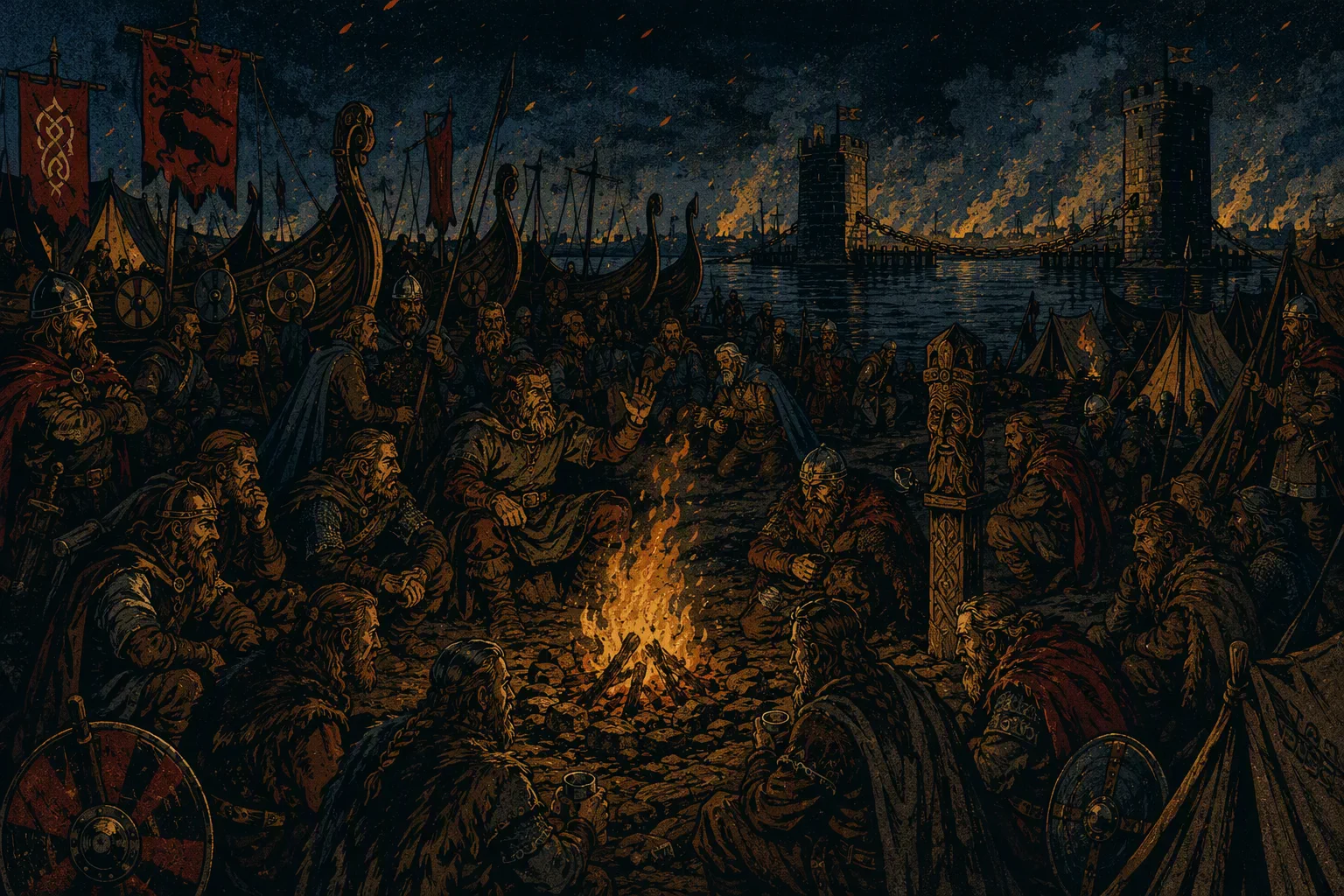
Fires on the bank downstream, the tents of the jarls, warriors sitting in council. The camp is a cauldron in which a decision ripens and a mutiny ripens beside it. The trap ahead is iron and geometry and can at least be looked at; the thing behind you is mood, and it shifts every time the chieftain opens his mouth.
Everything here is pitch, salt and wet wood. No god intervenes, nothing is enchanted, and no prophecy pays out. The dread comes from the chain under the water and from the silence in a sky where Odin is no longer.
Four people whose word is worth an army
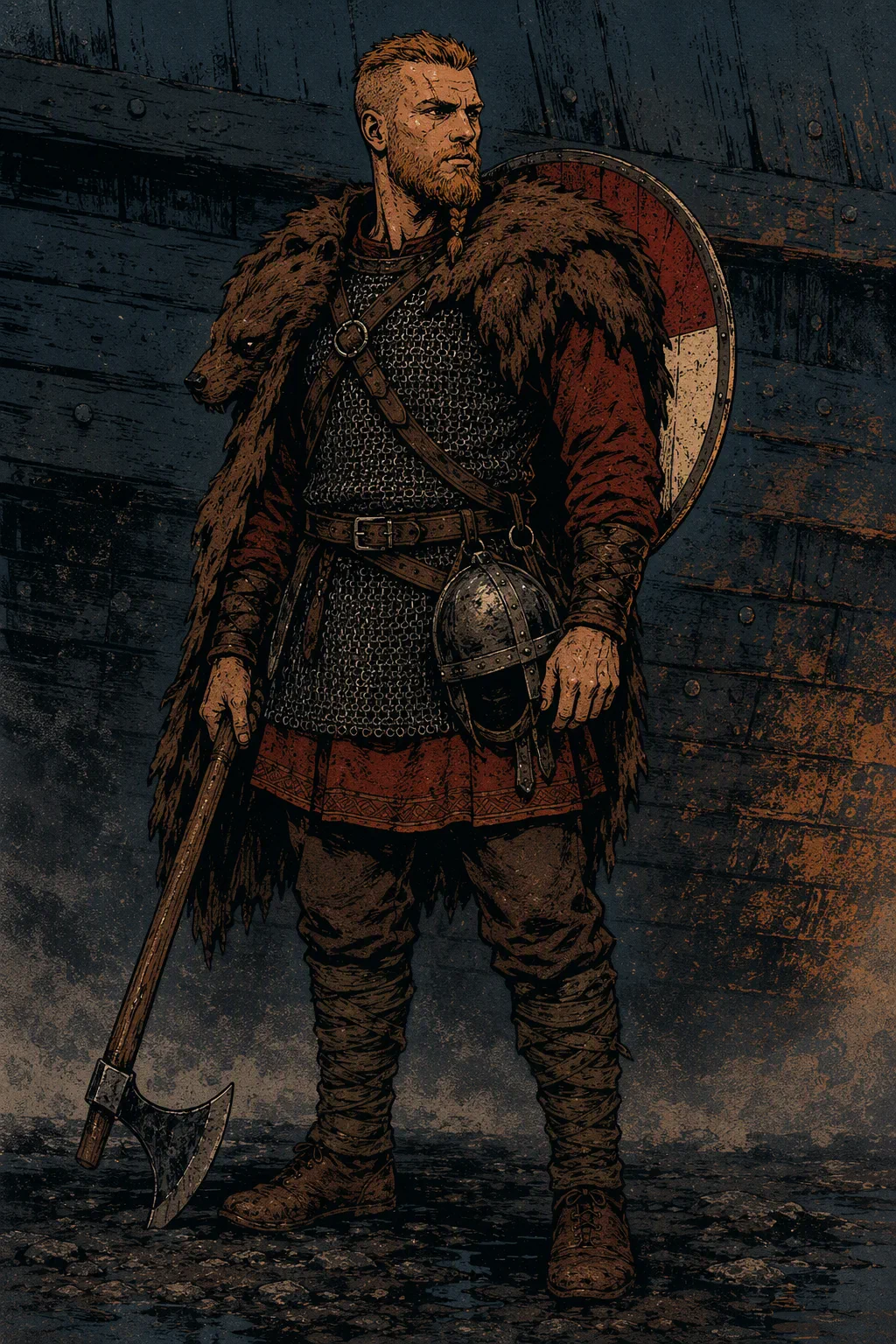
Björn Ironside is the only one of Ragnar's sons on this expedition — a seasoned warrior with standing of his own, torn between devotion to an ailing father and the sober suspicion that the fleet will die under the chain. Ubbe, Hvitserk, Sigurd Snake-in-the-Eye and Ivar the Boneless stayed at home; they weigh on Ragnar as an absence, a reason to want men alive.
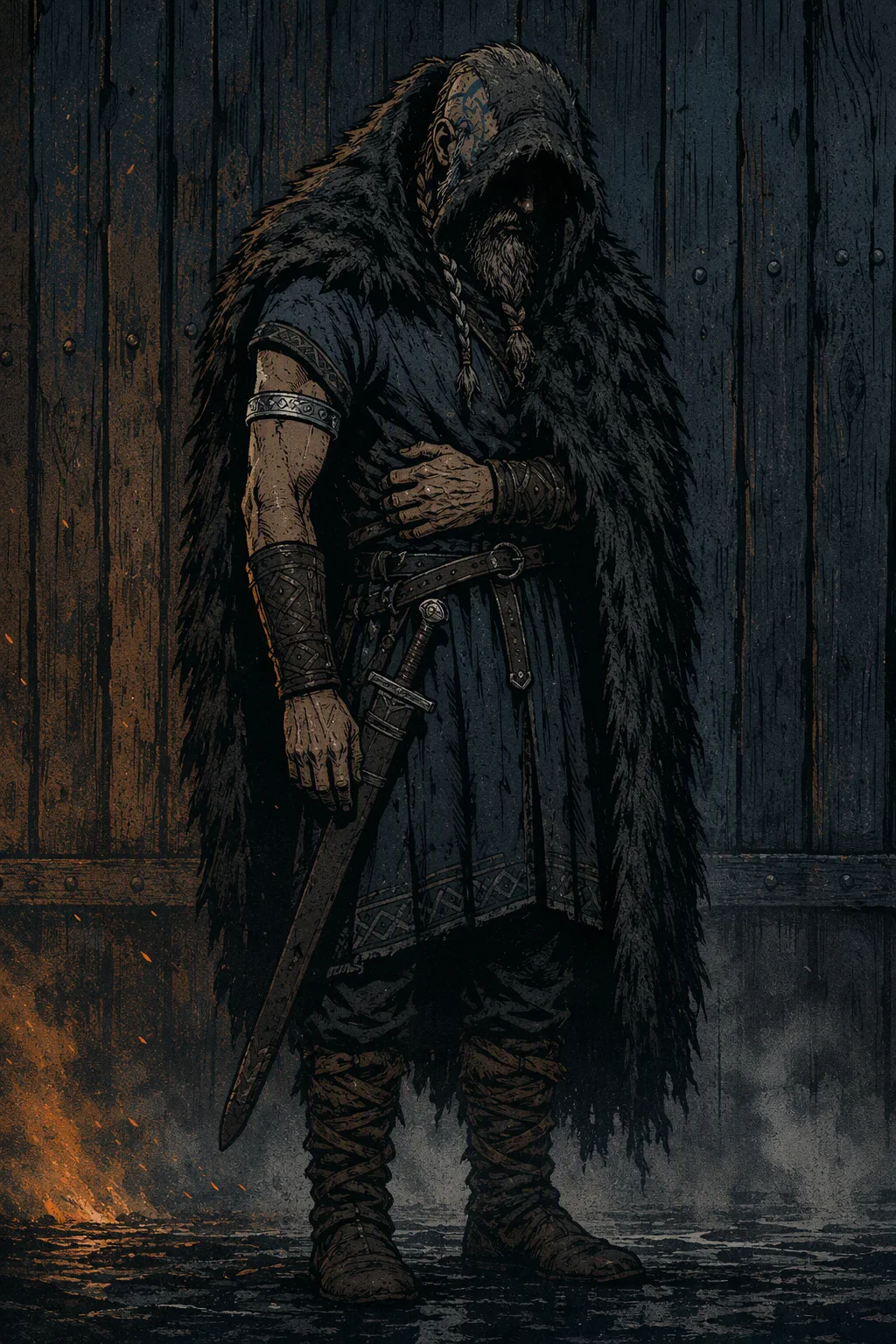
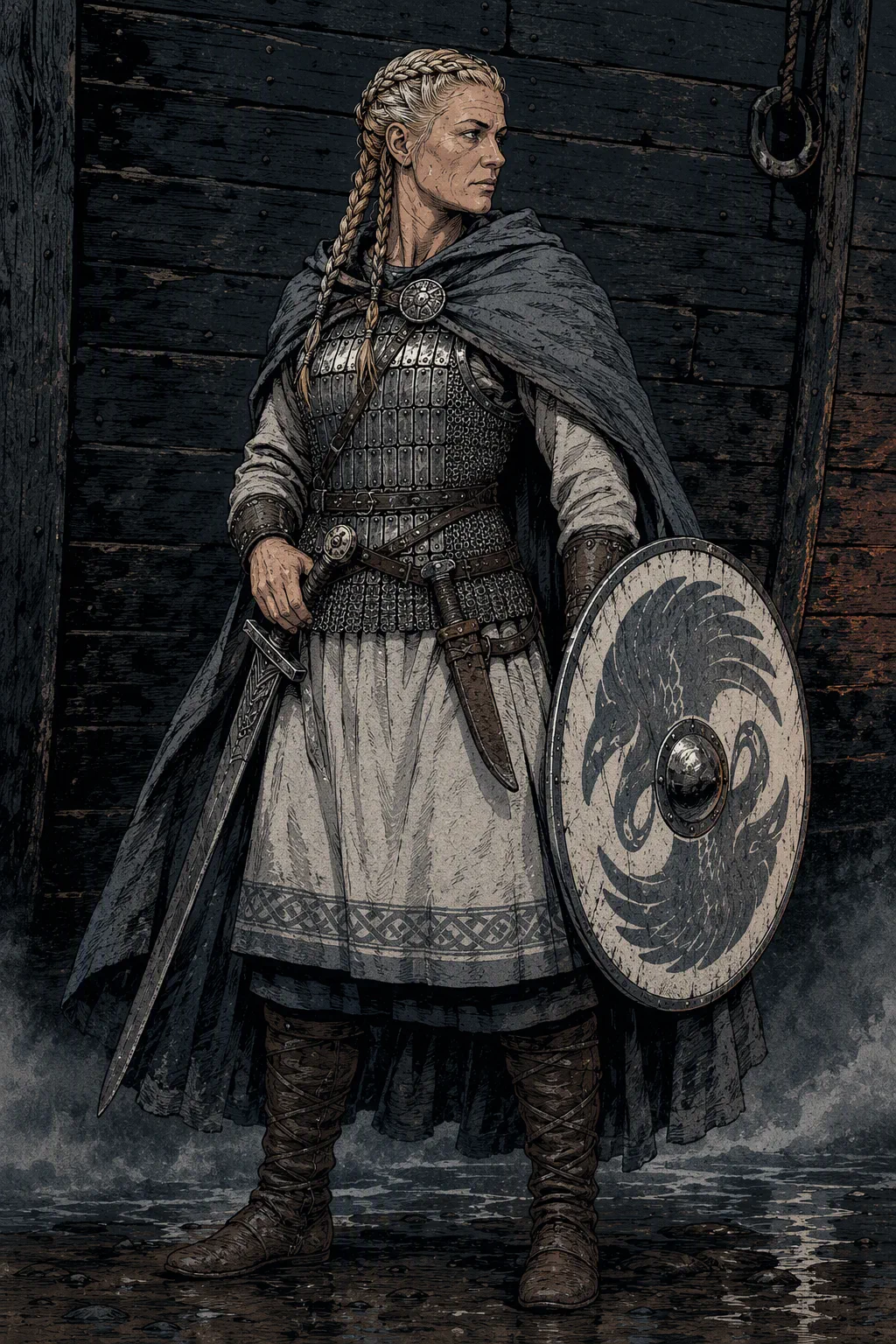
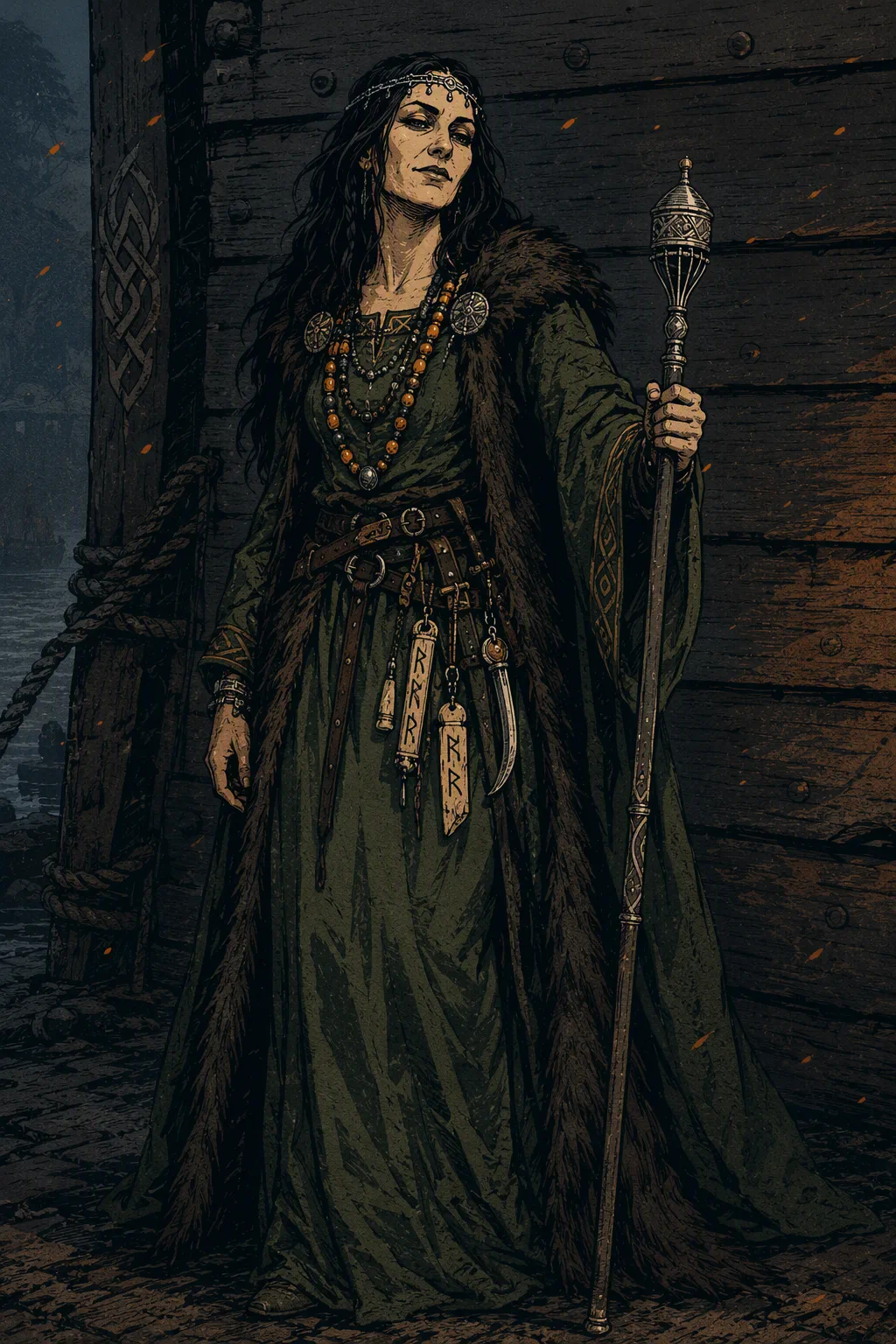
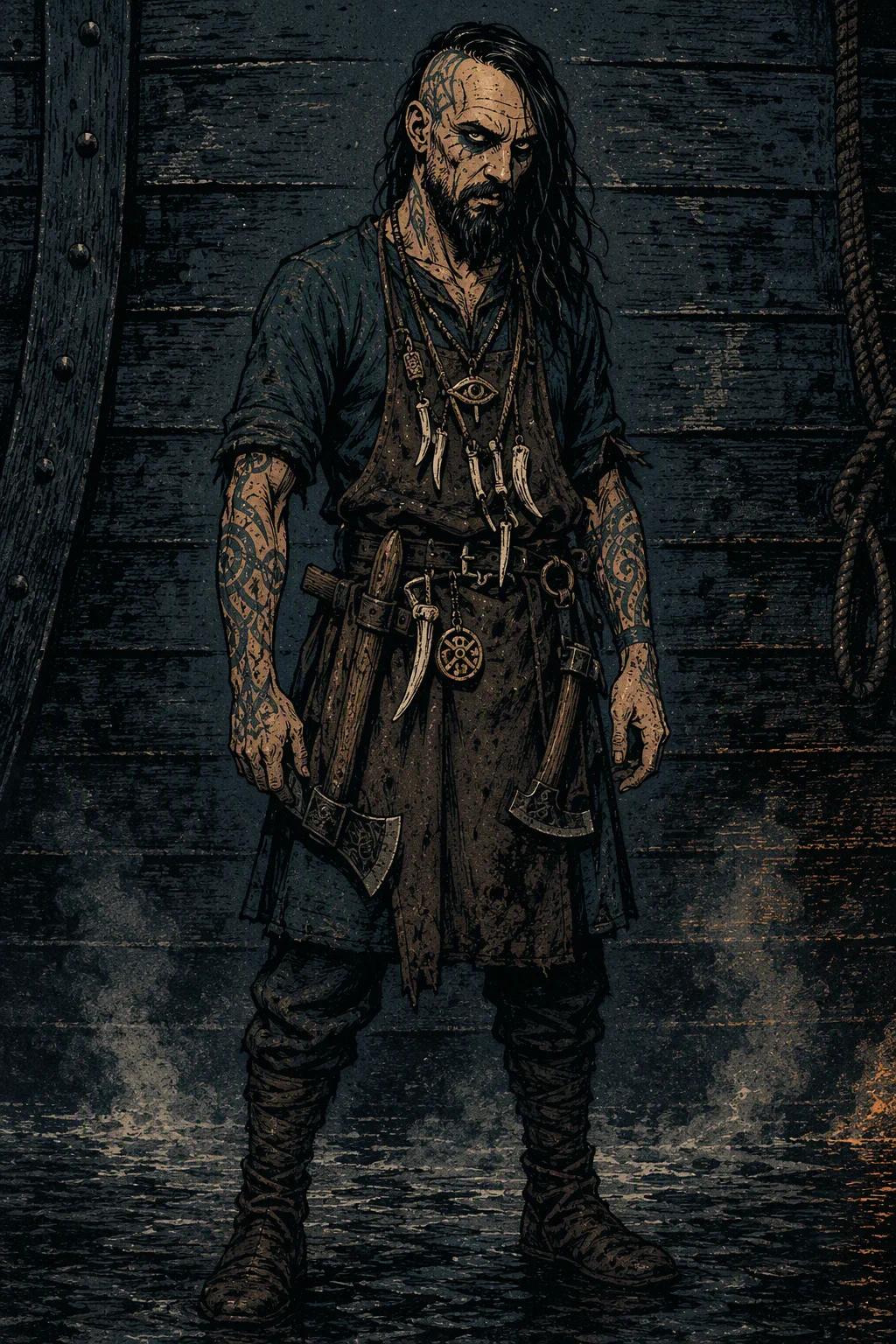
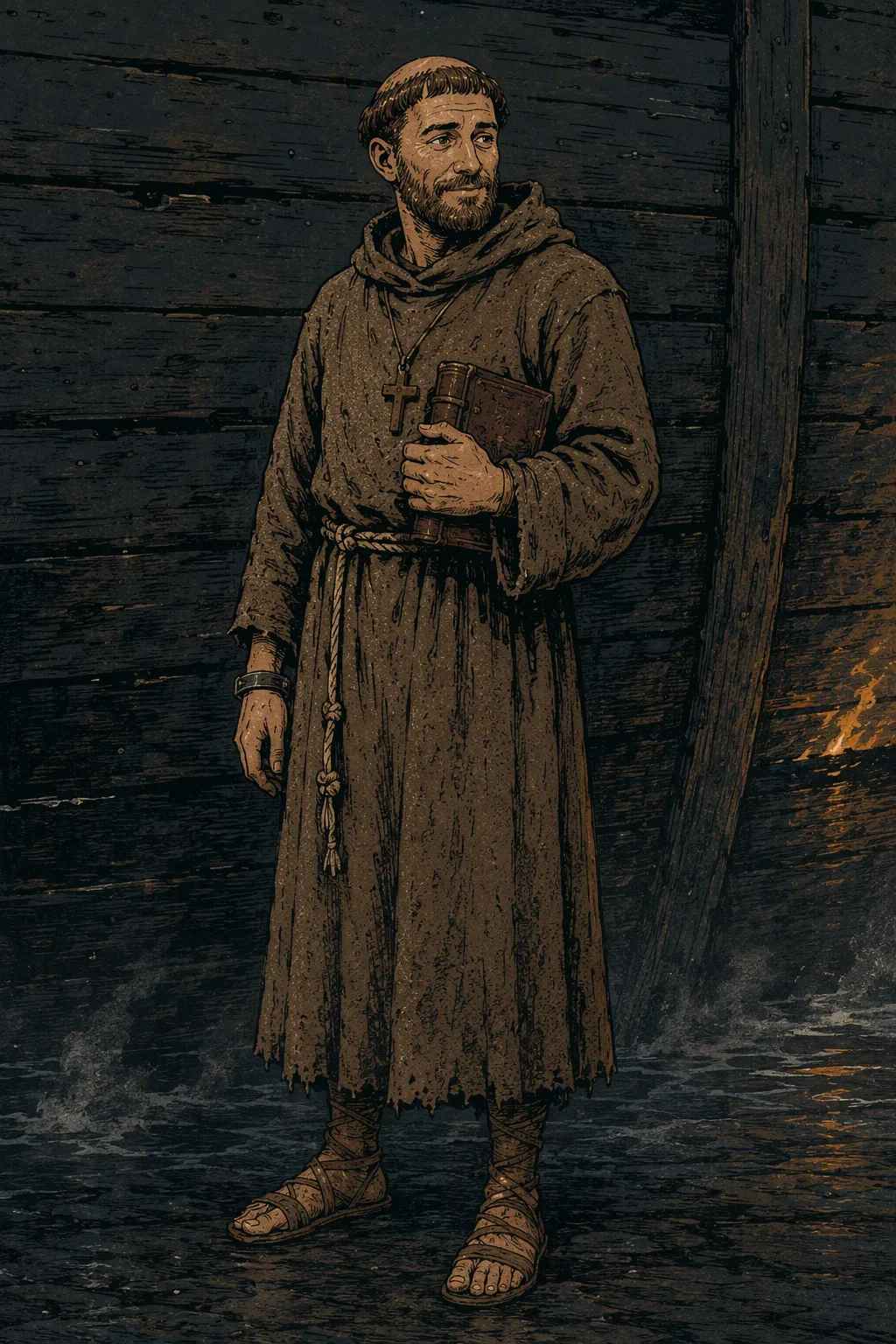
Lagertha came with her own host and commands it herself, which makes her a military lever as much as a memory of a time when the world seemed simpler and Ragnar still believed. Aslaug, his present wife, is a seeress whose prophecies once steered his decisions and now read to him as plain manipulation. And Floki, the finest shipwright in the fleet, built the very longships now rowing into the trap. His faith is the only thing he owns, he killed the captive monk who was Ragnar's dearest friend, and he will be the first to smell godlessness on his king.
Before you start
Is this a battle game or an argument game?
Mostly an argument. The stakes, the chain and the Greek fire are real and they kill, but the night is decided in the camp — councils, envoys, a revolt gathering around a heretic king. You will spend more of this story managing men than striking them.
Can I get it wrong?
Yes. Two scales are moving whether you attend to them or not, and passivity is the fastest way to lose control of the host. The siege ends on one of four roads, and not all of them bring the fleet home. Failure here is not a game-over screen; it is a worse version of the same night, arrived at through the councils you held.
How long is this, and can I stop partway?
It is one of the long ones — two nights of story time, but a full arc with a real ending rather than an endless sandbox. Sessions are resumable, so you can leave the fleet mid-river and pick the siege back up later. The tone stays grim and bodily throughout; there is no comic relief coming.
If this is your kind of story
This sits on the shelf of historical scenarios that refuse to romanticise the period, told in a noir key and resolved as a philosophical argument — a war story whose central mutiny is theological. If commanding tired men through a collapse is the part you want, Historical Stoicism: Marcus Aurelius puts you on a freezing Danube frontier with the same problem and a different philosophy; if you want the bare survival end of the genre, Before the First Fire strips it back to bone tools and cold nights. Start on the Seine, though. Mist on the water, an oar catching a stake, and above it all a sky that has stopped answering.