
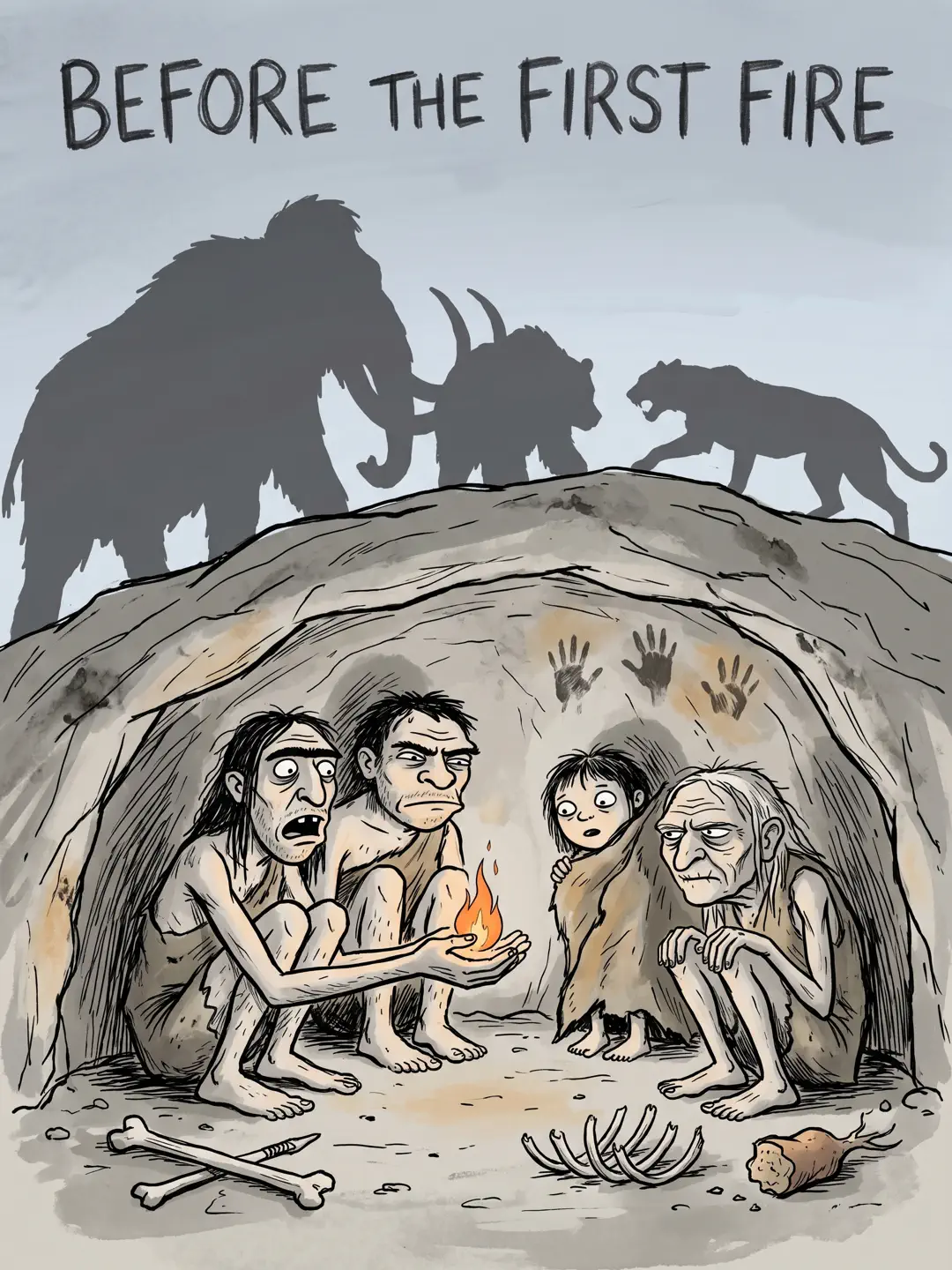
Before the First Fire
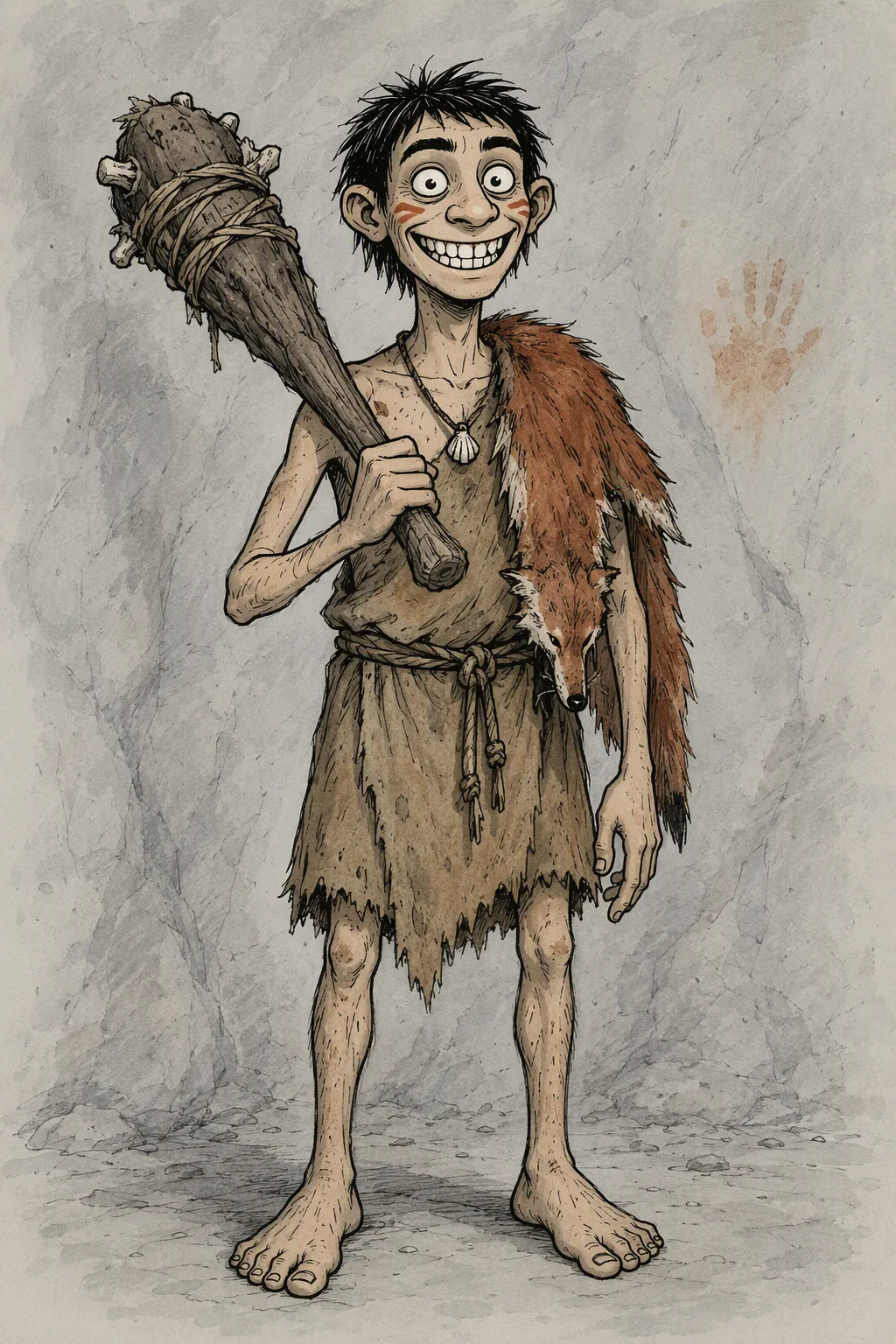
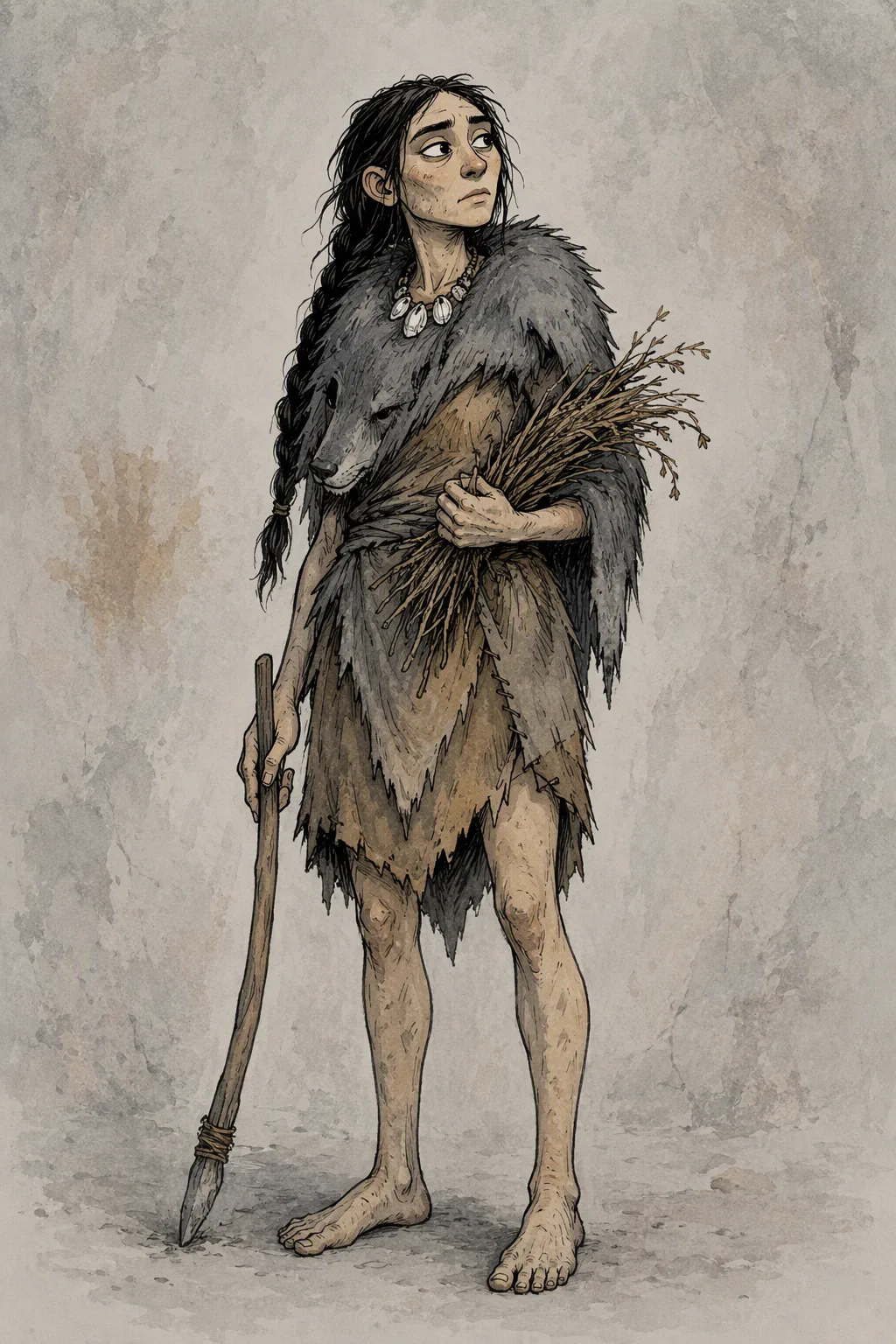
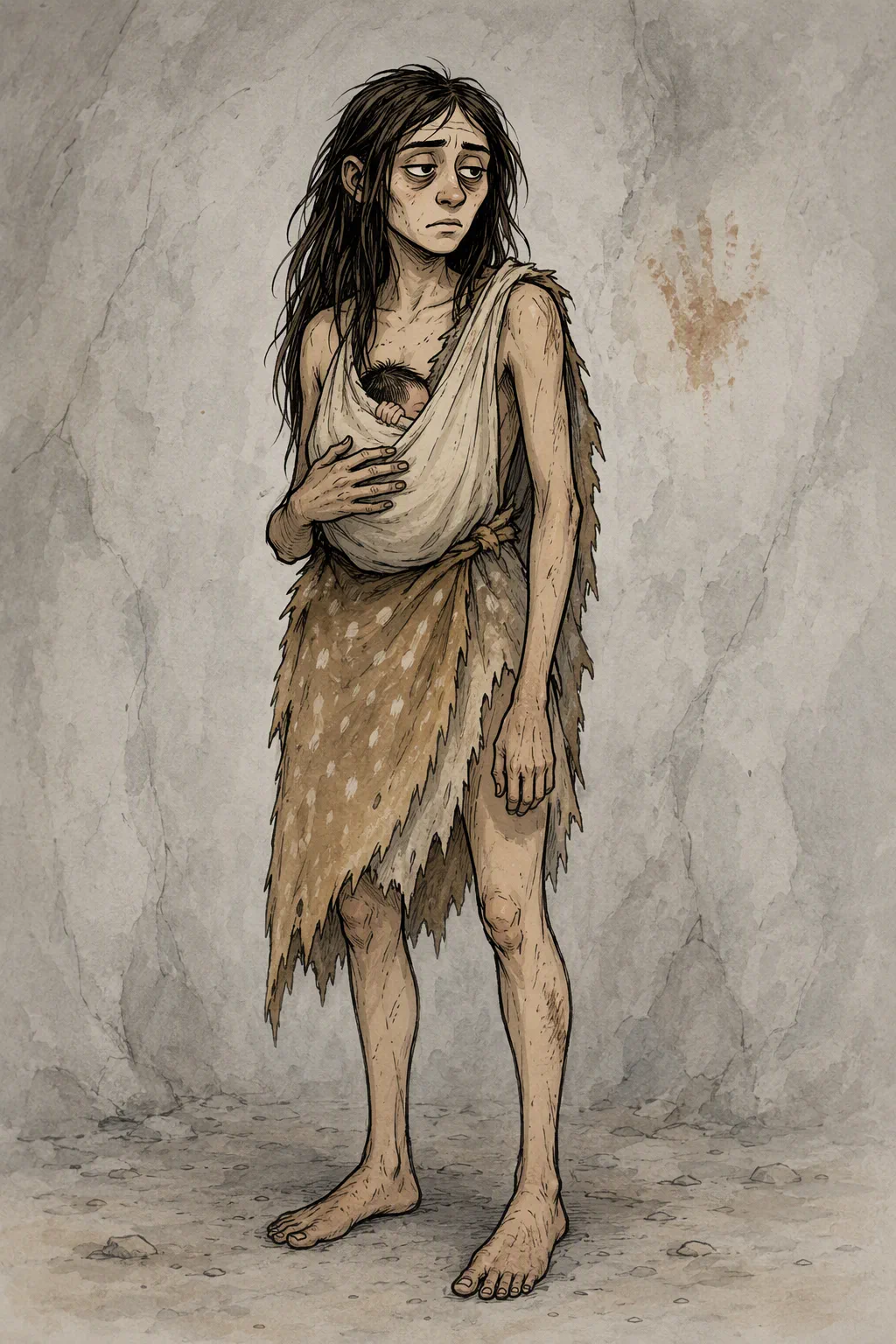
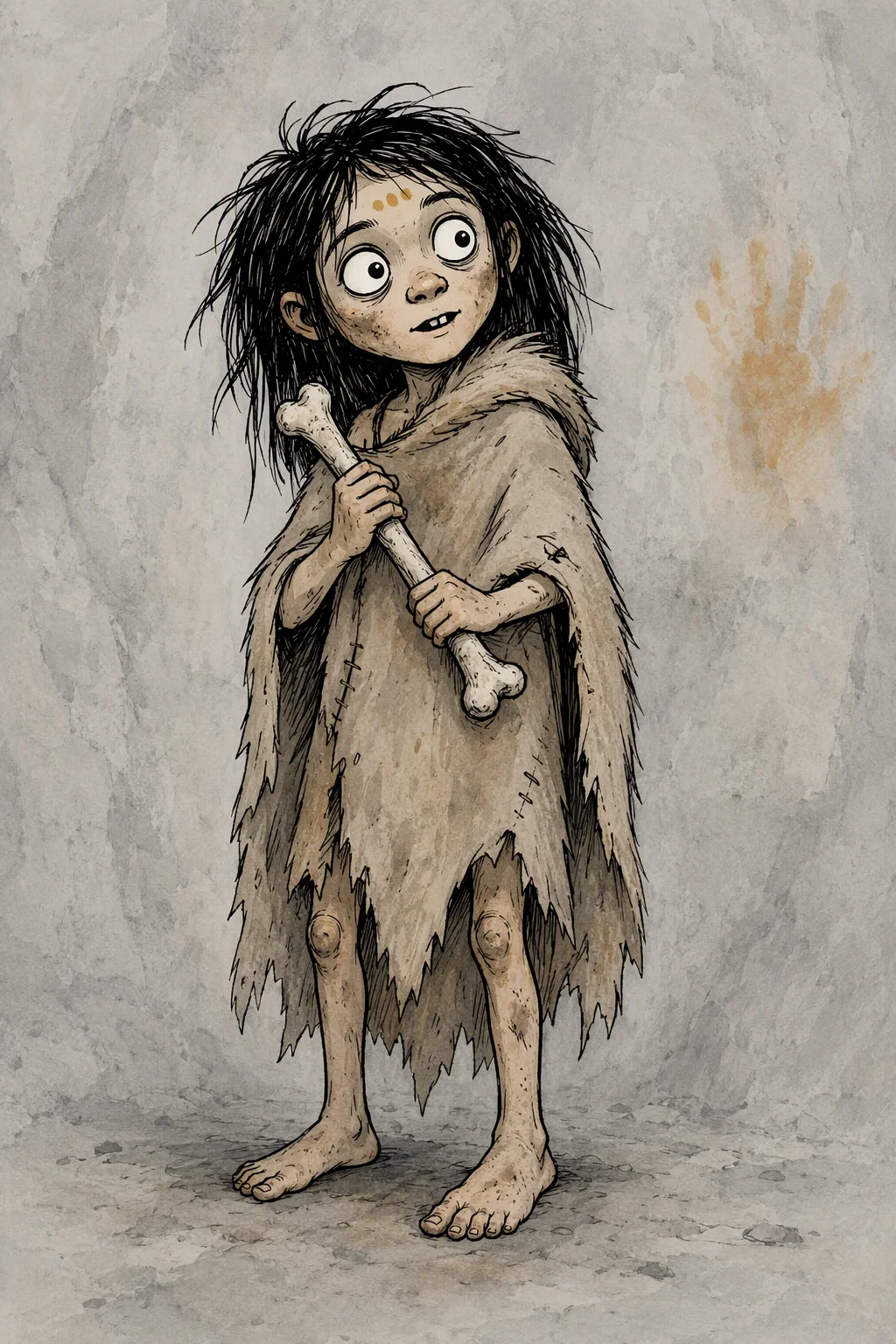
You live in a small prehistoric band long before settled life: cold nights, thin bodies, bone tools, and the constant hum of things that want to eat you. Hunger, weather, injuries, elders, infants, rival bands, and the strange new question of fire all pull at the clan. The world keeps moving whether you act or not — herds migrate, storms erase tracks, and someone always dies at an awkward moment.


By starting, you agree to our Terms of Service, Privacy Policy and Refund Policy.
Fire is not a possession here, and that is the whole difference
The caveman story most people carry ends with a spark, a triumphant grunt, and a museum caption. This one starts before that and stays there. Fire is known the way lightning is known — a thing that happens to the world, in a tree, somewhere else. Keeping it is new. Carrying it is new. Making it is new, contested, and sacred-feeling. Some of the band want it, some are afraid of it, some have already seen what it does to a hand. You are one of fifteen to thirty related and half-related people who eat together and sleep close for warmth, and the argument about the flame is the same argument as every other one in camp.
The clock is the weather, and it started running without you
There is no quest chain here and no countdown. There is cold, and there is how much meat came back. The band moves when the herds and the sky say so, not when you decide. Cold kills quietly. Wet kills loudly. A warm week in the wrong month is read as a bad omen.
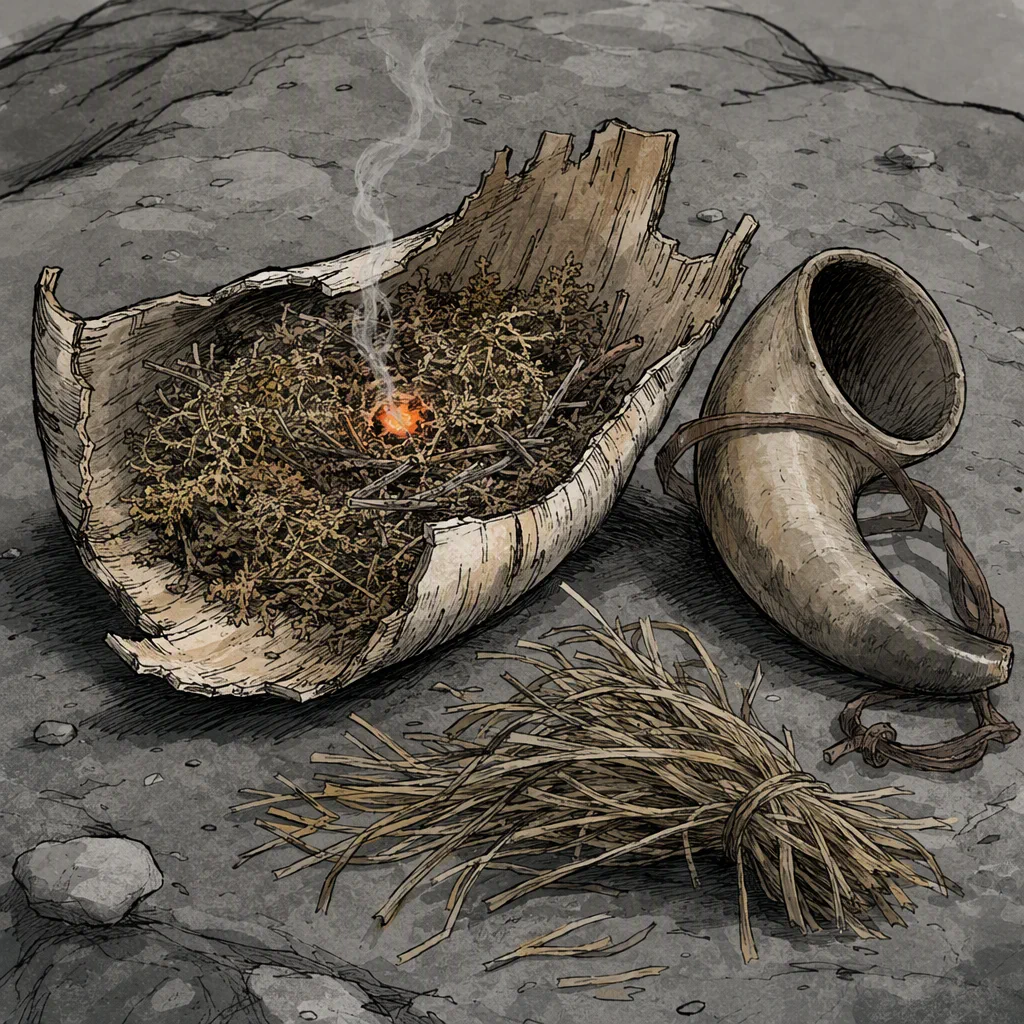
Fire arrives inside that pressure rather than above it. It is rumored, witnessed, occasionally captured: a lightning-lit tree, an ember someone has been feeding in secret, another band that already has it and might trade, or fight, or marry over it. Any flame you get is a small miracle that ends at a gust, a rain, a moment of inattention. People stare at it like idiots. People fight over who feeds it. People burn their eyebrows off. People cry when it goes out.
Everyone has a role, and everyone is one bad week from being a burden
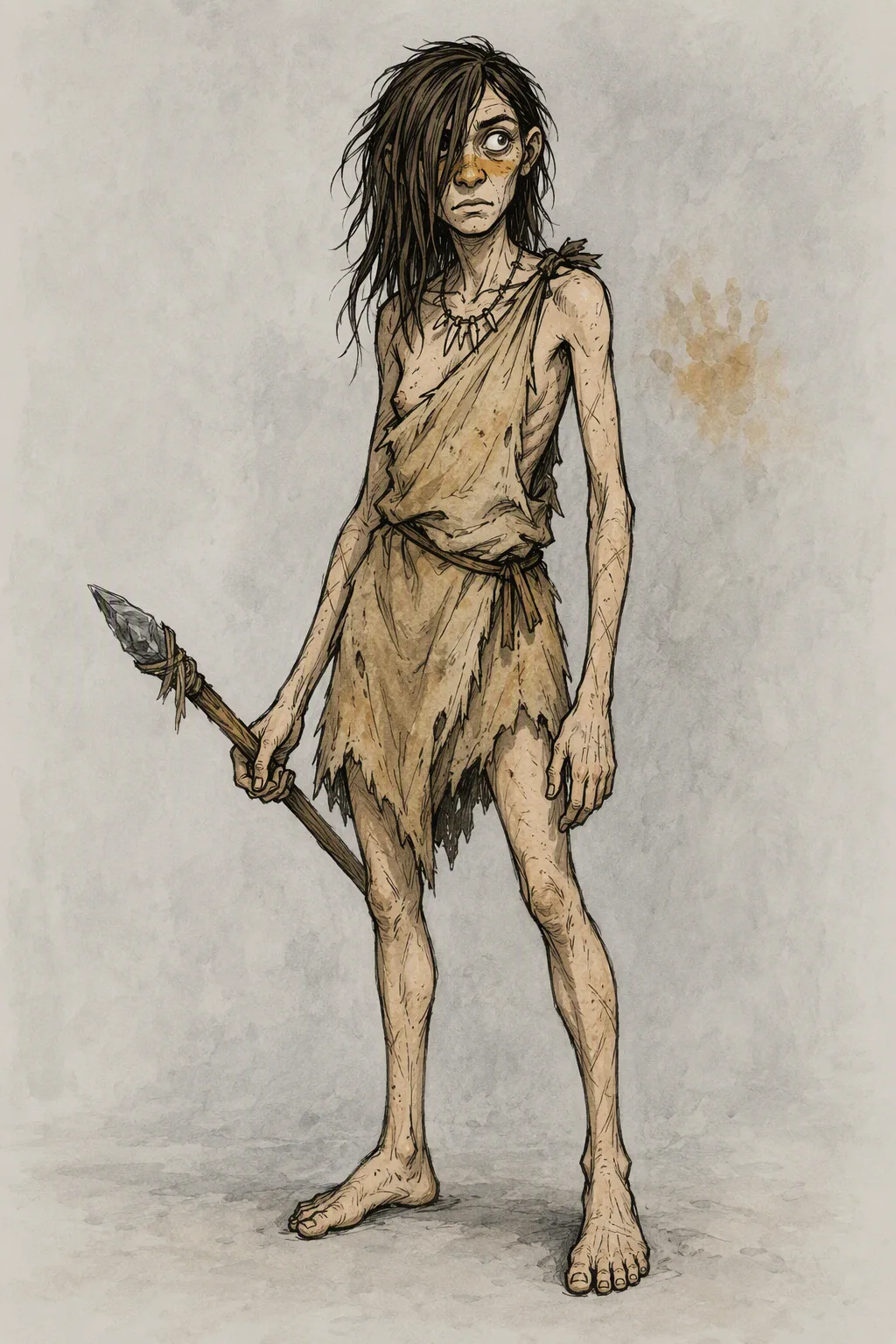
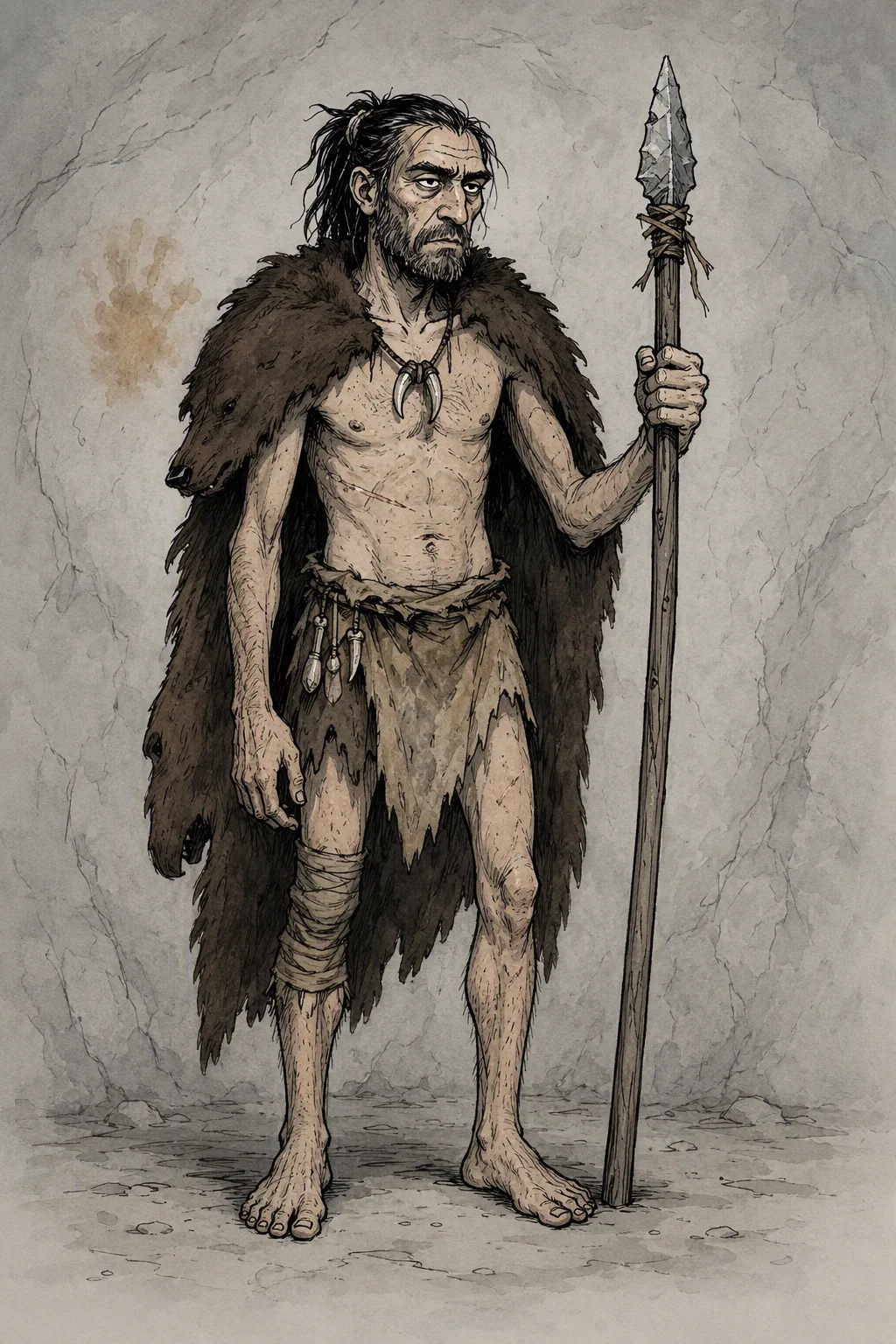
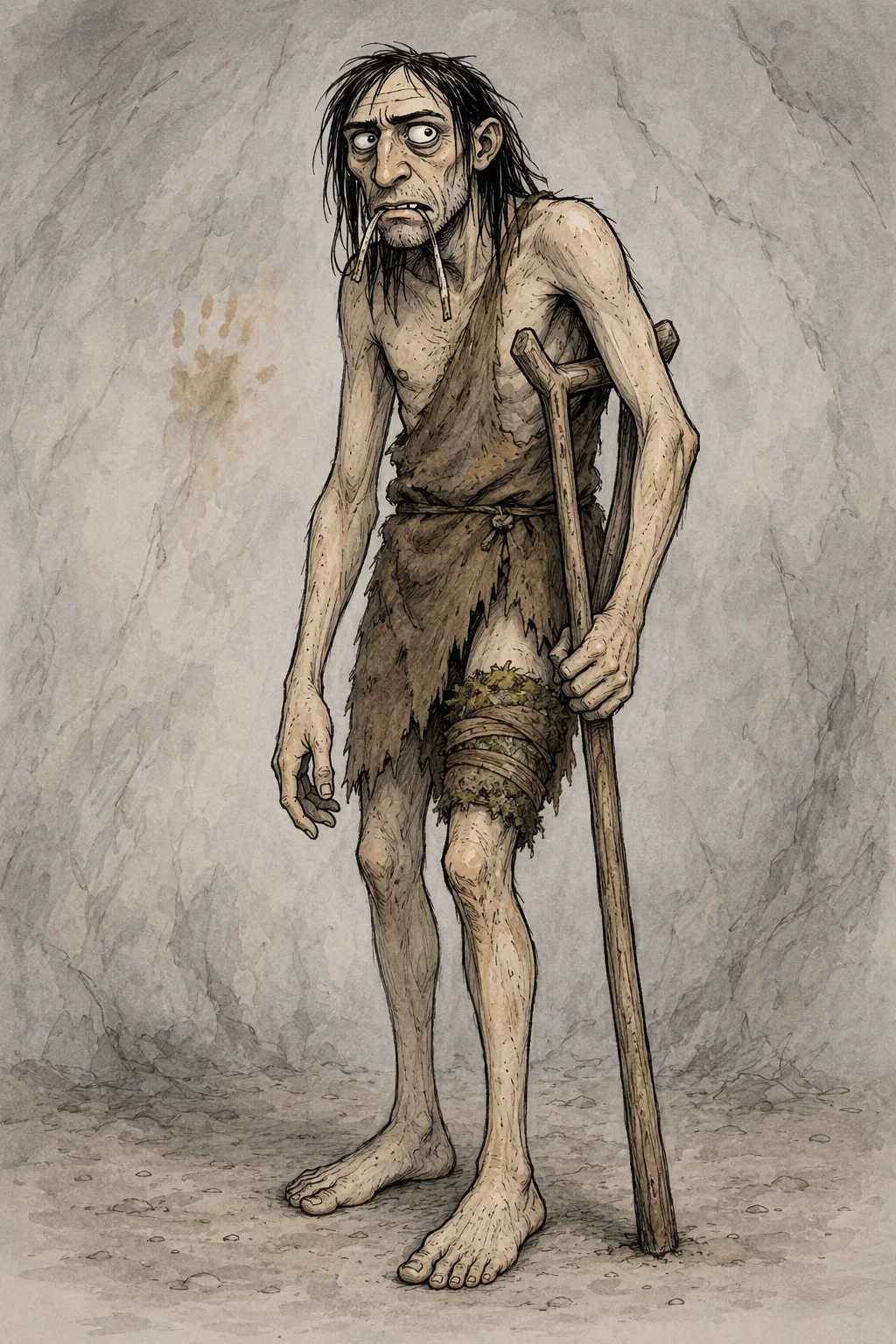
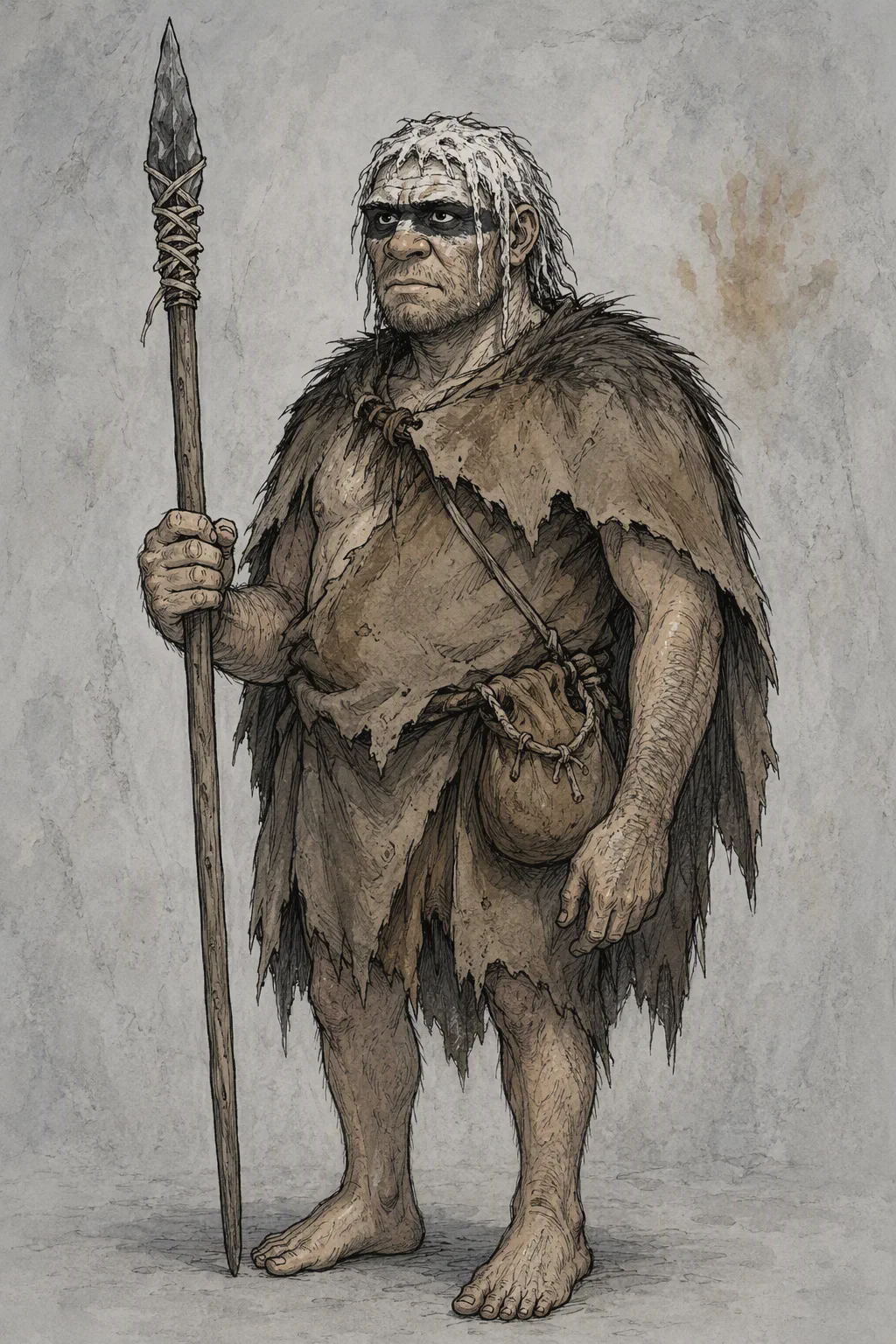
This is not a tribe with a flag but a pack of humans who sleep close, and hierarchy is real but keeps shifting — with injury, with mood, with who brought meat back. The senior hunter's knees are going and he knows it. The loud young one is either going to lead or get everyone killed. The quiet one reads weather and animals better than anyone admits and is listened to least. Every standing tension has faces attached: go out in bad weather, or stay and watch the thin ones get thinner; the infant or the elder, for the warm spot and for the marrow; your wound is slowing everyone down and everyone knows it.
The other bands sit at the edge of all of it. Sometimes they trade. Sometimes they fight. Sometimes they take a route, a carcass, or a person. Marriage-exchange and bride or groom theft are live pressures, and a band that finds your tracks before you find theirs has the advantage. Whether they are a rival to fear or a camp as thin as your own is a question the story puts rather than answers, and somebody in your camp is quietly deciding to leave with them.
What actually changes when you play
Scenes are short and physical, kept close to the skin: cold on it, smoke in the eyes, hunger in the belly, the weight of a spear, the weight of an infant. You act in that register rather than through a menu of adventure verbs. The camp keeps changing while you do nothing — between your choices the world advances on its own schedule. A herd that was two days out is four days out. A storm has erased the hunting party's tracks home. A predator has started following the wounded hunter's blood trail. Almost none of it waits for you.
The story tracks what a body and a camp track: who is hurt, who is fed, who brought meat back, whose word carries weight this week. Fire is the emotional center but never the only stake. And the narration holds a hard line, because the narrator works from this canon instead of improvising a generic adventure each turn: nobody speaks in modern idiom, no shaman turns up with a clean prophecy, no one stops to lecture you about the Paleolithic. People are articulate in their own register. Death, injury, hunger and childbirth are serious without being lingered over, and children can be in real danger — handled with weight, never as spectacle.
The land is small, and every part of it knows how to kill you
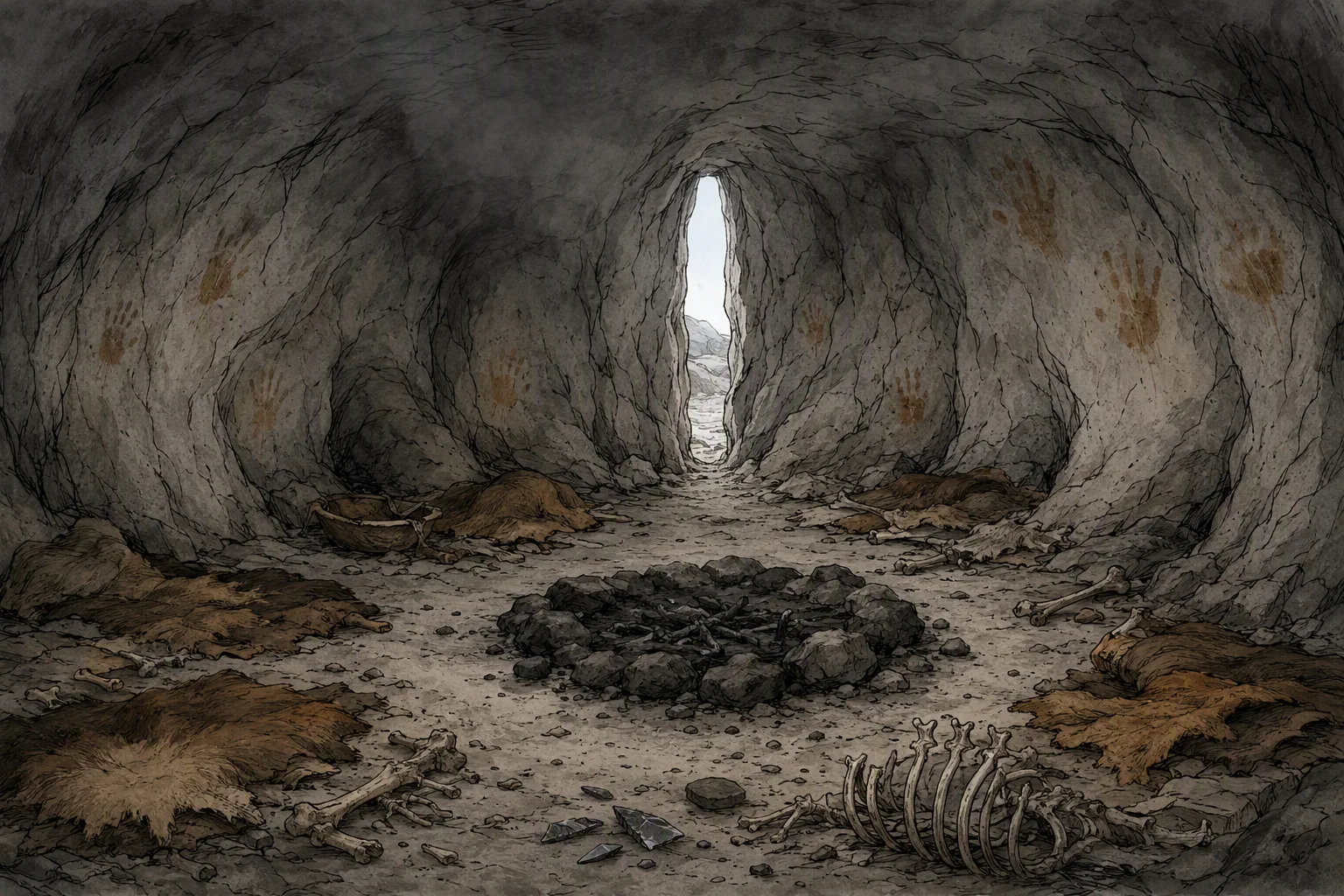
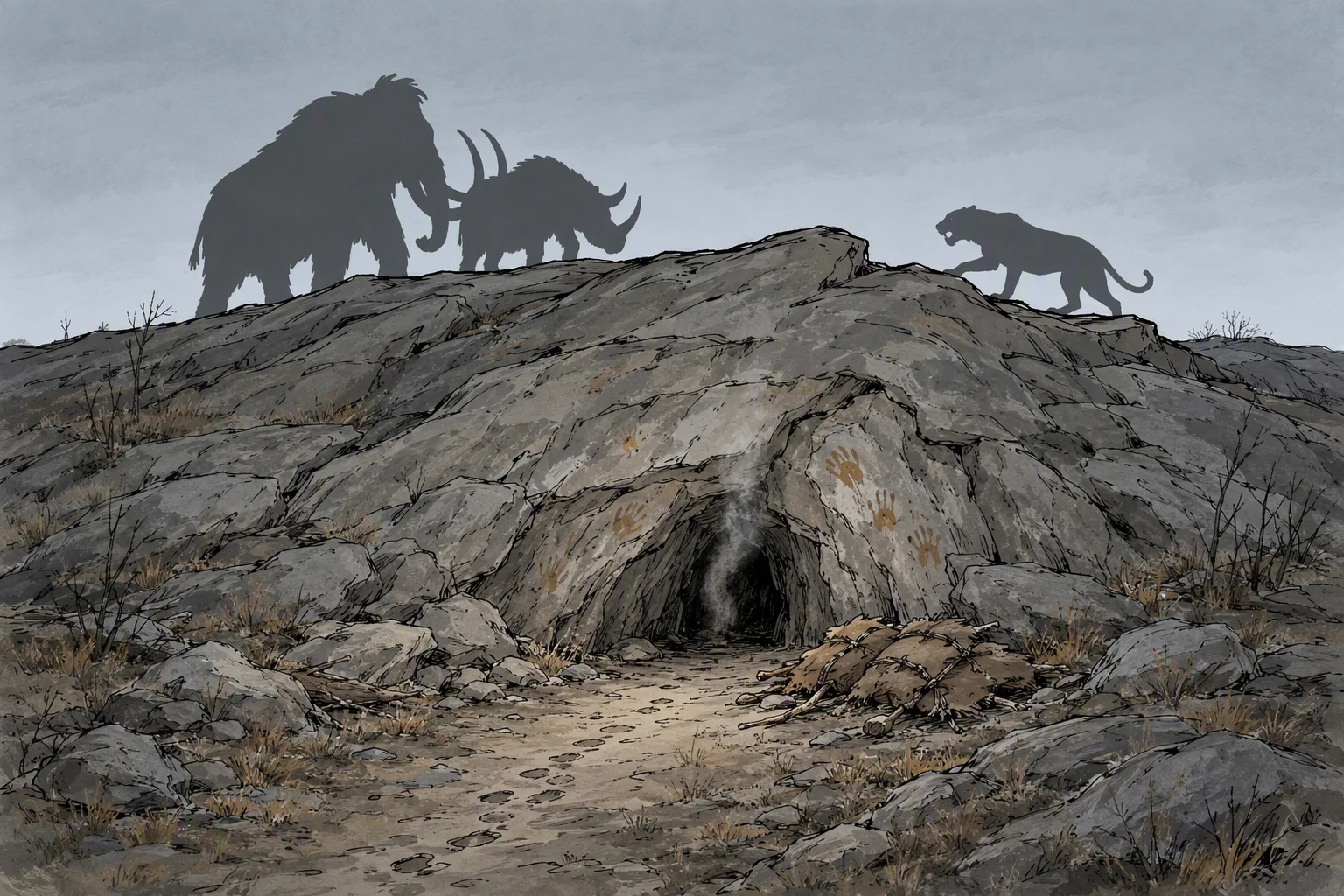
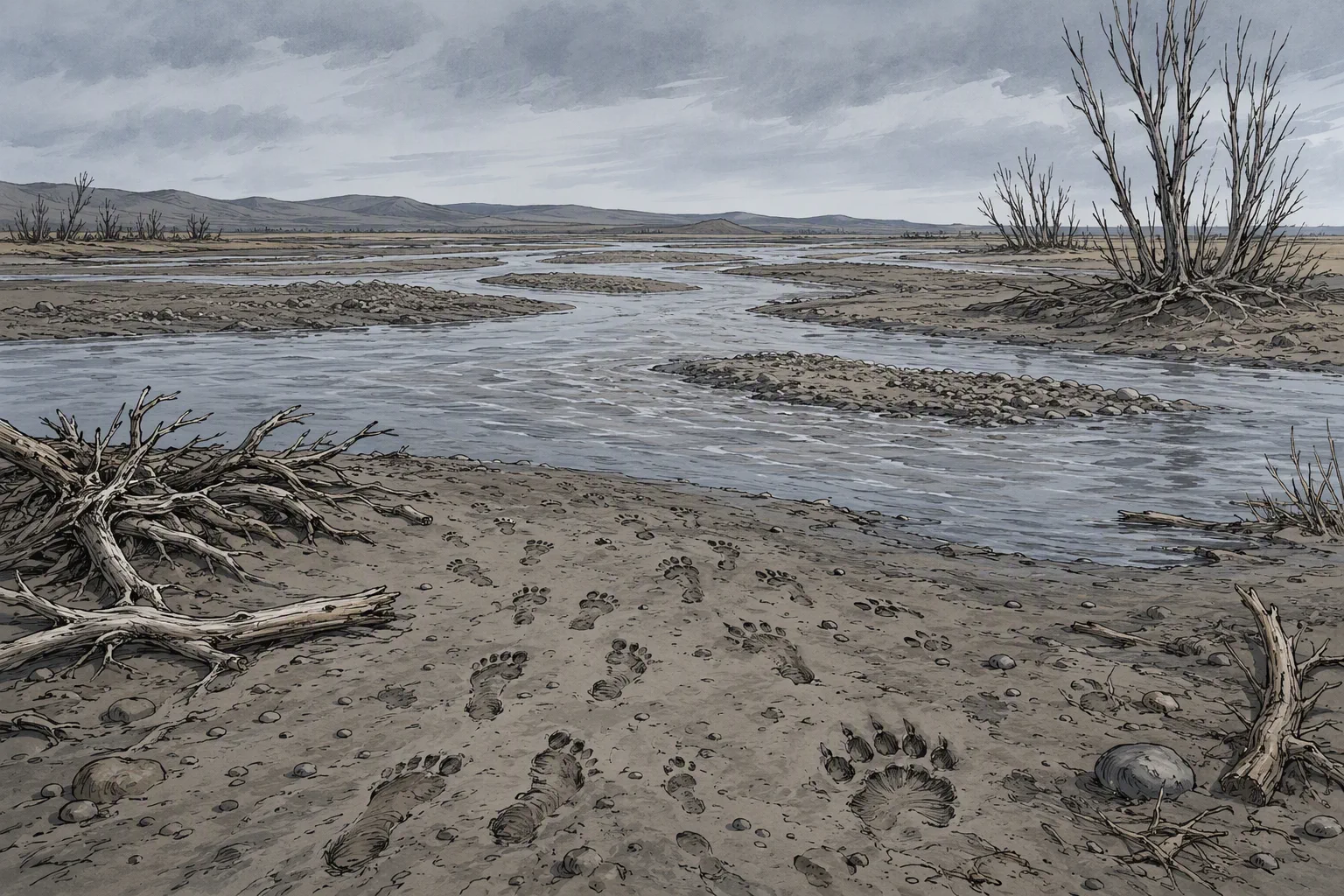
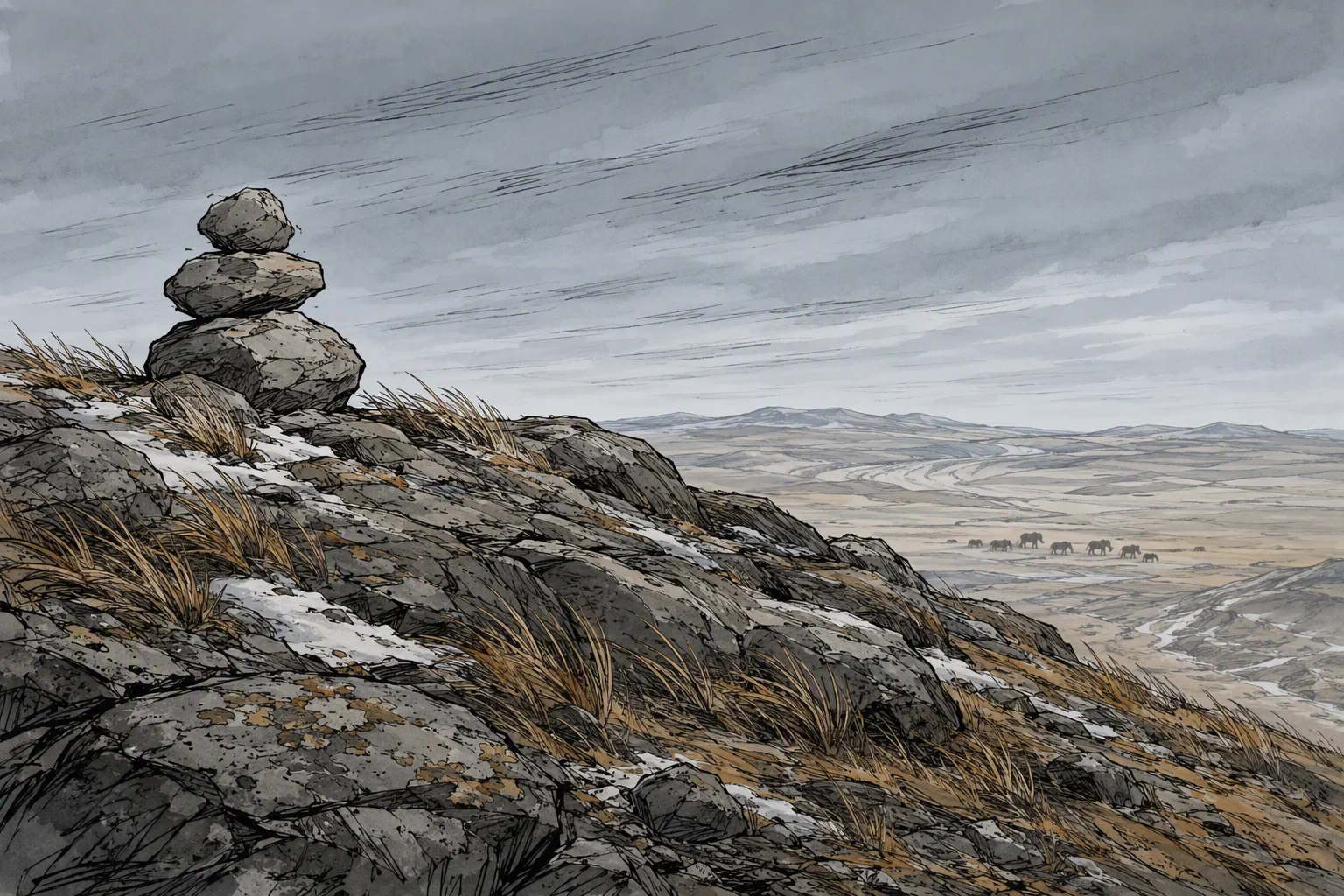
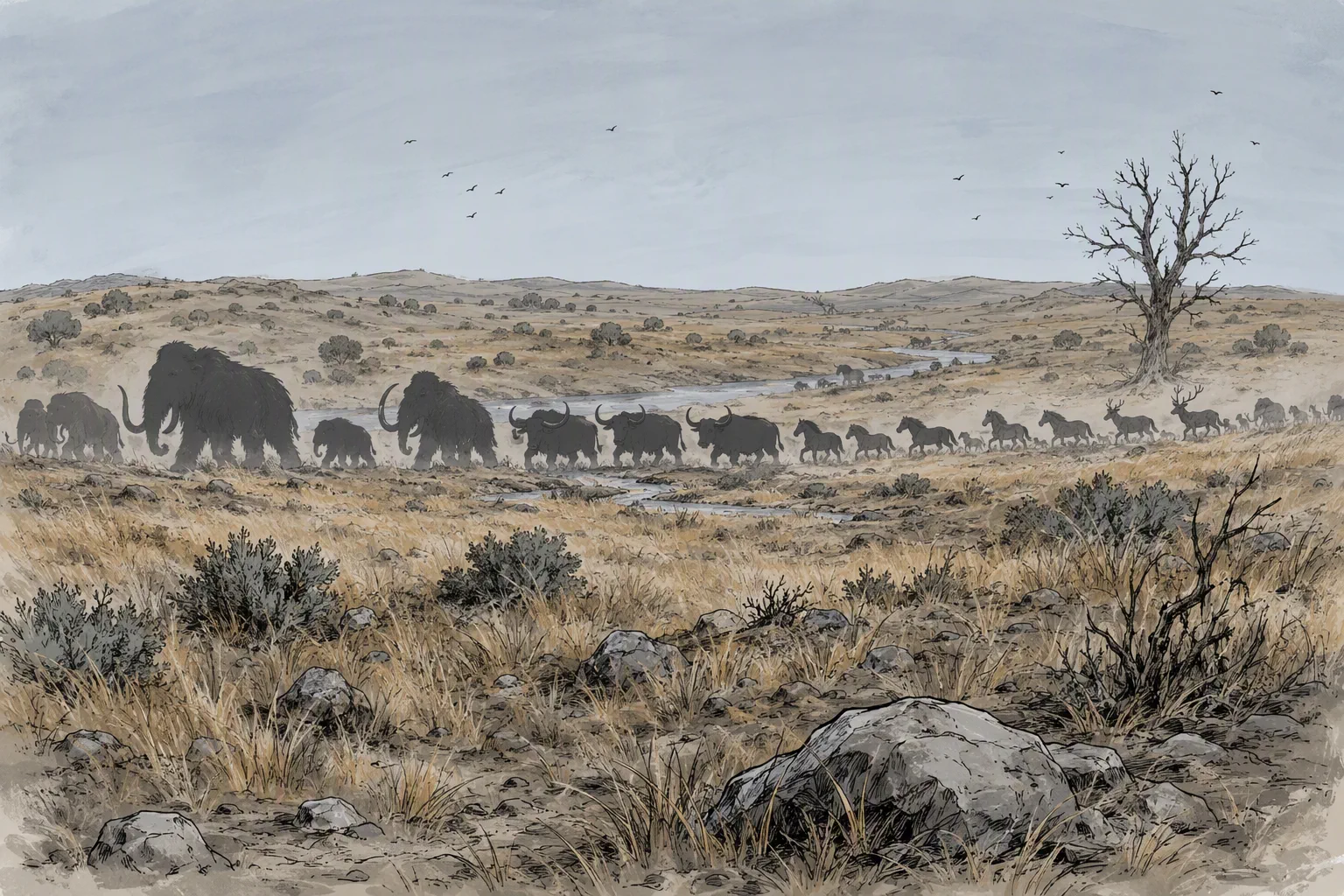
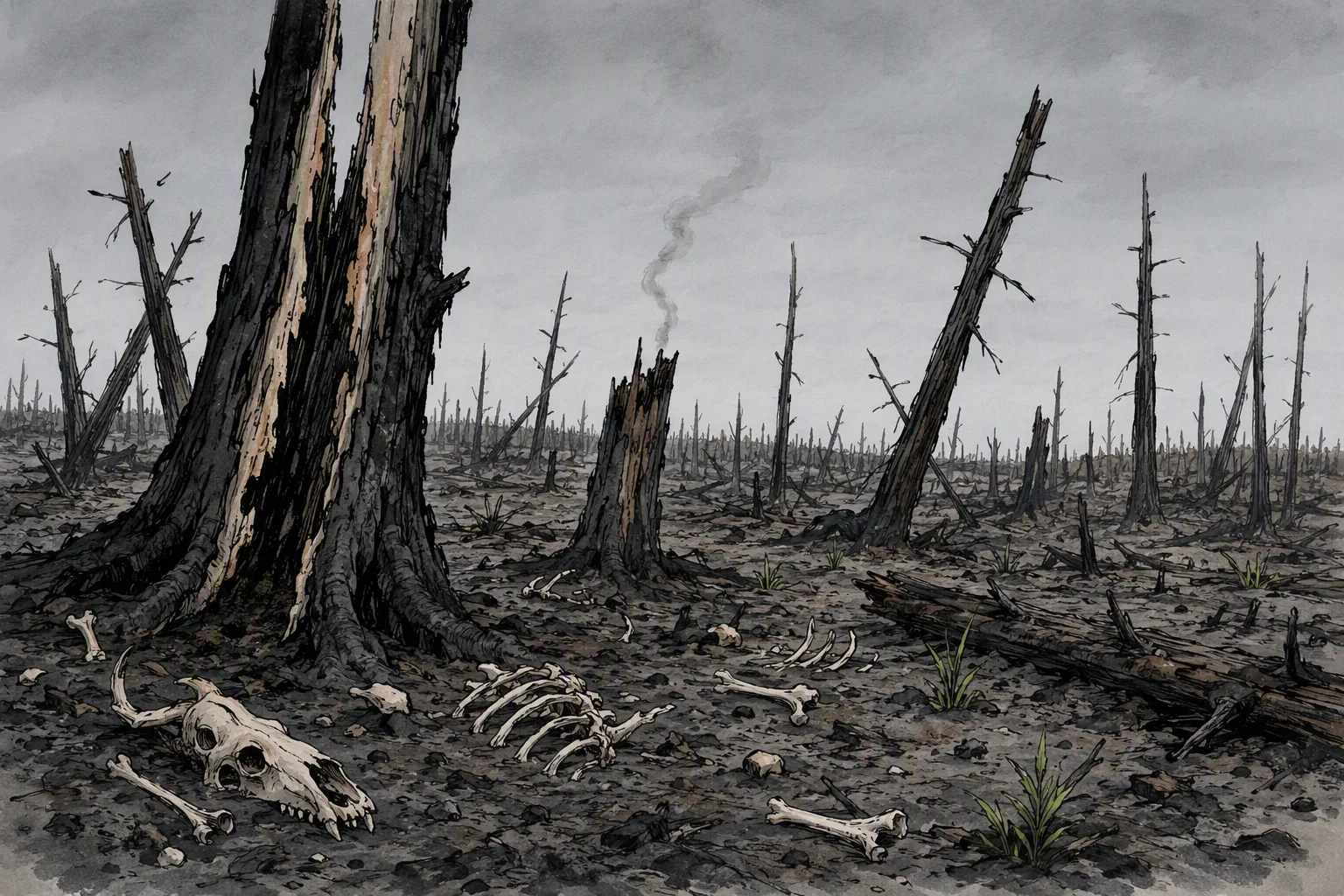
Five places carry nearly everything: a cave with a narrow mouth, defensible and smoky; a river that floods and moves its bed; a ridge where the wind is wrong; a meadow where the herds pass twice a year; and a burned patch of forest where a lightning fire once was. Deer, horse, aurochs and mammoth-kin travel on a logic that has nothing to do with your plans. Predators follow wounded things, including wounded people. A lone bear in the wrong cave can end a generation.
You will know these people by their knees and their jokes before you know their names
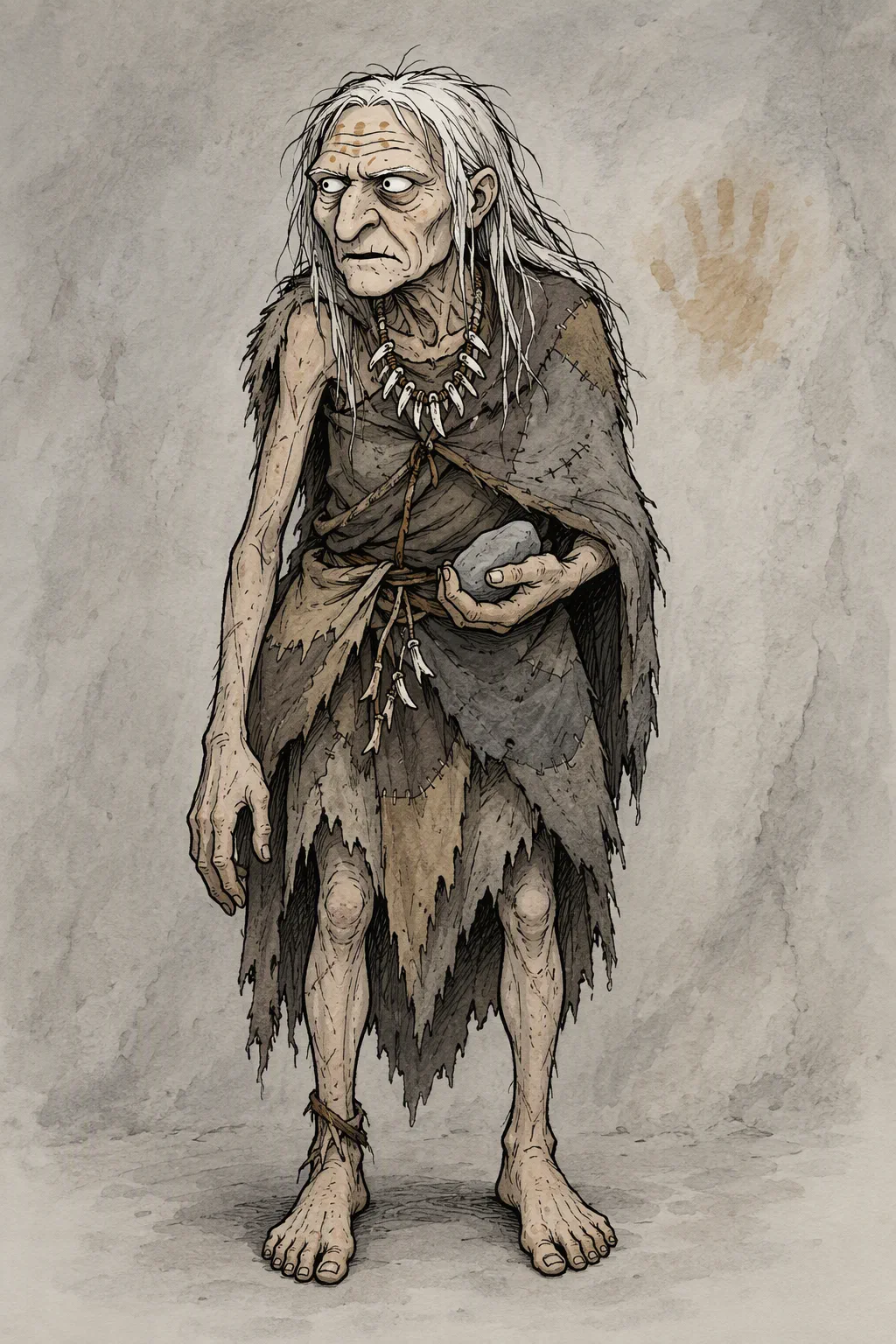
Names arrive inside the scene — short, sound-based, easy to hold in the mouth — and the relationships are messy: half-siblings, an adopted infant, a mate from another band, an elder who is not blood but raised you. There is the elder who remembers a winter nobody else survived and tells the same three stories; you will hear all three more than once. There is the mother with the new infant, whose survival sets the emotional weather of the camp. There is the child who asks the questions the adults stopped asking, and the one whose bad wound is either healing or not, while everyone watches and nobody says so.
The jokes are about someone's hair, someone's walk, someone's bad hunt. It is funeral humor, used because the alternative is screaming, and it lands inside the bleak beats rather than instead of them. The tenderness is just as physical: a warm stone passed along, meat chewed soft for a toothless elder, a song that is mostly breathing and stamping and one repeated word.
Before you start
Do I have to keep the fire alive?
No. Fire is the heart of the scenario, not a meter you are graded on. It can be found, stolen, hidden, shared or lost, and losing it is a direction the story travels rather than a failure screen. Plenty of sessions turn out to be about the wound, the infant, or the footprint in the mud by the river.
Can I get it wrong?
Yes, and you will. Hunger, injury and weather do real damage, someone always dies at an awkward moment, and the quiet one being right about the storm does not mean anyone listened. Getting it wrong here usually means a colder version of the same morning, with one fewer person in it.
How long is it, and can I come back to it?
It is a medium-length scenario built from short scenes: a session is a few cold days with these people, not an epic campaign. Sessions are resumable: stop mid-hunt and pick the camp up later. Because the world keeps moving between your choices, returning feels less like reloading a save and more like walking down off the ridge to see what happened while you were gone.
If this is your kind of story
This one sits on the historical shelf and earns the gritty tag honestly — cold and hunger are the plot, not seasoning — and the humorous tag without contradicting it. The survival shelf next door holds its nearest neighbours, and the coldest room on the historical one is Historical Stoicism: Marcus Aurelius, where keeping your people alive through a bad winter is also the whole job. If it was the flame that caught you, Emberwatch gives you one long night, a wagon of sleeping children, and a fire the size of a thumbnail. Then come back to the cave with the narrow mouth: smoke in the eyes, split knuckles, and cupped hands around an ember that may not last the night.
