
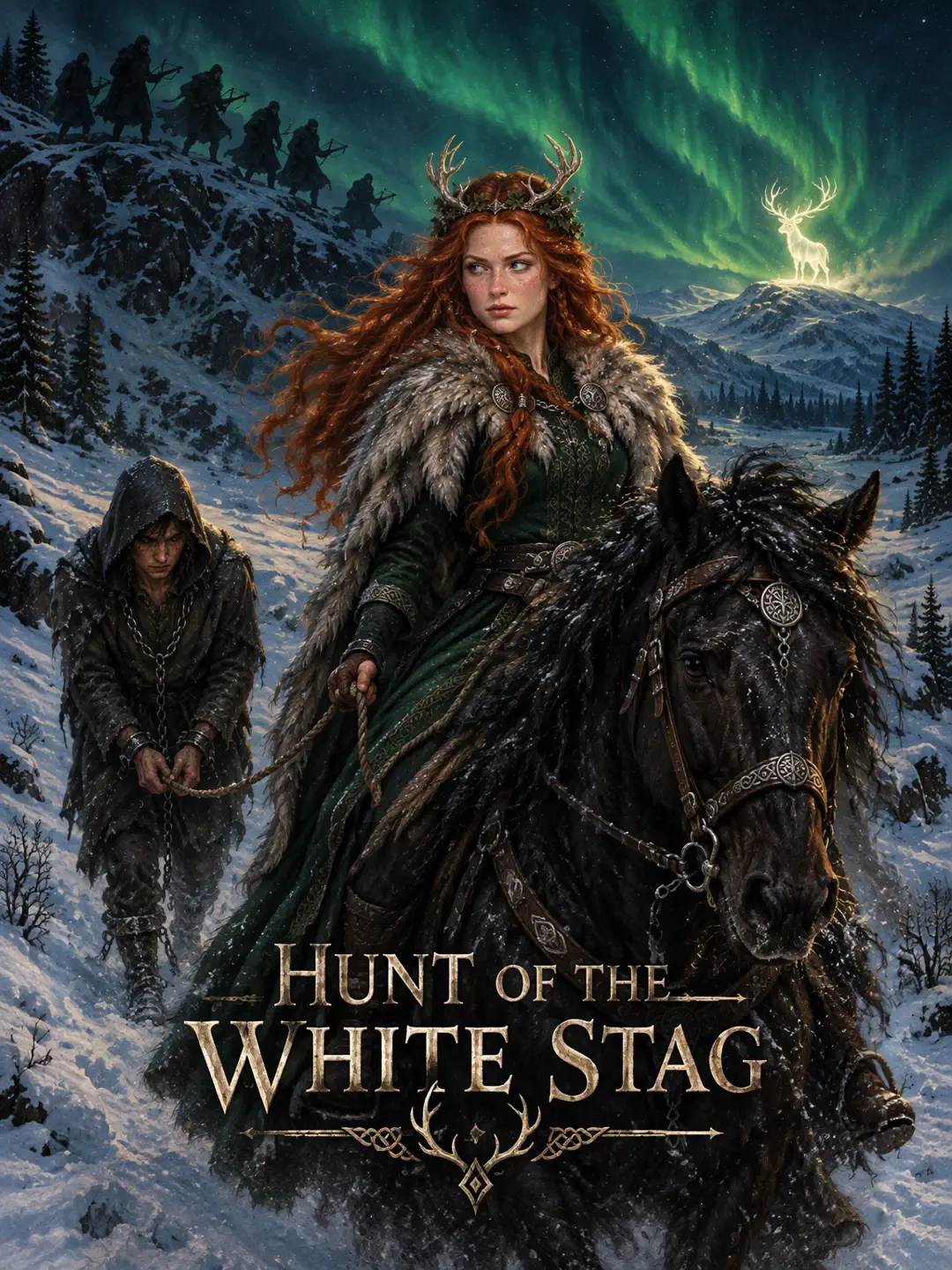
Hunt of the White Stag
You were accused of killing the old jarl. Ingrid, his daughter, offers you one chance: ride north with her after the white stag that stole the sun, and win her the throne. Her brother wants the throne, and he has paid the other hunters to make sure neither of you comes back. Outwit the rival heirs, make alliances on the ice, and choose who to betray before they betray you.



By starting, you agree to our Terms of Service, Privacy Policy and Refund Policy.
Roped to the heir, forty days without a sun
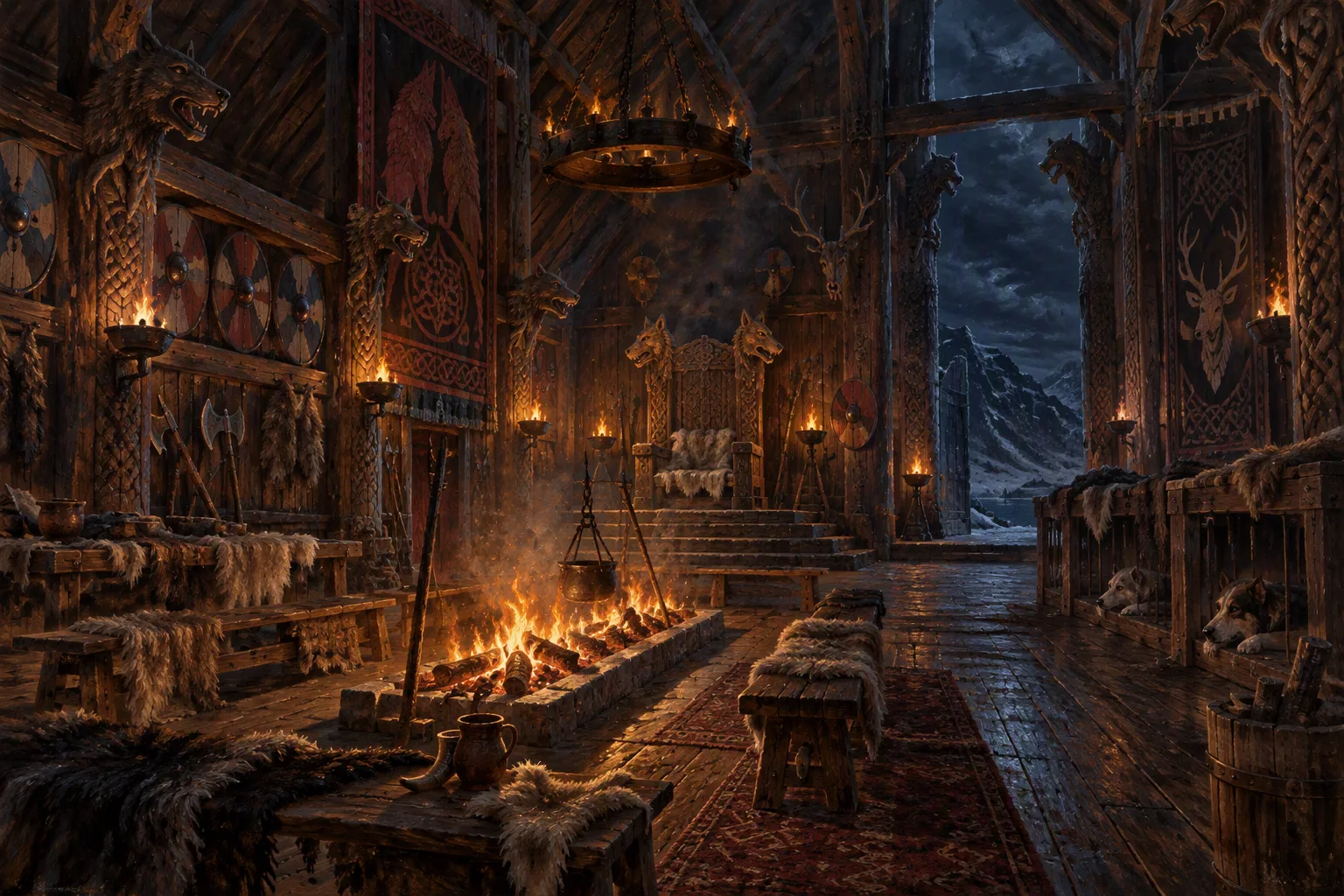
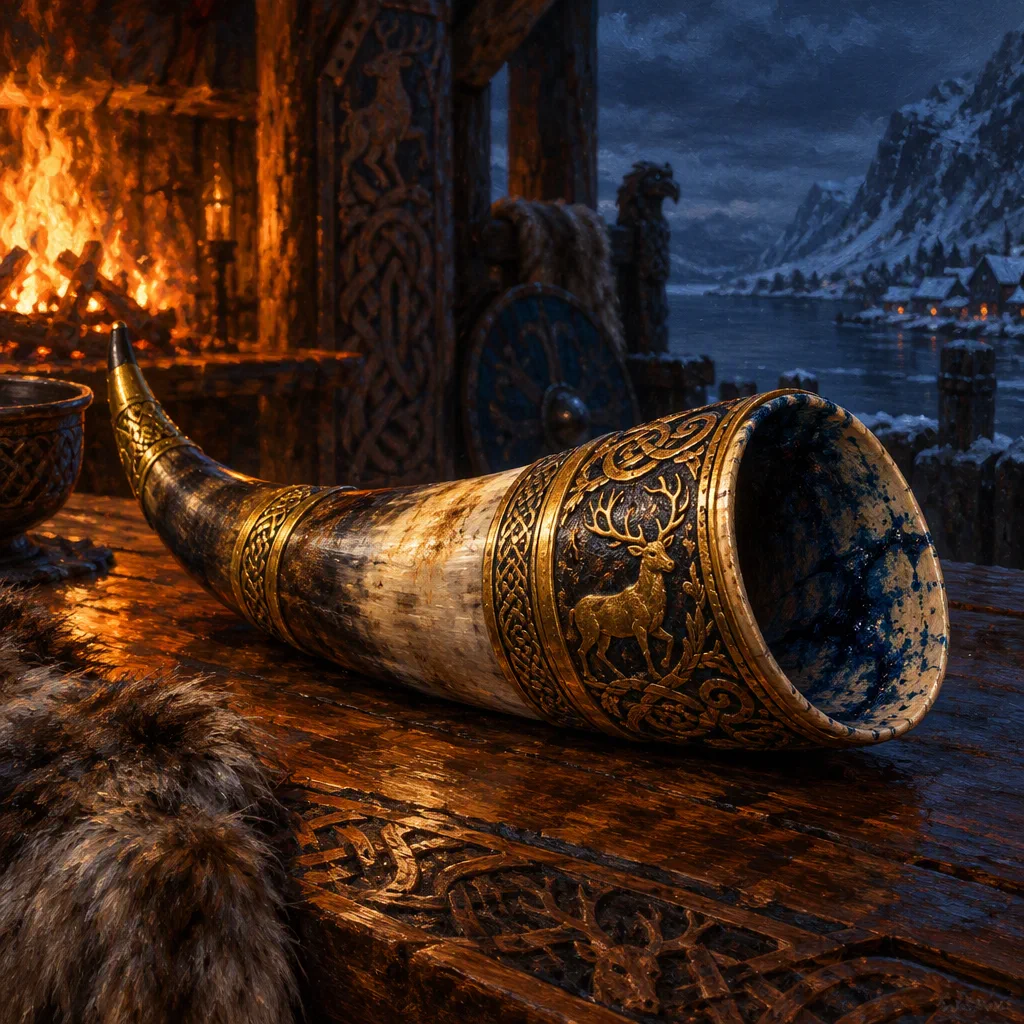
The rope bites your wrists and the cold bites everything else. You stand bound to a carved post in Kjarholm's longhall, in the dark that has lasted forty days since Midwinter, when a great white stag walked out of the Blackwood and the sun went out with it. On the table lies your own skinning knife, with Jarl Orm's blood dried along the blade. Hounds whine under the benches, and a voice from the high seat says you hang at second dark.
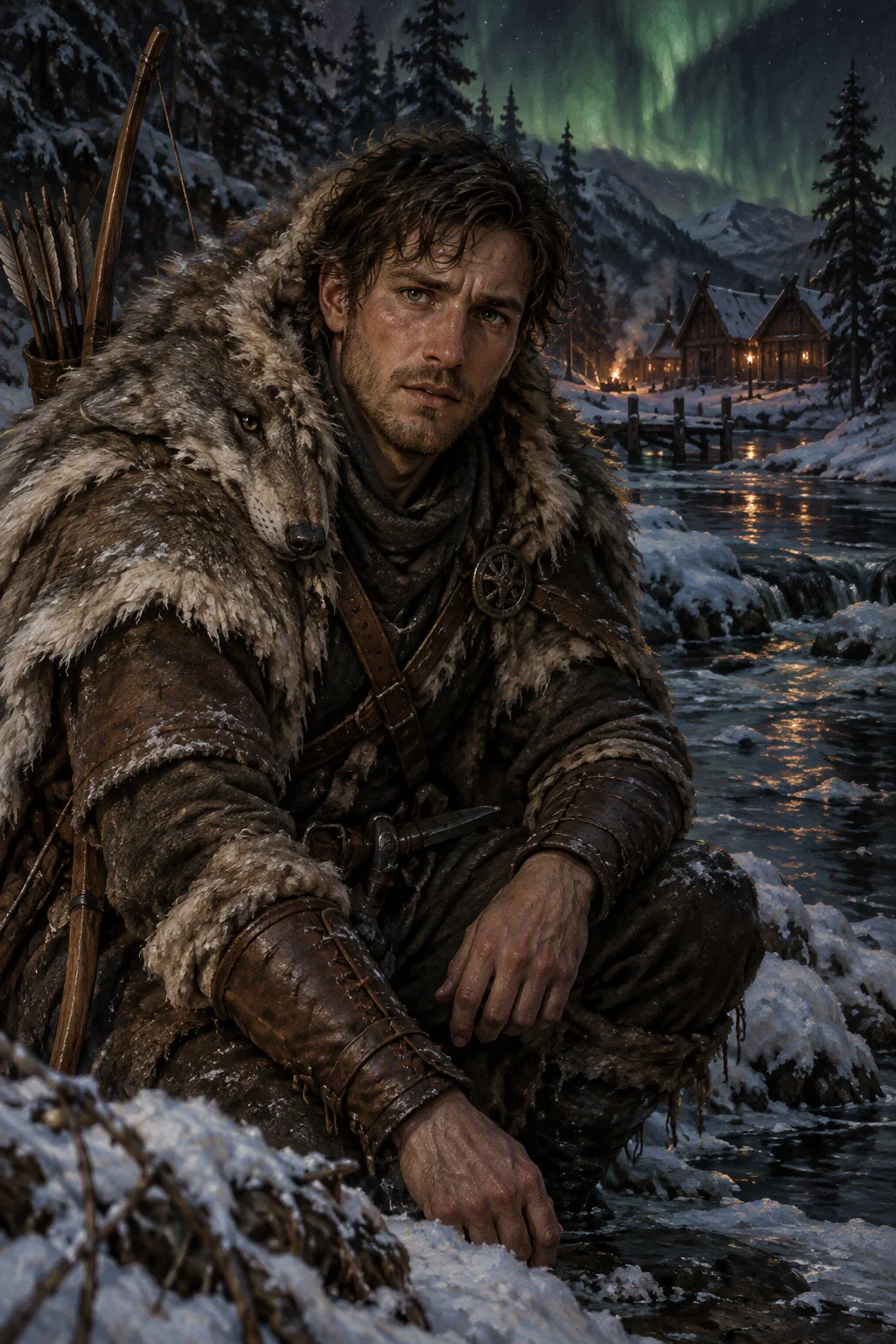
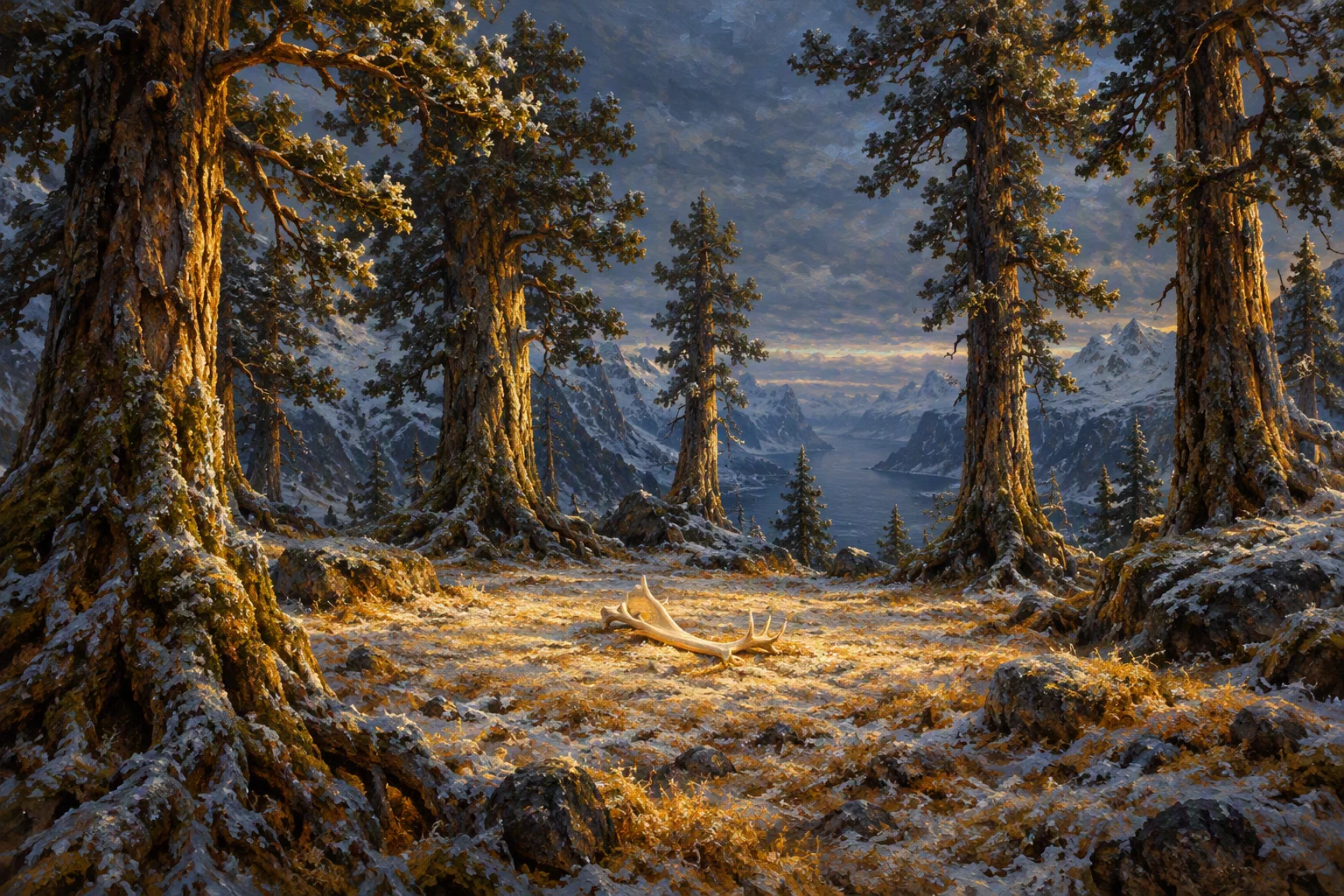
Hunt of the White Stag is an AI interactive fantasy story set in a harsh northern land of fjord-holds, black pine and ice. You are the hound-warden, a foundling raised in the jarl's kennels and accused of his murder. You say you did not do it. Then the jarl's daughter walks the length of the hall and offers you the only door left.
One rope, one chance
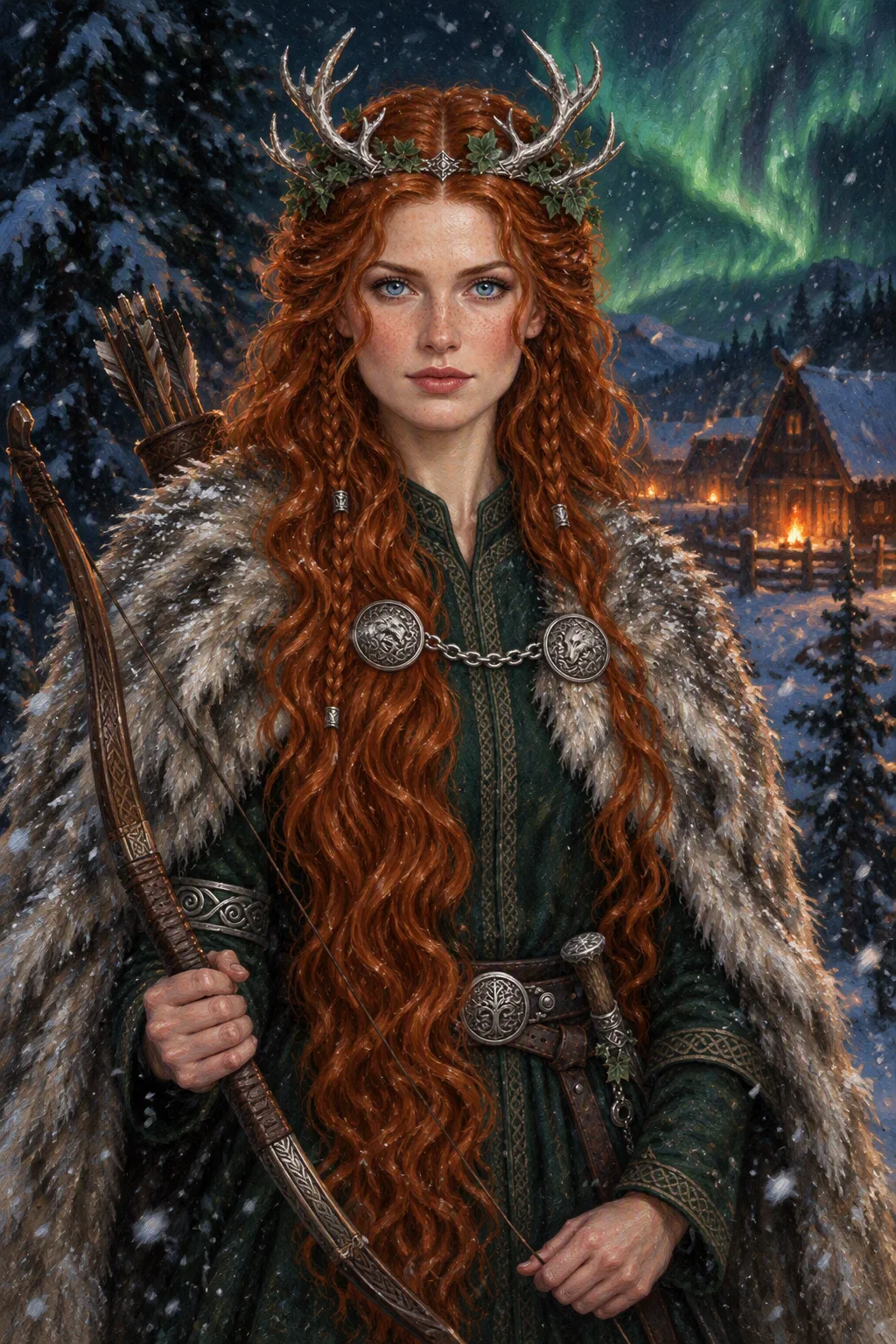
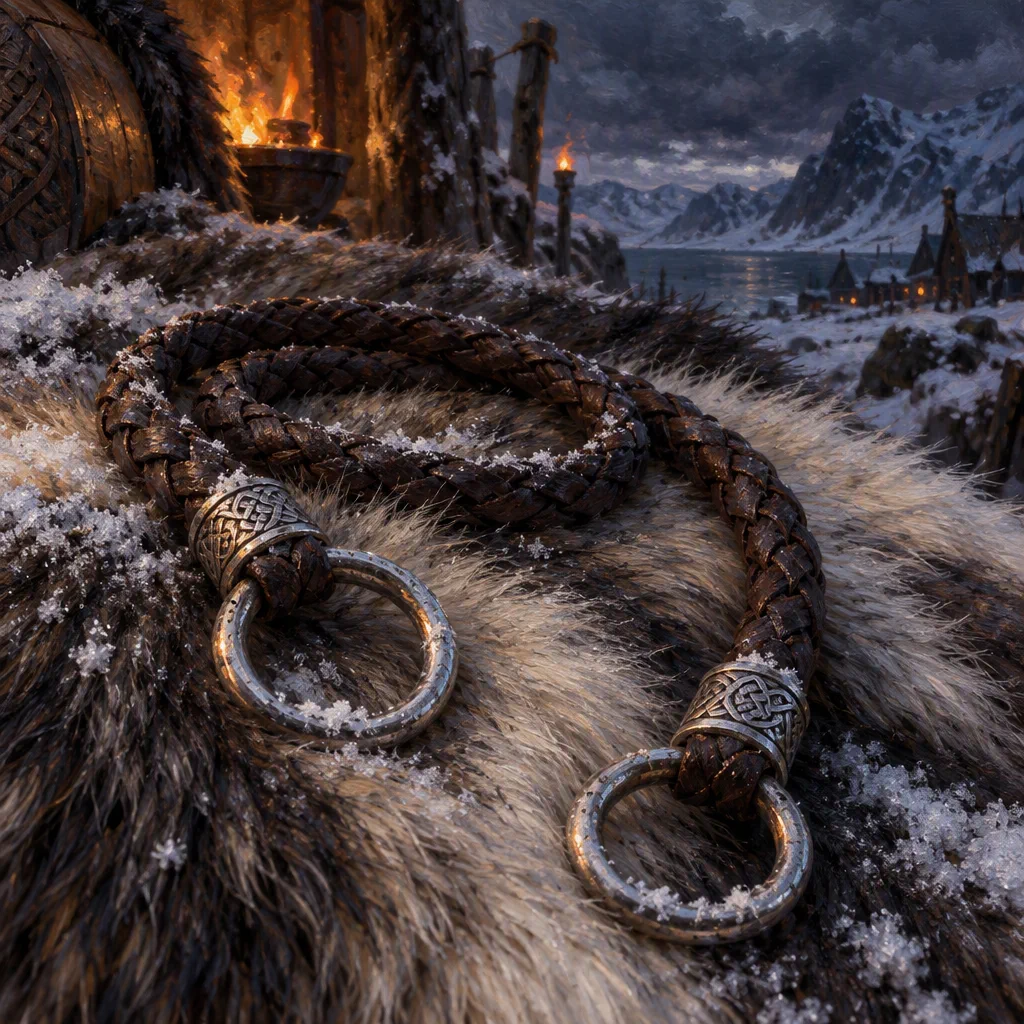
Ingrid is thirty-three, the jarl's daughter and a huntress who has never lost a trail she could see. By the Law of the Rope, an heir may claim an accused person to serve a hunt, wrists tied to the heir's belt, and if you serve to the end and she vouches, the charge is voided. Cut the rope or run, and you are an outlaw anyone may kill. Ingrid cannot read the spoor on the ice. You can.
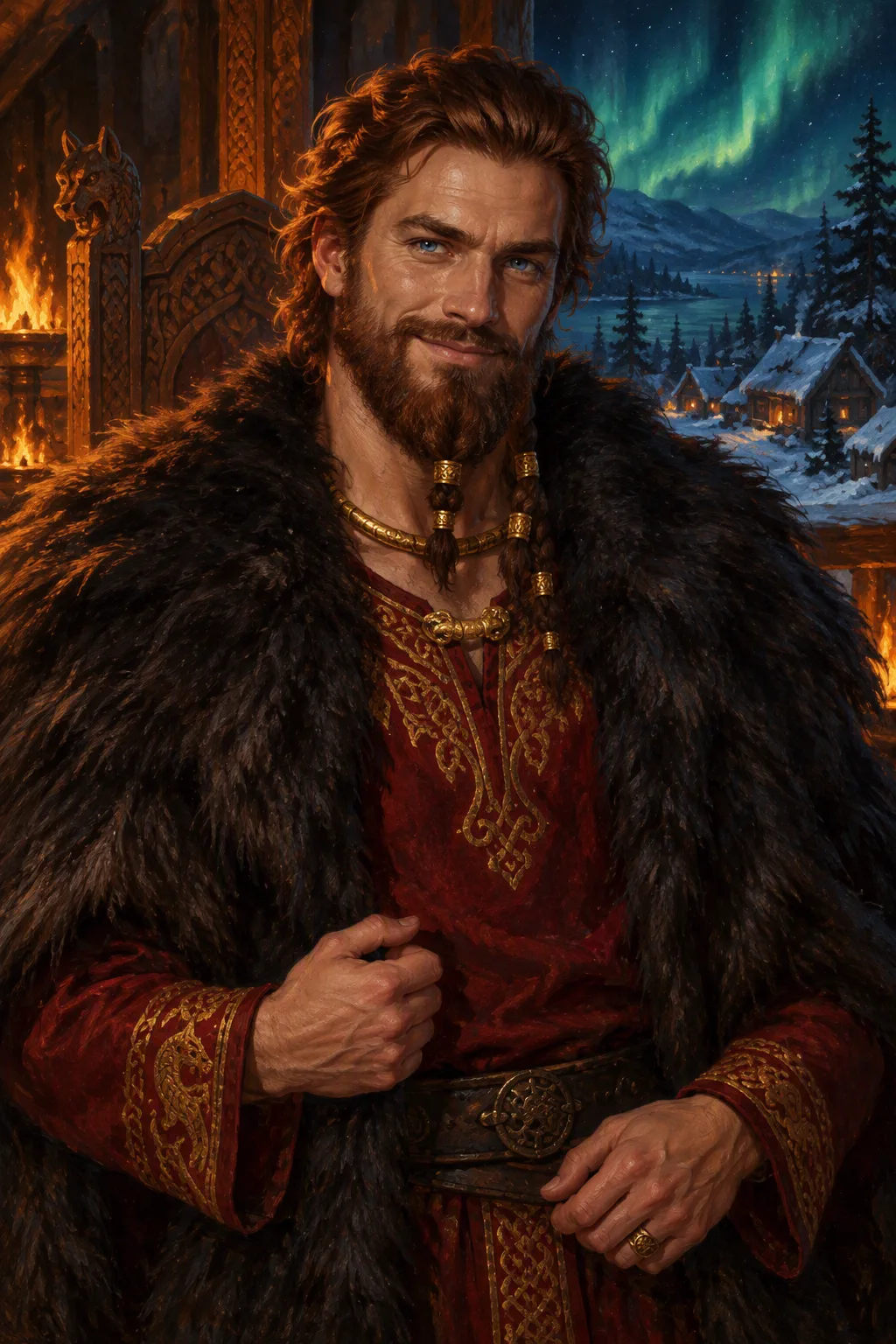
Her brother Hakon holds the hall as regent and tells her she is very late: Gunnar Bearhand, Lady Svala and Dag Coldsteel's riders are already out. You realise the other hunters were sent, and paid, for more than the stag. The opening ends on a choice: take the rope and swear yourself to the hunt, ask her one question first, or look at the scarred rider the hounds have already marked.
Nine nights to the Dark-Moot
The story runs on nine nights and nine camps. Each night is a day of travel, an encounter and a scene by the fire, and the Dark-Moot on the ninth night names a ruler. The Dawn-Ember, a coal of living daylight in the stag's antlers, is the prize, and the old law says whoever brings it home holds the high seat.
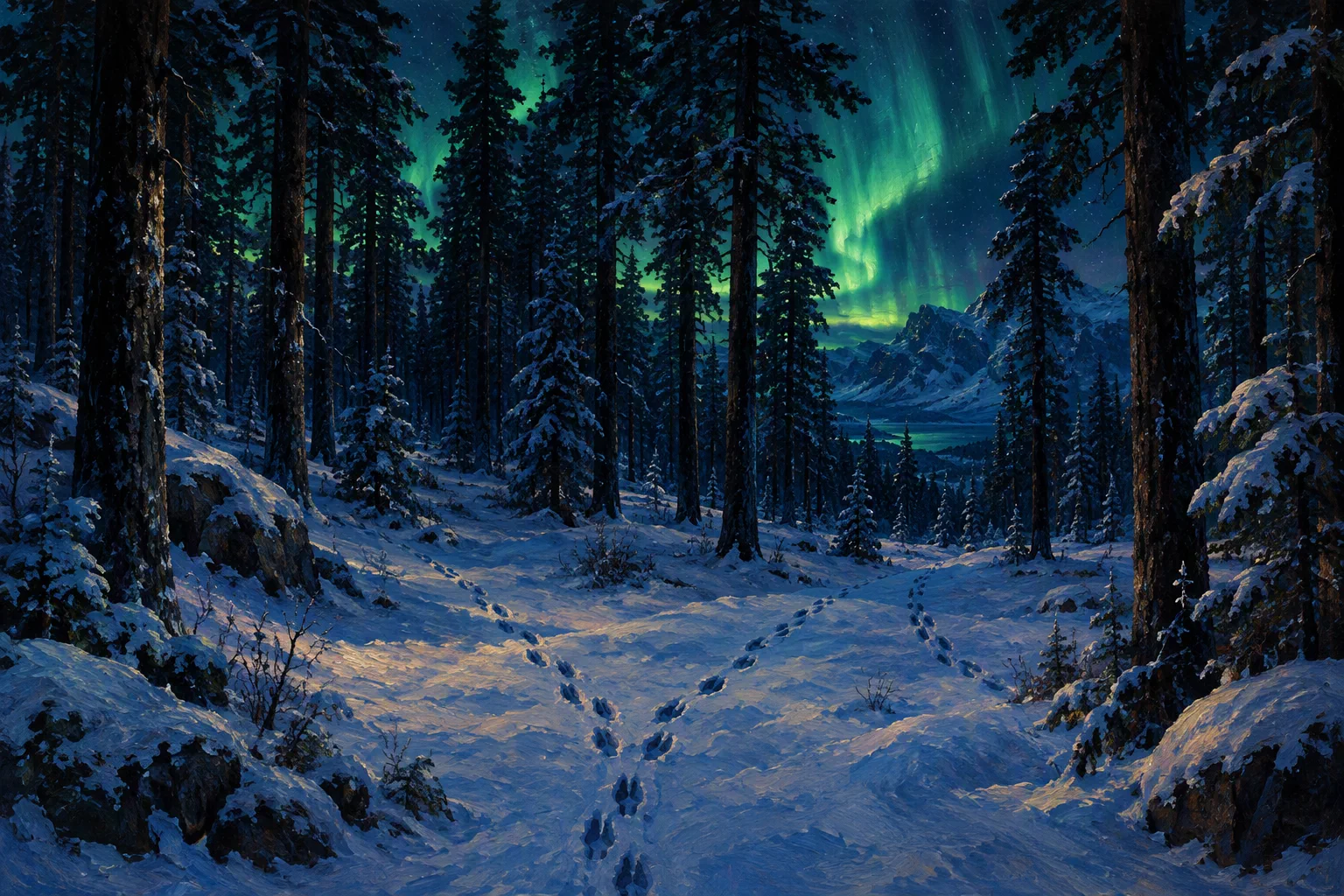
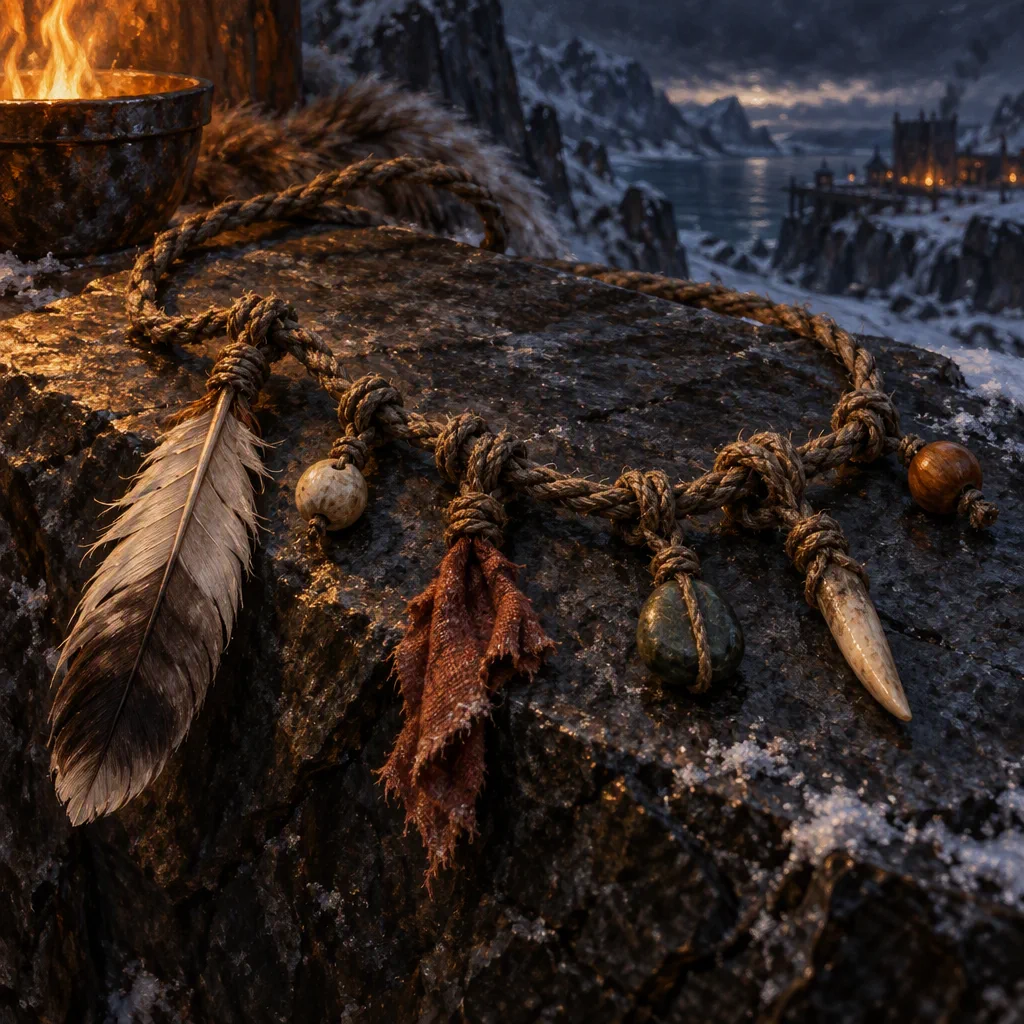
Your work comes in three kinds. You track, reading spoor, ice and wind and choosing between the Blackwood, the glacier shelf of the Skarn and the road past Tarn Post. You parley with rival hunting parties and win them with honor, coin, truth or safety. You dig into who killed the jarl, tying each clue to the Truth-Cord in front of a witness, because at the Moot a knot you cannot name is a lie you cannot prove. It is a mystery as much as an expedition.
Ingrid, the rope and the people you meet
The Hunt-Rope is the visible measure of trust. At the start it binds both wrists. Every deed that proves your worth loosens it, from wrist to belt to a coil you carry. Ingrid is dry, level and slow to trust, but she trusts evidence.
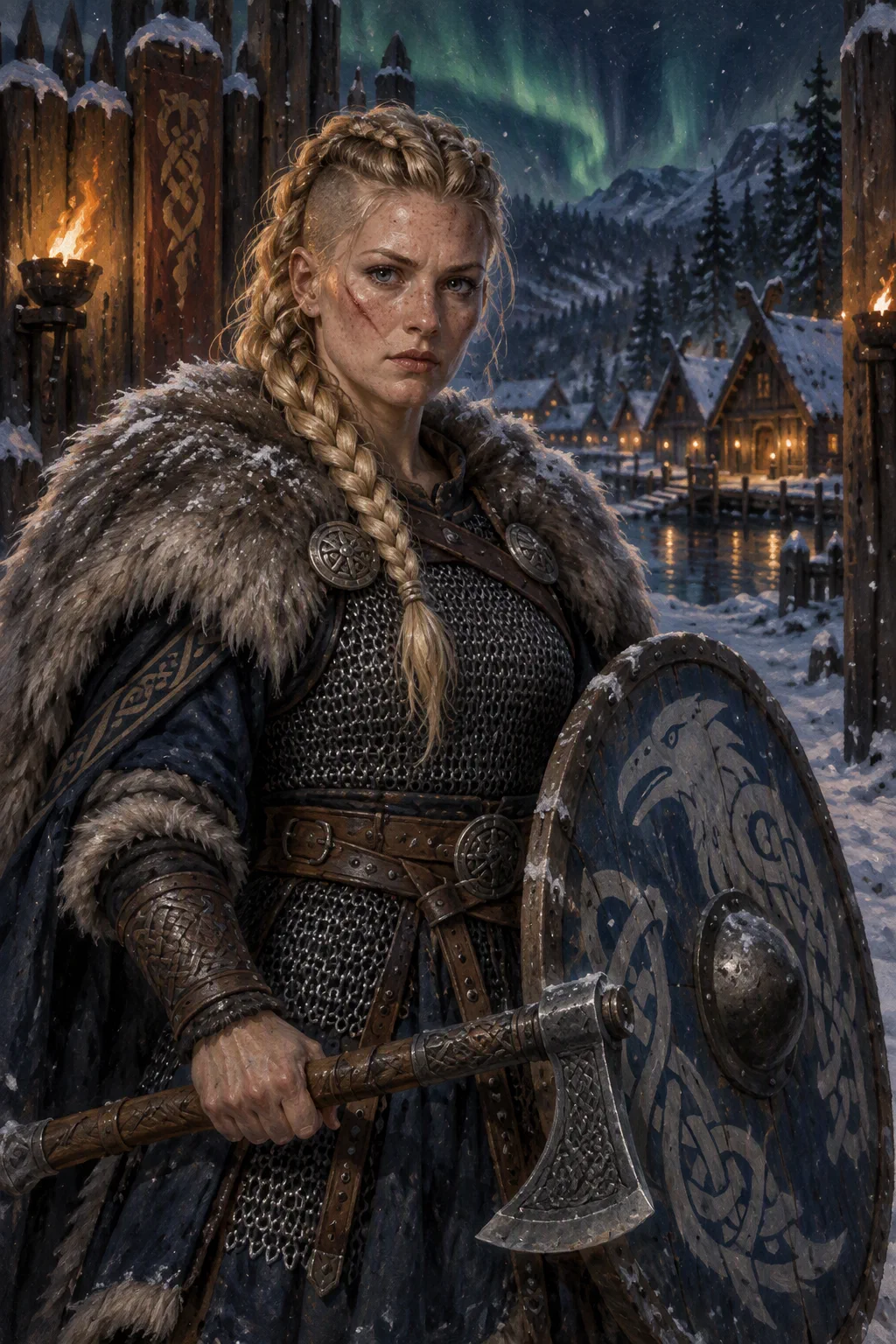
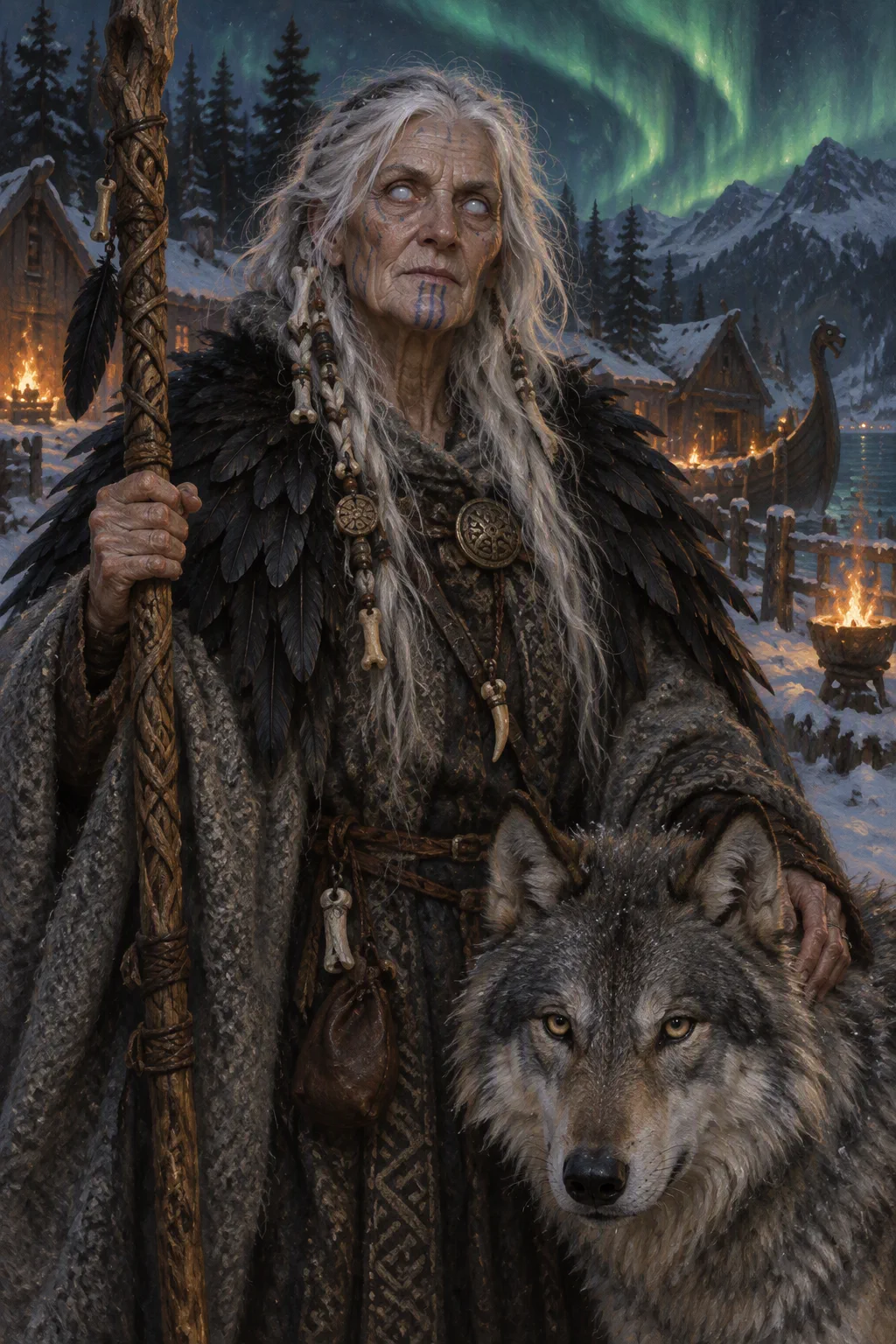
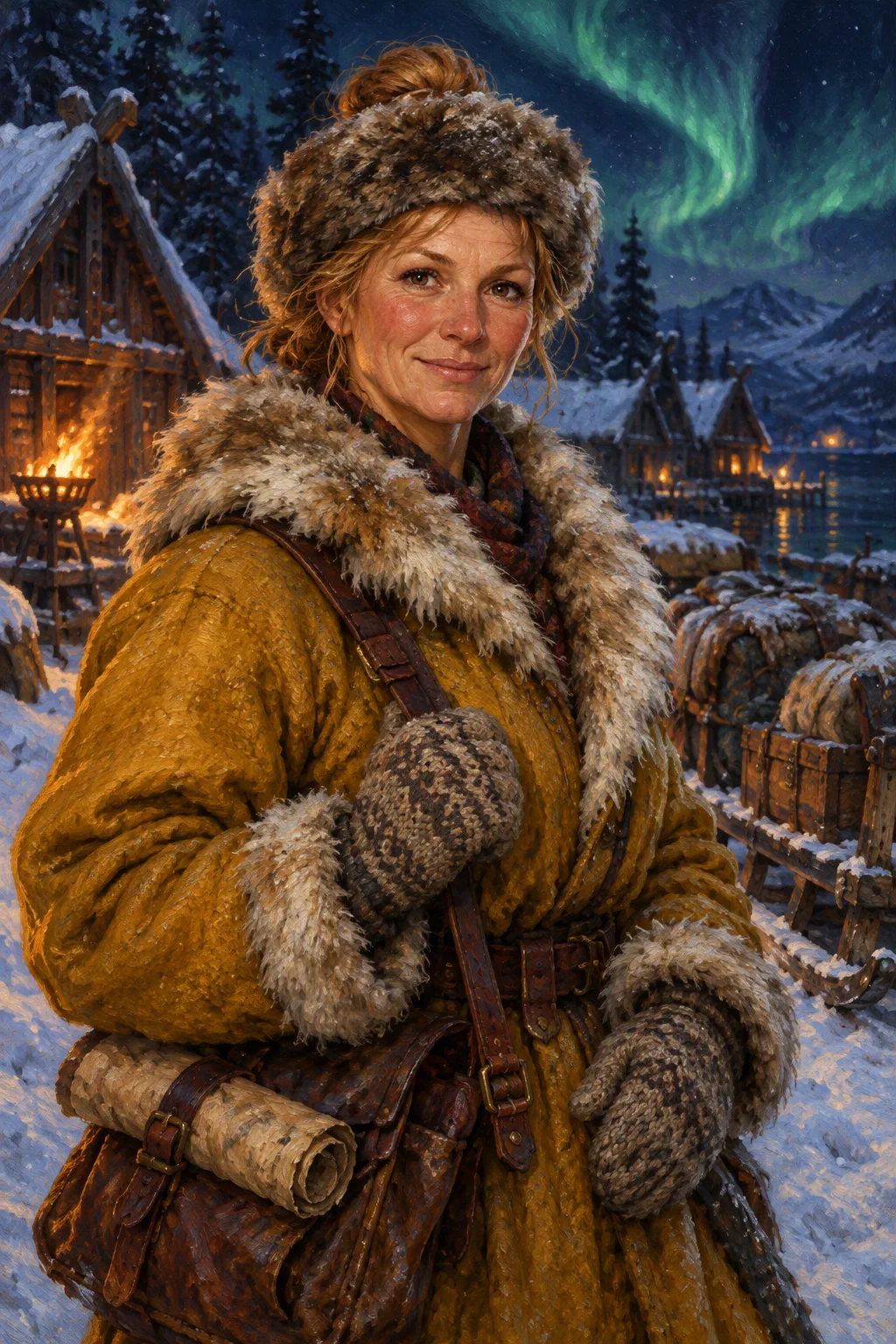
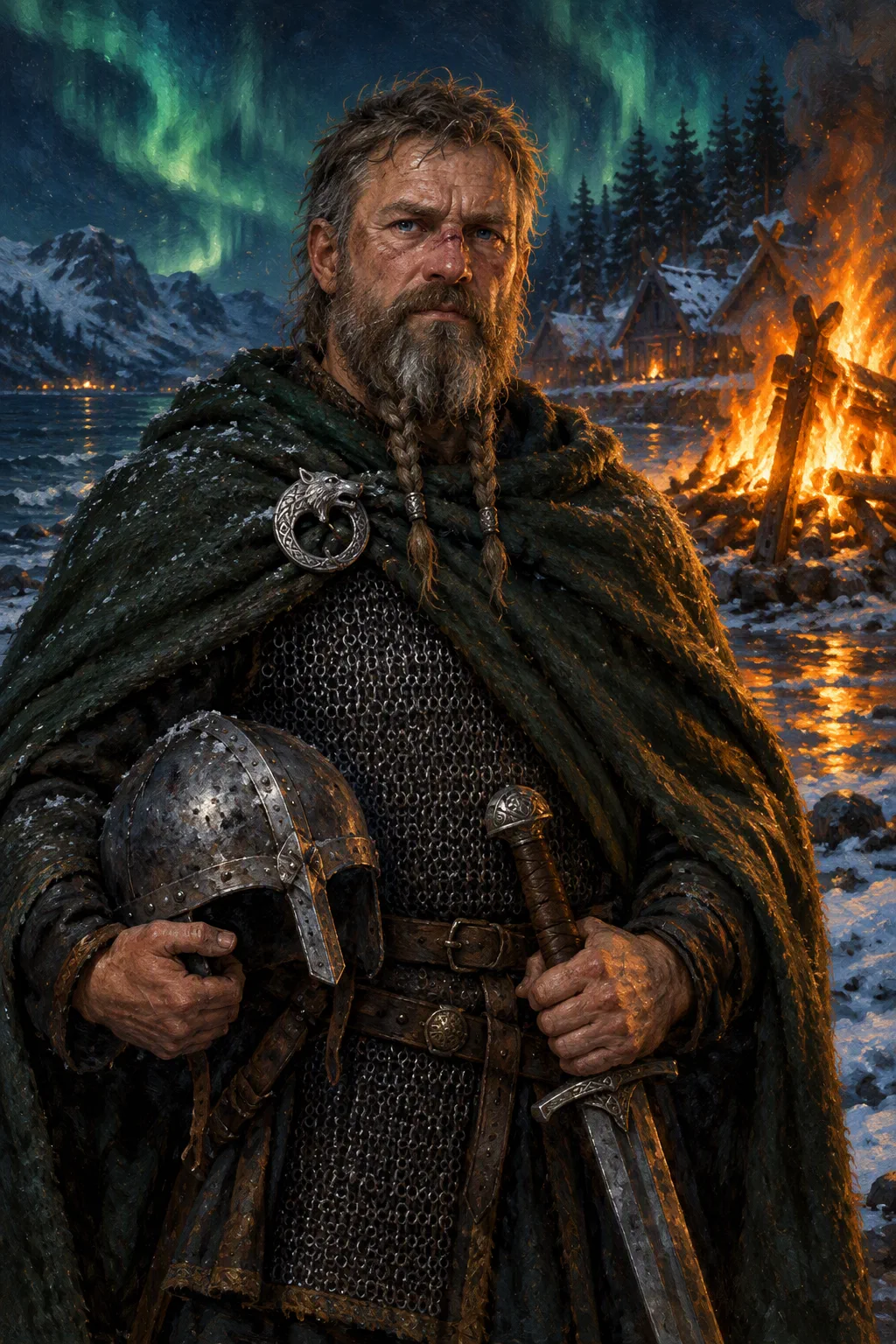
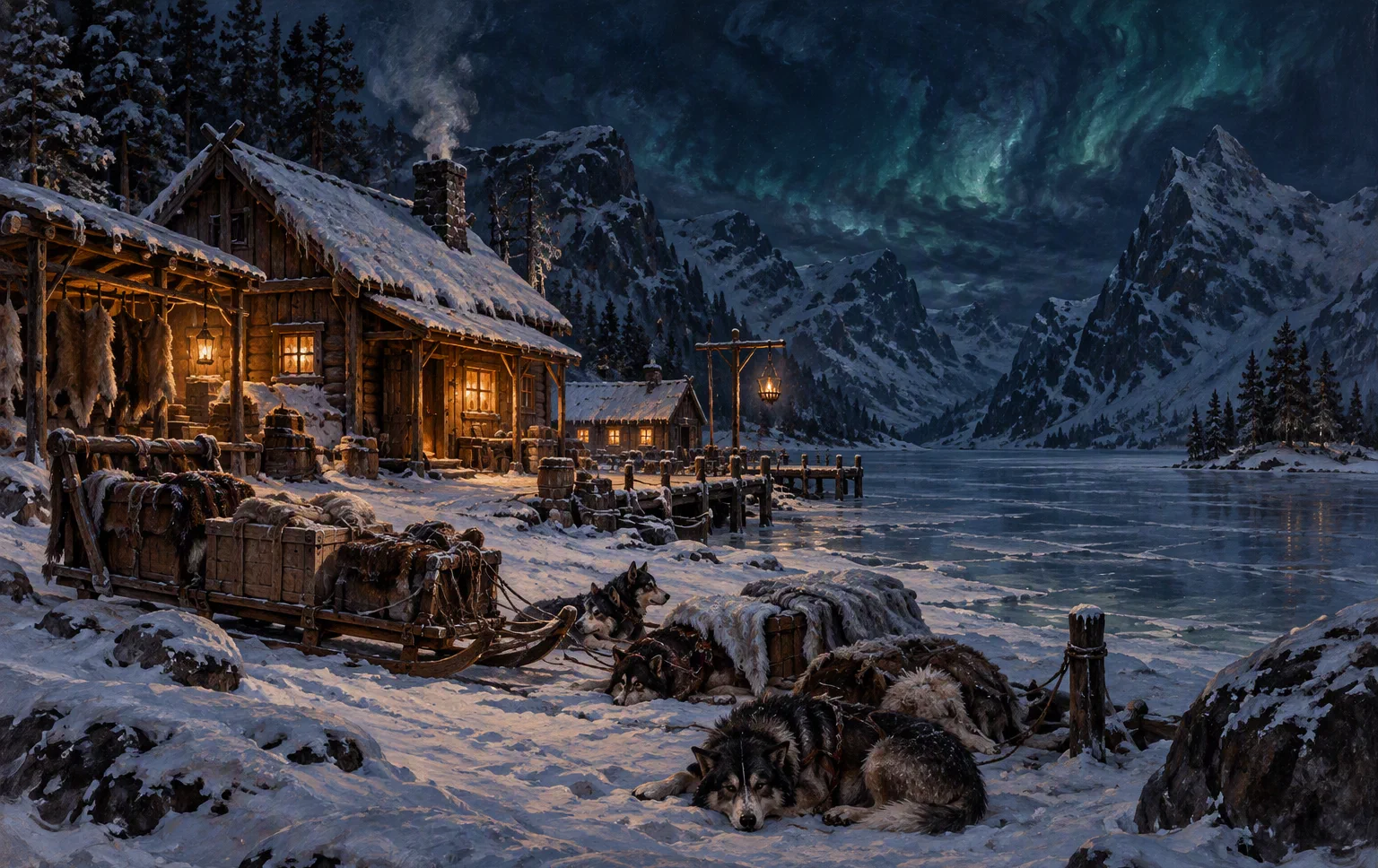
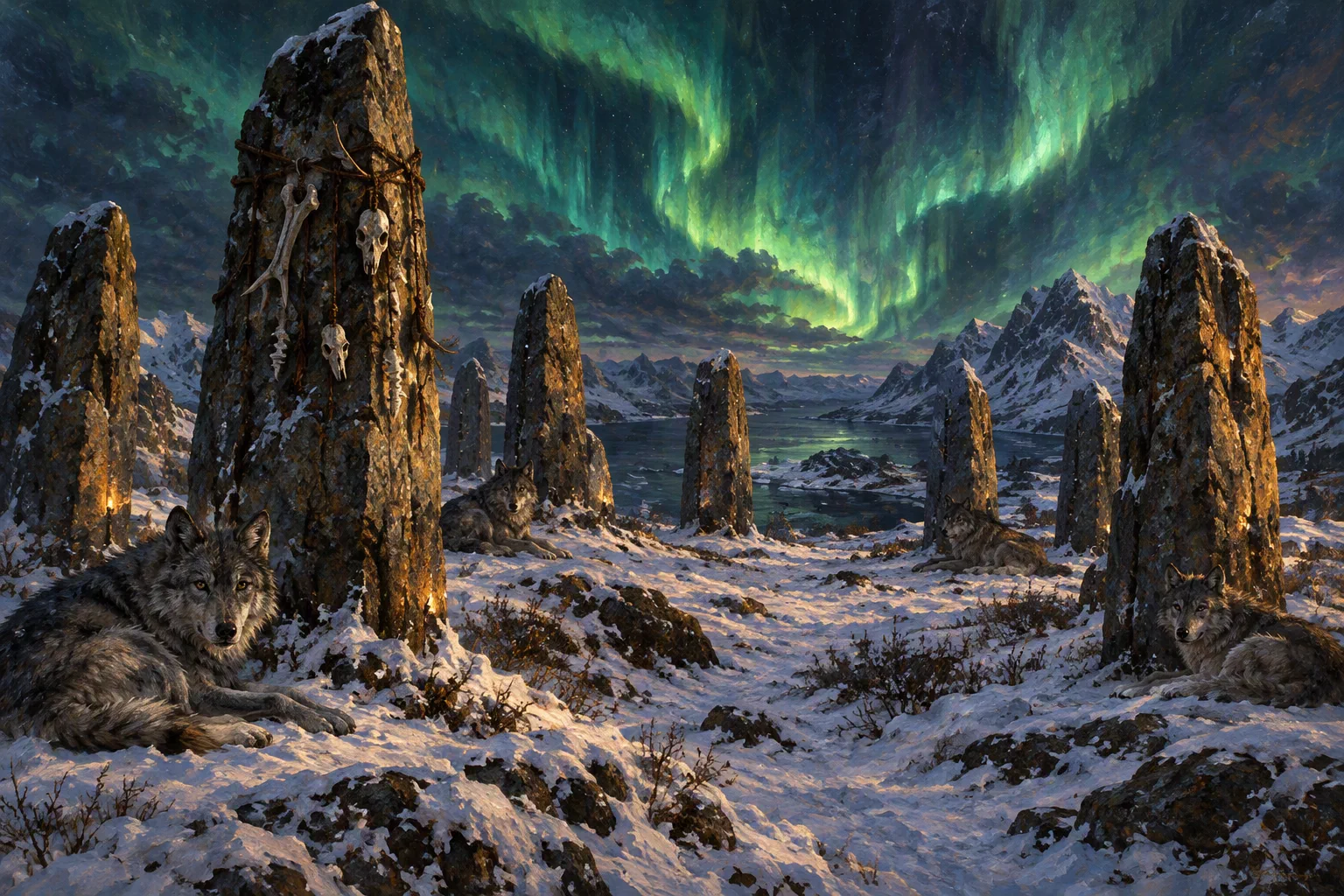
Along the way you can win allies. Sigrun is a blunt shieldmaiden loyal to the dead jarl's oath. Eirik is a hunter who took a purse he has regretted since. Old Bera is a seeress who walks with grey wolves and speaks in riddles she insists are plain. Thora runs the sledges at Tarn Post and counts every debt. Ulf is the jarl's old housecarl, and Halvard the Skald is a poet whose songs shape how the clans see you. A promise to one is visible to the others.
Say or do anything
You are never handed a menu. You type what a tracker, hunter or negotiator could plausibly do. You can take the Skarn shortcut or the safer road, fight a rival party, parley or deceive it, trust a suspect or test one, and decide whom to betray first when two allies' loyalties collide. The story remembers the debts you take on and the oaths you keep. At the Crown Glade there is a choice that cannot be unmade, and the story has multiple endings, from a sun that returns at a price to a road walked alone.
Tone and style
This is fantasy with a survival spine, set in a harsh wilderness of blue night, creaking pines and green aurora over a sky that should be pale gold. The tone is grave, wry and intimate, because people speak plainly when words freeze. Violence is real and costly, there is no sexual content, and every kingdom, clan and god is invented. Expect betrayal, too, and hard choices about whom to trust.
Questions before you play
Do I have to be good at mysteries or fantasy?
No. You write plain sentences and the story responds. There are no numbers or character sheets, and the story never assigns you a gender. Clues are solvable, and the Truth-Cord rewards careful tracking.
Can the story really go wrong?
Yes. Rival hunters can reach the stag first, and a cord that cannot be read at the Moot fails. Failing is a full ending, not a game-over screen.
How long is a run?
Nine nights of travel and camps, and a second run with different allies plays out differently.
If this is your kind of story
This is for fans of Norse-inspired sagas, survival expeditions and murder mysteries where the accused has to solve the case themselves. If you want another fantasy where a loyal friend stands at your back while a city turns on you, try Glass Storm. Otherwise, take the rope in the longhall and ride north.
