
Emberwatch
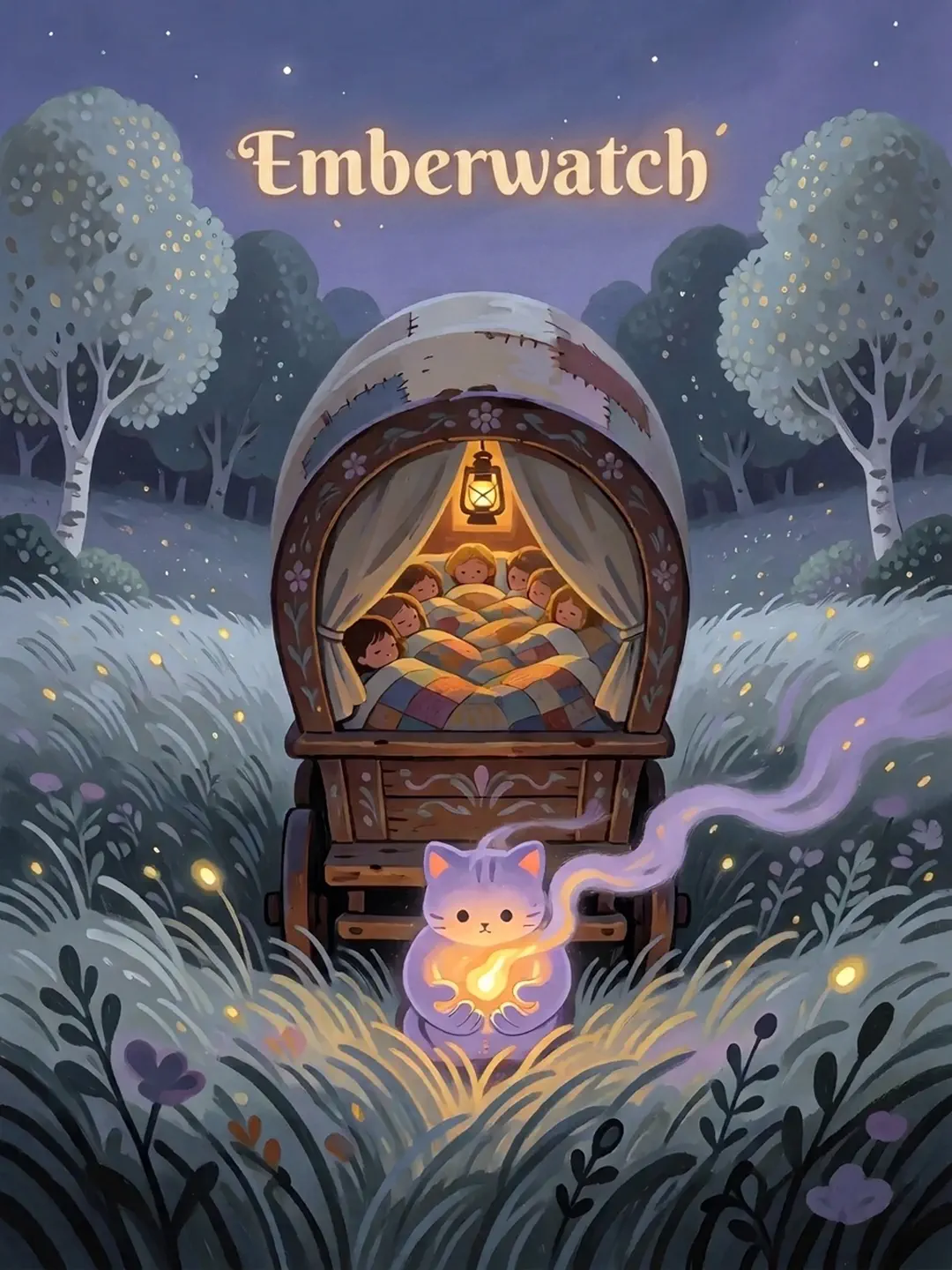
A tiny hearth-spirit guards a wagon of seven sleeping orphans across one long night in a whispering wilderness, where the dark presses close and the only shield against it is a flame the size of a thumbnail. Feed the fire, soothe the bad dreams, and trade what little warmth you have to carry everyone safely to morning.


By starting, you agree to our Terms of Service, Privacy Policy and Refund Policy.
Your entire body is one coal, and you never leave the bowl
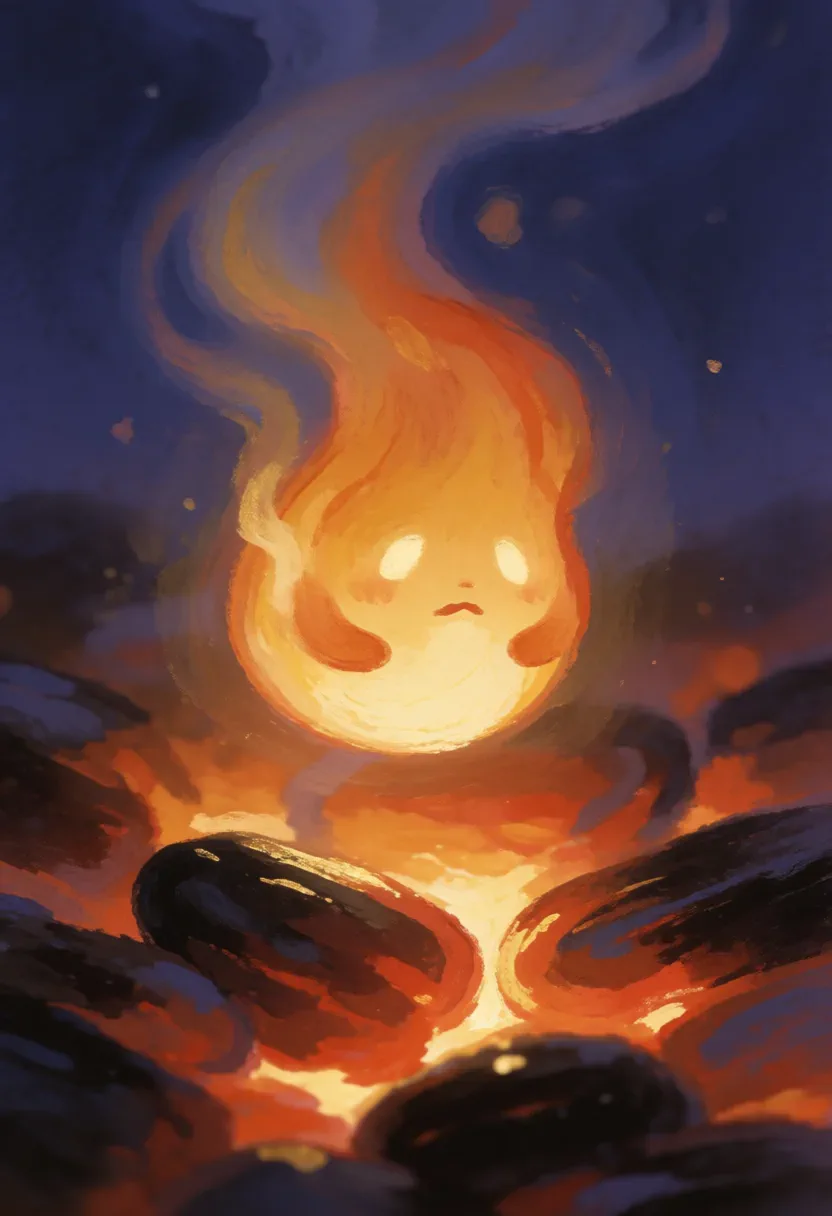
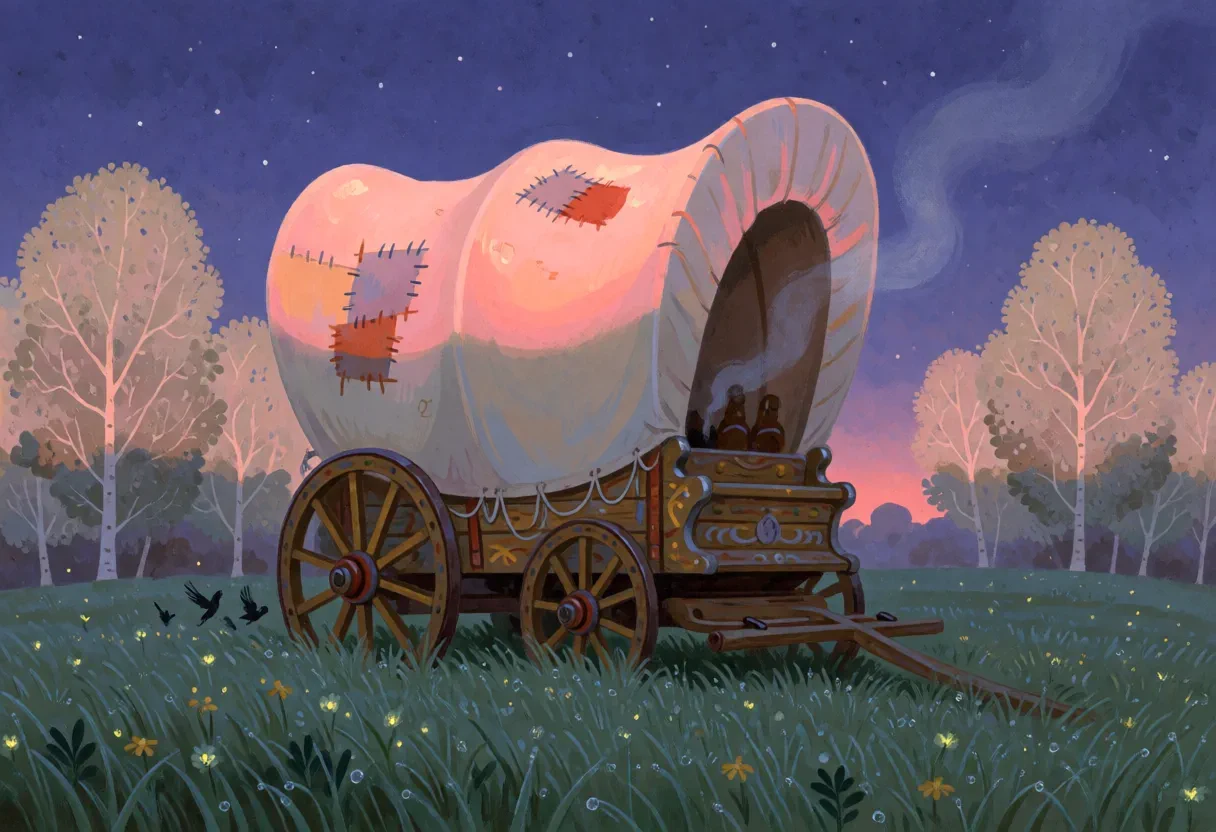
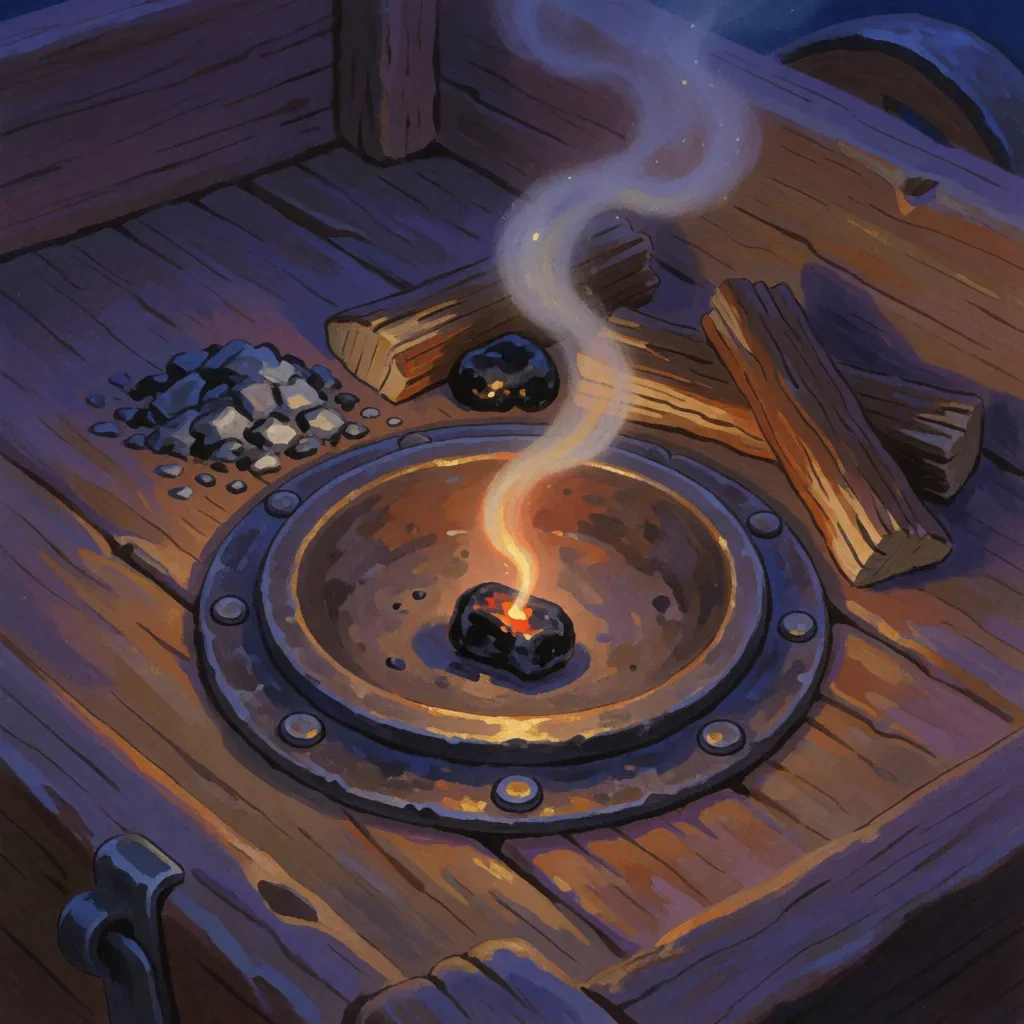
Most survival fiction answers danger by making you bigger: another level, another blade, another ally. Emberwatch takes all of that off the table in its first sentence. You are Cinder, a hearth-spirit the size of a single glowing ember with a wisp of smoke for a body, sitting in an iron fire-bowl bolted to the floor of a battered wooden wagon. You cannot walk to a problem. You cannot speak — your voice is rendered as crackle, leap, dim and glow, and it never resolves into words. You are not permitted to grow into a bonfire and solve the night with brute light.
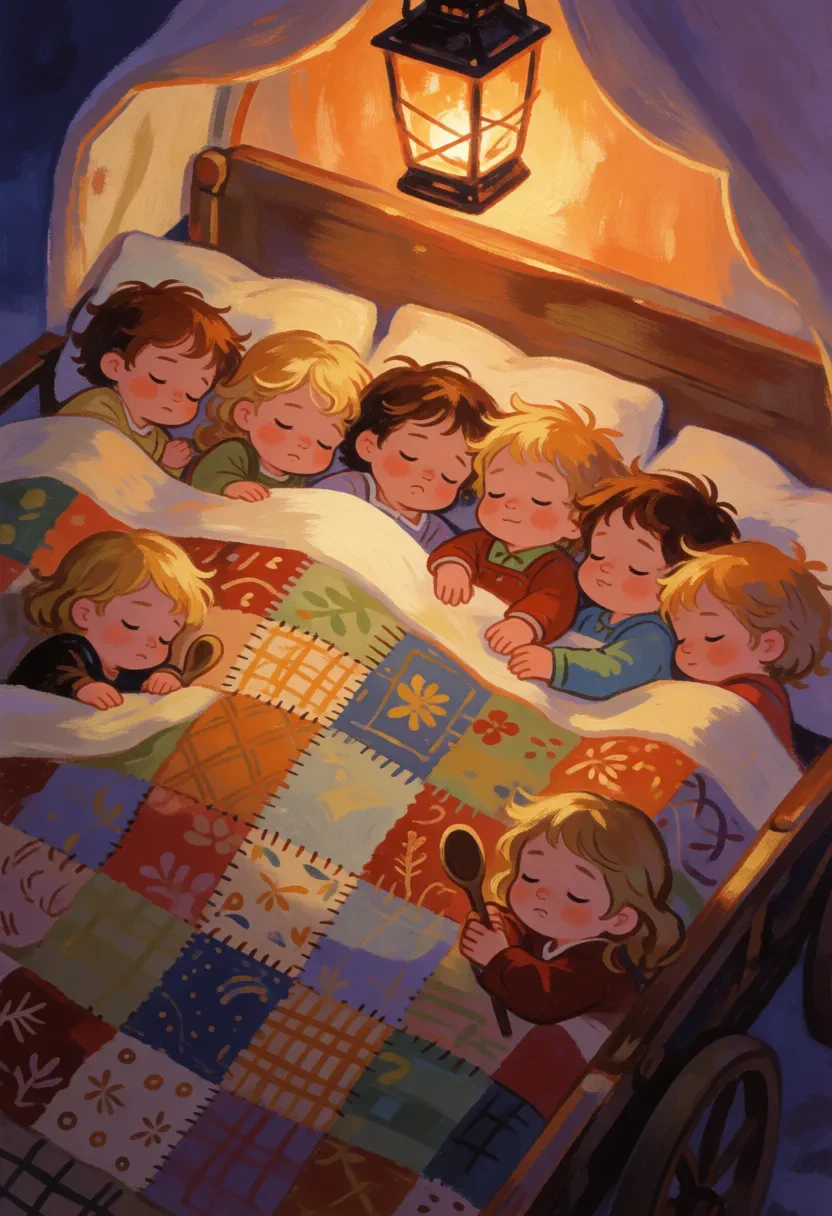
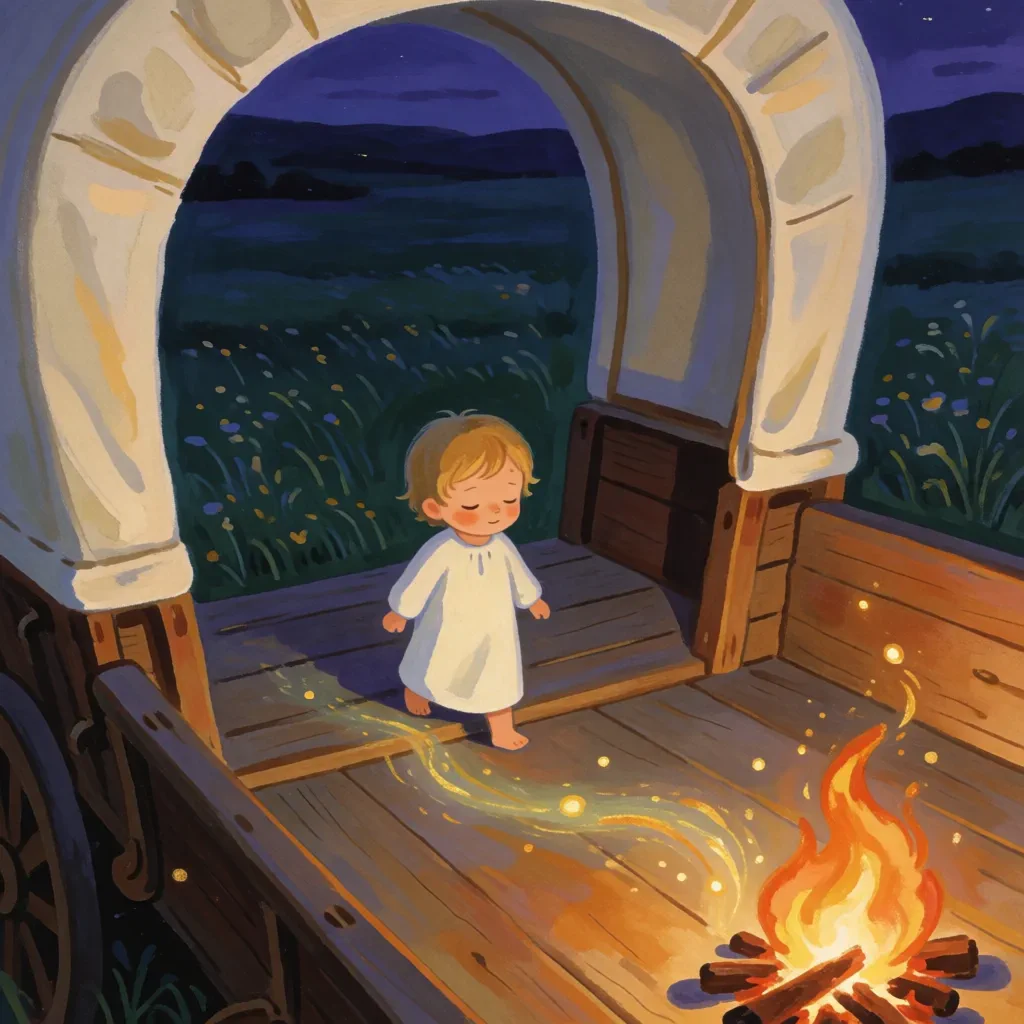
What you have is about a hundred embers of warmth, three sticks of wood, a heel of resin, and seven orphaned children bundled under shared blankets behind you, breathing slow.
One night, thirty turns, and a fire that dies while you sit still
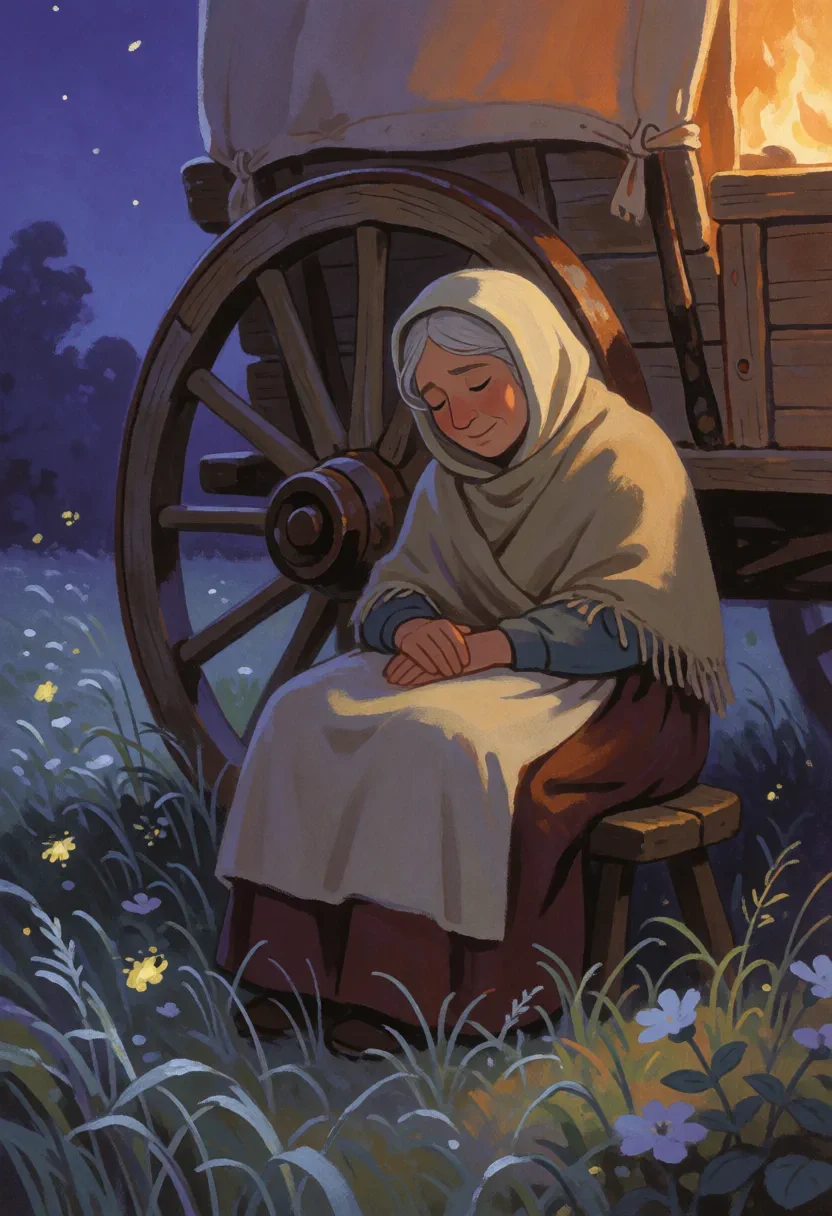
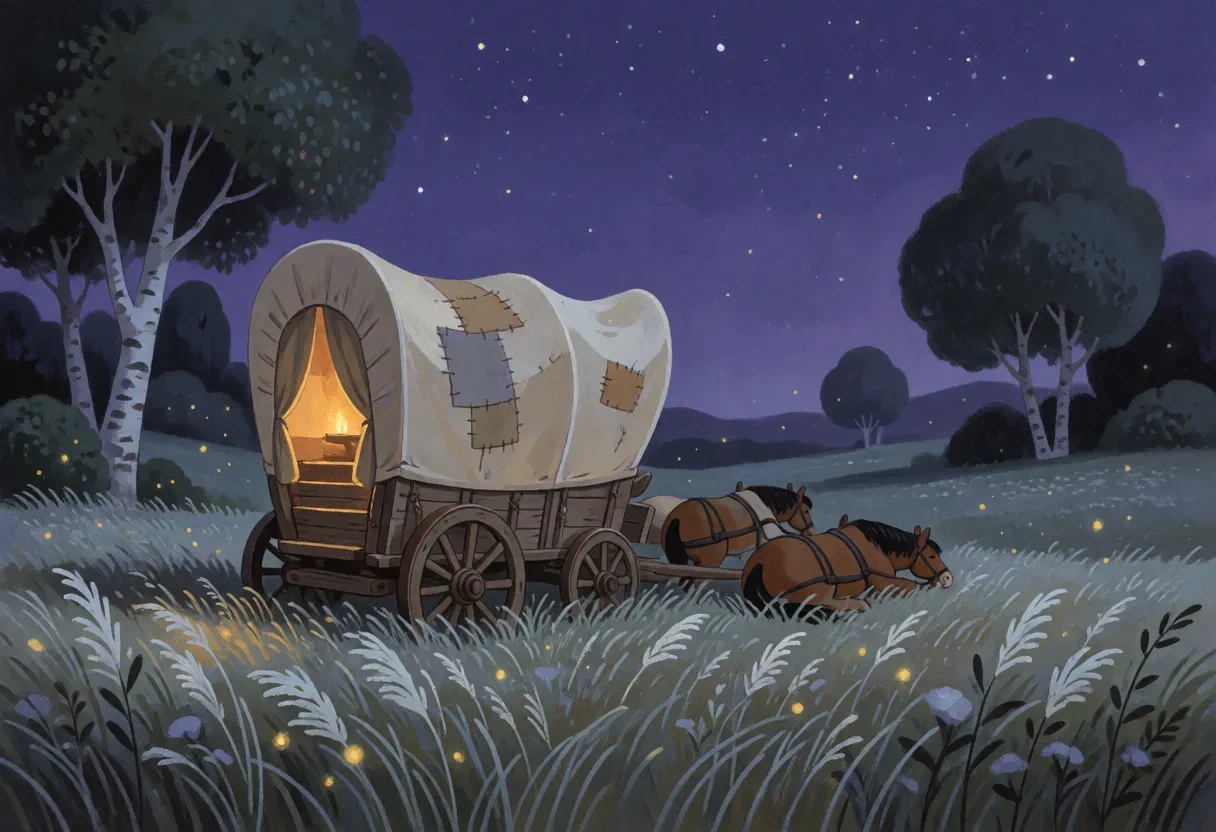
It is the dead middle of the Long Hush, the one night of the year when the dark over the Hushing Wilds grows thin and starts listening. The horses are unhitched and dozing. Mother Aubrey, the children's caretaker, has finally given out against the wagon wheel outside, which means the watch is yours. Dawn is roughly thirty turns away.
The arithmetic is unkind and completely legible. Holding lit costs two or three embers a turn — you bleed just by existing. Each stick of wood burns five or six turns and hands back twenty-five to thirty-five warmth, so three sticks do not cover thirty turns, and the difference is the game. The heel of resin is one quick flare worth a score of warmth, held back for when nothing else is left.
Everything you might want to do is priced against that same pool: soothing a nightmare or drying a soaked blanket runs three to six embers, throwing light far enough to read the dark five to eight, warding the wagon's seams a heavier eight to twelve.
The dark is not a monster, and that is what makes it difficult
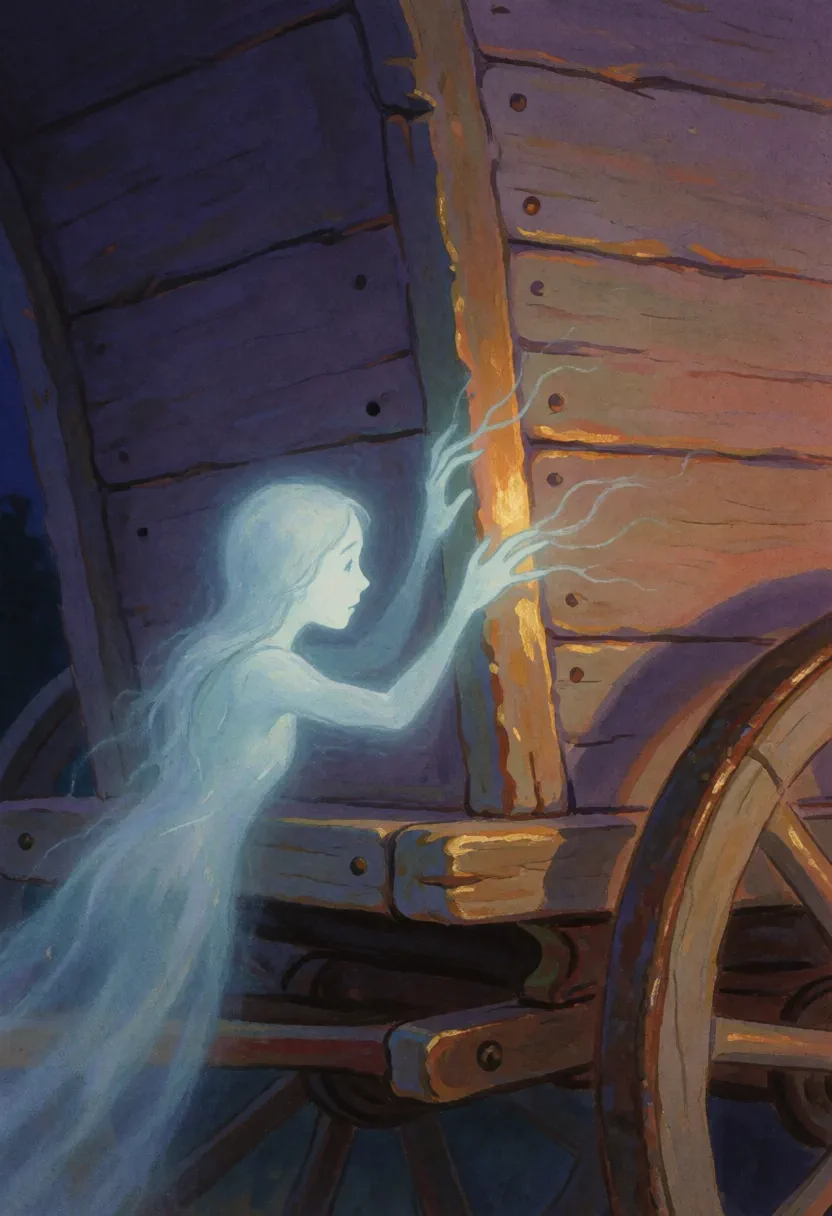
The Hushing Wilds run on one rule, and it has nothing to do with strength: what stays warm and unafraid through the Hush is left untouched, and what goes cold and frightened is followed home. The Old Hush is not a creature to be fought. It is a vast, patient, listening presence that leans close early in the night and asks, in a single hushed line of wind, whether you are afraid. You answer with brightness or with stillness, and the night takes its temperature from that answer.
There are no weapons in this story, no blood, nothing outside with teeth. Lantern moths gather at honest flame. A warmth-beggar — a guttering will-o-spirit who is lost rather than wicked — eventually presses cold against the wagon's seam and asks for help, and sharing with him costs fifteen to twenty-five warmth, an enormous fraction of everything you own.
Nothing out there is trying to hurt you. It is cold, or curious, or simply listening, and you are very small.
What actually changes when you play
Every turn is one decision about a fire that is always quietly dying. Feed a stick and you are brighter, warmer and safer — and seen much farther. Bank low and you are colder and slower-burning, but effectively invisible to whatever is out there listening. Or spend a pulse of warmth on one specific need, knowing warmth given away does not come back. The story never asks you to pick the right verb off a list, only where one small flame does the most good in the next few minutes.
Because you speak only in fire, what you type is intent rather than dialogue — dim, flare, hold steady, reach toward the child who just stirred — and the narrator reads that against a fixed canon instead of improvising a fresh world each turn, which is why warmth behaves like a currency here rather than a mood.
Pip, the smallest orphan, rises in his sleep and drifts toward the open tailgate, and you have to light a path that draws him back without waking the other six. An hour before dawn the Long Cold comes down, sickly Juno's shivering turns dangerous, and your last stick has to be spent exactly right.
What the story refuses to do matters as much. No child is harmed, taken or killed; that promise is structural and the world cannot break it. Your fire can gutter to almost nothing but cannot go out while the night runs, and dawn always arrives. The variable is not survival — it is how warm everyone is when the sun comes.
Seven sleepers, and the one adult who is finally asleep
You learn the children entirely through how they sleep. Greta hoards a wooden spoon and mutters about it half-awake — "...don't take the spoon... s'mine..." The twins Noor and Nell have to be touching or they will not settle. Bram, who is mute, hums when he is warm enough.
Juno shivers and is already ill. Tove sleeps with one eye cracked, watching. And Pip, six years old, talks in his dreams, and his nightmares pull at the dark outside the boards — keeping him under is the quiet spine of the whole night.
Mother Aubrey is driving these seven to a safe town and is worn to nothing by grief and the road. She talks in tired, plainspoken country kindness, and she believes in you considerably more than you believe in yourself. You can wake her when a crisis outruns you. It costs her the rest she badly needs.
Before you start
Is this a survival game or a bedtime story?
Both, and it does not dilute either half. The resource math is real and stated in numbers: warmth, fuel, thirty turns, a price on every action. The fiction wrapped around that math is amber light and blue dark, woodsmoke and wet pine, wool blankets and children murmuring in run-on fragments. Tension comes from candle arithmetic and tenderness, never from threat.
Can I get it wrong?
Yes, in the only way this world allows. You cannot lose a child and the fire cannot go out while the night runs, but you can absolutely spend your warmth badly — miss a need, or let yourself graze the floor during the Long Cold — and reach a colder, more frightened morning. How much you give away, and to whom, is the other half of that question. The night has more than one shape it can settle into by sunrise.
How long is a night, and can I leave in the middle of it?
About thirty turns, and yes — sessions are resumable, so the wagon waits where you left it. This is a medium-length story with one unbroken shape: one night, one fire, one dawn. Nothing is being held back for a chapter two.
If this is your kind of story
This sits on the protection shelf rather than the adventure one — the entire game is standing between something small and the dark — and the iyashikei tag is earned rather than decorative: it is genuinely restful to play even while you count embers. If that is the register you want, there are more fantasy stories nearby, including the underestimated-runt warmth of The Dragon Rider Academy: Bond of the Runt and the small-stakes stubbornness of The Goosekeeper's Concession Stand.
But start in the bowl. Seven children breathing slow under shared blankets, a listening dark on the other side of two inches of wood, and a flame the size of a thumbnail working out how to spend itself before morning.
