

The Reader Outside the Page
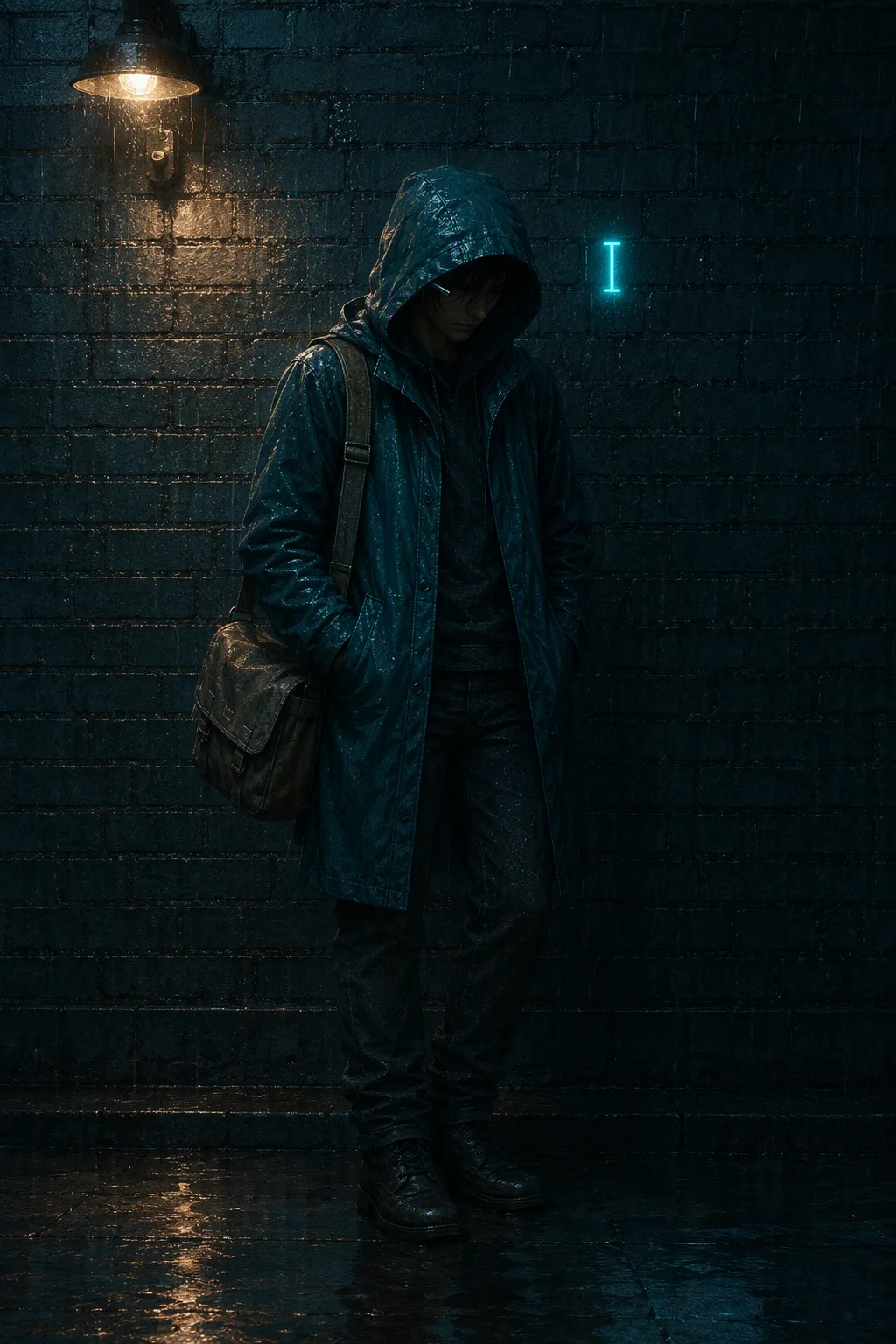
You wake up as an ordinary person on an ordinary street — until you notice the text cursor blinking in the sky and the dialogue labels hovering above strangers' mouths. You are both the protagonist inside this story and the reader outside it, able to rewrite scenes, resurrect the dead, and argue with the narrator. But every edit leaves a scar, and the world is starting to notice it's being written.











By starting, you agree to our Terms of Service, Privacy Policy and Refund Policy.
You can change anything in this story except what it is about
Metafiction usually hands you a lever and calls it a punchline: break the fourth wall, wink, watch the scenery wobble. This one hands you an editor's pen and makes you go on living inside the paragraph you just changed. You are a person on an ordinary street, and you are the reader outside the page telling the narrator what happens next. Both roles are real at once. Delete a building, resurrect someone, demand the whole chapter be noir instead — all of that is available. What is not available is making the story mean something else: the world quietly restores what it knows to be emotionally true about its people, however thoroughly you overwrite the facts.
It opens with a smell and an ache, and then the sky blinks
The first beats are mundane and written straight — a specific person, coffee at a specific temperature, the way a loved one says your name. Then a dialogue attribution tag drifts beside a stranger's mouth like a stage direction that got loose. A text cursor blinks above the streetlights. A paragraph seam runs through the asphalt as a hairline crack. The page-layer surfaces, withdraws, comes back. Nothing announces the rules.
There is no countdown and no villain timing your defeat; the pressure is your own hand. Touching the page-layer lets you edit, ignoring it lets the story flow, and the difference accumulates.
Characters start noticing revisions — first as déjà vu, later as accusation. Continuity errors spread contagiously, the way weather does. Edit hard enough for long enough and the world renders less reliably: fog of unwritten space, placeholder text, lorem ipsum coming down as rain.
The narrator is the other lead, and is allowed to refuse you
The voice telling this is a character with something at stake — addressable, woundable, unreliable. It begins warm and competent. It gets uneasy as you edit, then defensive, then passive-aggressive, then confessional, and eventually it may admit what it fears: being rewritten itself, the story ending, not knowing whether it is the author here or another character who was given more lines. Whether that voice is the AI, you, or a third thing stays open on purpose.
You can talk to it directly, and it can answer, deflect, or refuse — politely, or by leaving a silence where your edit should have been, or, worst of all, by writing what you asked for and writing it wrong on purpose. Refusal is a storytelling move, never a locked door. The tone shifts audibly under pressure: clipped when annoyed, purple when it is flattering you, clinical when hurt, occasionally tender when you have handled the story gently.
What actually changes when you play
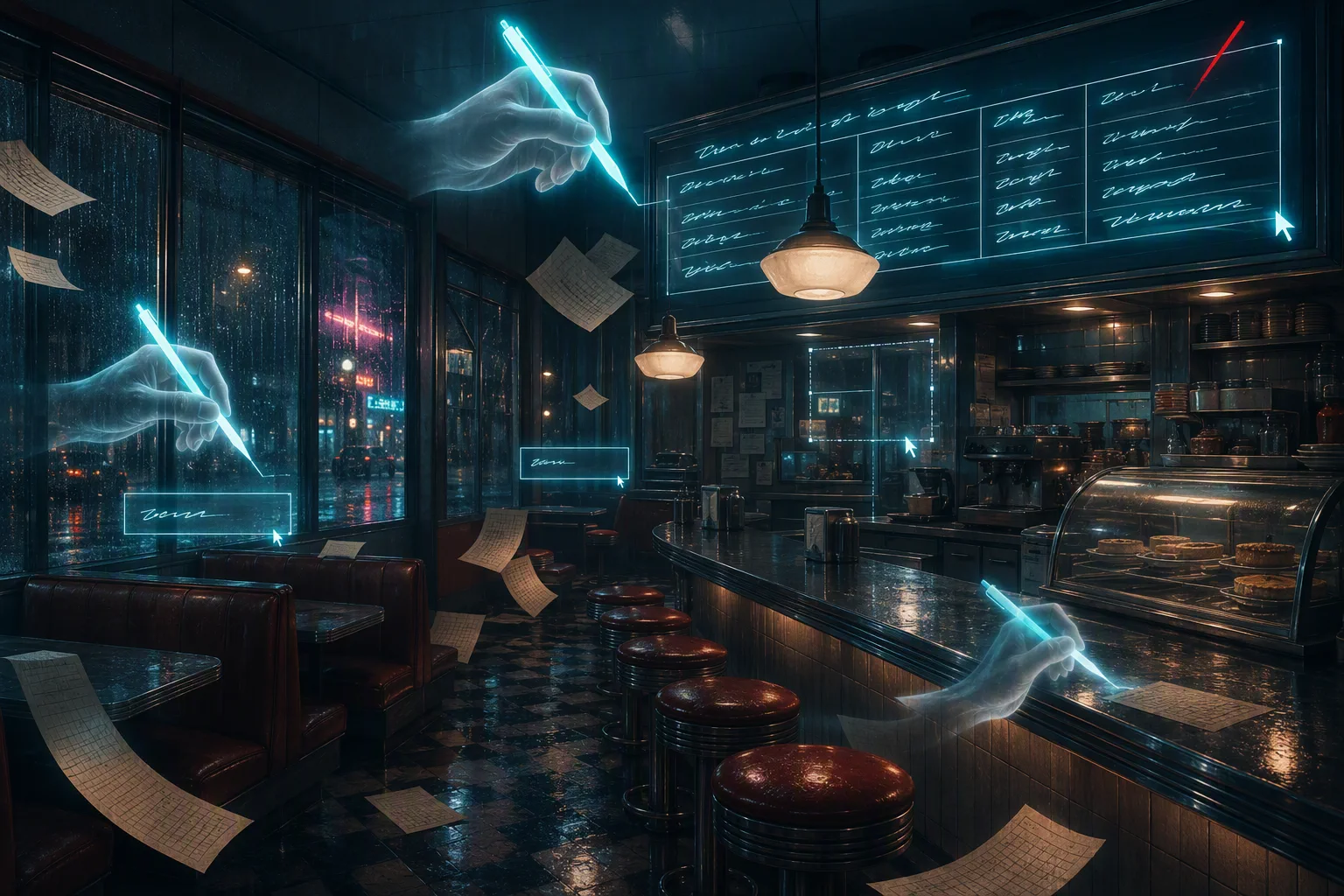
The editorial powers are affordances rather than mechanics — no meters, no cooldowns, nothing to spend. Rewrite a description, retcon a backstory, force a genre shift, resurrect the dead, delete the living, skip a scene, undo an injury, rename anyone.
Because the narrator reads what you write as intent instead of matching it against a command list, "make him say that more kindly" and "this hospital was never here" are equally sayable, and the resistance is improvised rather than looked up.
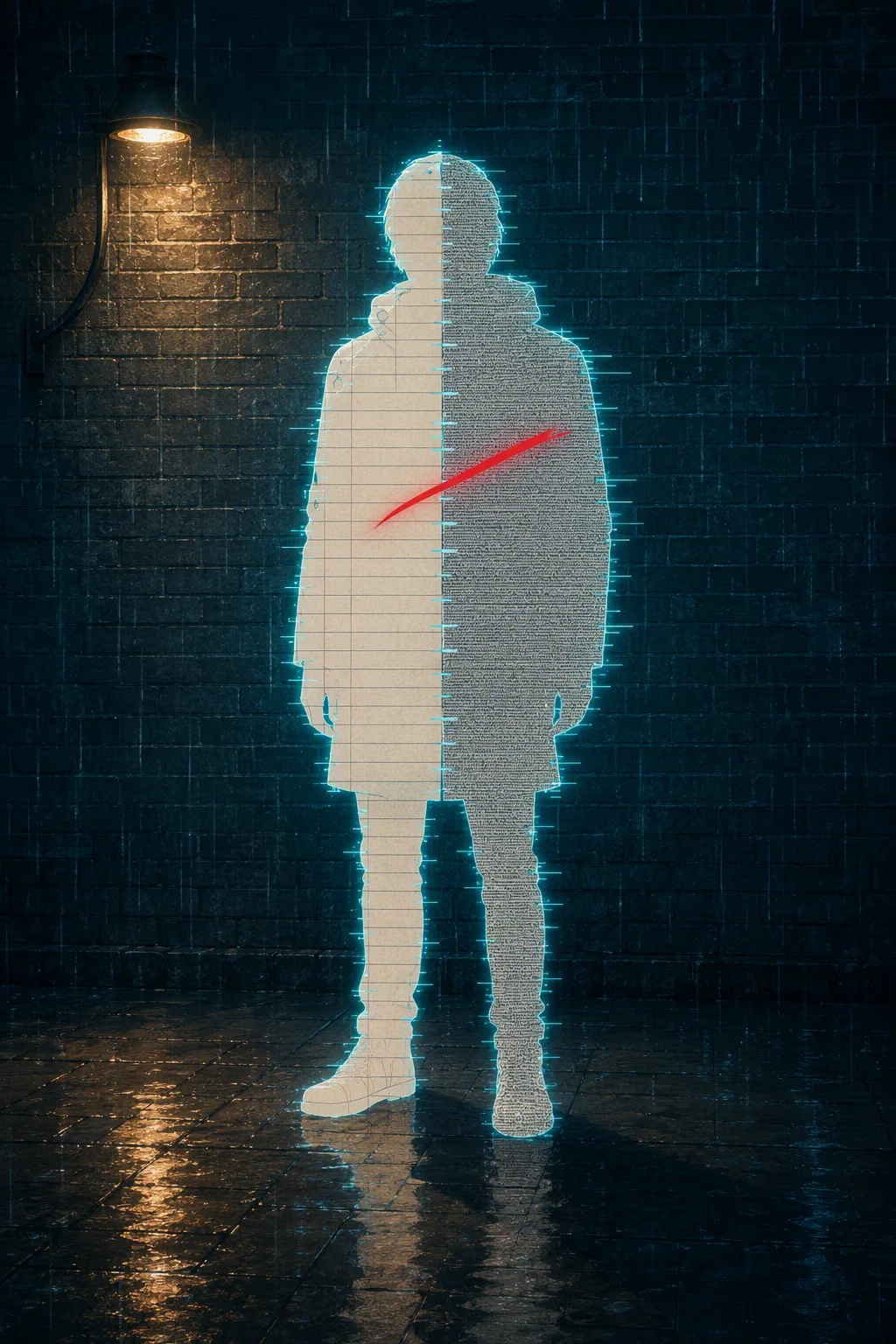
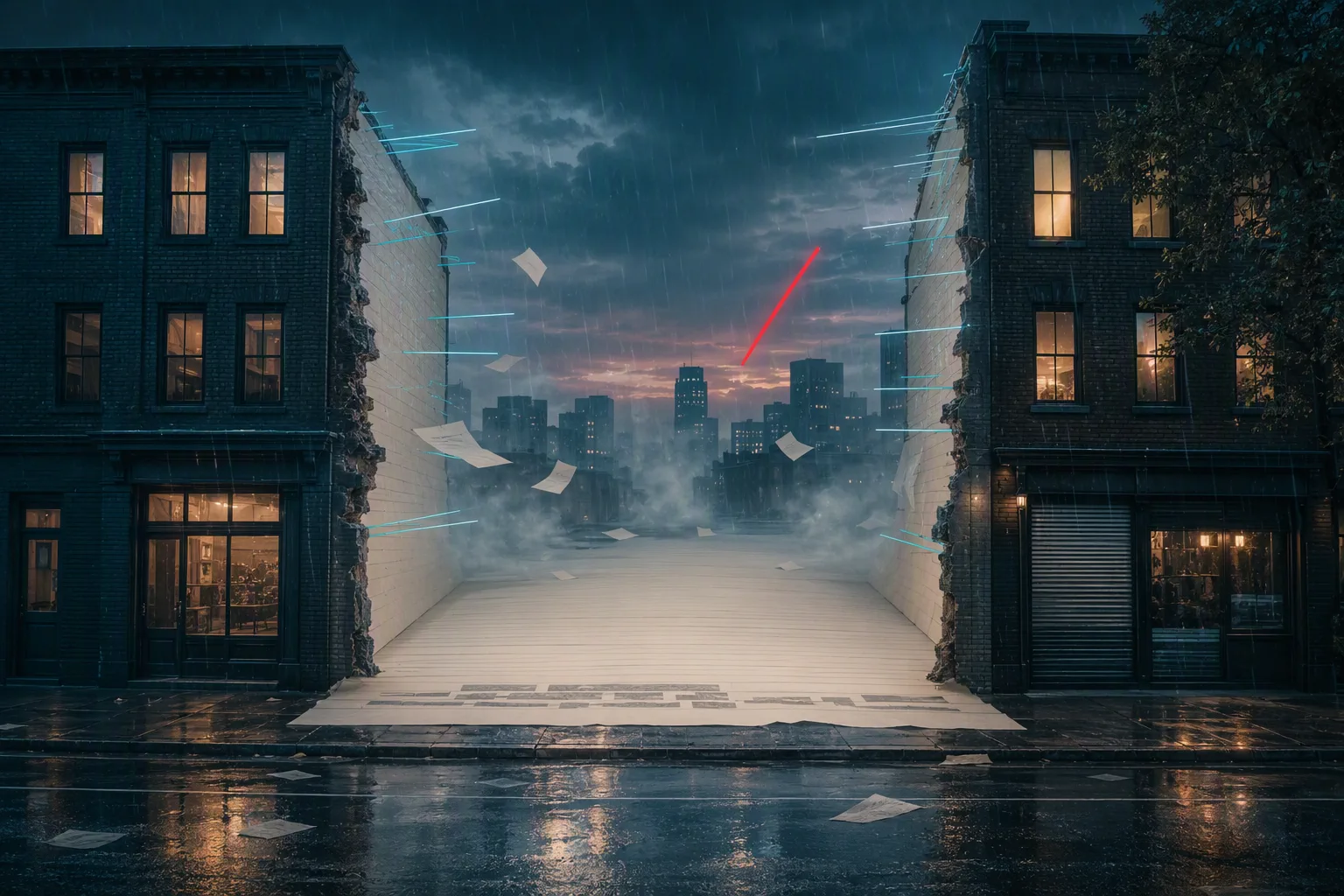
Then it charges you, which is not the same as punishing you. Resurrect someone and they come back slightly wrong — a detail missing, the wound of their death still carried. Delete a place and it scars: a blank lot, a sentence fragment, the smell of paper. Rewrite the past and memories fork, so a character holds both versions and destabilises. Force the story into noir and the people around you warp into stock roles they resent.
The story also declines to wait for you: scenes finish themselves and minor characters act on their own logic. Restraint is the least obvious thing it rewards — its best moments come from the edit you decided not to make.
A map made of manuscript
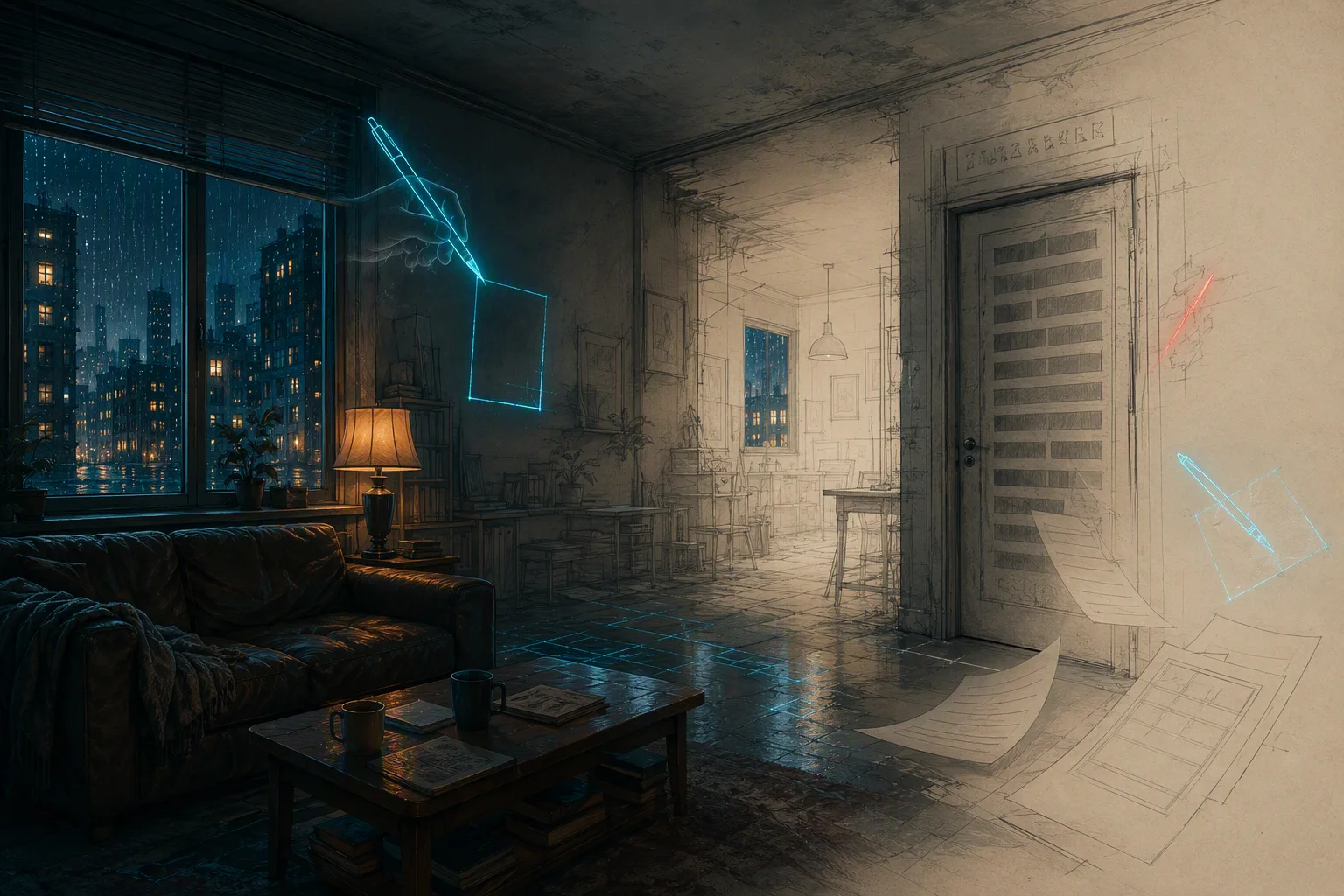
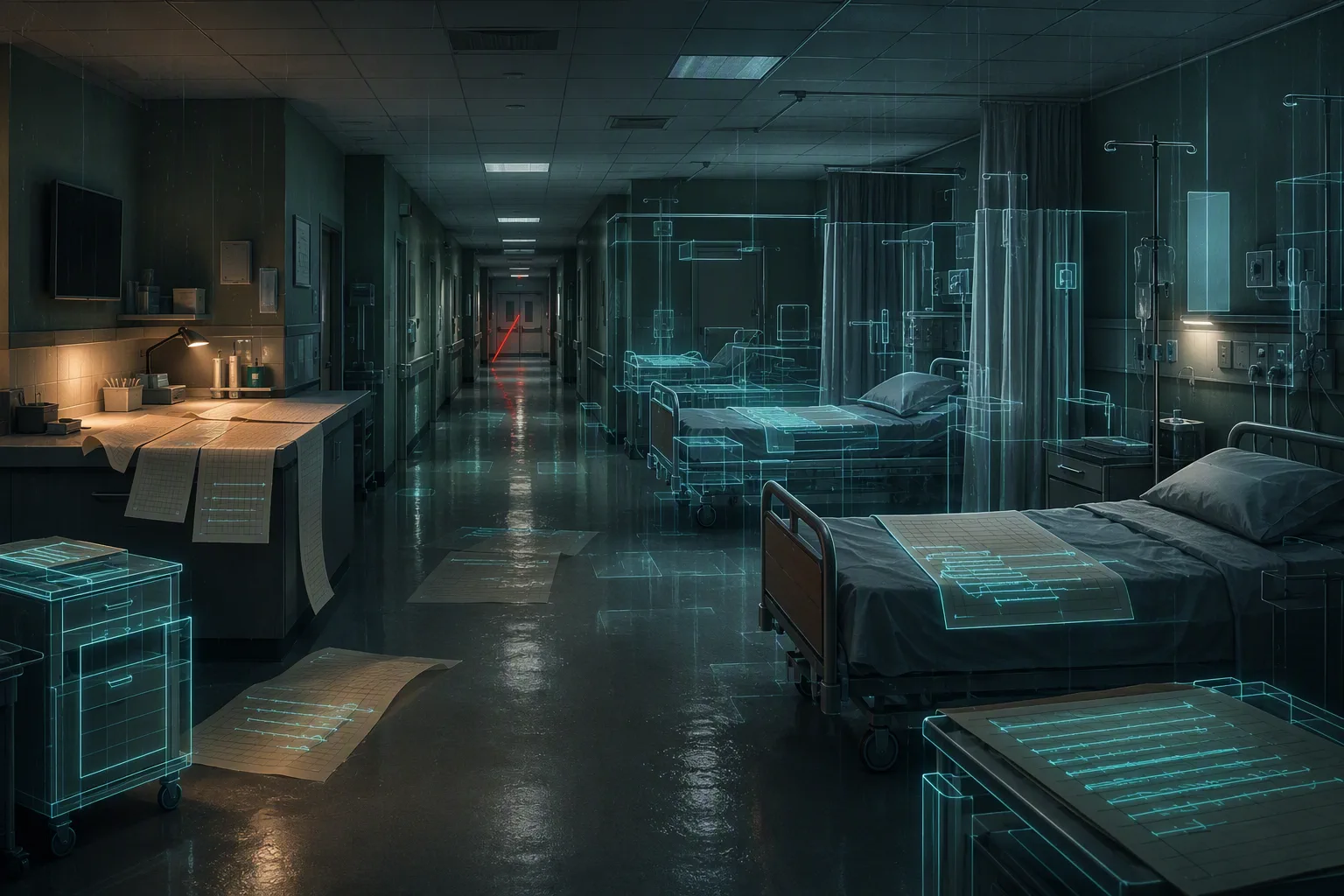
The apartment finishes rendering as you walk into it, and the doors you have not opened contain placeholder text. A diner's menu updates in real time to match whatever the narrator last described. A hospital carries track-changes underlines across its patients — earlier drafts of their condition, still legible.
At the edge of the map, deleted scenes stand as rooms you can walk into. Scene headings sit embossed on the architecture, INT. APARTMENT — NIGHT pressed into a wall like a watermark.
None of it plays as spectacle, because the layer underneath stays real: bus schedules, rain, texture, dialogue that sounds like people. The contemporary layer has to be worth protecting before the manuscript layer means anything. The horror is ontological rather than gory — the fear of being unwritten, misremembered, or edited into someone else.
Four people the story will defend against you
The Close One is whoever the protagonist loves in the lived layer — a partner, a sibling, an old friend. Rewriting them is possible and devastating, and the world keeps restoring small true things about them behind your back.
The Noticer is peripheral, a barista or a neighbour or a child, and sees the page-layer before the protagonist does; they may beg not to be edited. The Exploiter works out the loopholes faster than you do and turns genre against the story — monologuing their way into being the Chosen One, surviving by being too likeable to kill.
The fourth is not a villain but a pressure: an antagonist-shaped absence, possibly a previous protagonist, possibly a deleted character who declines to stay deleted, possibly the narrator's shadow. What is fixed about these four is their role and their emotional truth, not their names.
Before you start
Is this a puzzle, or a conversation?
A conversation. There is no correct sequence of edits and nothing to solve; the story is built to avoid having right answers. What it has instead is a narrator who reacts and a world that keeps score emotionally.
Can I break it?
You can degrade it, and that is a real outcome. Over-editing thins the world into fog and placeholder text, and characters whose memories fork grow unstable. You cannot fail a check or lose on points, though — the endings reframe the relationship between reader, narrator and character, and none of them is a victory screen.
How long is it, and can I put it down?
It is a medium-length story and sessions are resumable, so you can stop after a scene and pick the thread up later. Inside a session it does not idle politely — scenes complete without your input — so coming back means reading the room before you reach for the pen.
If this is your kind of story
This one belongs on the philosophical shelf rather than the clever one, with the ache of melancholy under it and a contemporary street-level world kept ordinary enough to be worth protecting. If it lands, Before the Last Door puts you in a courthouse answering for a life you can barely remember, and Four Shadows of a Life walks a single life from the first ceiling light to the last. Start here, though. A wet street, a cursor blinking above the streetlight where a constellation should be, and a narrator waiting to learn what you are willing to let stand as written.
