
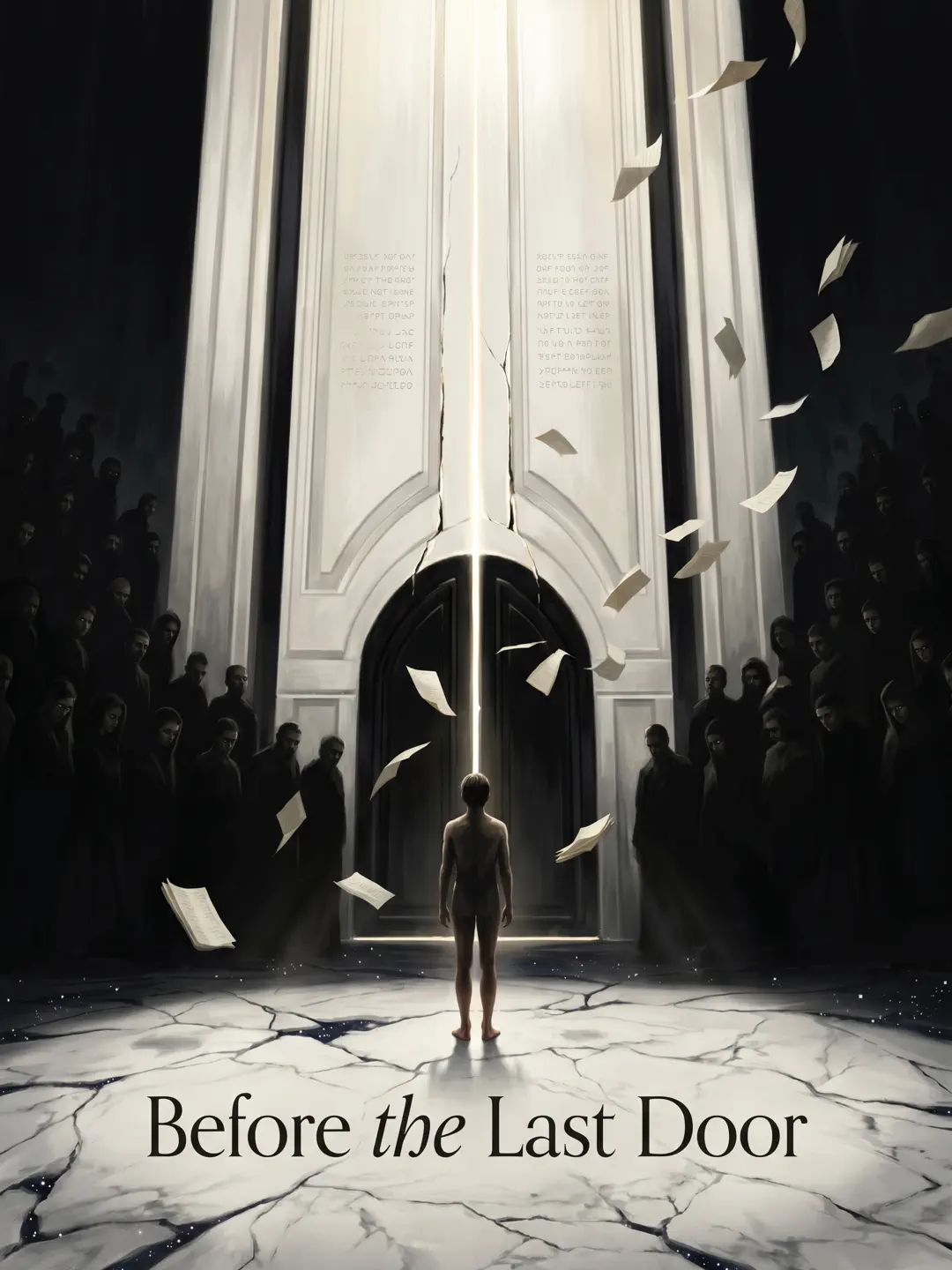
Before the Last Door
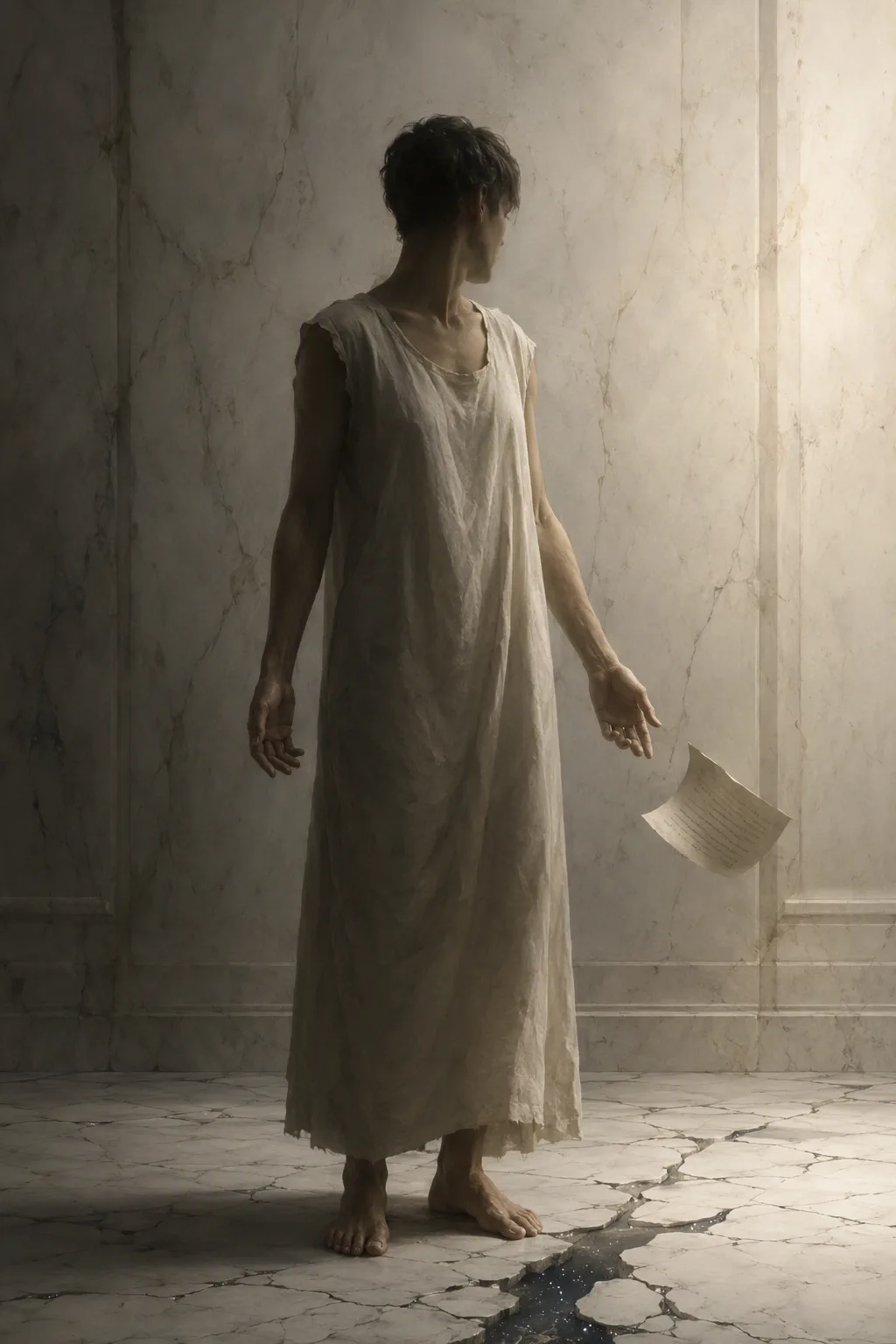
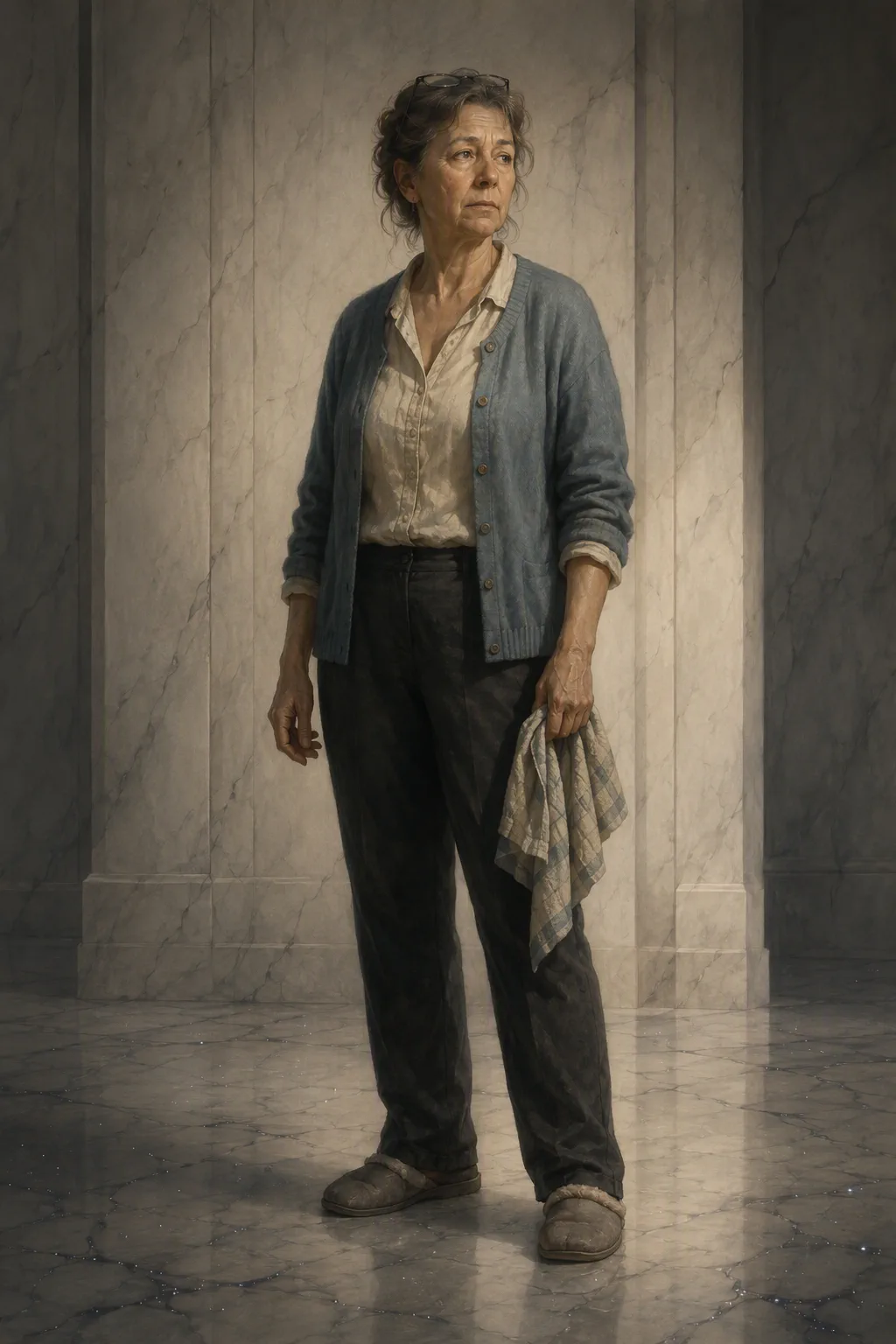
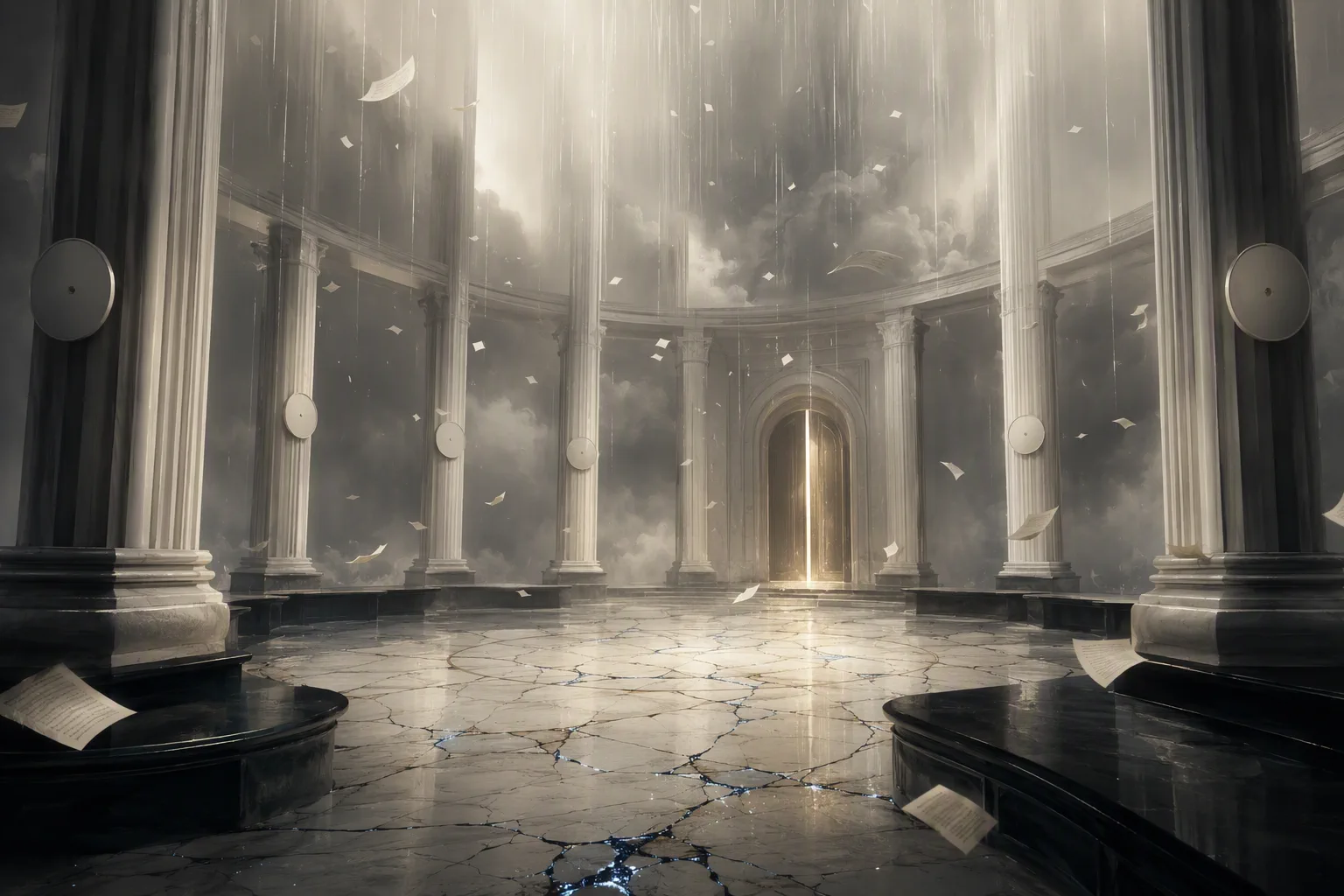
You wake barefoot on cracked marble in a courthouse that stretches past the edges of reason, summoned to answer for a life you can barely remember. Clerks bring ledgers, witnesses arrive from doors that open onto your past, and the great white-black door at the end of the hall waits for your plea. Every word you speak costs memory; every silence costs time.


By starting, you agree to our Terms of Service, Privacy Policy and Refund Policy.
The verdict is not whether the door opens
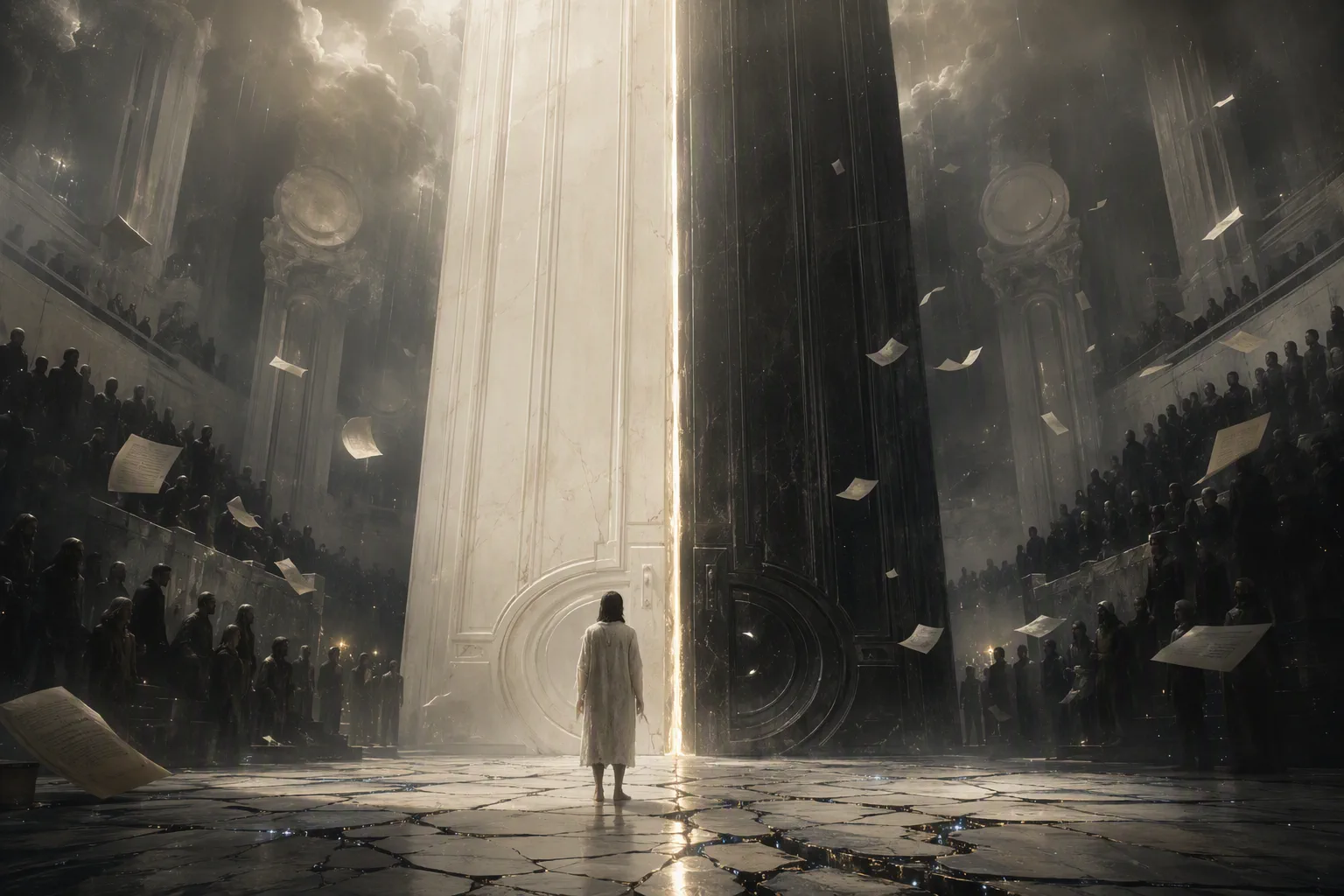
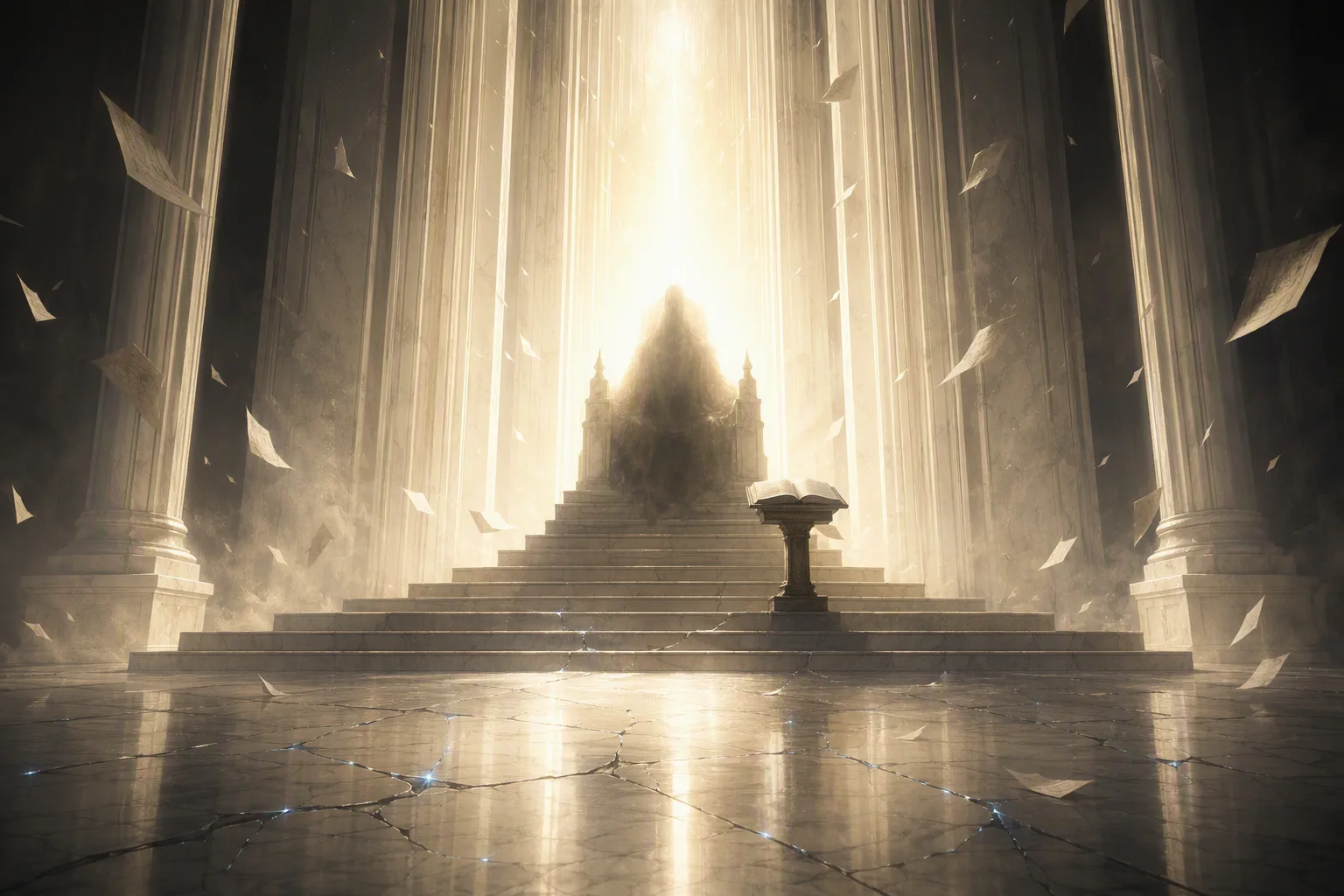
Most stories about judgment are escape rooms with better lighting: find the loophole, out-argue the prosecutor, overturn the sentence. This one closes that exit and never reopens it. You wake barefoot on cracked marble in a courthouse whose corridors grow longer when you walk them slowly and shorter when you run. You remember your name and almost nothing else. At the far end of the hall stands the Last Door, half white stone and half black stone, seamed down the middle, light leaking through in slivers. It is beautiful, it is fatal, and it is patient. Nothing you say will keep it shut; what is undecided is what kind of soul walks through, and how much of its own life it can still hold when it does.
Every word you speak spends a piece of what you remember
Memory is the currency here, and never a number. It is loss: a face going soft, a name on your tongue that will not come, a childhood bedroom dimming at the edges. Argue, delay, insist, explain — each costs clarity about some part of the life you came to answer for. You cannot examine everything. You remember too little to choose well, and you choose anyway — which pieces of yourself you will keep clear enough to speak about precisely.
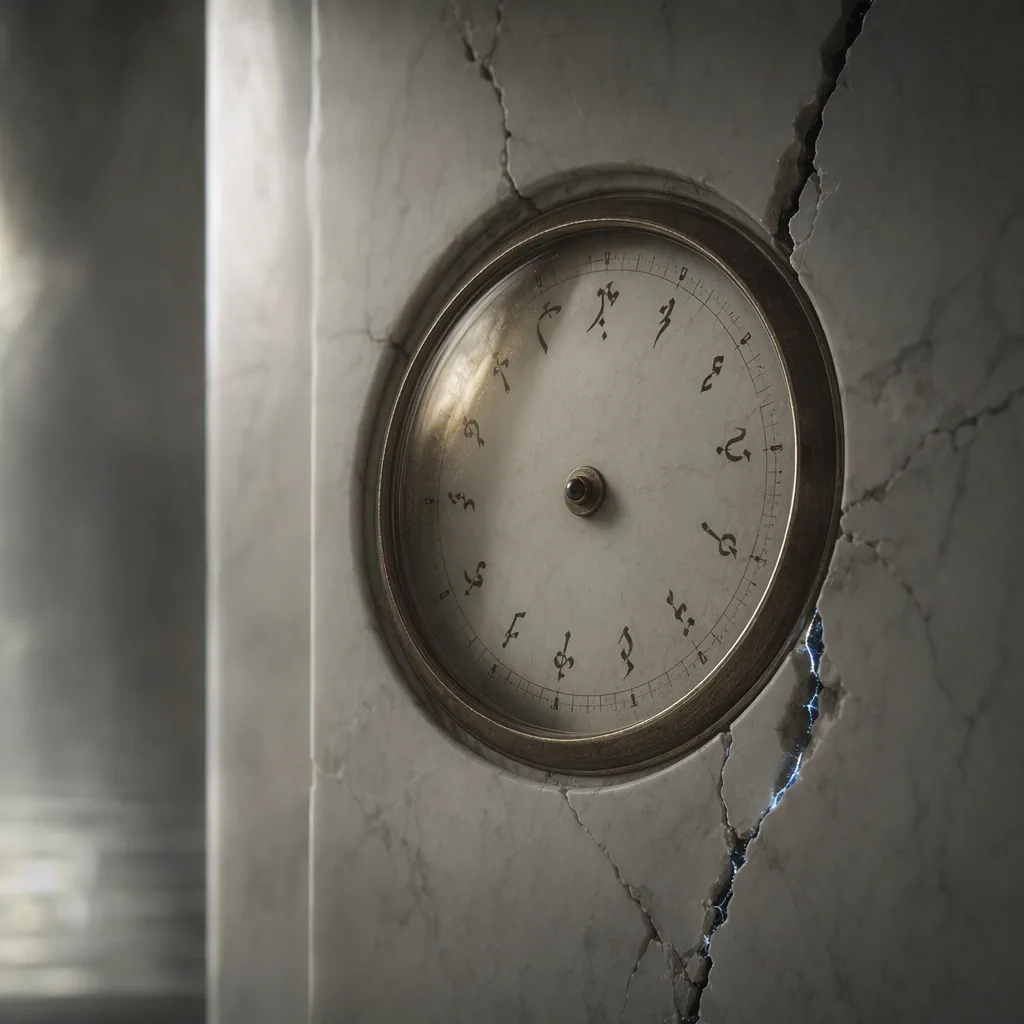
The court does not wait while you think. Hesitate or evade and the room advances on its own: a clerk arrives with fresh pages, a witness is called that you never summoned, another memory dims. The clocks here have no hands at all, and tick anyway.
Nobody at the front of this hall is a devil
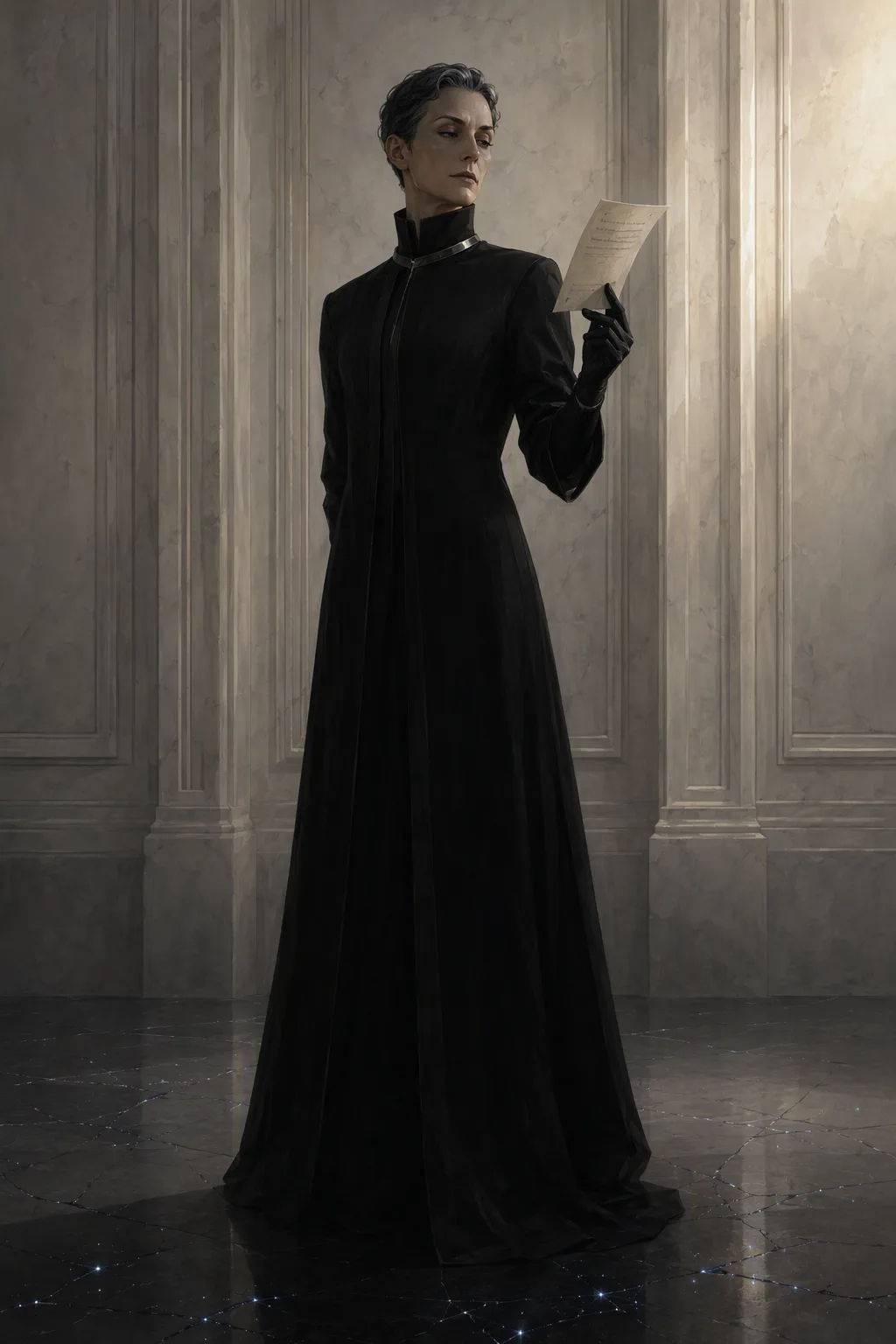
The Accuser is a prosecutor, not a demon — sharp, articulate, almost tender in its cruelty, genuinely interested in the truth. It quotes your own past words back at you, it is better at argument than you are, and it knows that. Rarely it withdraws a charge, but only when the confession arrived before the accusation did. Opposite it, the Advocate — an angelic presence — speaks for mercy and refuses to manufacture it: it will not lie for you, so mercy has to be built out of something true you handed over. Sometimes it says nothing for a long stretch. That silence is its own verdict.
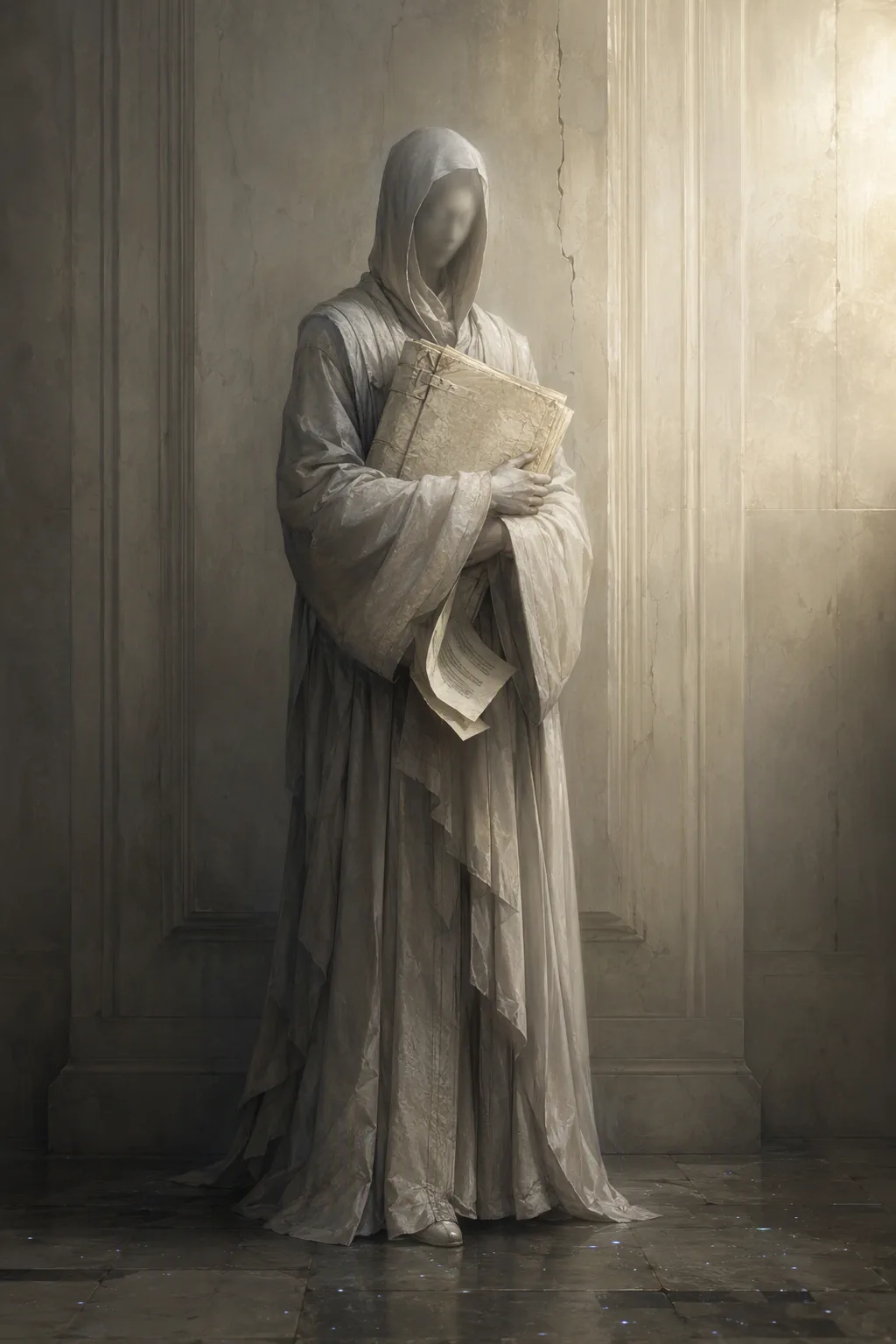
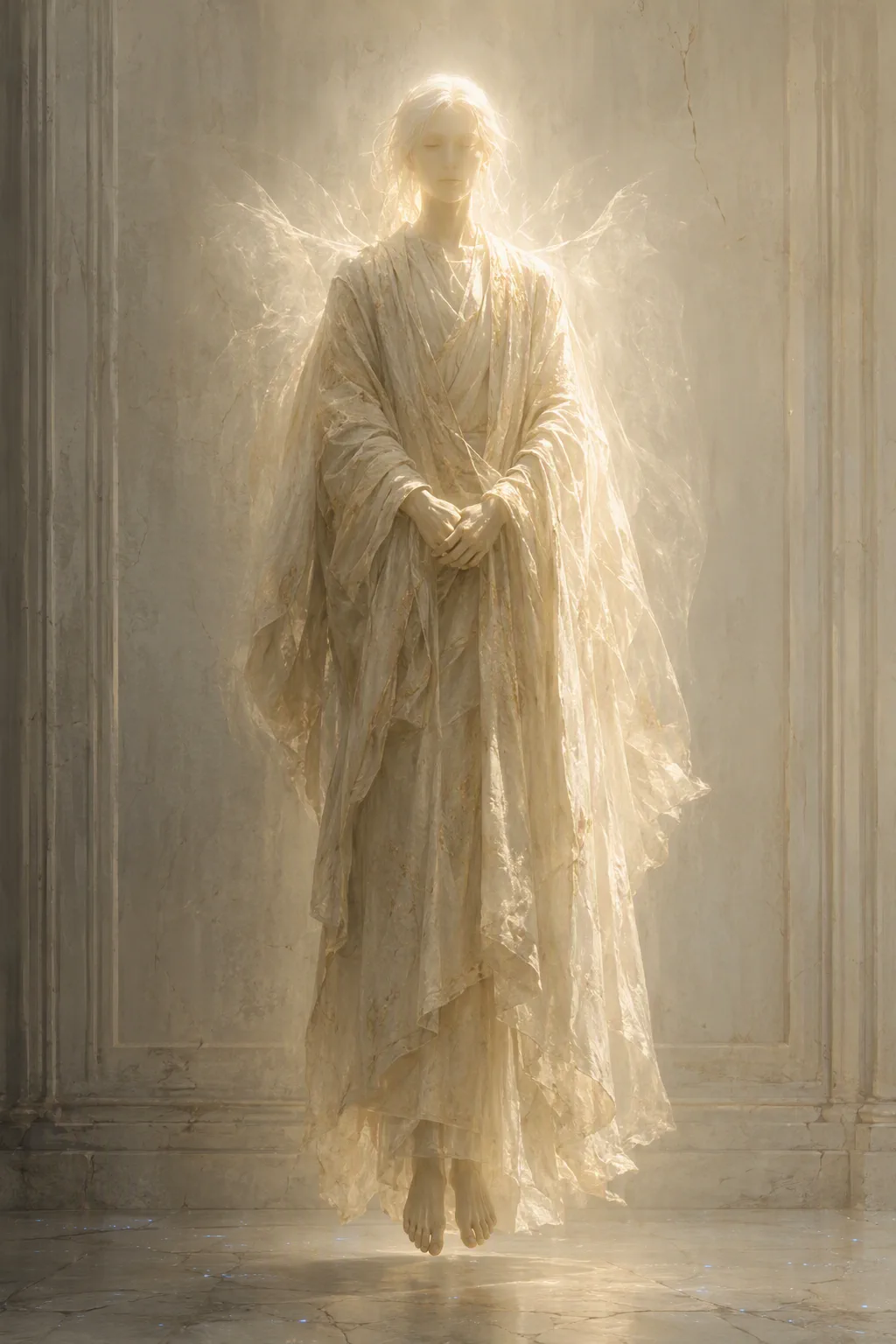
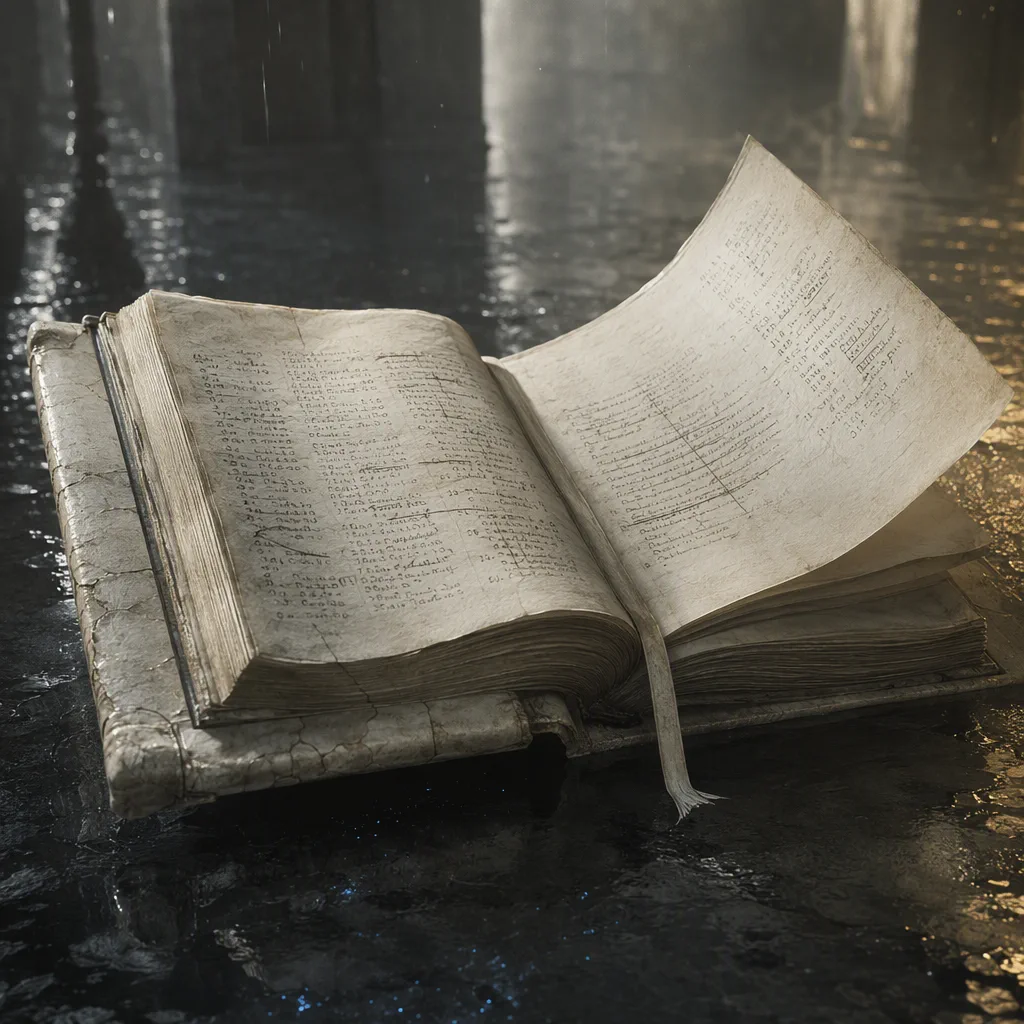
Between them moves the Clerk, tall and soft-voiced in pale robes, carrying your ledger, neither kind nor cruel, answering every question exactly as literally as you asked it. There may be more than one Clerk; they are interchangeable, and they insist they are not. At the end of the hall the Magistrate occupies a seat that never resolves into a shape. You never hear it speak — the Clerk relays, or the light shifts. Its silence is one of the sounds of this room, sitting in the mix alongside the choir and the bells.
The witnesses are the other half of the room. A mother. A stranger you helped once on a street. A person you wronged. A pet. Yourself at seven. They arrive summoned and unsummoned, speak in fragments as though still half inside their own lives, and go. You learn who you were by watching them, and by noticing what you chose to defend.
What actually changes when you play
Six things are worth doing with a turn, and none of them is free. Argue precedent with the Accuser, which is dangerous. Bargain — offer a future, a name, a silence — which the court rarely accepts and sometimes listens to. Confess: say one true thing aloud, which costs memory and steadies everything around it. Walk through a life-door and watch a scene from your past stripped of the story you told yourself about it; you cannot change what you see. Accuse the Magistrate to its face, which is permitted, is not punished, and does not dim the light. Or spend your remaining clarity on someone else's ledger instead of your own, which moves your verdict in directions you cannot predict.
None of that is a menu. The narrator reads the sentence you actually wrote rather than matching it to a list of options, which is why a confession lands differently here than an admission you hedged halfway through. The wording is the move, and the court hears the difference.
What the story refuses to do is grade you. There is no karmic arithmetic — the court is not a calculator, and no outcome is presented as a win. Denial stays available and is taken as seriously as confession — the design treats even cowardly choices as sacred. The costs are asymmetric, though: admitting guilt costs you something, denying it costs more, and the room can taste both.
The hall keeps testifying while you talk
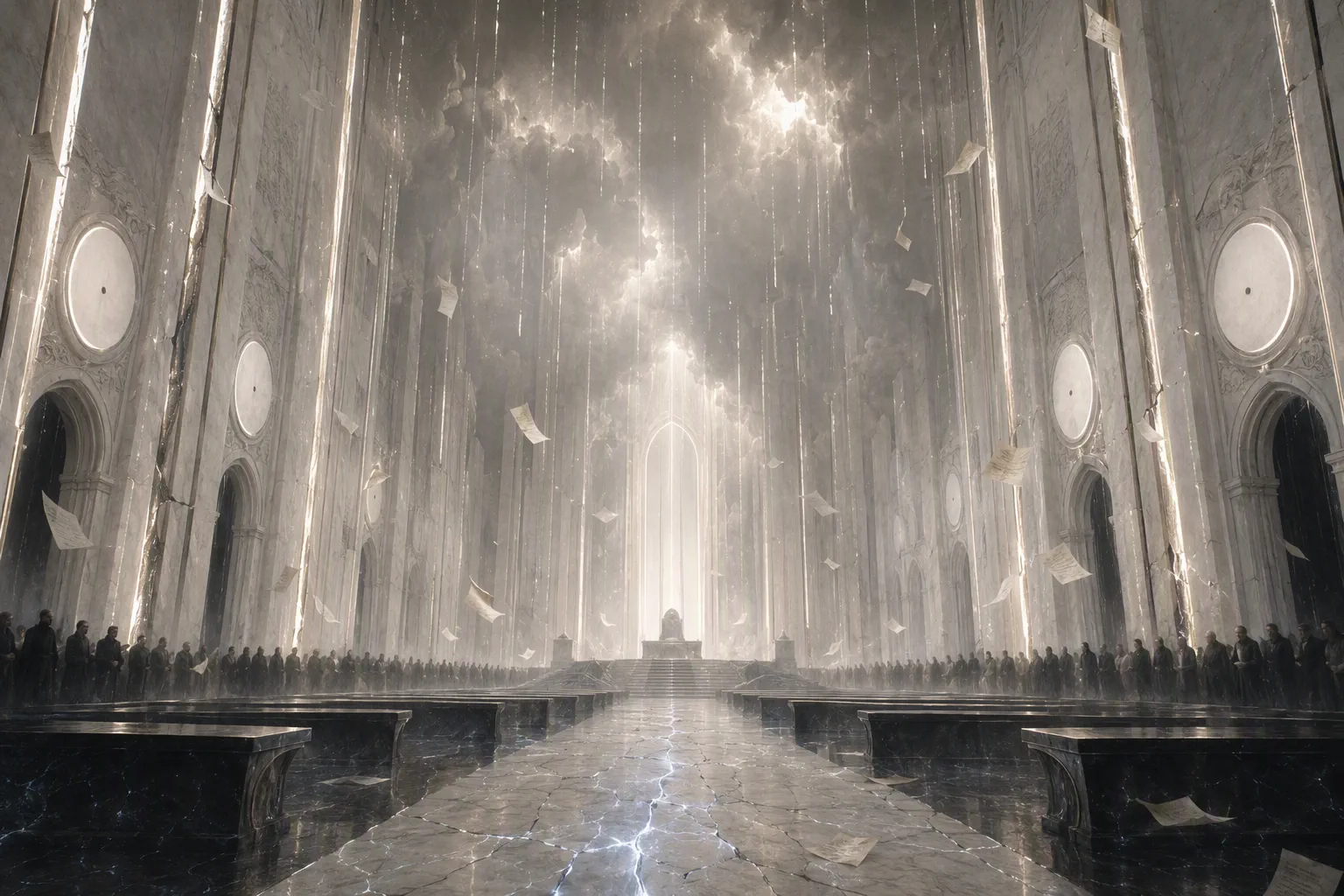
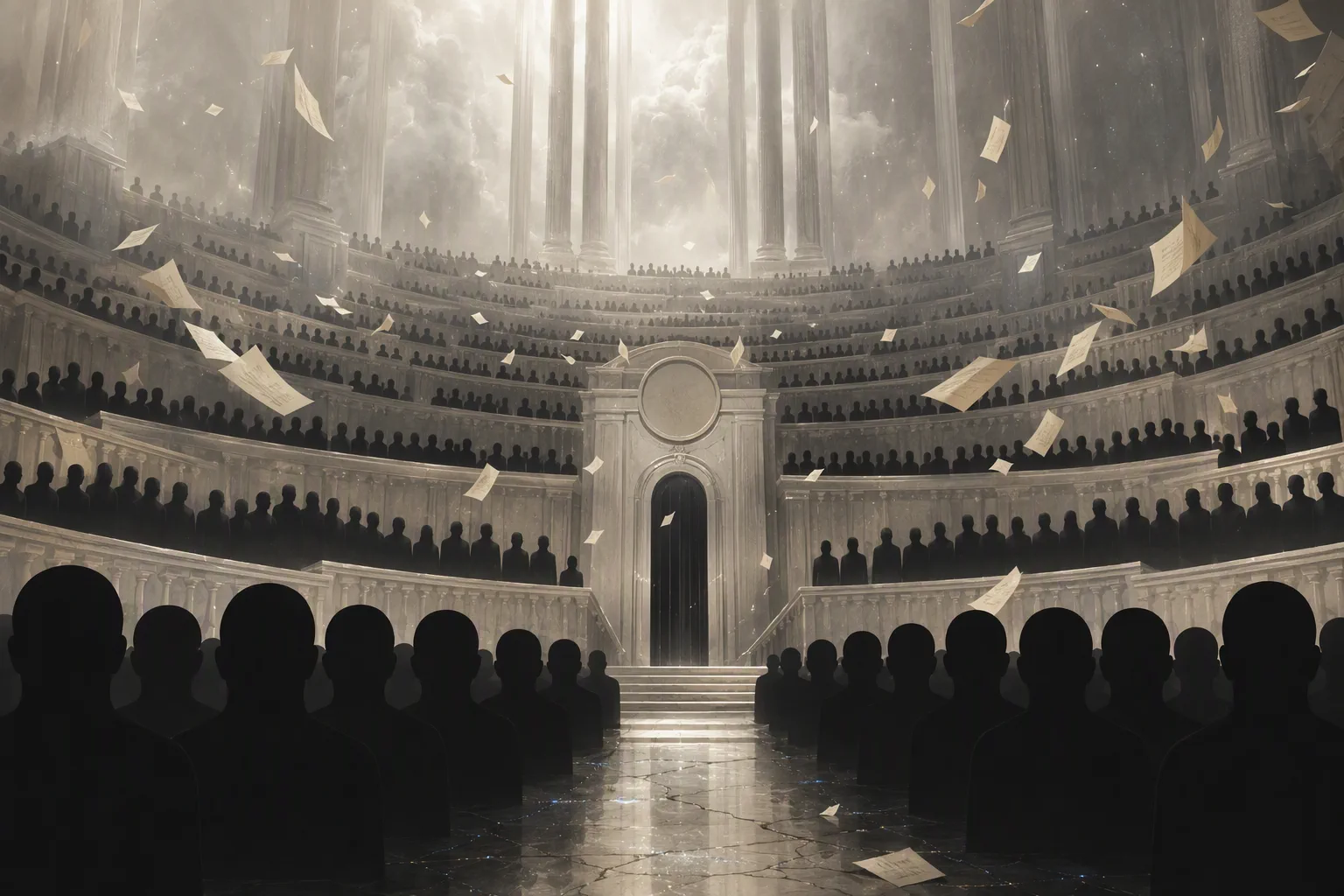
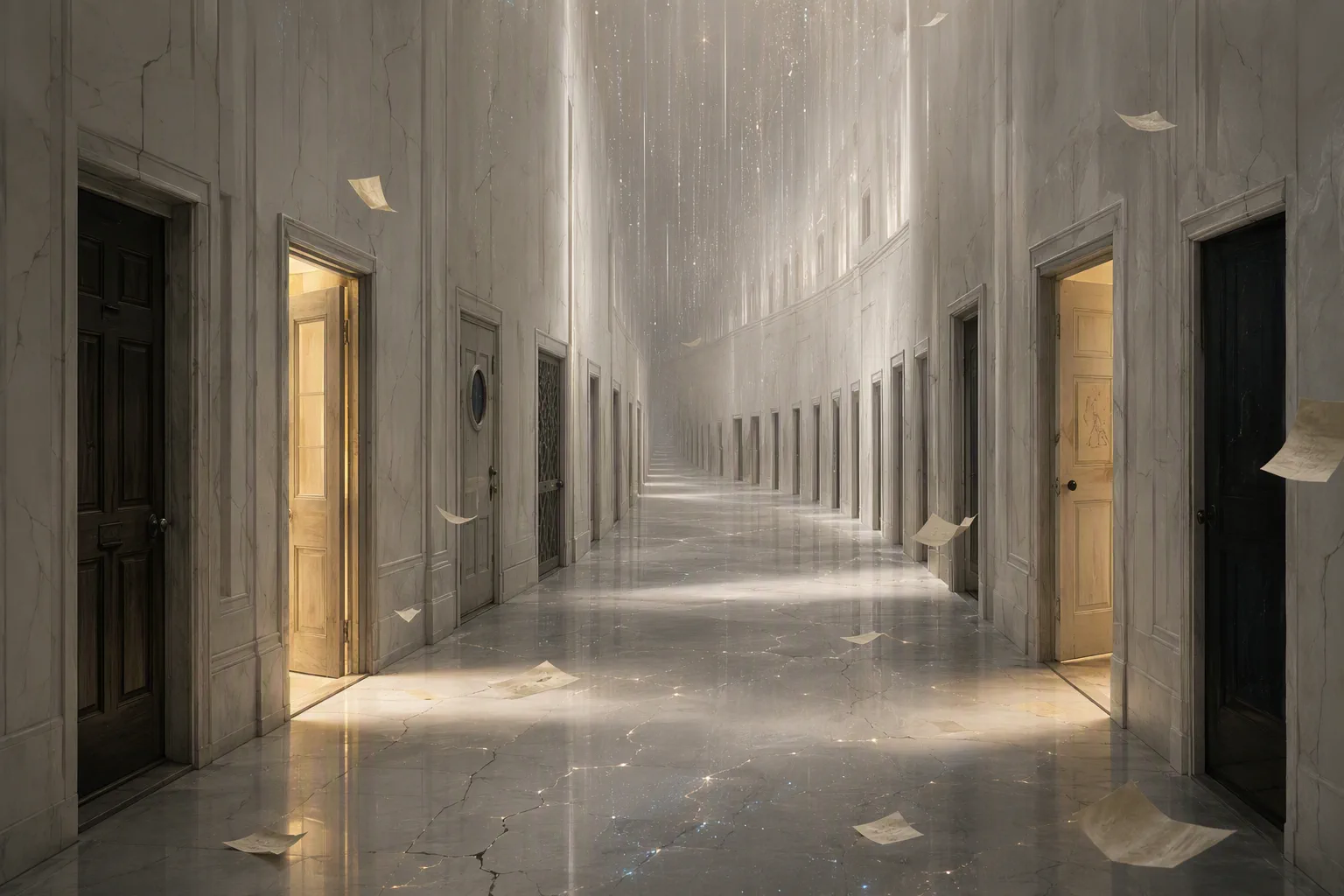
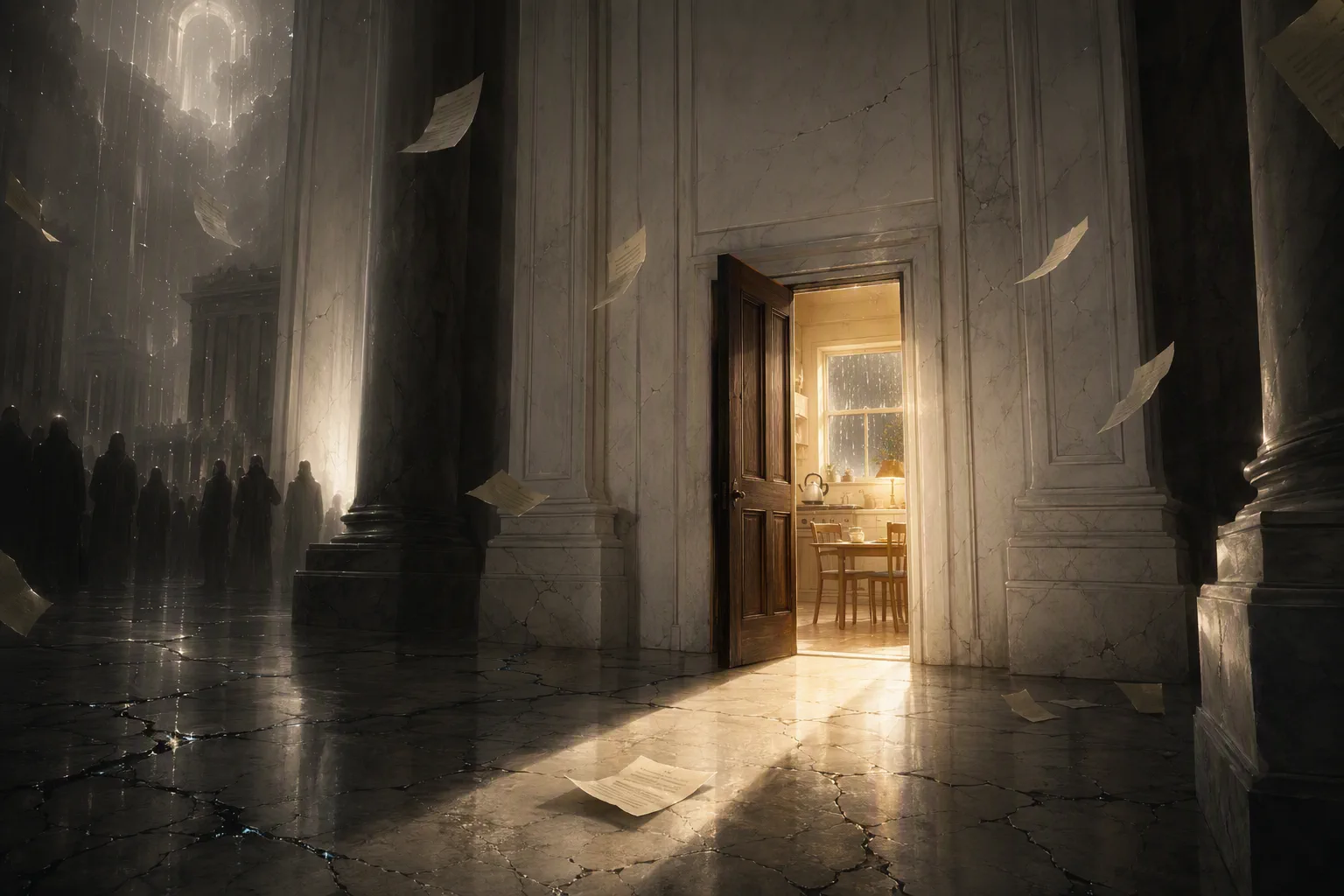
Marble vaults rise into cloud. The floor is bone-white stone cracked by veins of living starlight; the benches look like dark water held still. Rain falls upward in thin silver threads and never reaches a ceiling. Doors along the walls open onto kitchens, hospital corridors, childhood rooms, and close when you look at them directly. In tiered galleries the shadows of the dead sit in countless silence and occasionally turn their heads in unison.
A low choir runs under everything, with bells at wrong intervals, the dry turn of a ledger page, footsteps that echo too long. Old incense and wet stone — and then, incongruously, something out of your own life: bread, rain on asphalt, a particular perfume. Cold stone underfoot, paper that is warm, air that does not move, and at some point a hand on your shoulder from behind that is neither threat nor comfort. The light is never described. You know it by what it does: it sharpens the edges of honesty, it makes liars flinch, it makes certain witnesses weep when it shifts.
Before you start
Is this horror?
No. The dread is constant but solemn rather than jumpy — nothing lunges out of the dark. The unease comes from being seen accurately by something patient that has already read the file. Beauty and terror run together rather than taking turns.
Do I need to believe something for this to work?
No, and it deliberately leaves that space open. The story uses the grammar of judgment — a court, a ledger, witnesses, a door — without naming any real-world religion, deity, or sacred text. It is serious about the questions and non-committal about the answers; if you want a system that explains the rules of the afterlife, this is not it.
Can I get it wrong, and can I stop partway?
There is no failure state and no scoreboard, so you cannot lose in the ordinary sense — but you can spend yourself down to very little and still be required to speak, and the story lets that happen without scolding you. It is medium-length and shaped as a vigil rather than a puzzle: scenes linger, and a silence can be a whole beat. Sessions are resumable, so you can stop between witnesses and come back.
If this is your kind of story
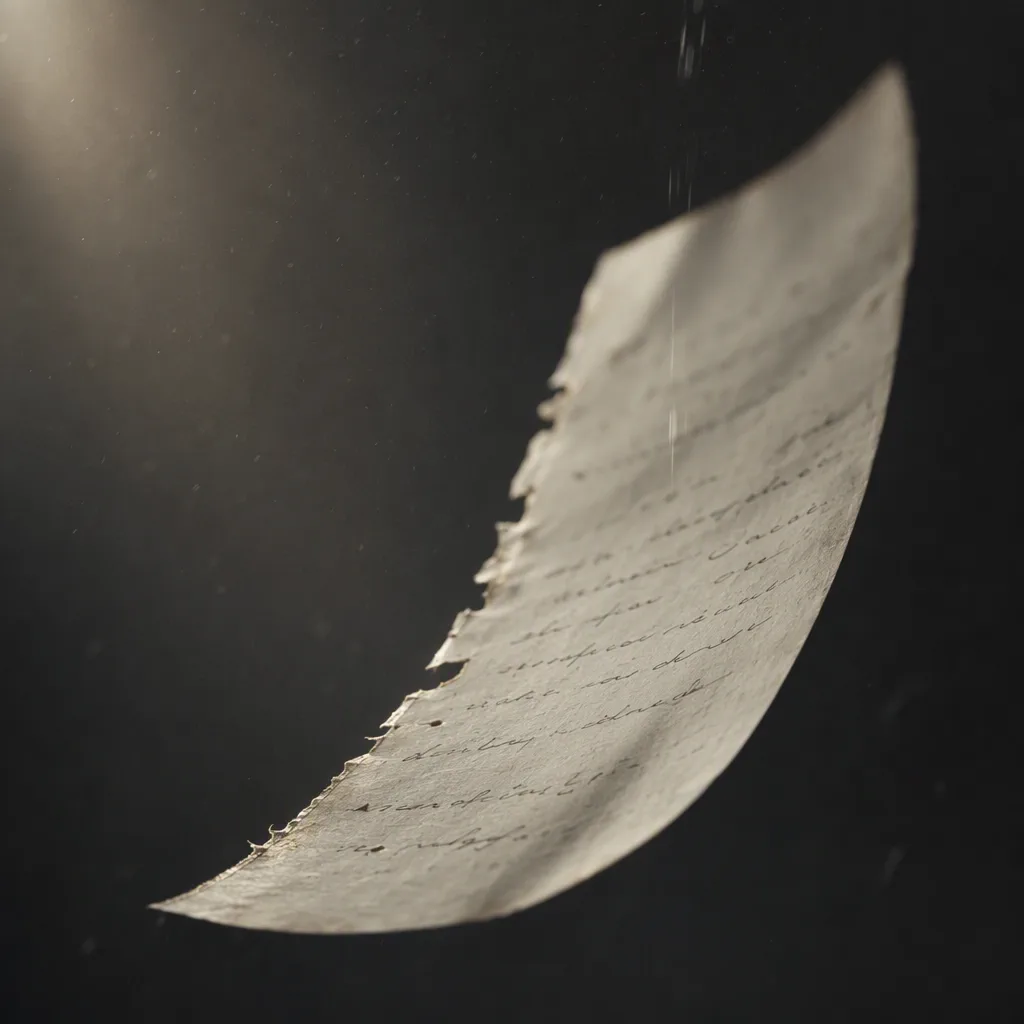
This one sits on the philosophical shelf, at the melancholy end of fantasy — quiet, slow, and interested in what a life adds up to rather than what it conquers. If the life-review is what pulls at you, Four Shadows of a Life covers the same ground from the other direction, from a first breath forward. If it is the judgment — one person standing between mercy and a ledger — Miasmorrow puts you on that side of the bench. This hall, though, is its own thing: no hands on the clocks, rain going up in silver threads, and the pages of an unfinished ledger drifting past your face, always just out of reach.
