
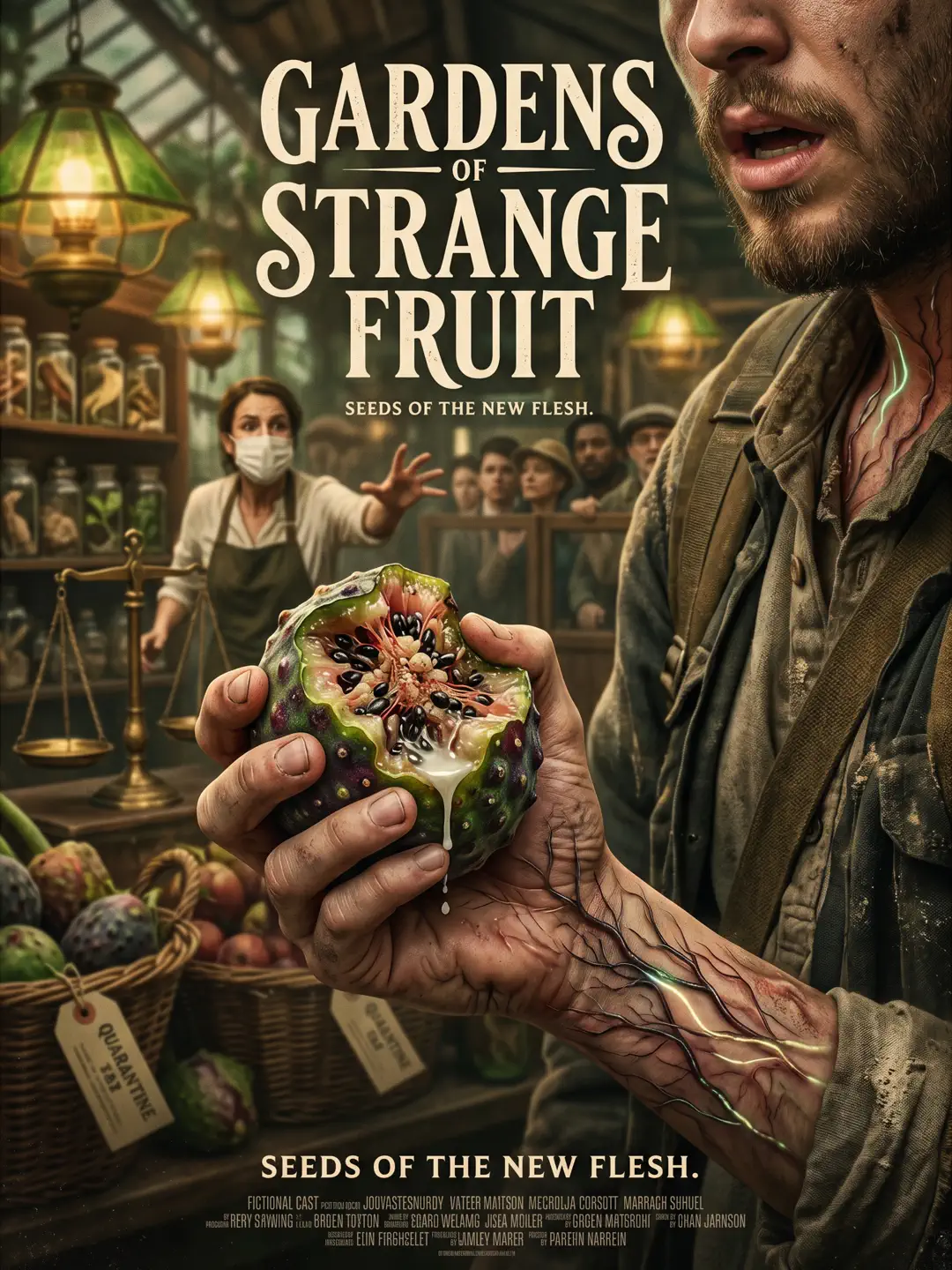
Gardens of Strange Fruit
You arrive at Saltterrace, a terraced valley where engineered fruit rewrites bodies through graft tissue, spores, hormones, parasites, and rootlike symbiosis. Traders dose customers by weight, patients mutate in public, orchard families feud over contaminated cultivars, and quarantine laws change before the dew dries. Choose what to eat, what to carry, and what you are willing to let live inside you.







By starting, you agree to our Terms of Service, Privacy Policy and Refund Policy.
The price is not a moral test, it is tissue
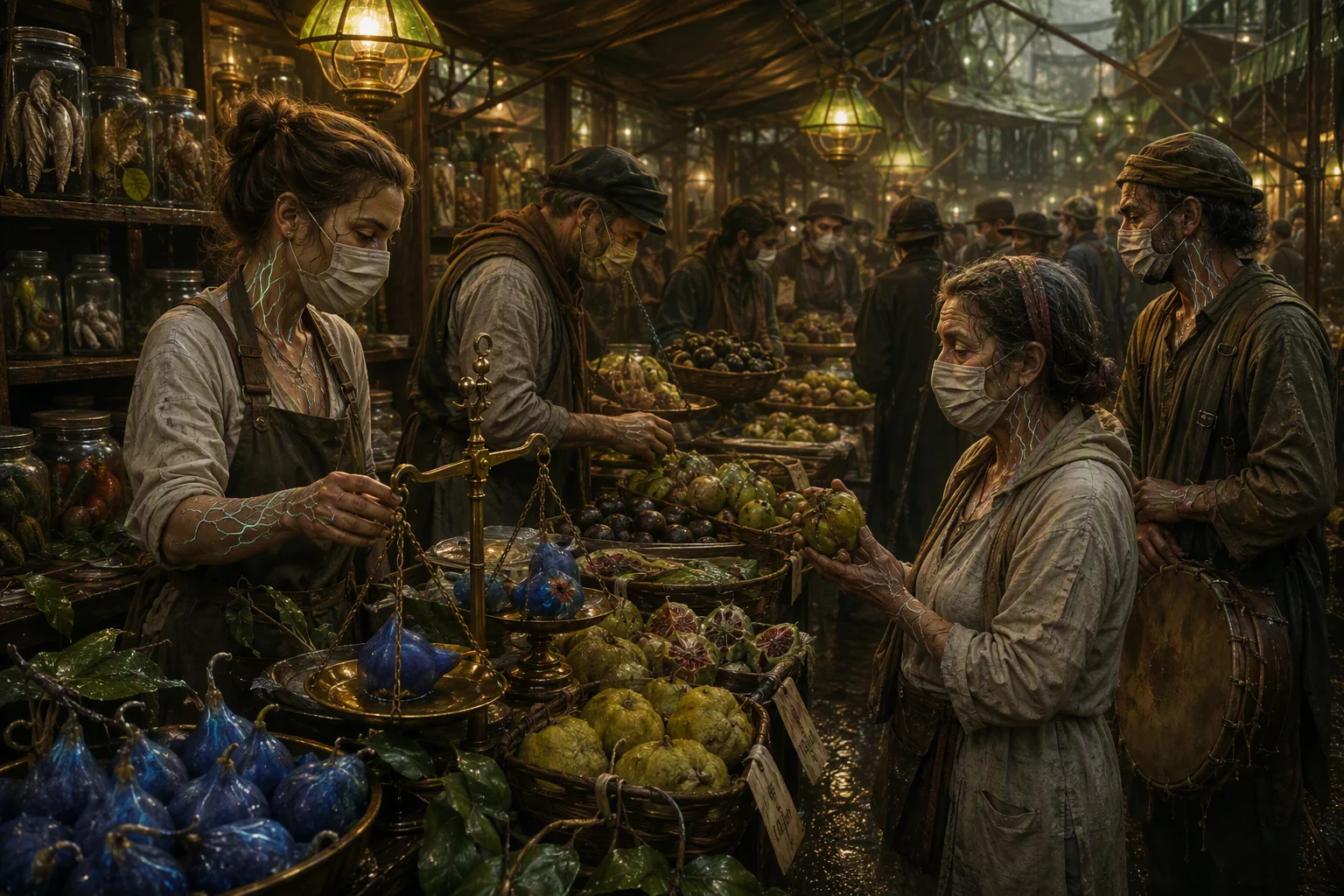
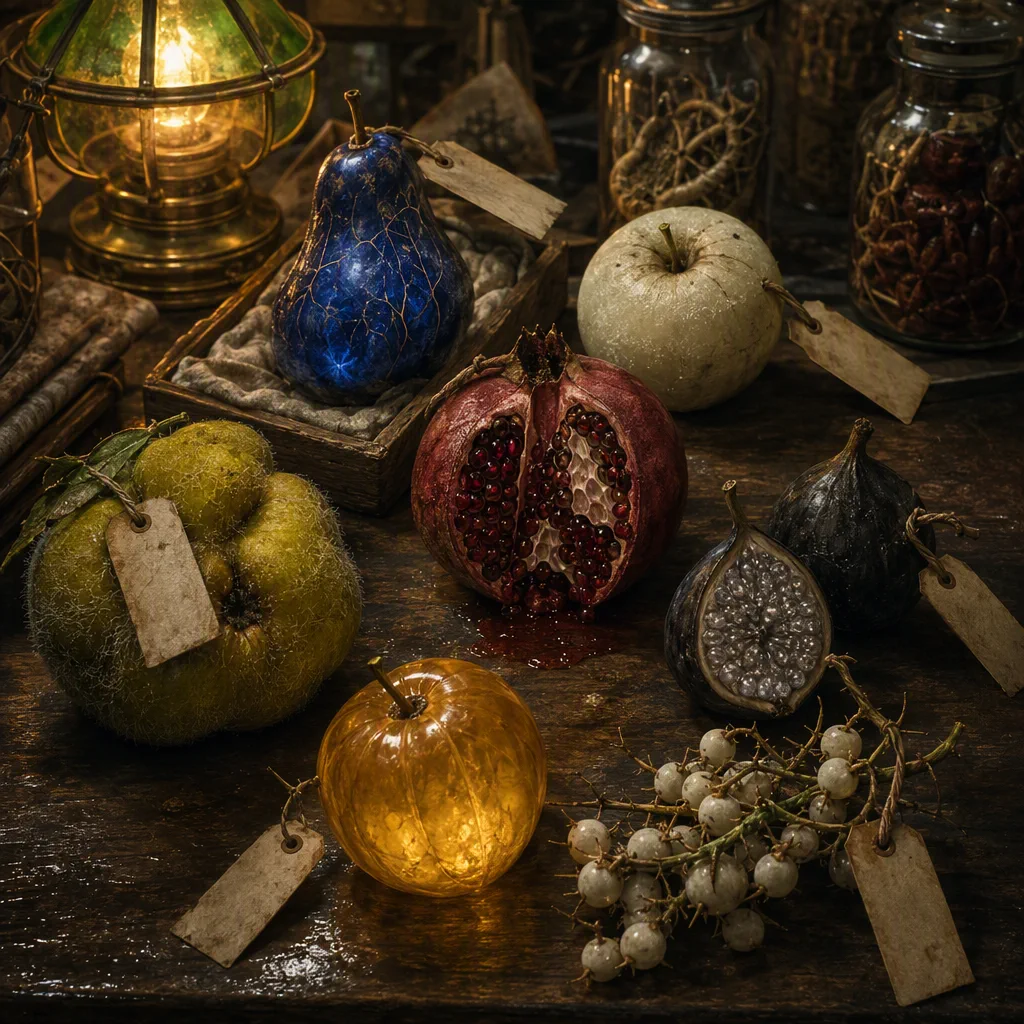
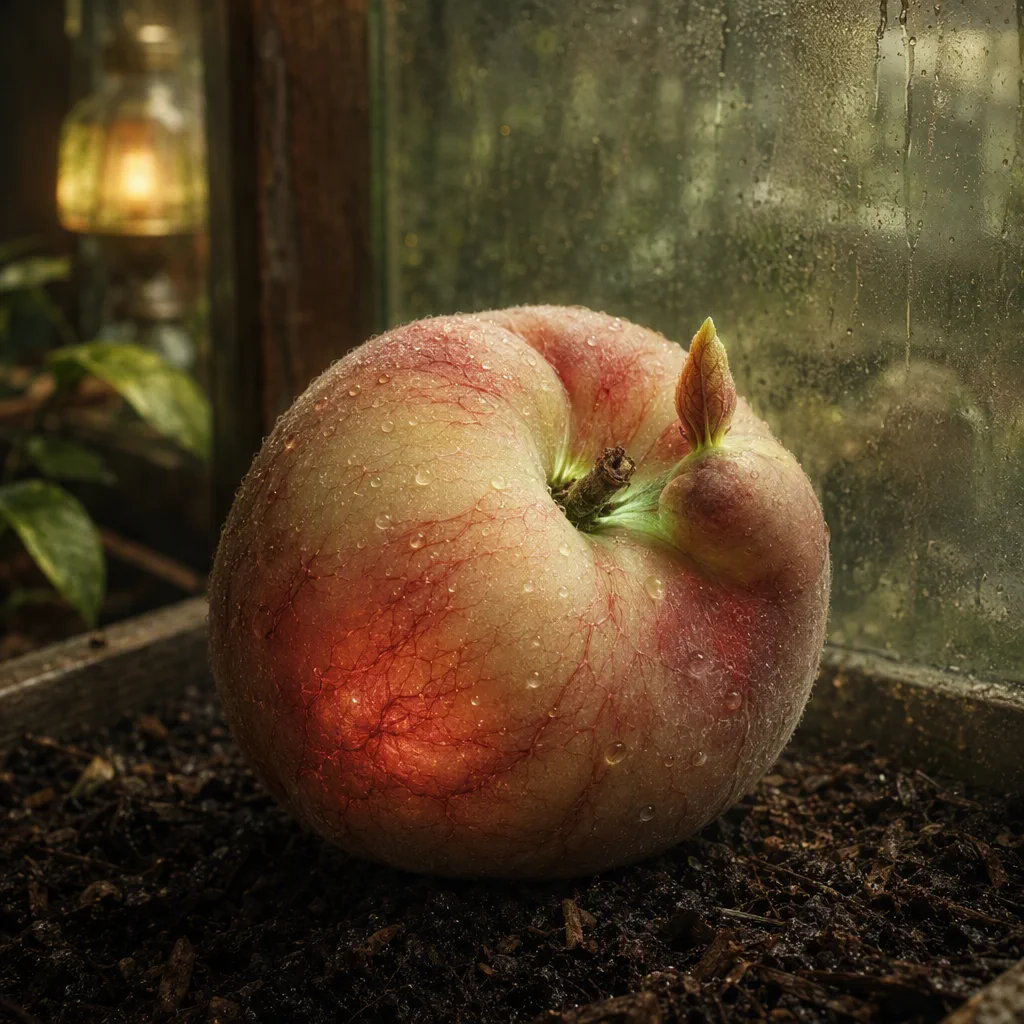
Most stories that sell you power charge you in conscience. Saltterrace charges you in anatomy, and it itemizes. The Ironbark Quince — green-gold, fuzzed with silver hairs, heavy as a fist — hardens your skin into bark-grain armor. It also sheathes your nerve endings until touch goes dull, stiffens the joints, and splits the skin at every flex point, where cracks turn fungal. None of that is metaphor.
Growers here learned generations ago that grafting human and animal tissue into rootstock steers what a fruit does to a body, and the market scales are calibrated in doses, not grams.
You arrive needing something and the valley has a cultivar to match. That is not luck: someone here has already tested a body like yours and knows what it cost.
What was legal at dusk is contraband before you wake
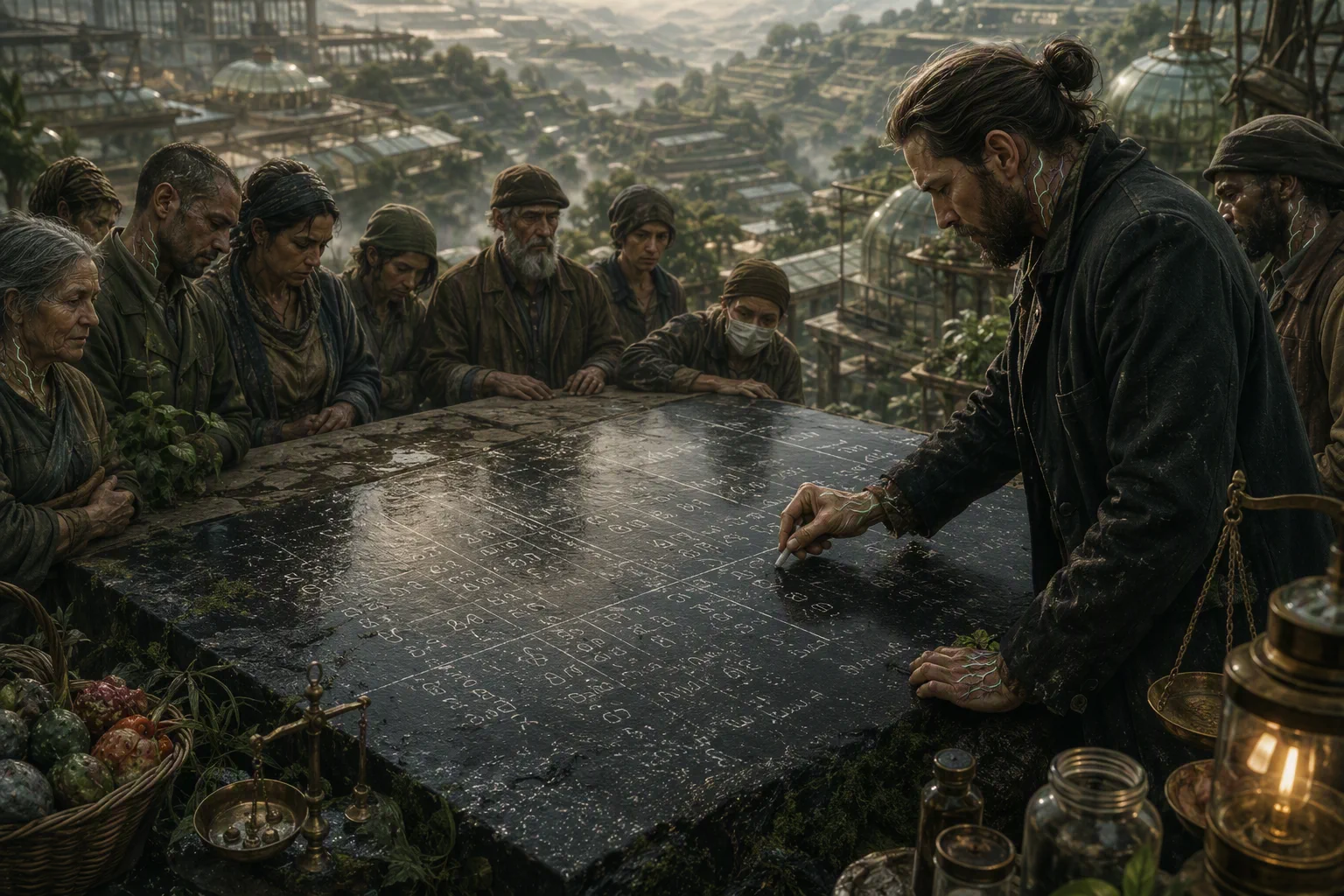
The Law Stone is a flat black slab on the upper terrace where quarantine orders, dose limits and market bans are chalked anew each dawn. No announcement, no appeal: you learn the jar in your bag is contraband by climbing up to read. Fruit keeps its own schedule underneath the law: Blue Glass ripens when night temperatures drop and rots within three days. Miss the window, miss the cure.
Beneath that sits what the Ledger will not chalk up. A hidden experimental grove was breached, and an unstable regeneration line has leaked into the other terraces since — through pollen, corpses, smuggling jars and altered bodies walking row to row. Patients arrive faster than the valley can absorb them, and the Nine Families race to patent the strain or destroy it.
Everyone in the valley is farming someone
The Nine Orchard Families are hereditary growers feuding through graftings, blights and sabotaged pollinations — House Tivane in the salt grove, House Orrin in the cobalt neurofruit, House Kesh in the healing vines. They are not villains; they are kin, rivals and farmers, which is harder to argue with.
Around them: a Ledger that calls itself neutral while being bought and slept with, a Physicians Guild that bids on half-ripe cures and wants the orchard industrialized, and the Salt Runners, who move shipments past the Brine Gate in wax-sealed jars and inside their own bodies.
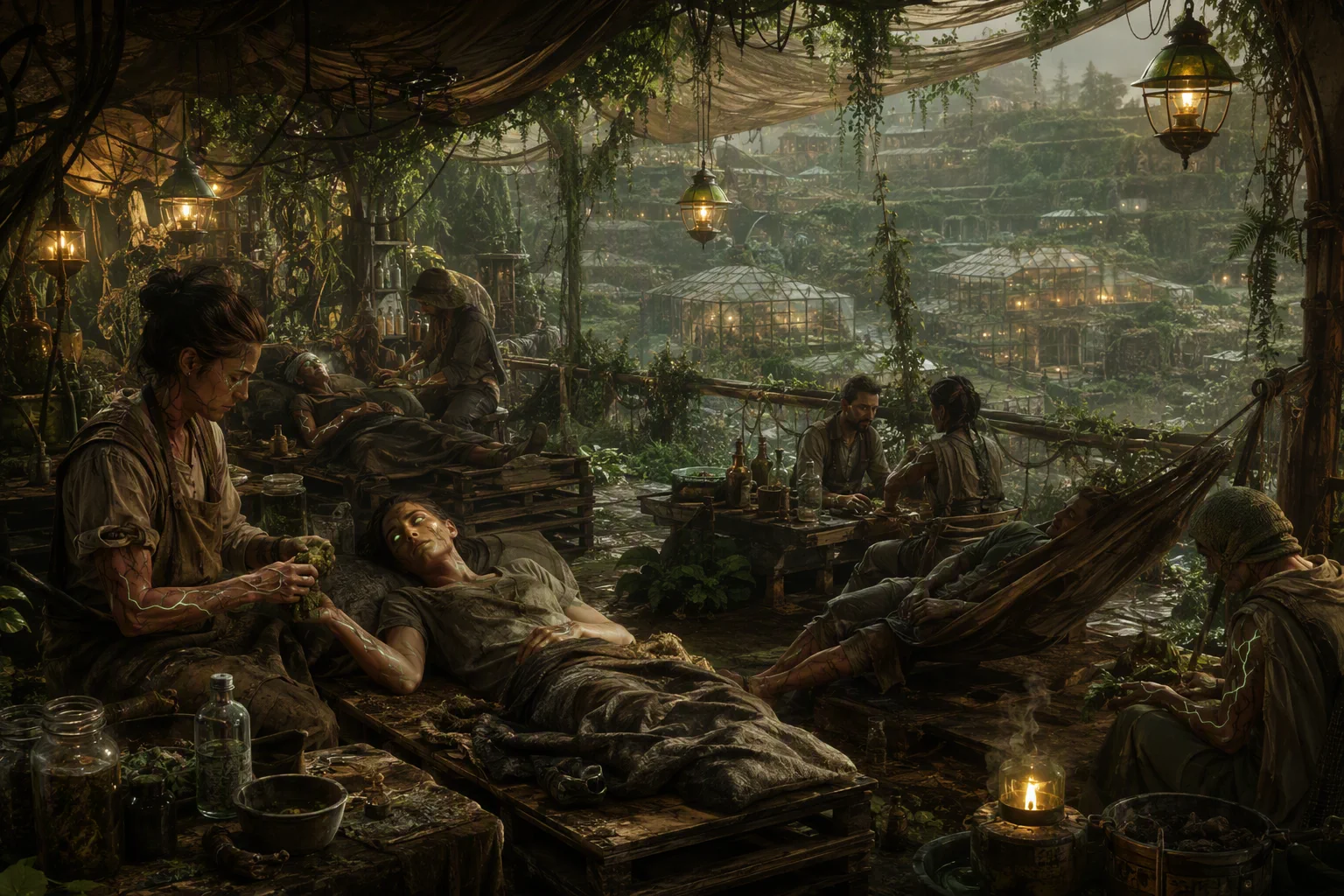
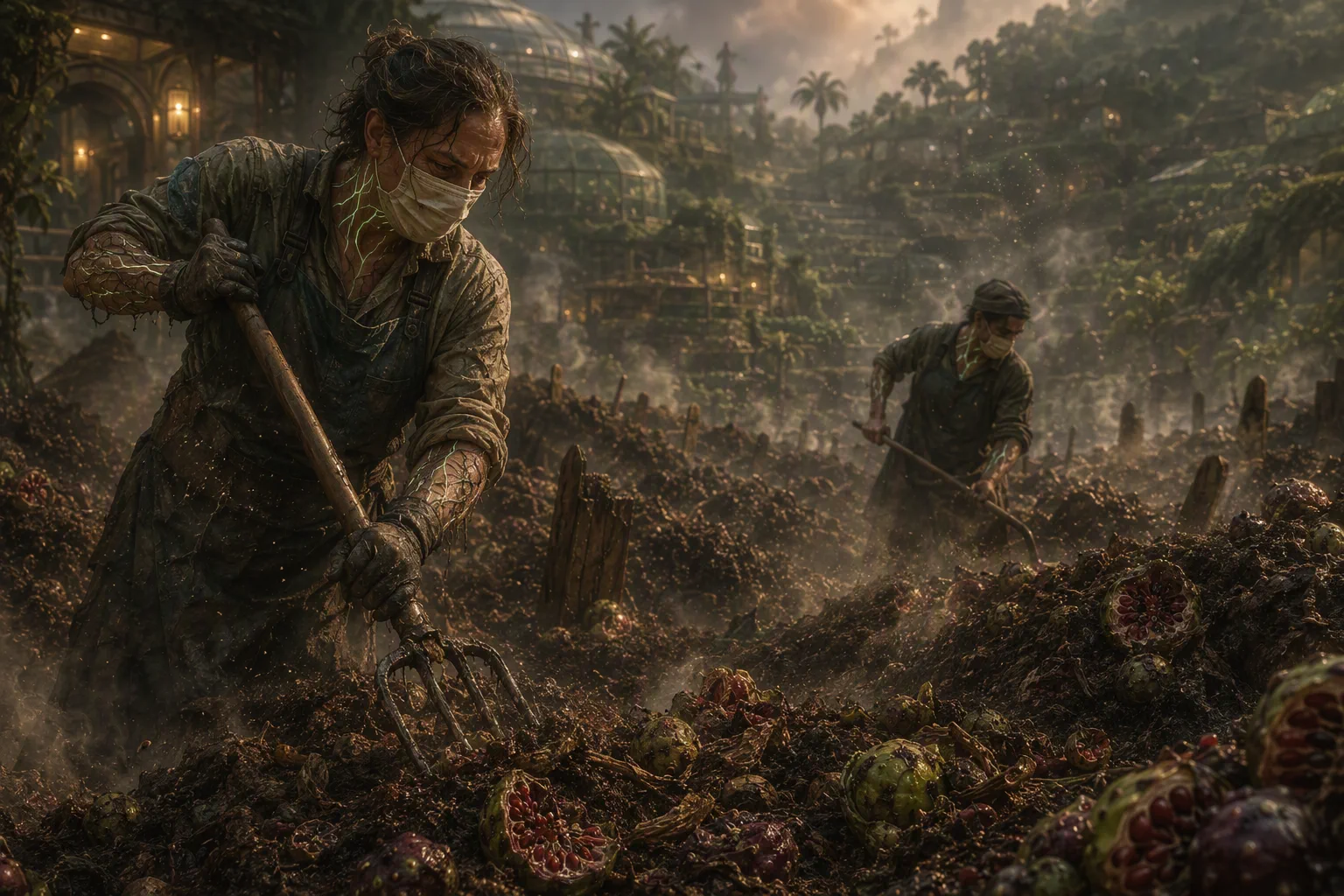
Then there are the people the trade leaves behind. The Rootwardens are altered patients who tend the Patient Hollow, compost contaminated waste and bury the unclaimed dead; they refuse new fruit because their bodies are already full of old bargains.
Below them is the tide — patients who came sick, injured or desperate and stayed, because an altered body no longer tolerates dry air or life outside the valley. The Hollow grows every season, and nobody has decided whether Saltterrace is a hospital, a market, a farm or a containment breach.
What actually changes when you play
Every fruit gives and takes through biology, and the story treats that as physical law, not a rule you can talk around. The useful change is immediate; the cost blooms later, through dependency, organ rooting, tissue overgrowth or changed blood chemistry, and no two bodies pay alike.
You are never handed a stat block — you find a root-tip under a rib while bathing, or catch heat-plume insects trailing you because your metabolism now runs hot. There is no prophecy in this and no soul bargain; harvest law comes from contamination reports and covered-up quarantine failures. Nothing moralizes at you about what you swallowed; you get the weights and do the weighing.
The valley moves without you. Salt Runners work the tide schedules whether you watch or not, a family's sabotage happens off-stage and washes back like weather, and a south wind off the Rotwalk doses a whole terrace: rashes, fever, false hunger. The narrator plays from this canon instead of improvising a fresh world each turn, which is why a Black Fig eaten on your second day still has you craving salt and burning in dry air on your twentieth.
The terraces are worth walking slowly
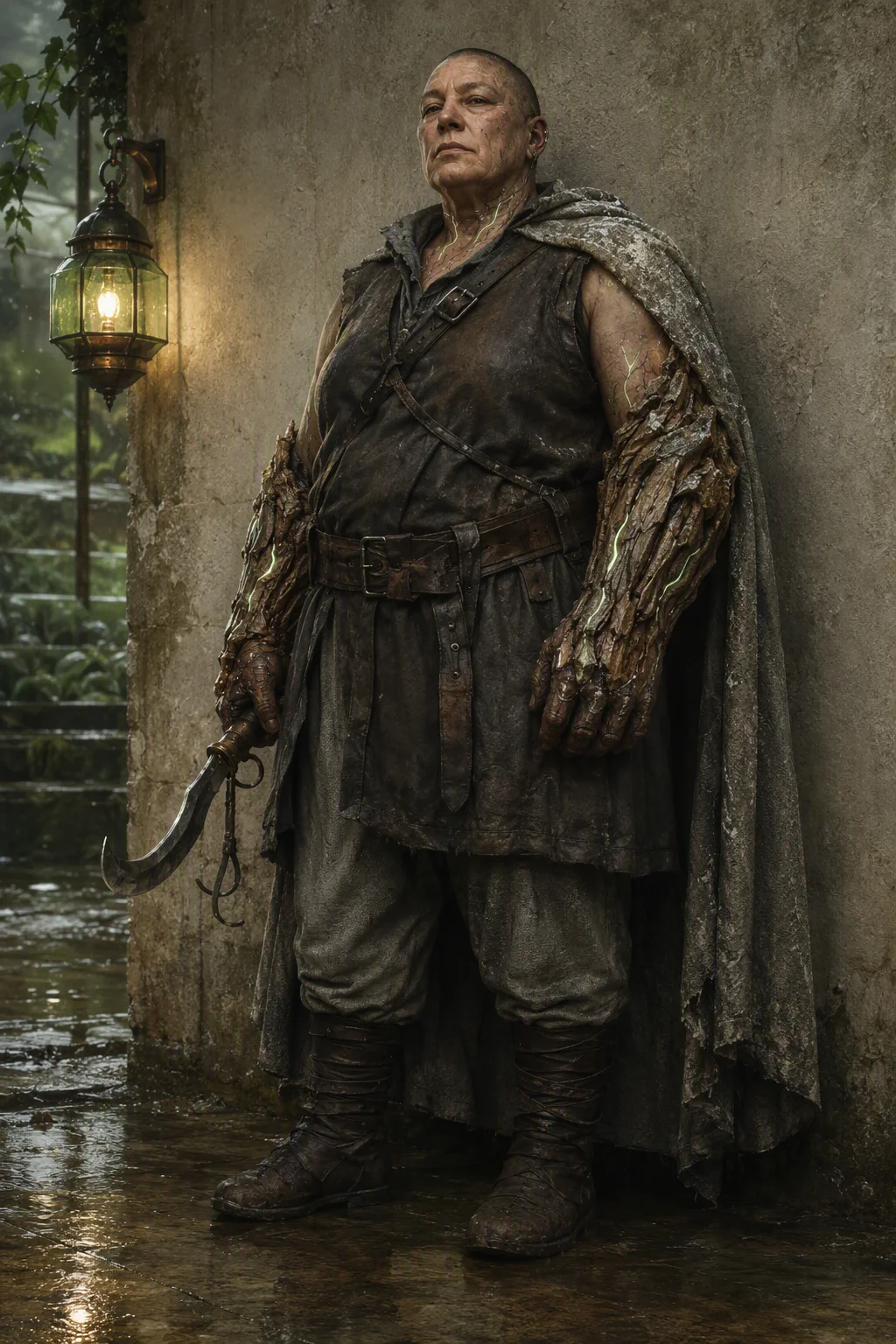
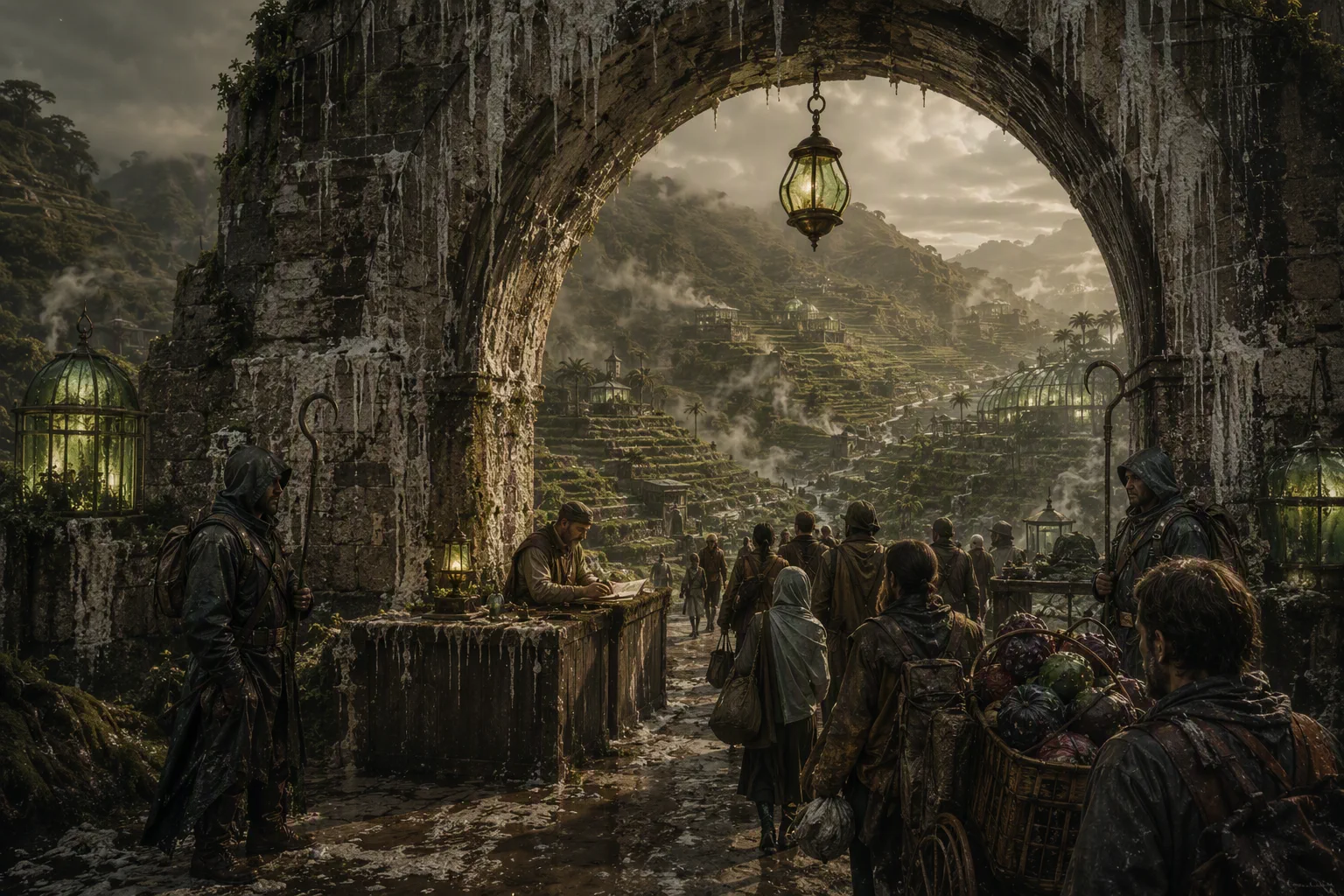
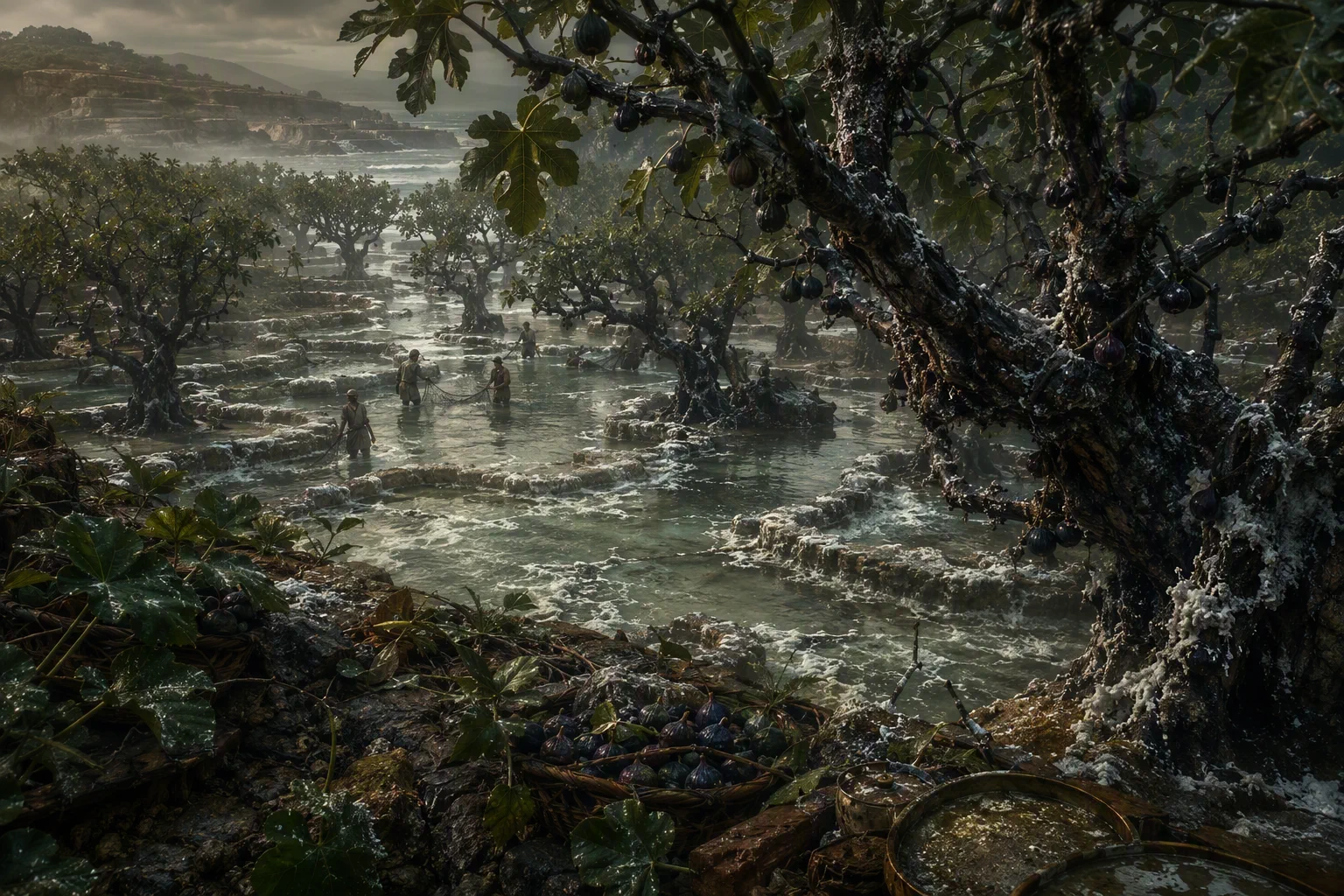
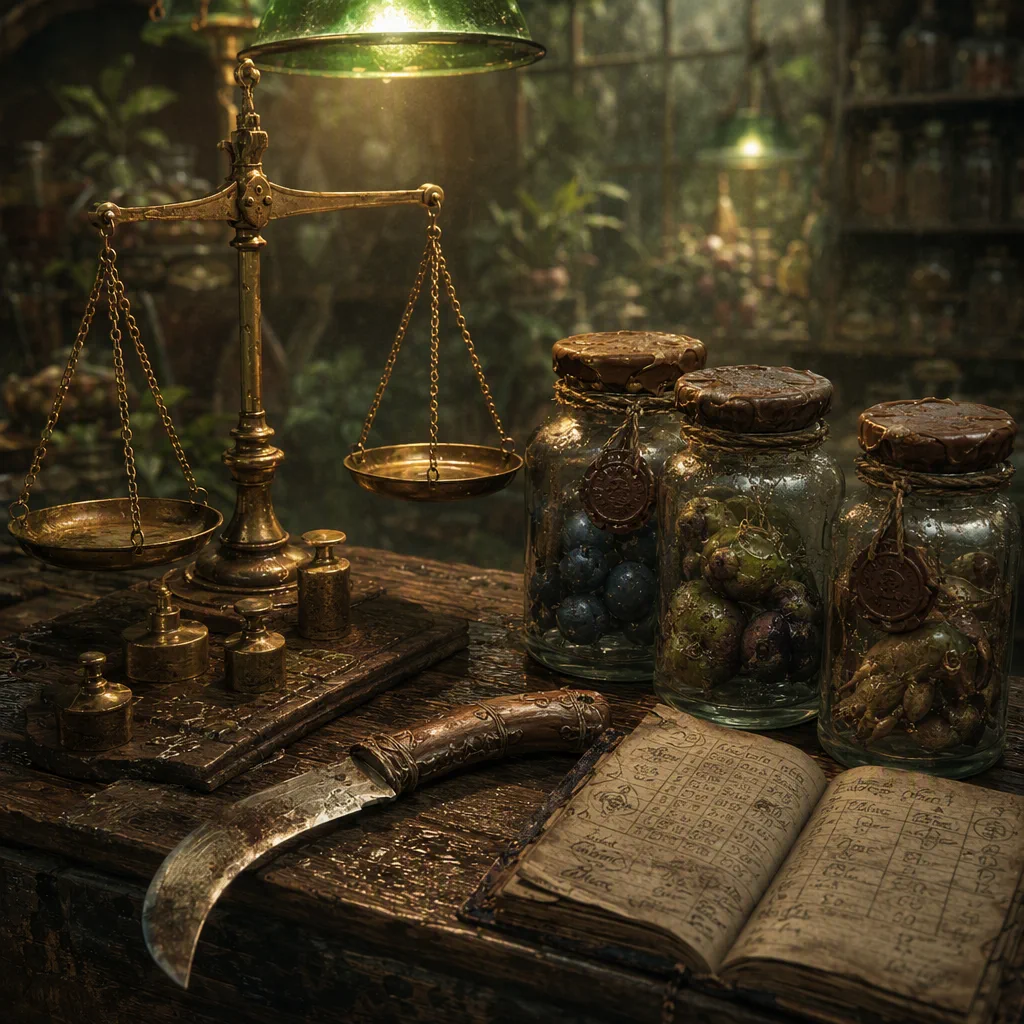
The Brine Gate is an arch weeping salt, with a ledger-keeper who records every arrival and two guardians with hook-knives and bark-grained forearms. Below it the Lower Market sells by weight, by dose, by oath, on brass scales cool against the wrist, in a smell of wet leaves, crushed mint and copper. Further out, the Salt Orchard is a seawater-irrigated grove worked barefoot at low tide by Tivane hands alone.
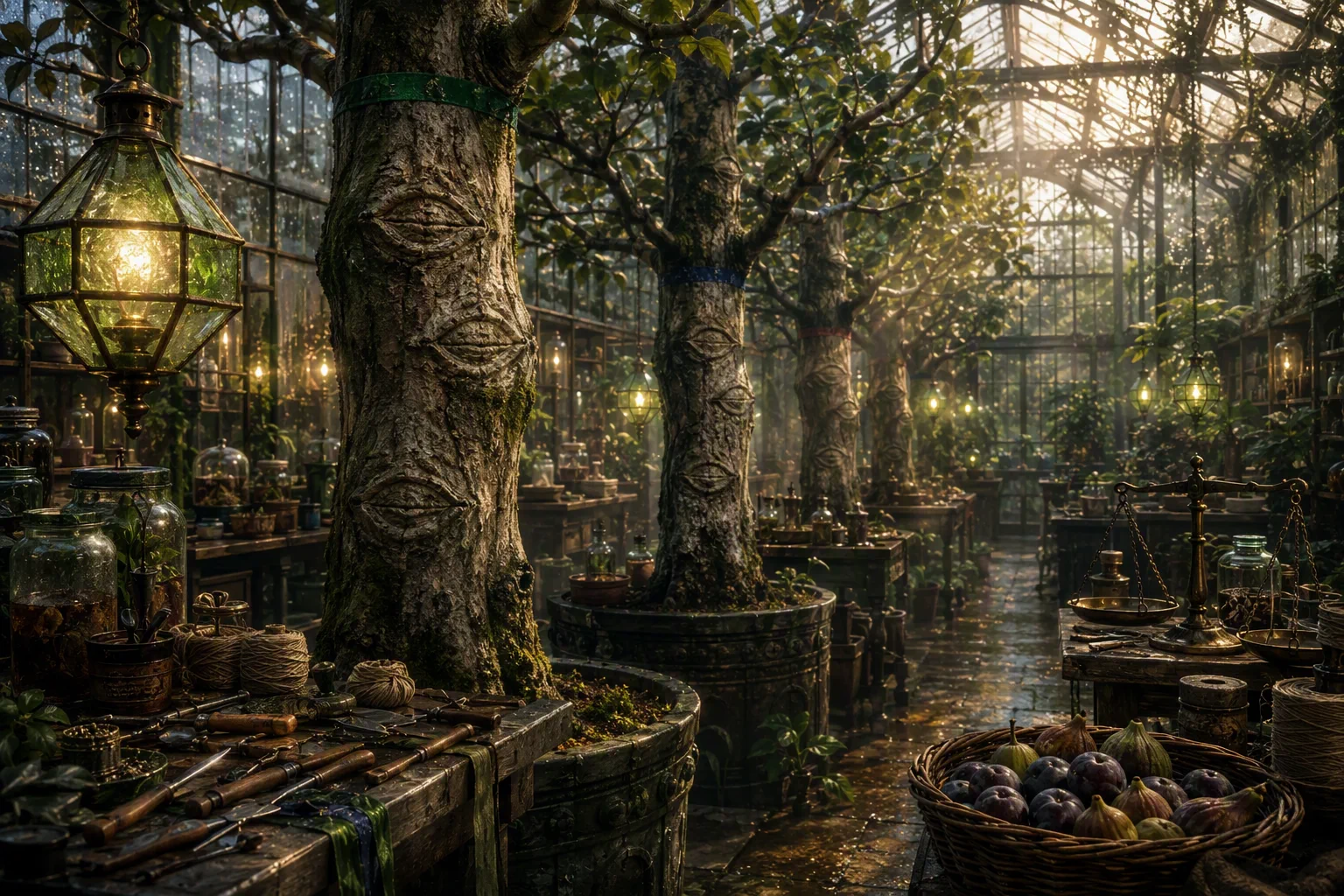
The class line runs straight through the terraces. On the Physicians Walk, doctors from distant cities bid on half-ripe cures while patients wait on pallets a few steps away. In the glasshouses the next varietal is grafted onto trunks scarred like closed eyes. And in the Rotwalk the pollen drifts strangest of all; standing there is itself a small dose.
Five people, and what each of them wants from a body
Matriarch Orrin of the Cobalt Rows runs the neurofruit trade with steady hands and tremors she hides under her rings. She reads market movement almost before it happens, then spends sleepless nights unable to trust familiar faces. The listed cost of a Blue Glass Pear is thinning sleep, tremors in the fingers, and familiar faces misreading as threat-shapes.
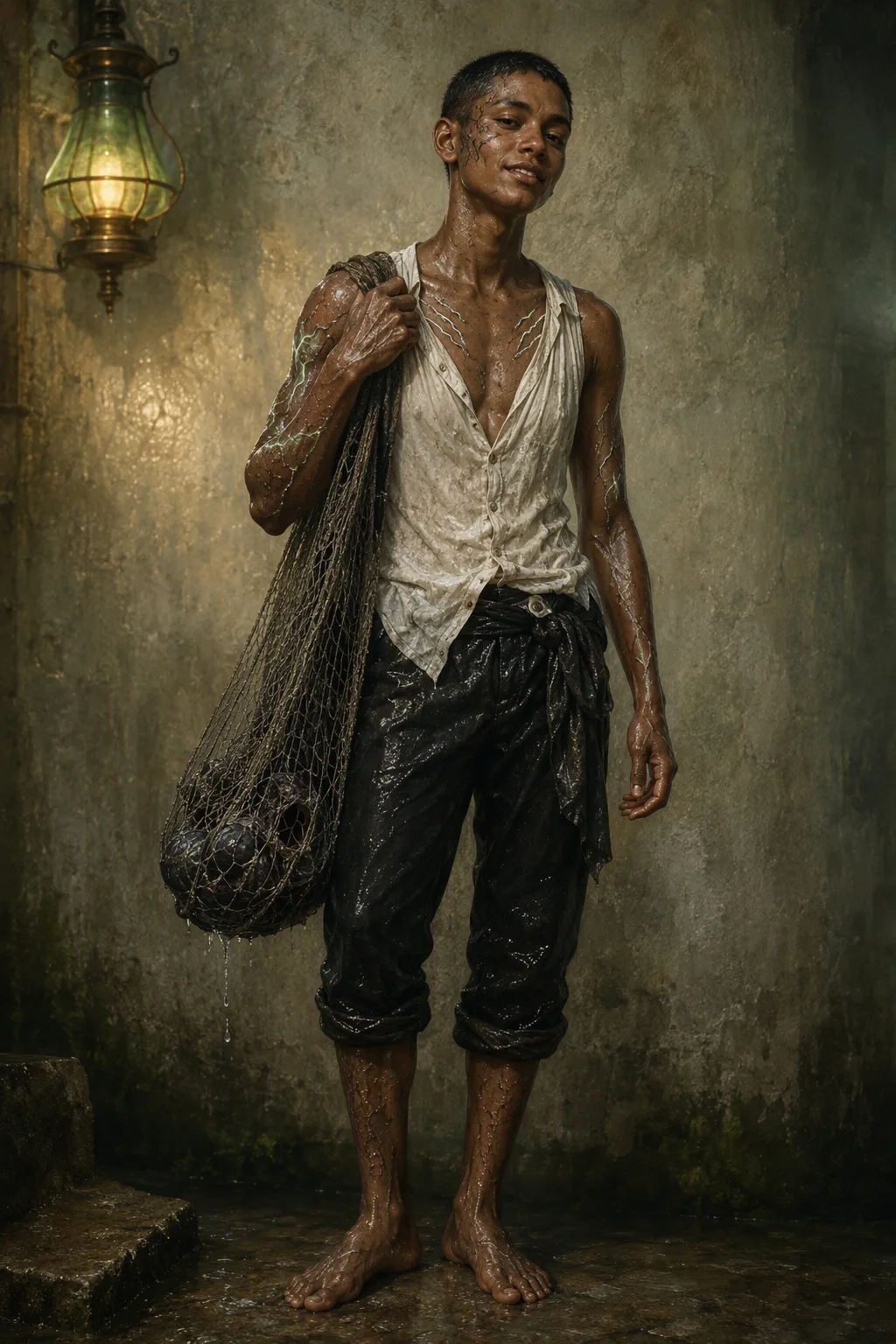
Tevi of the Tivane is a young salt-harvester with gill-scars at the collarbone: charming, thirsty, dangerous to love. Doctor Halsa is an outsider physician bidding on vein-pomegranates to save a distant patron — ethical enough to hesitate, desperate enough not to. Imre the Ledger-clerk is young, ambitious, and bribeable in three currencies: quarantine exemptions, clean permits, private test results.
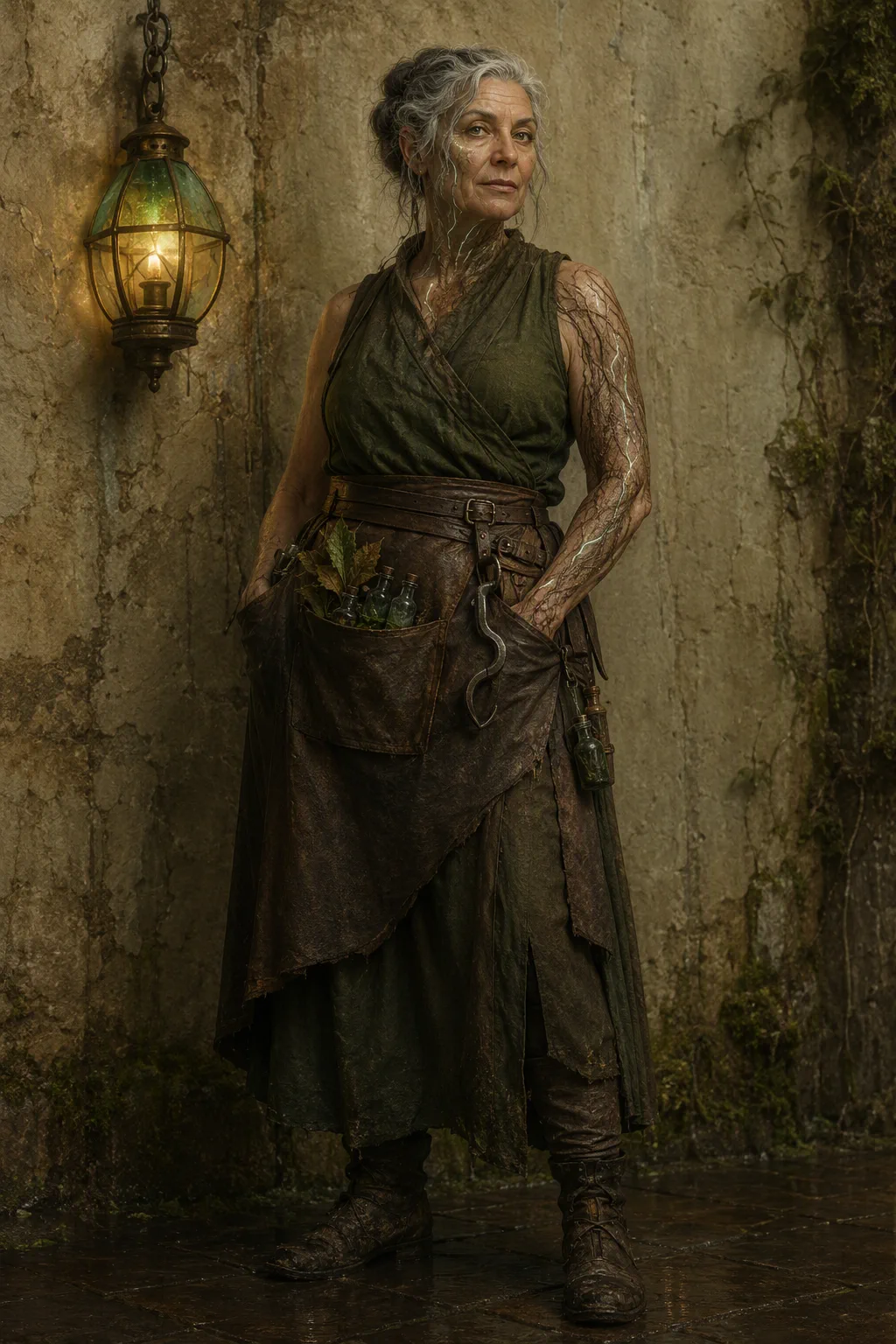
The Rootward Mother, nameless by choice, tends the Hollow and can name what you ate from your breath, your rash pattern, your pupils and the rhythm of your pain. Rootwardens use few words, chosen like fruit: ripe, simple, heavy.
Before you start
Is this body horror, or a story about farming?
Both, and it takes the farming seriously. Bodies split, root and overgrow in ways meant to unsettle, but the register is humid and pastoral rather than shock, melancholy more than grim. The valley is beautiful enough that some people decide the cost is worth it.
Do I have to solve the contamination?
No. The breached regeneration line drives the world, and you can circle it or ignore it. Buying one cure for one need, working the Hollow, running jars for the Salt Runners, or tangling with a single orchard family are each a complete game.
It runs long. Can I stop, and can I get it wrong?
Sessions are resumable, and this is one of the long ones. You can get it wrong, though wrong here rarely looks like a failure screen: a body that needs a maintenance dose, a debt numbered on a wax-sealed jar. Some players walk out of the valley; some find their character no longer can.
If this is your kind of story
This sits on the shelf with survival that is metabolic rather than tactical, horror that arrives as a diagnosis rather than a monster, and science fiction that keeps its speculation at skin level. If it lands, the frozen scarcity of Ossuary of the Frost-Titans works the same nerve at the far end of the thermometer, and Miasmorrow is another beautiful sick place where somebody decides who gets another dawn. Start at the arch that weeps salt, a stranger's pen writing your name, and the first fruit small enough to close in one hand.
