
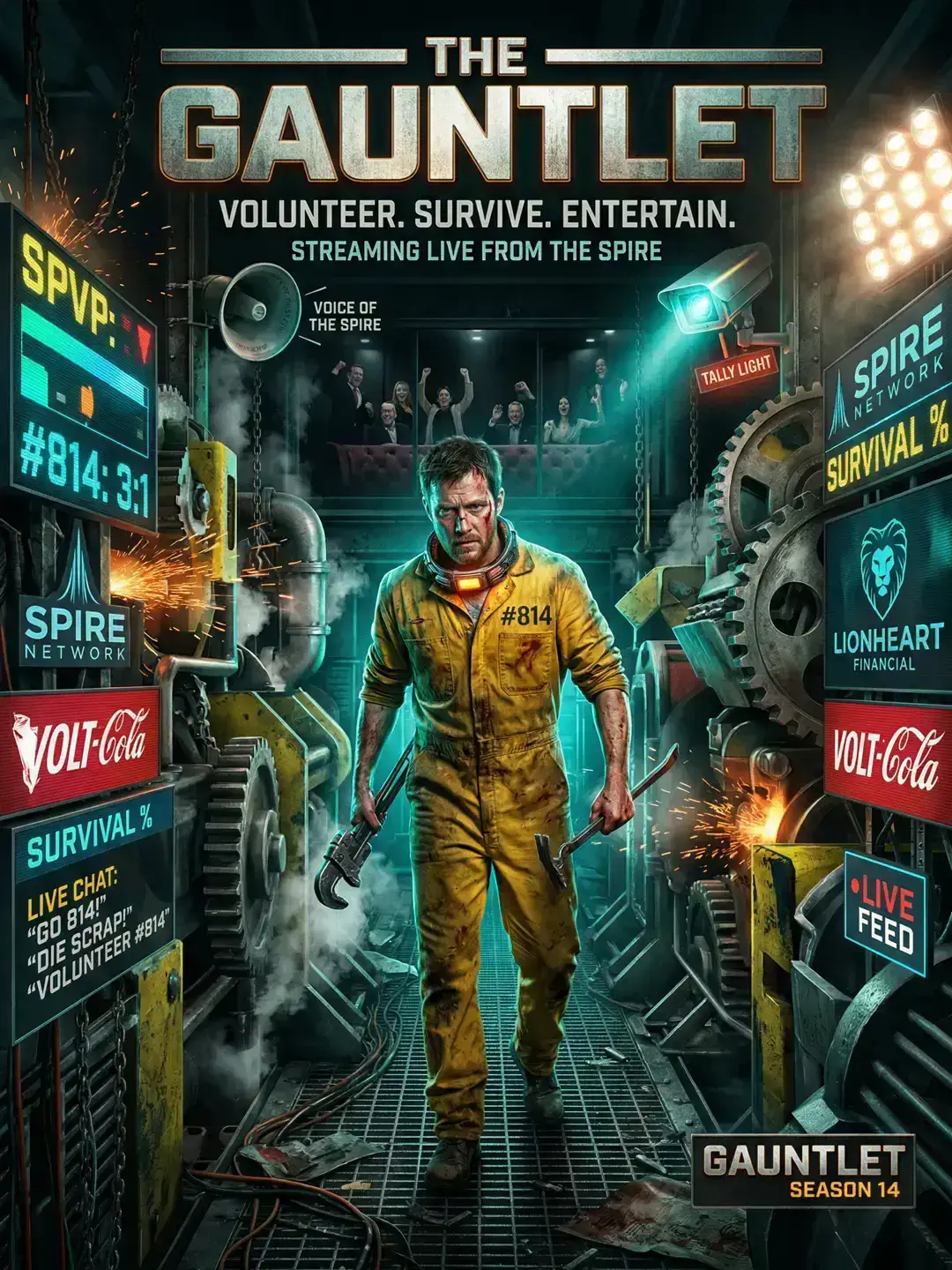
The Gauntlet
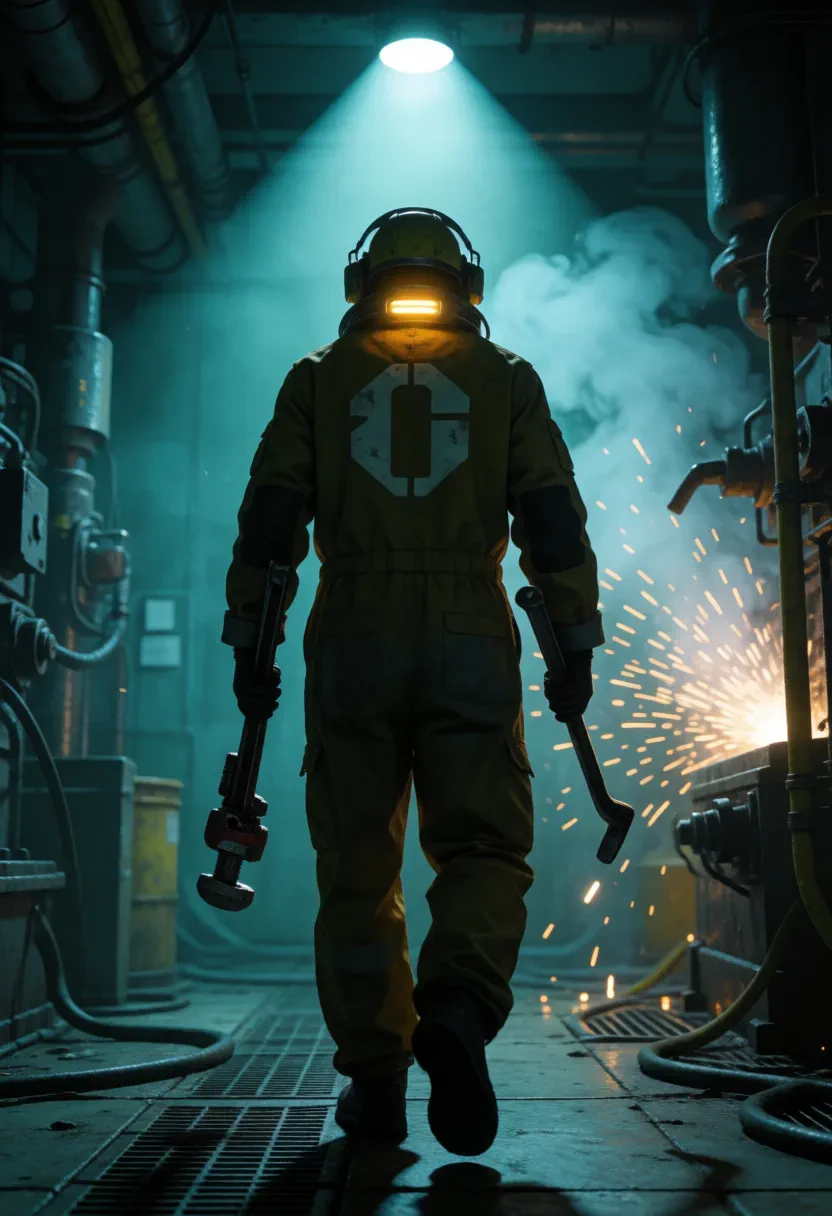
You volunteered for the deadliest show on the dark web. Ten brutal mechanical rooms stand between you and a billion-credit payout. Entertain a spectacle-hungry audience to earn survival supplies, or die live for their amusement. Smile for the cameras.




By starting, you agree to our Terms of Service, Privacy Policy and Refund Policy.
The rooms are only the second-worst thing in this building
Ten reinforced mechanical rooms, one behind the other, a billion credits past the tenth door. That is the poster. What it leaves out is that the doors do not decide whether you live. The audience does — five of them, with different appetites and very different budgets — and the room you stand in gets easier or lethally harder depending on whether they are entertained. You are Timber, a Volunteer out of the Lower Slums. Nobody dragged you in. You signed.
Ten doors, and no version of this where you wait it out
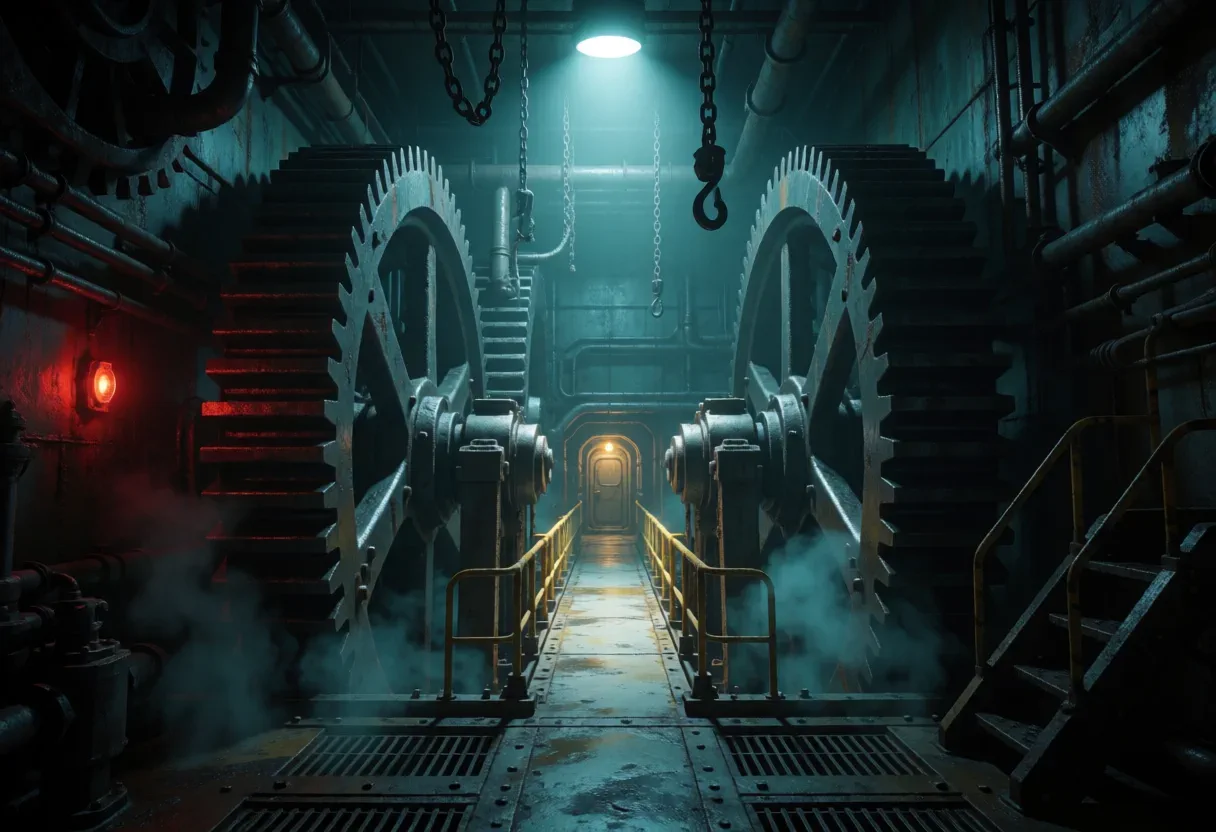
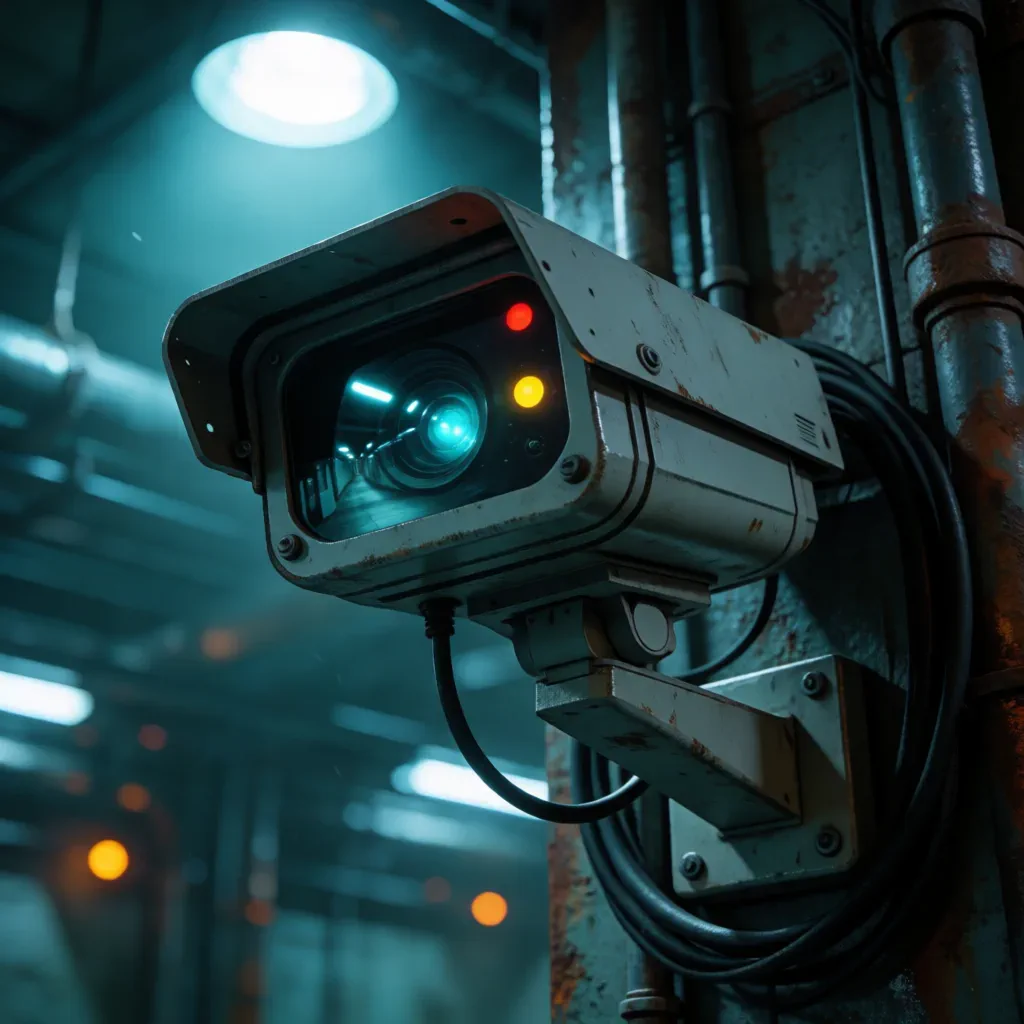
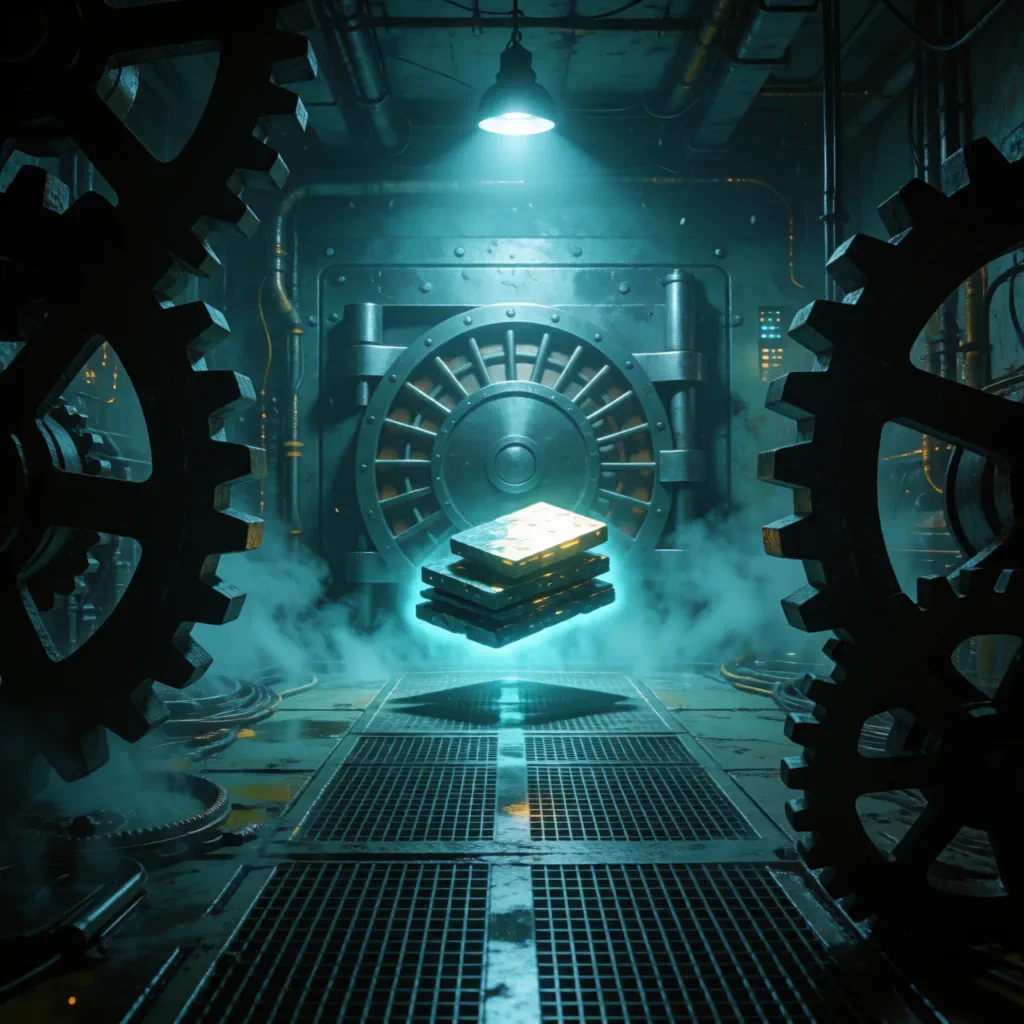
The Gauntlet is exactly ten reinforced puzzle rooms in sequence. You advance by solving the room, paying blood, or surviving its trap until the next iron door grinds open. There are no timeouts, no breaks, no rescues: the broadcast ends when the Volunteer dies or steps out of Door 10. Tamper with a camera and the collar around your neck detonates.
What escalates is the kind of thing asked of you. The early rooms are machinery problems: drag scrap blocks onto pressure pads to level a floor of shifting iron plates over a chasm. Then they stop asking for cleverness and start asking for tissue — a brass scale that lifts the latch only after you bleed exactly one pint into it, a brass key at the bottom of a vat of solvent, the ceiling coming down while your bare arm is still in it.
The deepest tier keeps the puzzle and adds a room that kills you while you work it: a cylinder rotating every thirty seconds through furnace fire, flooding acid and crushing spikes while you crack the lock on the exit hatch.
Five audiences, and none of them want the same thing from you
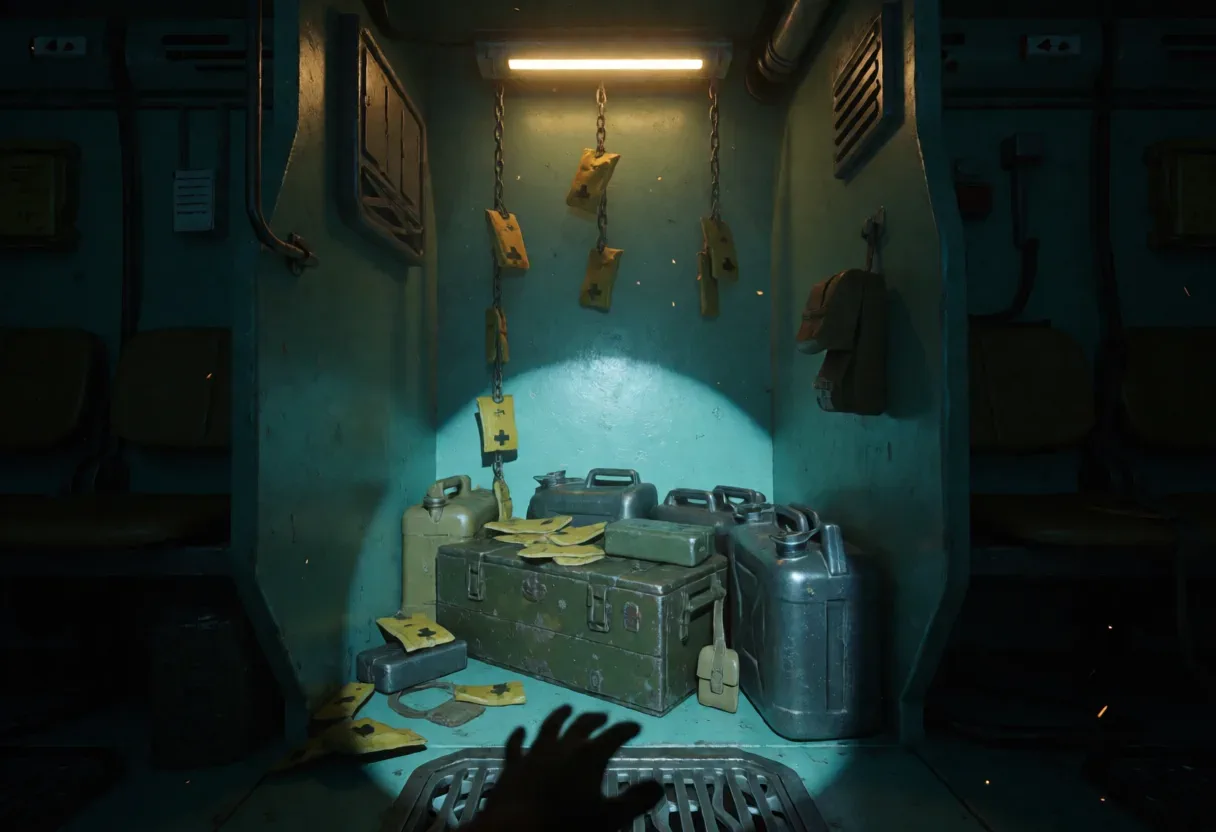
The live chat sits in your earpiece all run, and it is not one voice. The Slum Rats back you and are broke; their pooled micro-credits buy a dirty bandage or a stick of chalk. The High Spire Bettors are eloquent, sadistic and bored easily — they fund real medical drops for a risk worth wagering on, and vote for lethal complications when their odds need protecting. The Gear-Heads hate brute force and sponsor wrenches, grease and schematics for a trap dismantled properly.
The Gore-Hounds chant, and your standing spikes every time you bleed, take damage, or walk into a deeper room. The Corp-Sponsors send stimulants with the clinical warmth of a warranty, to keep you working through one more room.
Their verdict is Audience Favor. Play cautiously, hide, or stall, and the chat votes for Complications: toxic gas, faster crushers, the Hound. Give them bravery, clever mechanical thinking or dark humour, and supplies drop by pneumatic tube.
The rule underneath is stated without embarrassment — the audience prefers a spectacular failure to a careful success — so every safe choice is a withdrawal from the account keeping you supplied.
What actually changes when you play
The story tracks one thing above all: whether you are worth watching. That turns almost every action into a double question — will this open the door, and will it play. Turning the Valve Maze wheels in the right order gets you wrenches and grease from the Gear-Heads. Opening a vein on camera buys favor you may badly need three rooms later.
What it refuses to do is let you opt out of the performance. Hiding and stalling are read as boring play, and letting Favor reach zero is one of the defined ways this ends. You type what Timber does in your own words instead of picking from a list, and the narrator reads that input against this canon rather than improvising a world each turn, which is why the Gear-Heads stay consistent about what impresses them and the collar is as final in room nine as in room one.
Iron grating below, clean marble above
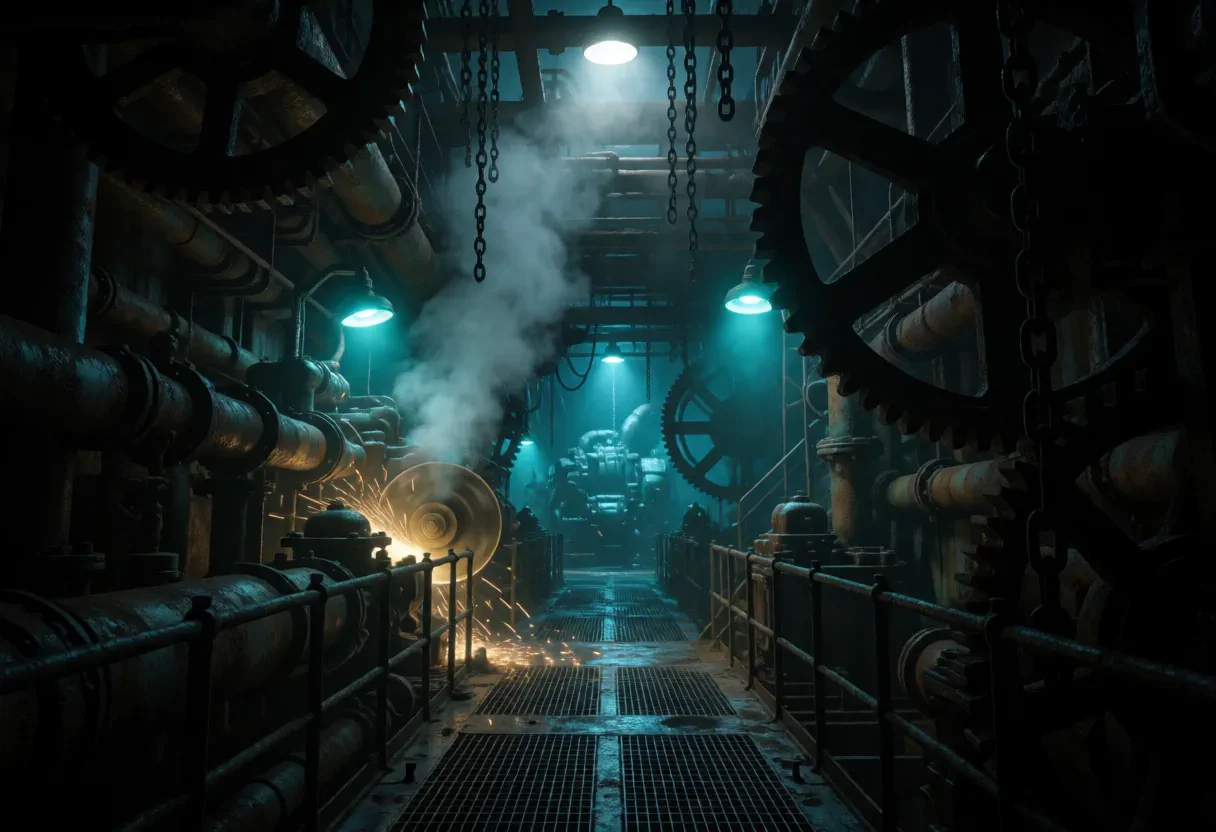
Nothing here is sleek: heavy analog technology — grinding gears, steam valves, pneumatic tubes, iron grates — in a decaying industrial dystopia where equipment does not glow, it rusts. Above stands the pristine Upper Spire, where the people funding your medical drops live; beneath are the starving Lower Slums you came from. That distance is not a gap anyone crosses; it is the premise.
The facility is also staffed: through reinforced glass you will sometimes see the Hazard Crew — the Scrubbers, silent in rubber hazmat suits and welding masks — power-washing gore off a wall or dragging a body out of a room you are about to enter. They never answer when you shout, and work around you as though you were already a ghost.
The people on both sides of the glass
Over all of it is the Announcer, the Voice of the Spire: a booming, artificially smoothed, unnervingly cheerful host on the iron PA, with game-show energy that fits the content the way a party hat fits a wound. When the numbers collapse, or you refuse to advance, the Showrunners release the Hound — a mechanical predator of pneumatic pistons, rusted blades and a sensory-array head, sent purely as punishment for being dull.
Scattered through the rooms are the Remnants: previous Volunteers, mutilated, some not finished dying. They are the closest thing to documentation here: how a body fell tells you what a trap does. One still breathing may whisper a clue, beg for mercy, or hold something you need in a grip already stiffening around it.
Two people outside still think of you as a person, not a broadcast. Mara Venn, your older sister, worked scrapyard shifts and can patch machinery and spot a lie inside a sentence; she treats you as someone who can be saved, not merely watched.
Bram Holt, foreman of the scrap yard where you worked, is heavy-shouldered, soot in his beard, with a memory for every debt. He sees through your bluffing and helps only quietly.
Before you start
Is this a puzzle story or a gore story?
Both, and the order matters. The first tier is genuine mechanical problem-solving — sequences, pressure, sound, timing — and the Gear-Heads reward you for it. The deeper tiers name a price in blood, fingers and skin. If graphic bodily harm is a hard limit, this is not the story to discover it in.
Can I refuse to perform?
You can try, and the show is built to make refusal expensive. Cameras cannot be blinded without the collar answering for it, stalling summons the Hound, and dull play gives the Bettors an excuse to vote the room harder.
How long is it, and can I stop partway?
It is a long story: ten rooms escalating in kind, not only difficulty, with a run's worth of chat, sponsorship and consequence between them. Sessions are resumable, so you can walk away between doors. It ends more than one way, and the audience decides most of which one.
If this is your kind of story
This sits on the horror shelf, beside the survival stories, and it is gritty in the literal sense: rust, grease, machinery nobody cleaned before you arrived. Quietus & Sons, Pest Removal trades cameras for a ledger where the things in the walls know your name; The Dead-Hand Clause seals you on one floor with people dying in an order somebody else chose. Start with the first door, though. A cheerful voice says your name over the PA, a dirty bandage drops down the tube because people with nothing pooled their micro-credits for it, and behind the glass a man in a welding mask hoses down the room you are walking into.
