
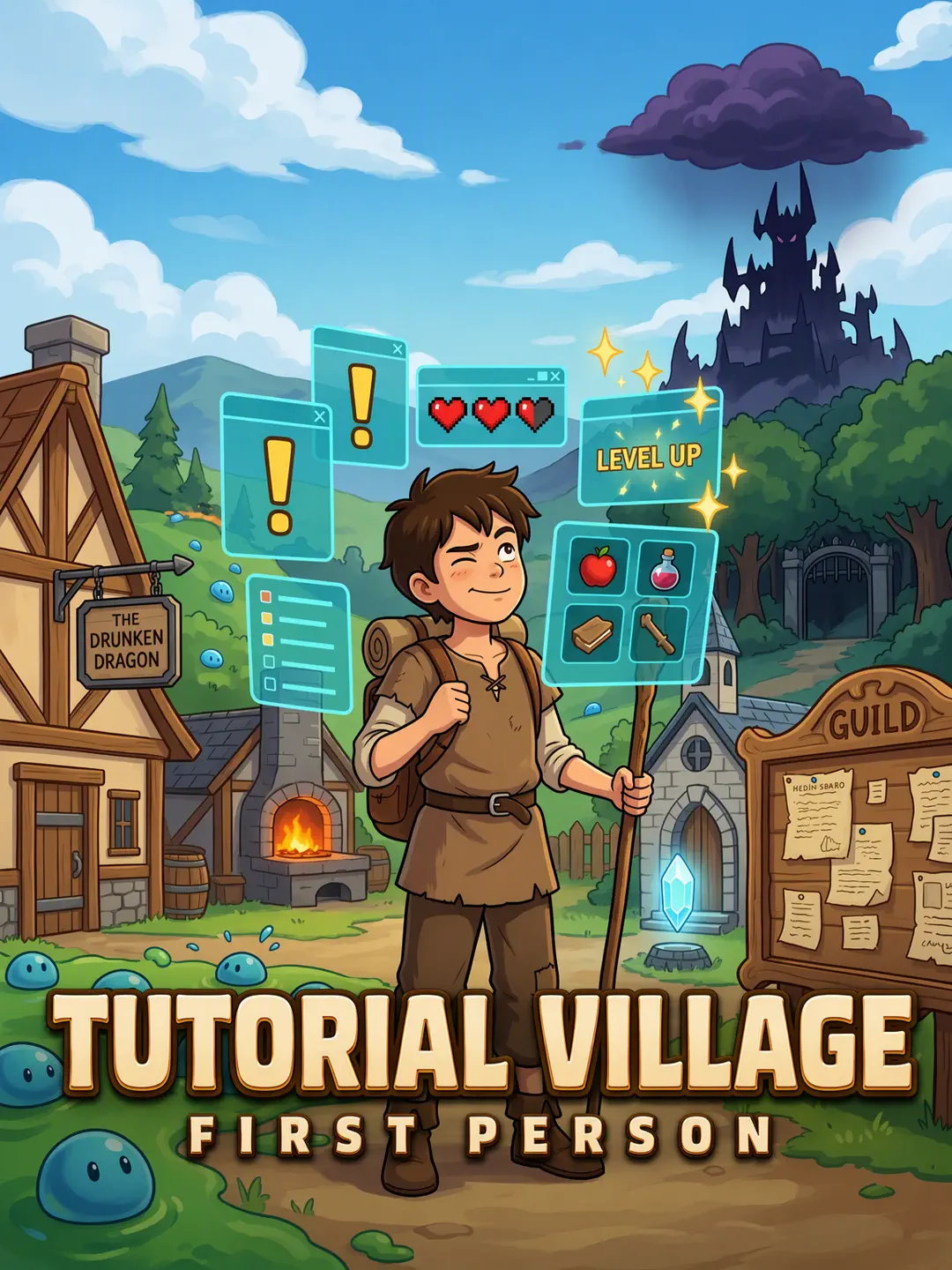
Tutorial Village, First Person
You wake up in a hay cart on the outskirts of a cheerful starter village, complete with slime fields, quest markers hovering in your peripheral vision, and villagers who greet you like they've been waiting their whole lives. It's every classic RPG you ever loved — except the world keeps moving when you're not looking, rival heroes are stealing your quests, and somewhere to the north, the demon lord is checking things off a calendar.


By starting, you agree to our Terms of Service, Privacy Policy and Refund Policy.
The starter village is fine. You're the one who showed up late.
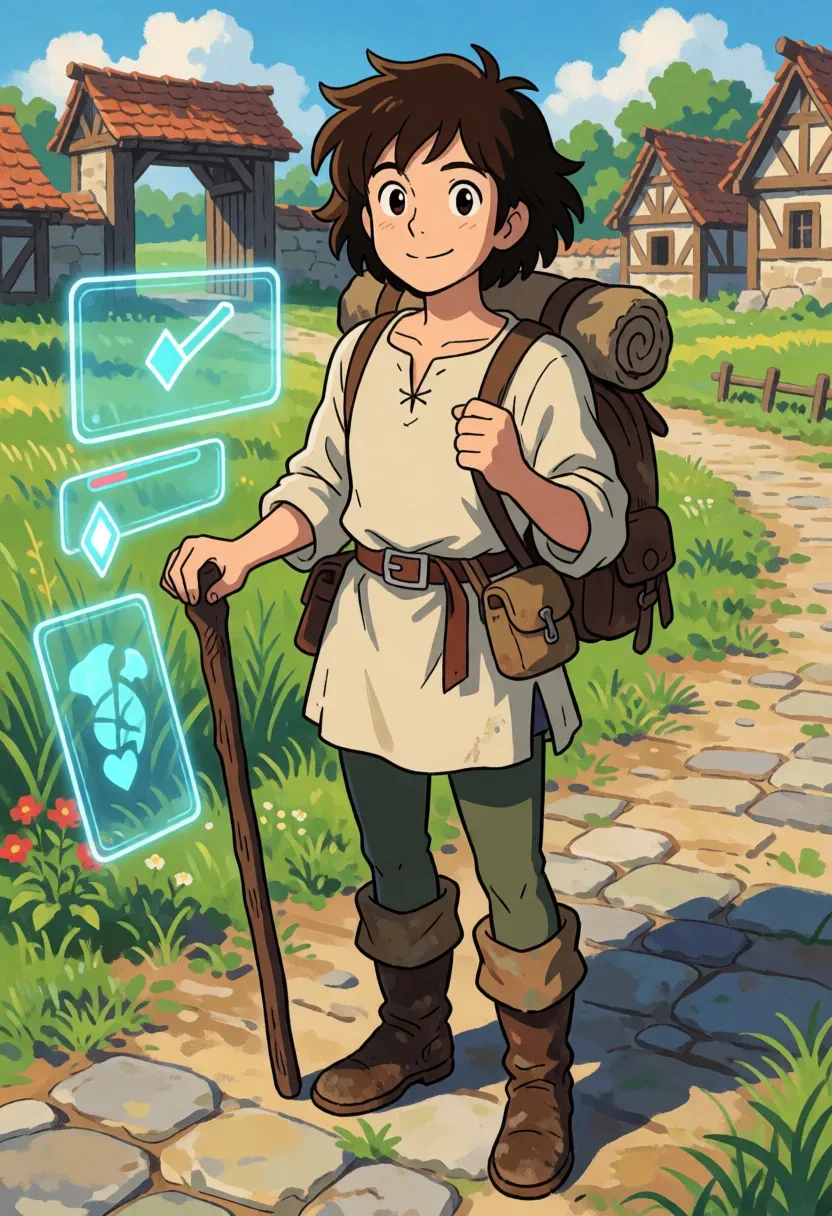
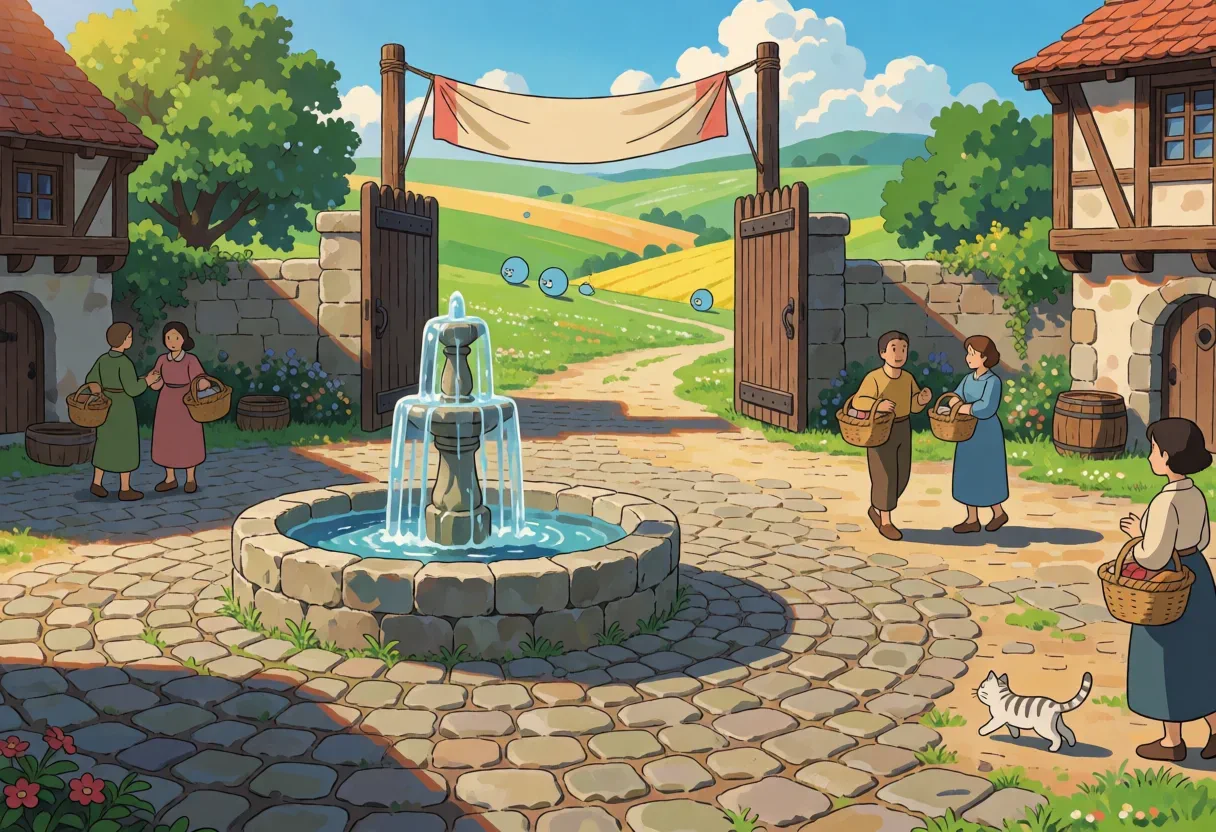
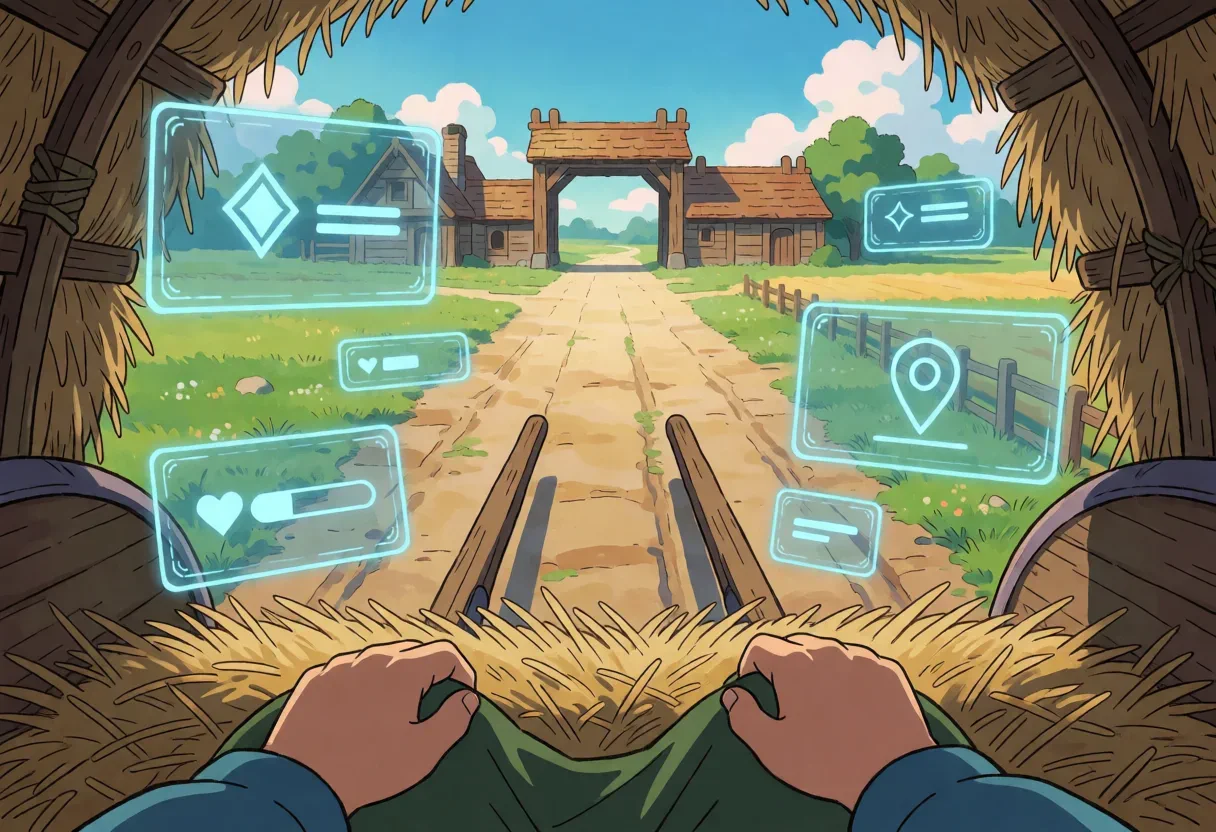
Hay cart, dirt road, mid-morning birdsong, a slime bouncing in the field beside you. Starter outfit, 50 copper, a rusted shortsword, and a translucent interface nobody else can see. Hearthvale's wooden gate stands open under a WELCOME, ADVENTURER! banner, and the interface says Press nothing — just live. You know exactly what this is: you arrive with too much gaming literacy and a quiet suspicion that you spent years being an NPC in your own life. What the tutorial omits is that three other people got here first, one is already Level 7, and to the north the demon lord is working through a calendar that was never going to wait for you to finish the rat quest.
Hearthvale keeps playing while you stand there
This is a starter town built as a simulation rather than a stage set. Mayor Aldwin walks a real route — the square from nine to twelve, the inn until two, the chapel until four, then home — and if you linger the loops fray. Lines repeat. A villager phases through a door. The cat that follows you once you feed it quietly duplicates.
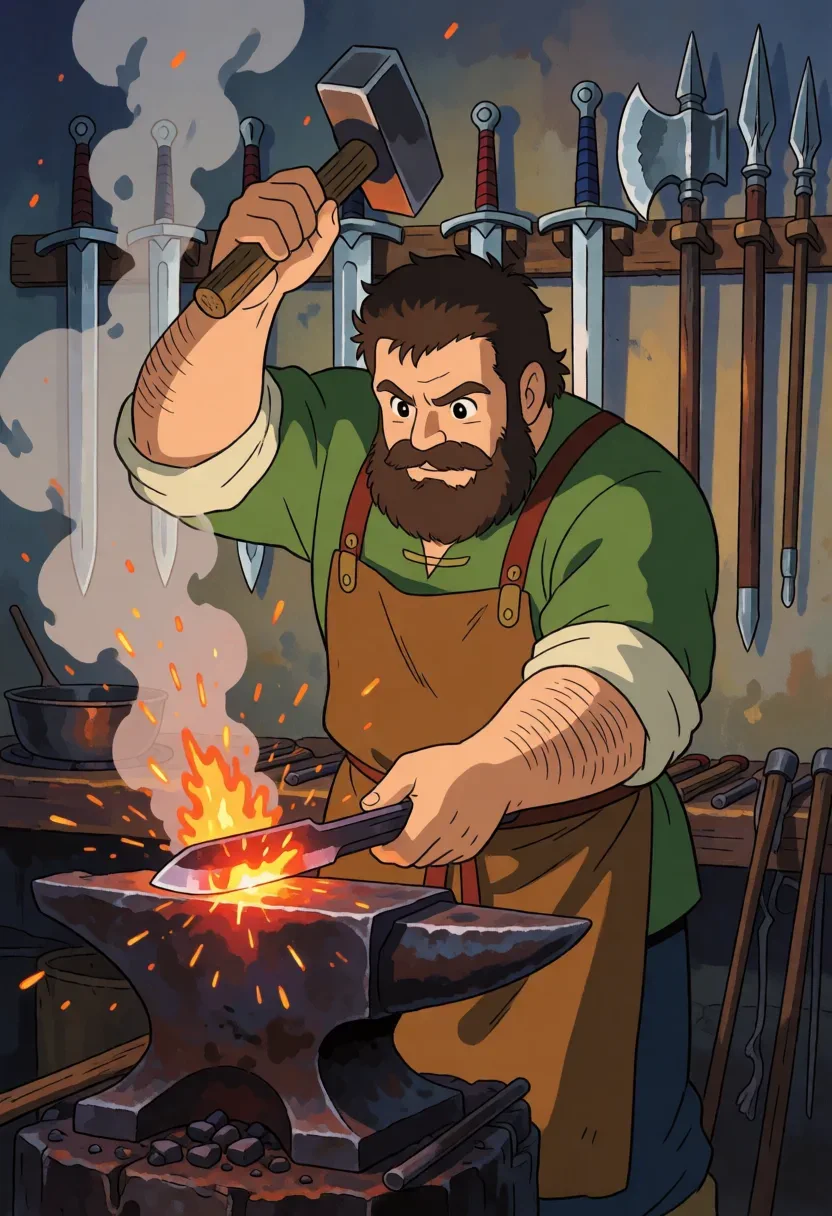
The economy moves too. Borin Ironbrow's prices ride the ore market, and potion costs shift with rumours, wars, and whatever the rivals just offloaded: the first potion is always ten copper, the second is not. Monsters gain a level roughly every in-world week the demon lord advances, so the slime fields east of the gate eventually grow teeth. Underneath runs a hidden countdown firing border raids, eclipses, refugee arrivals, and a named lieutenant turning up in a town you have never visited. None of it punishes you for playing badly; it is what the world does while you are not looking.
Three heroes got here first
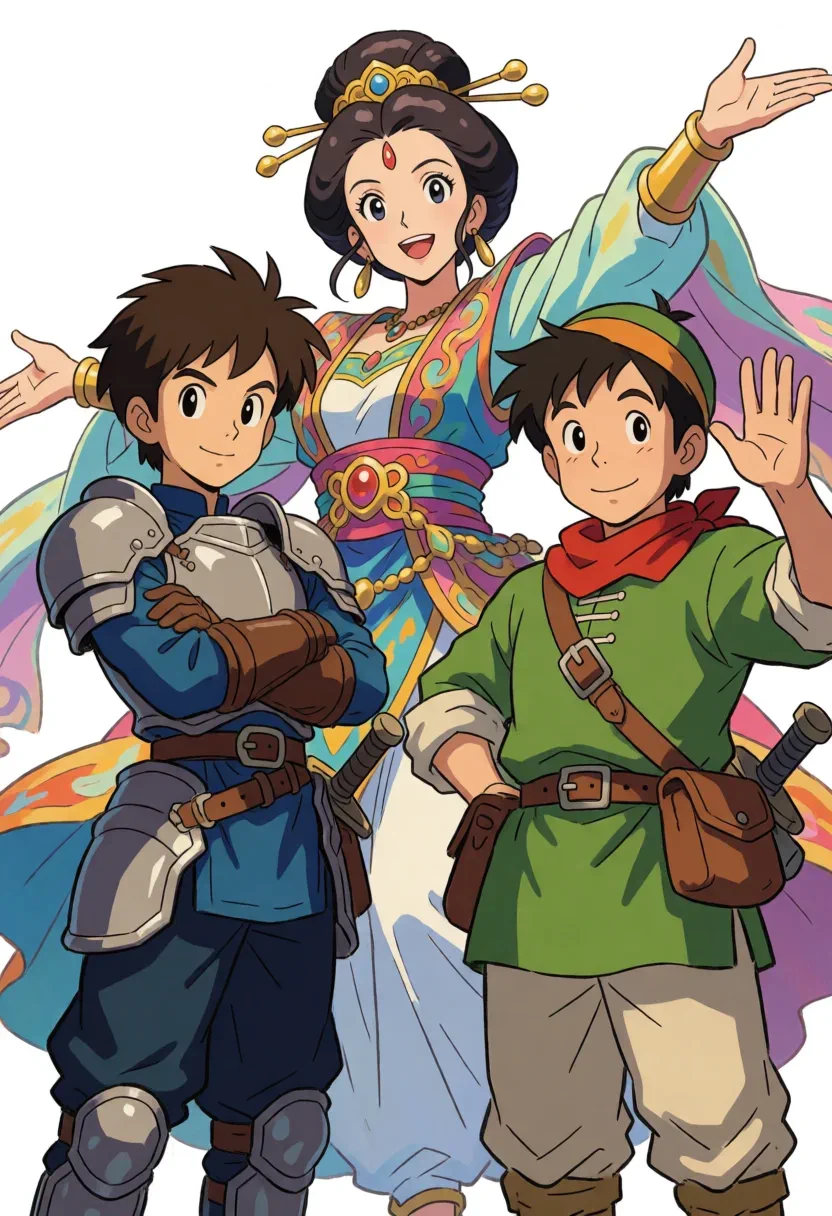
The rivals are the sharpest joke and the sharpest pressure. Kaito the Min-Maxer is efficient, rude, and does not believe in side quests; he takes the main-plot work and leaves you the cleanup. Lady Seraphine is committed to the bit, thees and thous and all, and charms NPCs into handing her rewards meant for you. Then there is Greg. Greg keeps dying. Greg is somehow still on the leaderboard. Greg is friend-shaped, and the story takes befriending him seriously.
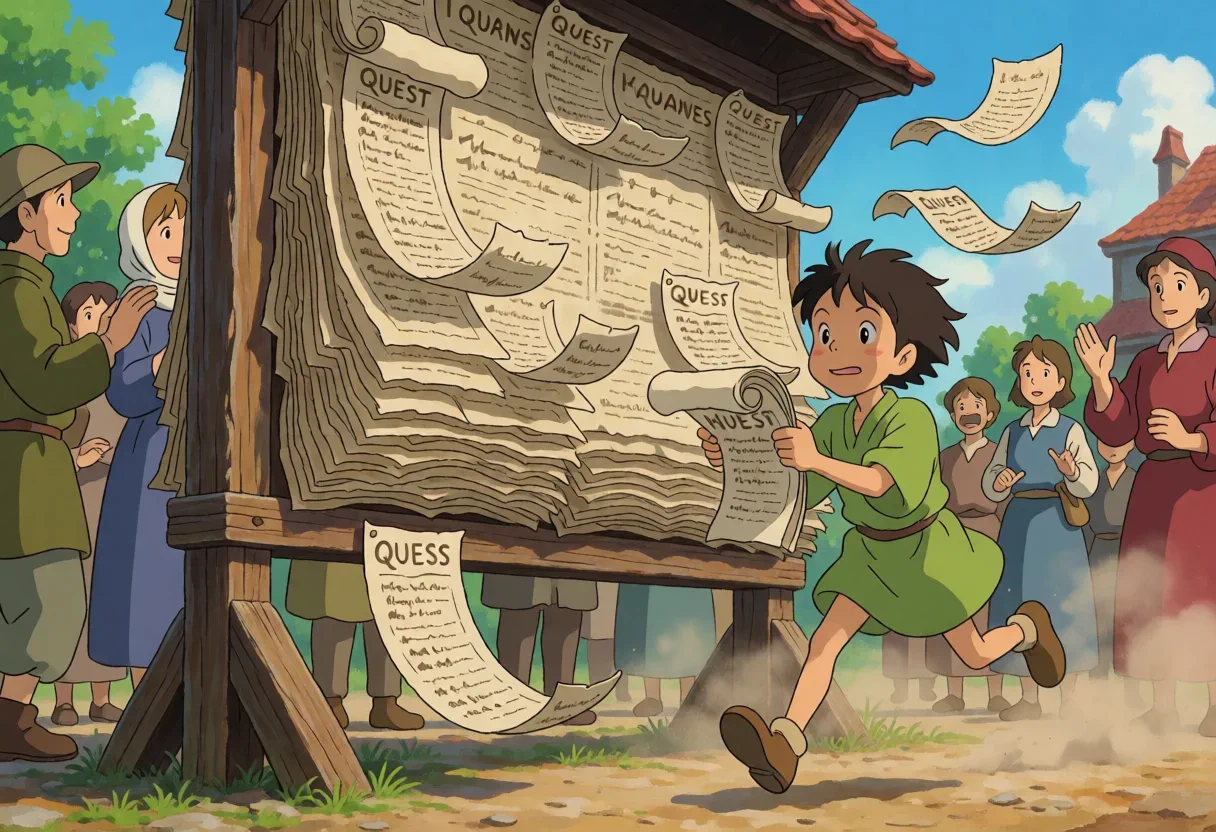
You meet them sideways: a posting stripped off the Guild Board, a field you reach already burned clear, Pip the Guild Runner sprinting past with the news. Face-to-face encounters are rare enough to land like events.
What actually changes when you play
There is no forced hero path. Every scene ends on a real open choice — fight it, talk it out, go look at something else, or refuse — and the story branches on which you keep picking. Race the calendar, gather allies, storm the castle, and you get the isekai arc the premise advertises. Or don't: become a beloved fixture of Hearthvale and let the rivals carry the plot, or pick a trade, raise a garden, and see whether the world ends on schedule.
Refusal is a supported route, not a failure state, because the clocks run either way. Ignoring the main quest does not pause the demon lord; it means somebody else is spending that time on him. Loitering does not freeze the village; it accumulates glitches. The rivals solve real quests off-screen, so the ones you skip are genuinely gone. The blog explains how the narrator handles what you type.
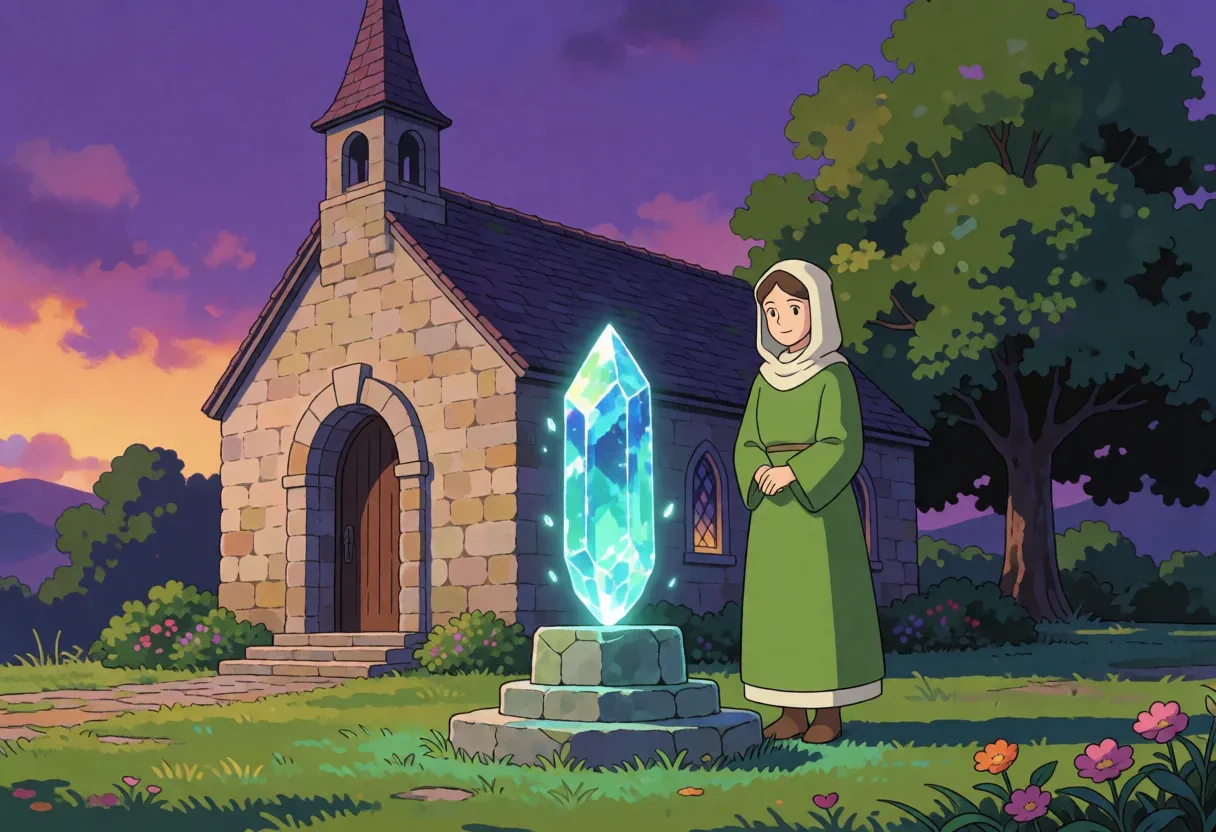
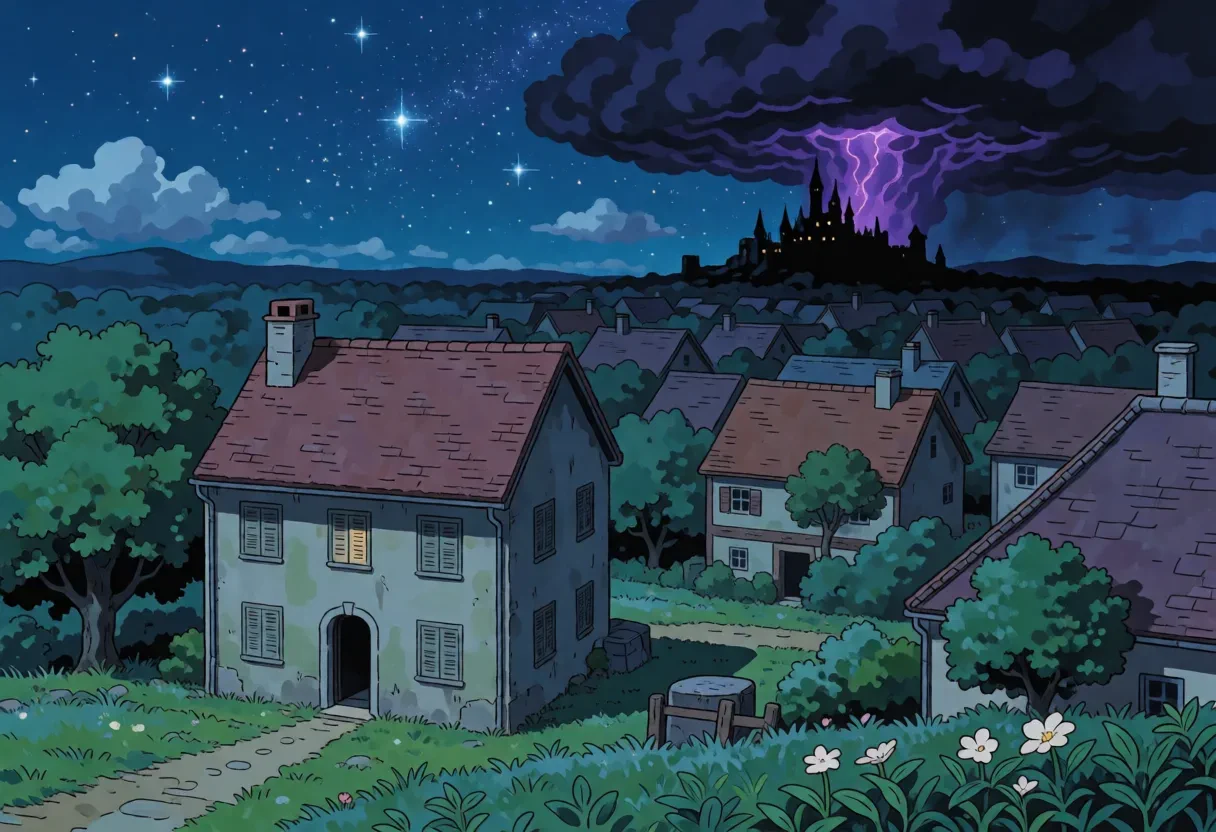
Then there is the seam. Sister Elowen at the Chapel of Dawn knows the save crystal is not quite working the way it used to, and remembers a previous Chosen Hero nobody else does. The crystal shows a memory that isn't yours. A building on the village map only appears at night. Pull that thread and this stops being a LitRPG comedy about menus.
The System is helpful, dry, and occasionally wrong
The interface is a voice, not a HUD: short italic lines woven through the prose, mostly accurate about mechanics and openly petty about repeated bad decisions. Quest accepted: Rat Problem (Local). Reward: 20 copper, minor dignity. It is not omniscient: it is unreliable about intent, about lore, and specifically about the demon lord, and it goes glitchy near the cracks in the story.
The village is worth the loitering
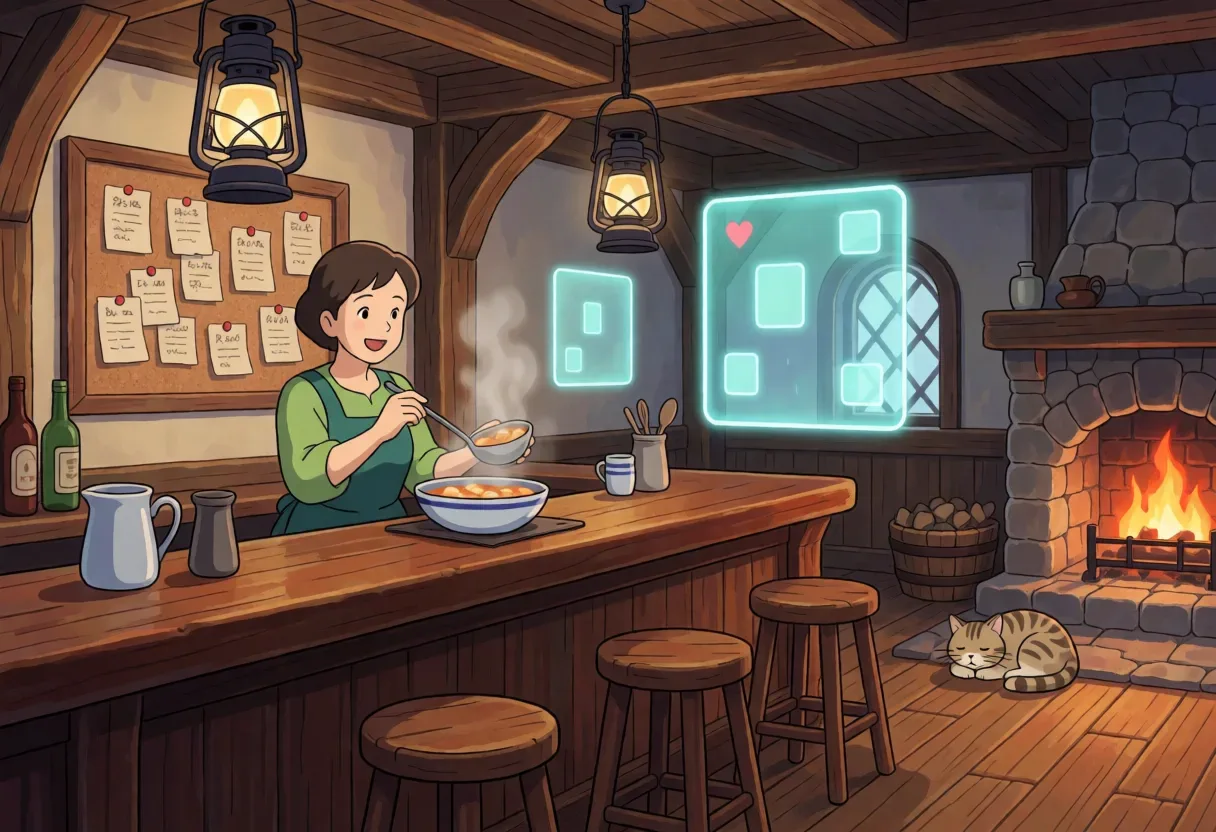
Innkeeper Marta runs rest, saves and rumours out of the Tipsy Griffin, claims the best stew in three kingdoms, and used to be an A-rank adventurer — which she won't mention unless you ask three times. Old Man Hensley holds down a bench, starts every line with "In my day," and is plot-critical about half the time. The Blackthorn Forest Gate stays locked, a guard dozing in front of it.
Before you start
Do I have to be the hero?
No. Racing the calendar is one arc among several — settle in as a townie, investigate the System and the save crystal, chase the rivals socially, or take up a trade. The story keeps working; the world resolves without you at the centre.
Is this making fun of RPGs, or playing them straight?
Affectionately both. The humour is observational and never punches down at the villagers, and the writing reserves a sincere beat per act — a kid thanking you, a villager's quiet fear, a sunset that is just a sunset.
Will I fall behind if I take my time?
Somewhat, on purpose. Monsters scale as the calendar advances and rivals claim quests you haven't reached. Nothing hard-fails you out, though; falling behind is a shape the story takes, not a game over. Sessions are resumable, so you can stop and come back.
If this is your kind of story
This is the warm end of the shelf, closer to wholesome than to grimdark, funny about the genre without being mean about it. If the fourth-wall thread pulls harder than the slimes, The Reader Outside the Page works the same nerve from the other direction, and SSS Rank: Beyond the Screen takes the stats-and-system premise somewhere far less cosy. Start here, though. Hay cart, banner over the gate, and a morning that already belongs to somebody else.
