
Respawn Debt
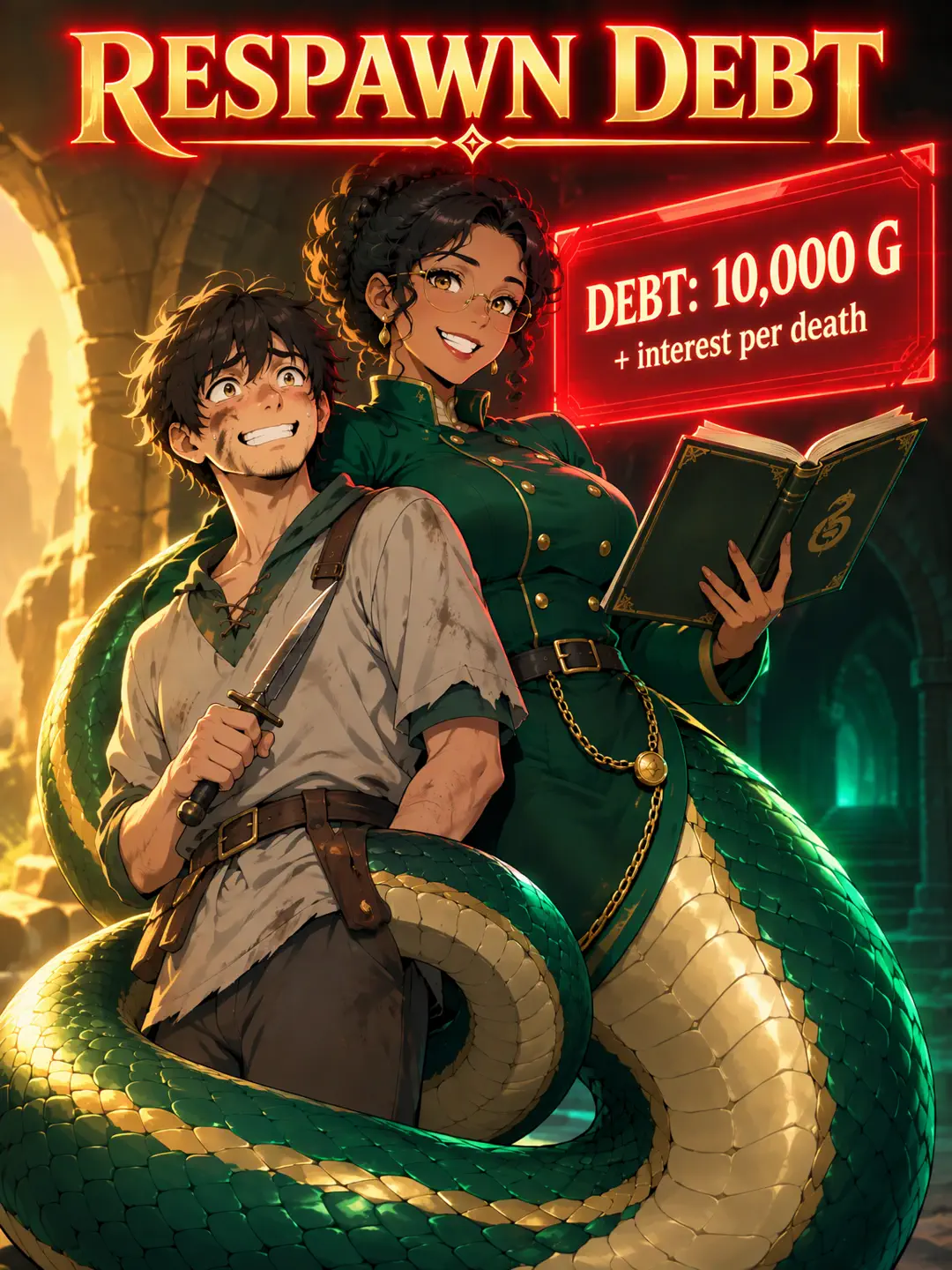
You died, woke on a gold altar and already owe the bank 10,000 G. Every death in the dungeon adds to the bill. Your cheerful lamia debt collector needs you alive for her bonus. Pay it down, die forward, or find out who put a price on breathing.






By starting, you agree to our Terms of Service, Privacy Policy and Refund Policy.
You died. The bill arrived first.
Respawn Debt is an isekai LitRPG comedy that starts where most isekai stories skip ahead. You die in our world, wake up face-down on a gold altar in a marble hall, and before you can ask where you are, a System window opens with three lines: your level, your health, and a debt of 10,000 gold.
The Bank of Second Breath runs the altar. In the dungeon city of Gildmaw, whatever dies inside the dungeon comes back, and the bank sends the invoice. You are an Arrival, a newcomer from another world, and the bank has billed you for the resurrection that brought you here. Every time you die down in the dungeon, it brings you back again and adds to the total.
It sounds grim. It plays like a comedy with a heart, because the person assigned to make sure you pay is the most cheerful debt collector in the city.
Meet Marisol, your collector
Marisol Quell is a lamia: a woman in a buttoned emerald banker's coat and round gold spectacles from the waist up, and a long emerald-and-gold serpent tail from the waist down. She hangs from dungeon ceilings by her tail while she does sums. She calls you her favourite asset. She gets a small bonus for every hundred gold you pay down, so she very much needs you alive, solvent and not doing anything expensive, like dying.
She frames every kindness as accounting. Whether that stays true is part of the story, and how fast she starts calling you by your name depends on what you do. If you liked the funny, growing warmth of a bond you can't walk away from in Familiar of the Failing Three, Marisol is that energy with a ledger.
How dying works
Death in Respawn Debt is never the end of a scene. You blink out in a flash of gold, wake up on the altar with soot on your face, and a goblin clerk hands you a receipt and a boiled sweet. The fee climbs with every death: the first costs 120 G, the second 240 G, the fifth 600 G. Dying is always possible and never free.
Every death also pays out a Death Insight: one true, useful fact about what killed you. The troll who flattened you has a knee that buckles at the sound of coins. The collapsing tunnel always goes on the third step. You can play carefully, or you can die forward on purpose and learn the dungeon the expensive way. The game lets you choose, and the bill keeps score.
A dungeon city where every number means something
The money in this story is never a spreadsheet. A bowl of noodles costs 2 G. A bunk for the night costs 5 G. A moss-rat tail sells for 3 G and a troll tusk for 400 G. Each number is a joke, a stake or a choice.
You delve into the Maw, the living dungeon under the city. You sell what you bring back on the Coin Steps, the long market stair between the bank and the dungeon's mouth. Then you decide what the money is for: your debt, better gear, a bribe, or somebody else's problem. Those pull against each other, and that tension is the game.
Fans of stat windows and fast levels will feel at home. Your first level-up comes in the first few turns, every level offers abilities to choose from, and any power you invent for your Arrival Skill is granted. The bank just stamps a price on it. For a different take on a starter world that keeps running without you, try Tutorial Village, First Person.
Redline Row and the people who live there
At night the debtors' quarter glows. Crooked houses are stacked into the city wall, and every window carries the red number of the person who sleeps behind it. This is where you rent a bunk, where Nan Pepper's noodle cart feeds half the street on credit, and where everyone knows how close everyone else is to the Ceiling: the point where the bank stops billing you and starts owning you.
The comedy is loud, but Redline Row is where the story finds its heart. You arrive thinking about your own number. You will soon know other people's by name. If you enjoy a story where a funny premise opens onto something tender, The Ledger of Last Breaths mixes humour and dread in a similar way.
Who it's for
Respawn Debt is for readers who like:
- isekai and LitRPG with real stakes and very few stat dumps
- a companion who is fun from the first line and has more going on underneath
- comedy that doesn't punish you for trying things
- choices that cost something, without walls that stop you
It's a good next story if you liked the high-pressure climb of SSS Rank: Beyond the Screen but want something lighter on its feet. Every reply ends with clear choices you can tap, and you can always type your own move instead. The story will take it seriously.
FAQ
Do I need to know LitRPG or isekai to enjoy it?
No. The System window never shows more than three lines, and the story explains each number when it matters. If you know the genre, you'll catch the jokes about it. If you don't, it reads as a fantasy comedy with a very pushy bank.
Can I actually lose?
Dying never ends your run; it adds to your bill and teaches you something. The real danger is your debt climbing toward the Ceiling, and the story always warns you well before then, with a way out.
Who do I play as?
You play an Arrival from our world, written in second person. The default is Teo, a 22-year-old delivery rider, but you can set your own name and gender, and the story follows your choice.