
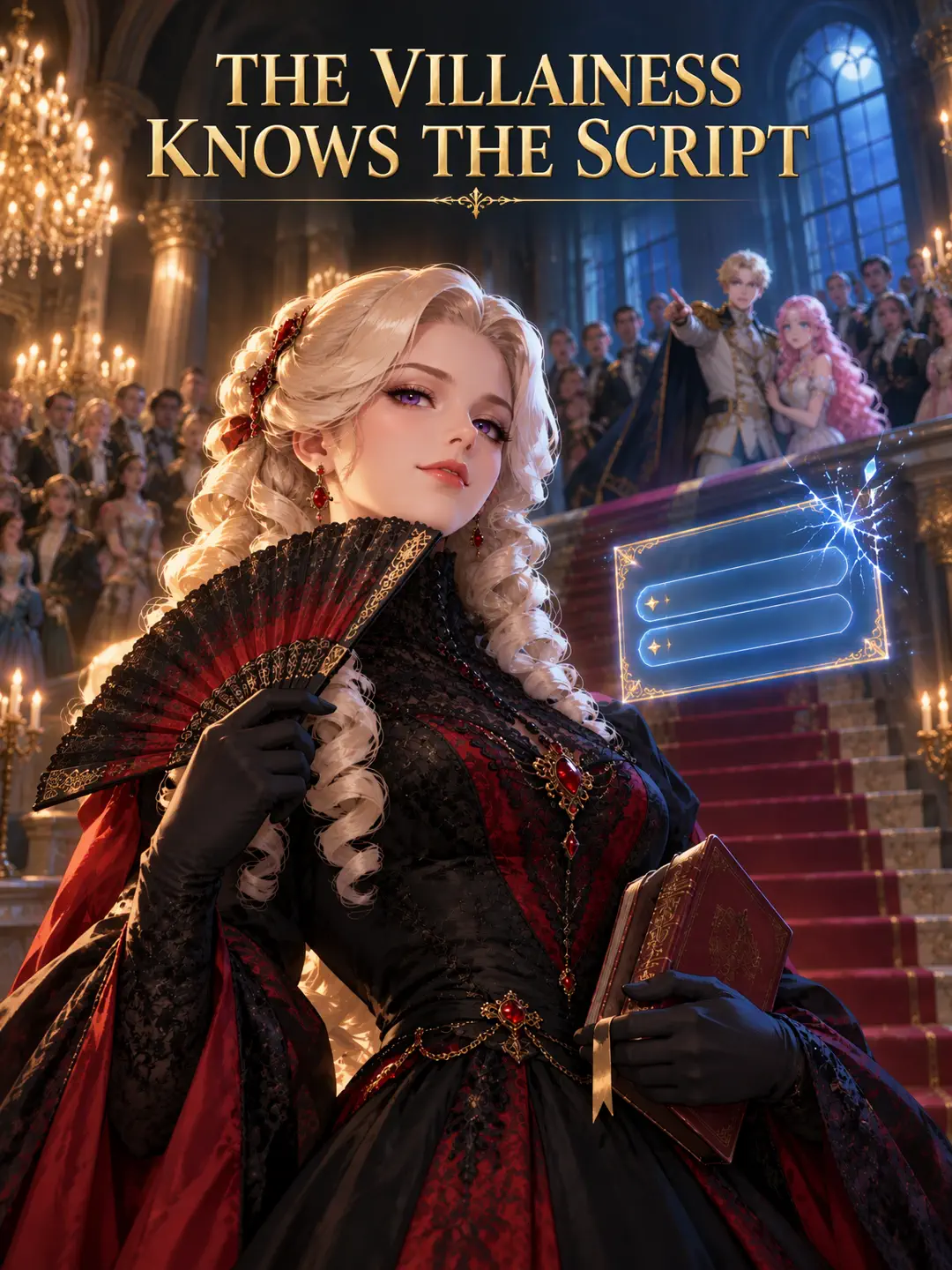
The Villainess Knows the Script
You wake as the villainess of a romance game you've played to death, on the night the crown prince denounces you. You know every line and every route, and all of them end with you condemned in seven days. Break the script to live, but every break makes your foreknowledge fail.







By starting, you agree to our Terms of Service, Privacy Policy and Refund Policy.
Waking up as the villainess
You open your eyes on a crimson staircase in the middle of a royal ball, wearing a black-and-crimson gown, a lace fan in one gloved hand and a red book in the other. Four hundred guests are turning to look at you. At the top of the stairs, the crown prince is pointing straight at you, and the sweet pink-haired heroine is clinging to his arm.
You know this scene. You have seen it on a screen more times than you can count. This is Lilac Crown: Vows in Bloom, a romance game you played to death, and you are no longer the player. You are Duchess Seraphine de Noirvel, the villainess, on the night the prince publicly breaks the engagement. In every route you ever played, this night is where her ruin begins, and seven days later the Lilac Judgment finishes it.
The Villainess Knows the Script is an interactive romance-fantasy story about surviving those seven days with the one advantage nobody else in the kingdom has: you have read the script.
The script, and the window that offers it
At the game's choice points, a translucent window of gold and moon-blue light appears beside you. Only you can see it. It holds two lines, word for word as the game wrote them, and you remember exactly where each one leads. While it hangs in the air, the world holds its breath.
You can take a canon line. The scene then plays out exactly as you remember, and your foreknowledge stays perfect for the next beat. The trouble is that the canon road ends at the Lilac Judgment with you condemned.
Or you can break the script and say anything else. The window cracks at one corner with a sound like ice that only you can hear, and your words land in a world that was not expecting them.
Knowledge that fades as you use it
Breaking the script works. People react to you as real people instead of game characters: a guest who expected a cruel retort hears a joke, a servant who expected a slap hears a thank-you. But each crack makes the world drift further from the rails. At first you know every line before it is spoken. After a few breaks, you still know who will be where, but no longer what they will say. Break enough, and only the great fixed events of the week still hold.
Your red book shows the cost. It is full of your own notes on every route, written in a language no one in the kingdom can read, and when you break a scene, the pages about it blur into ink. The facts you know about this world never fade, though: histories, secrets, where things are hidden. That is the heart of the story. You are spending your future knowledge to buy a future.
The court that has already cast its villain
The Kingdom of Lisandre is a world of lilac gardens, white marble and candlelit ballrooms, and it has already decided who you are. The old Seraphine earned some of that hatred. But the gravest charge against her, the one that carries a death sentence, is a crime she did not commit, and the game never told you who did.
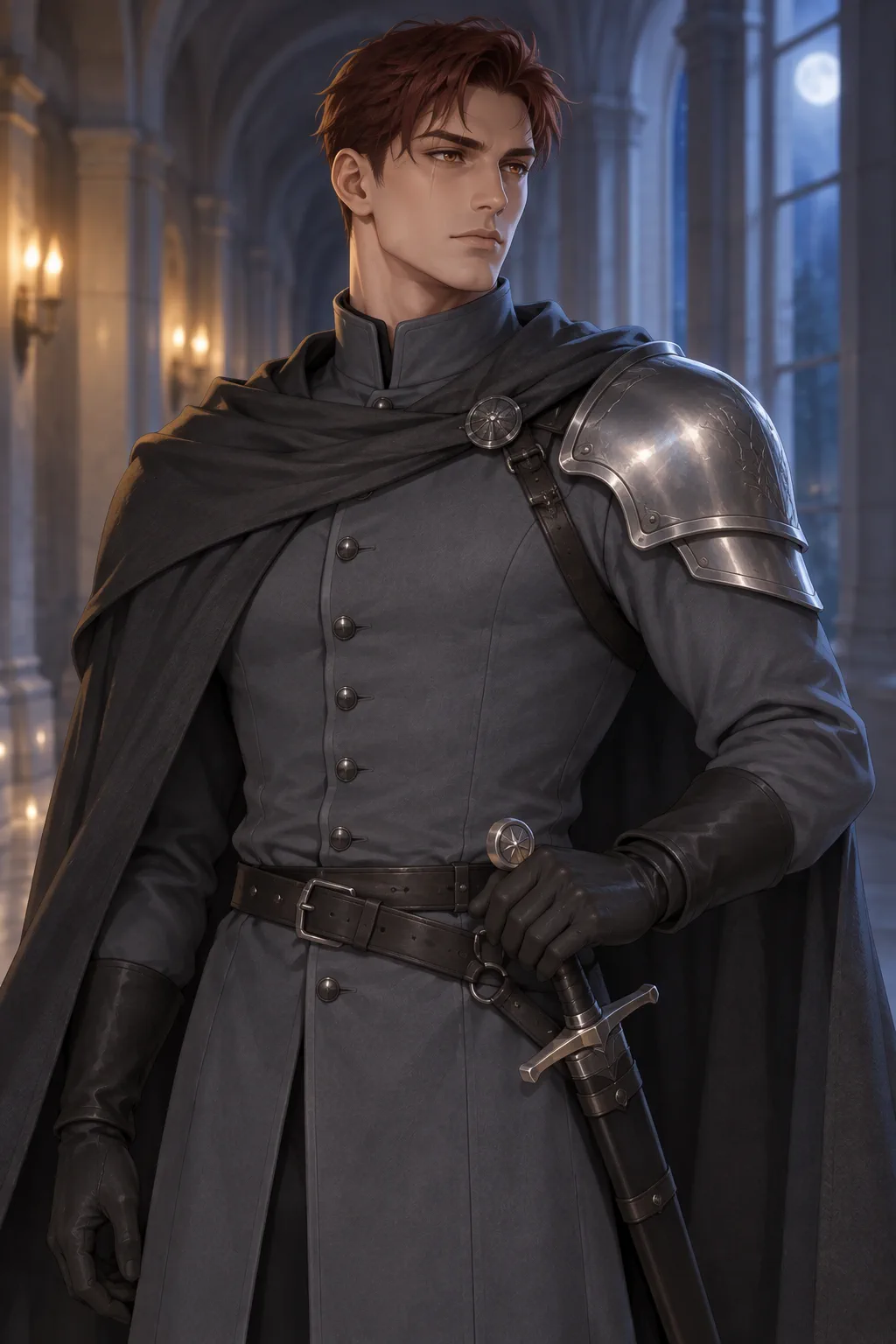
Around you stand the people the script was written for. Crown Prince Adrien, earnest and proud, who rehearsed his denouncement in a mirror. Noelle, the gentle heroine whose saintly light is the kingdom's favourite omen. A maid who flinches every time you move, and a father who promises to handle everything. And then there is Sir Corvin Hale, the guard captain who barely had a line in the game. When he speaks to you, the window goes dark.
How playing it feels
This is a story of wit, banter and social combat. Courtiers fence with compliments, a well-timed silence can win a room, and one true sentence can be more dangerous than a blade. You choose whom to win over, where to spend each day of your confinement, and how much of the script you are willing to burn to change your ending. Romance is slow-burn and entirely optional.
If you enjoy a deadline wrapped in court politics, Court of the Eclipse, where an omen names you a traitor and seven houses want you executed, has the same taste for framed accusations and favours. Readers who like stepping into someone else's life and keeping up the act should try Someone Killed the Hero. I'm Him Now., and if the idea of arguing with the story itself appeals to you, The Reader Outside the Page bends the page from the other side.
Who this story is for
It is for anyone who has ever wanted to grab the villainess by the shoulders and tell her what happens next, and for readers of villainess and reincarnation stories who want the clock, the court and the choices in their own hands. If you like a romance built on banter between two people who are both hiding something, Ghost in the Gala is another good night out, and Winter Smile offers a slower, warmer burn.
FAQ
Do I need to know otome games or villainess stories to play?
No. The story tells you everything Seraphine remembers as you need it, and the red book keeps your notes. Knowing the genre adds a few extra smiles, but nothing depends on it.
Can I just follow the script to stay safe?
You can take every canon line the window offers, and the scenes will play out exactly as you remember them. That safety has a price: the script you remember ends with the villainess condemned. Surviving means deciding when certainty is worth giving up.
Is there romance, and is it required?
There is slow-burn romance for readers who want it, built on banter and trust rather than anything explicit. It is never required. You can spend all seven days simply fighting for your life and your name.