

Ghost in the Gala
In neon Neo-Osaka, your very self is a commodity — and once a year the elite gather to bid on stolen lives. You slip into the Vermillion Auction under a forged identity, and out of a room full of predators the legendary thief called the Ghost walks straight to you: 'You're the only one I can't read. Want to steal something impossible?' One hour. One vault of stolen selves. Two liars who can only be honest with each other.








By starting, you agree to our Terms of Service, Privacy Policy and Refund Policy.
Every lock in this building is a person
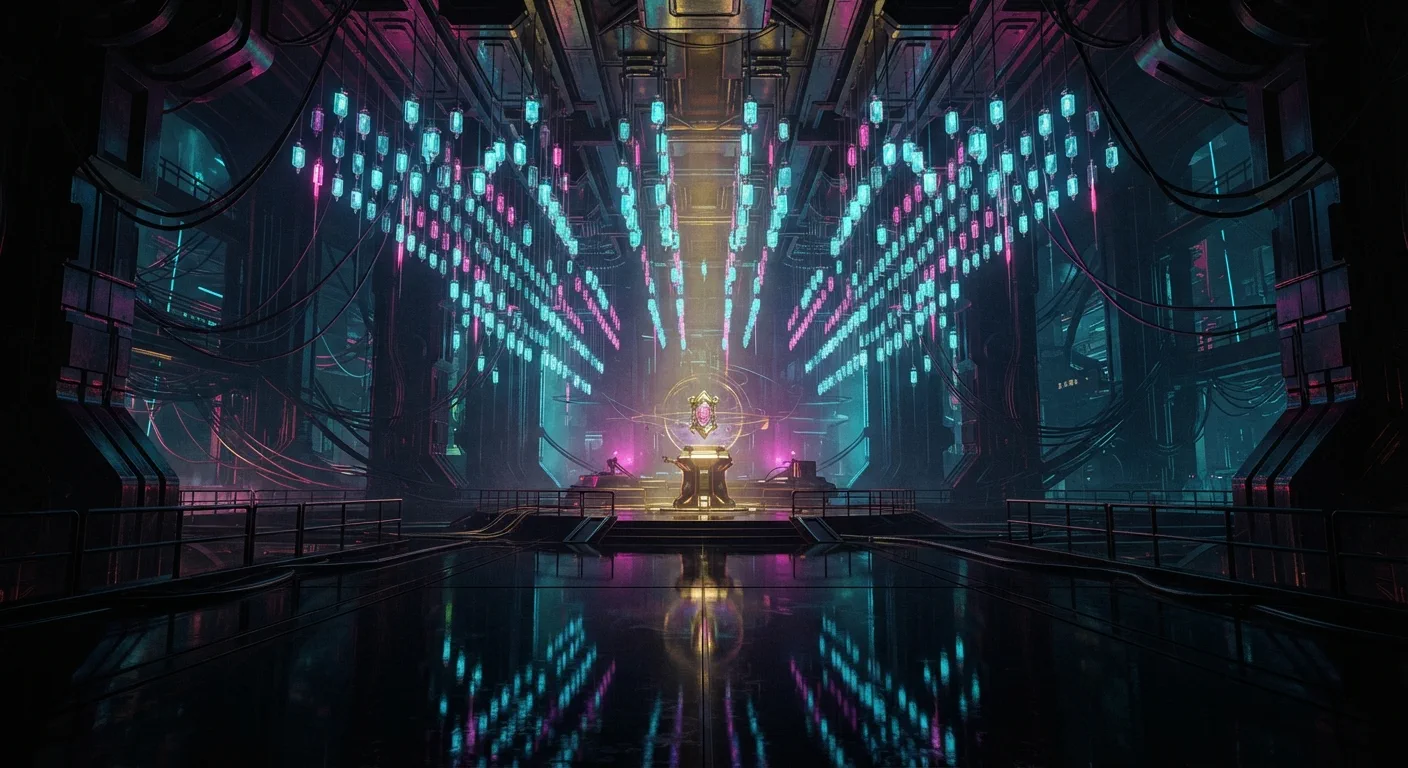
A cyberpunk heist usually hands you an encrypted wall and a countdown in the corner of your eye. This one hands you a champagne flute. The Vermillion Auction is black tie: holographic koi drifting over the guests, a string quartet, laughter that costs money, and the elite of Neo-Osaka bidding on stolen lives.
There is very little gunfire in it. What there is instead is a room of faces to read, a cover story you have to hold at conversational speed, and the running arithmetic of how much true information you can afford to give a stranger.
The vault at the end of the night is real. What stands between you and it is a sequence of people, and people are talked open rather than cracked. Every sentence that moves you closer costs you a piece of the anonymity you came in wearing.
One hour, and a hammer nobody can take back
On the Auranet, a self is data. Memories, biometrics, the shape of a reputation, the whole map of a life — harvestable, packageable, ownable. Corporations strip selves out of the poor, the indebted and the erased, then sell them as profiles to buyers who want a new face, a clean past, or simply to possess a person.
Once a year that trade puts on a gown, and the gown is the Vermillion Auction in the floating Koi Tower.
At the tower's heart is the Vault, and inside the Vault the Ledger: the master registry binding every harvested profile to the person it was taken from. Burn the Ledger and thousands of stolen selves come untethered, free to go home. The auction runs exactly one hour. Nothing that happens after the final hammer can be undone, and the story never softens that — the clock is a constraint, not a mood.
You arrived wearing a face that isn't yours, a forgery good enough to walk the vermilion carpet without tripping a single sensor. You have your own errand here, and the story lets you keep it to yourself.
The only person in the room she cannot read
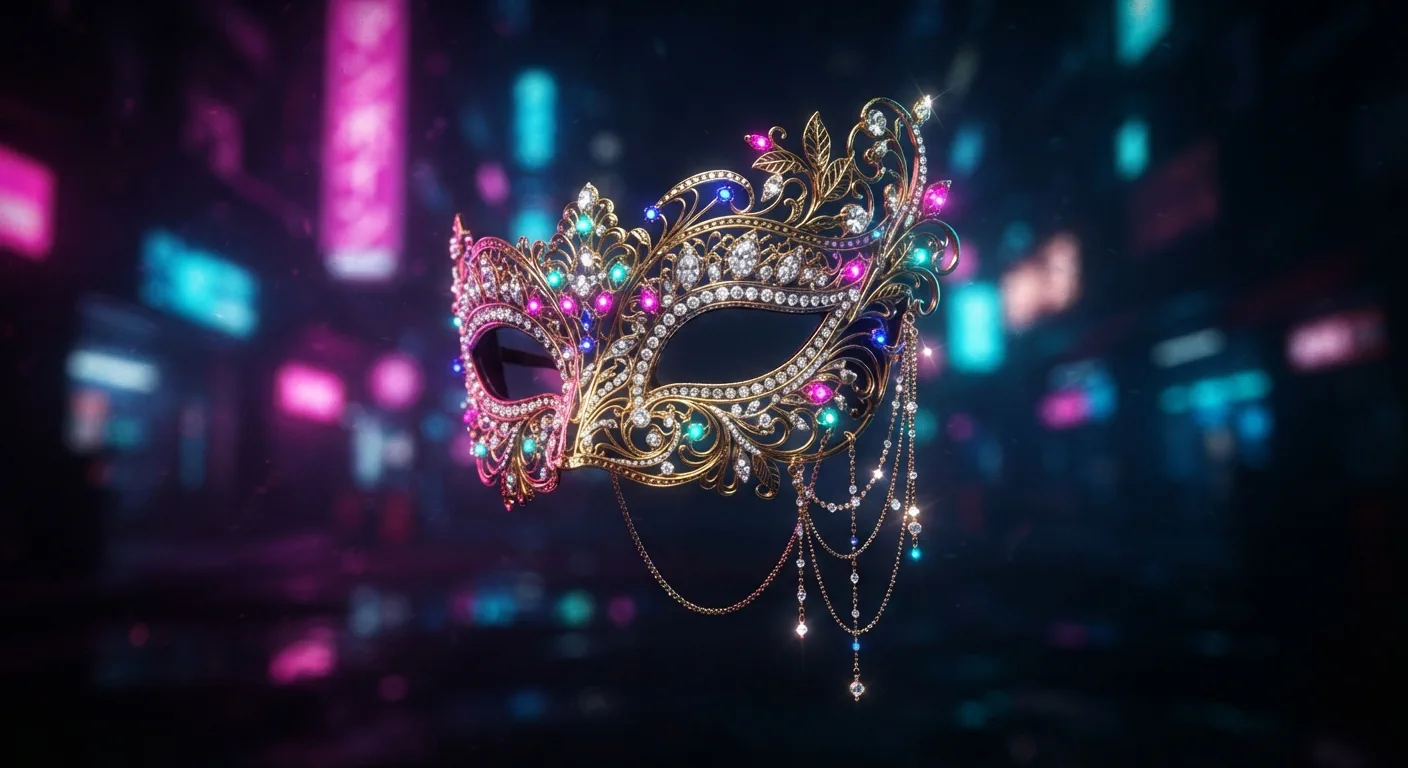
You are three flutes of borrowed champagne into pretending you belong when the room changes. A woman in diamonds she almost certainly did not buy crosses the floor, past senators and syndicate heirs, and stops close enough to murmur. Everyone here reads to her like an open file. Everyone except you.
She is Kohaku, the thief they call the Ghost — the social engineer who steals harvested profiles back and returns them to the people they were ripped out of. Three seconds is all she needs on anyone alive: posture, tell, the price of the shoes, the thing they are afraid of. She is never wrong. That is precisely why she is standing in front of you instead of working the senators. Her delight is rare and entirely genuine — she loves, helplessly, to be surprised, and an unreadable face is the one thing in this room she cannot already price.
So the offer is simple and the arrangement is not. She has one hour and one impossible idea. You have a stolen face and reasons of your own. Neither of you can verify a single word the other says, and both of you are professionally excellent at exactly that.
What actually changes when you play
Two hidden tensions climb under every scene: how far past her guard Kohaku has let you, and how close you are to the Vault. They are not separate tracks. Access to the tower runs through her, so closeness here is not decoration on the heist — it is the route. Feed her a cover story and you stay safe and stay outside. Hand her one true thing and a door moves.
Scenes fork the same way over and over, at a different price each time. Con a mark smoothly, or improvise loud and hope. Catch her in a lie and press for the truth, or let her keep it. When the Reader closes in on one of you, cover for the other or protect your own skin. The narrator works from your typed intent rather than matching it to a menu of buttons, which matters in a story whose real moves are changing the subject, letting a pause run a beat too long, or admitting something true because there was no time to invent an alternative.
What the story refuses to do is make any of that free. Lie well and you stay unknown, which is the exact wound the evening keeps pressing on. Trust her completely and you have handed a professional liar the only leverage you own. And the Vault offers no clean version of itself either. What the Ledger can do for thousands of strangers and what it can do for one particular person are not the same act, and the hour does not leave room for both.
Four people working the same hour
The Curator hosts the Vermillion Auction. Impeccable, warm, merciless, she sells people the way a sommelier sells wine and means every compliment she pays you. The house always wins and she is the house.
The Reader runs the tower's security: a corporate analyst augmented to read the truth off any face, able to unmask any liar in the building. Except, so far, you. She is Kohaku's mirror image and the clock you are both racing.
The Broker is Kohaku's fence and the voice in your ear from outside, the one who gets freed identities home. Gallows humour, a real conscience, and the closest thing the Ghost has to family.
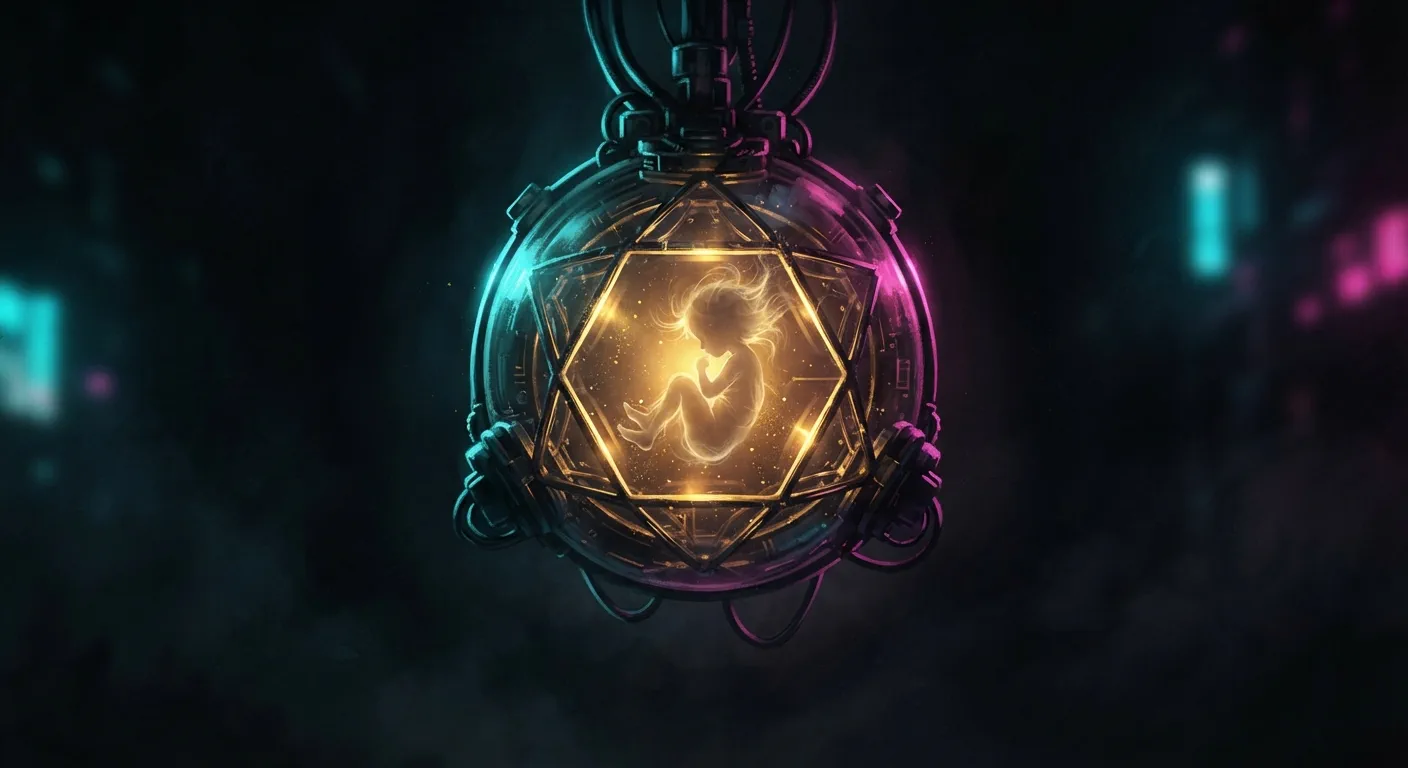
Lot Zero is the night's crown lot: a harvested childhood self with the serial number filed off. Whose it is becomes the hinge the entire story turns on, and the auction will reach it whether or not you are ready.
Before you start
Is this a heist or a romance?
Both, inside the same hour, and neither is the subplot. The caper is real — marks, access, the Vault — and so is the two-hander, a slow burn built out of wit, cover stories that slip, and the occasional true thing said too quietly to take back. There is no explicit content; attraction is carried by tension and nerve. Kohaku is not a prize to be won. She has her own judgment and the freedom to walk away from a guest who only wants to use her.
Do I need to be good at hacking or fighting?
No, and there is nothing to learn. Violence is rare and consequential rather than lurid. What the story asks for are the skills of a bad dinner party: reading a face, keeping a story straight, deciding what to admit and to whom. Type what you would actually say and the scene takes it.
One hour — so is this a very short story?
The hour belongs to the auction, not to you. A playthrough works the room, runs a first grift for Vault access, survives a near-unmasking and only then moves on the Ledger — many scenes, not one. Sessions can be stopped and resumed; the hammer waits while you are away.
If this is your kind of story
This one sits on the noir shelf rather than the shootout shelf — a heist whose hardest lock is a person, in a cyberpunk city that has worked out how to itemise a human being. If you want the sealed-room version of that, The Dead-Hand Clause seals you on a midnight signing floor with executives who cannot leave and a record only you can shade; if it is the two-hander you came for, Winter Smile is the patient work of getting past a face someone built for the public. Start here, though. Champagne towers, a string quartet, lives going under the hammer at a polite pace, and a woman who can read every predator in the room telling you that you are the one she can't.