
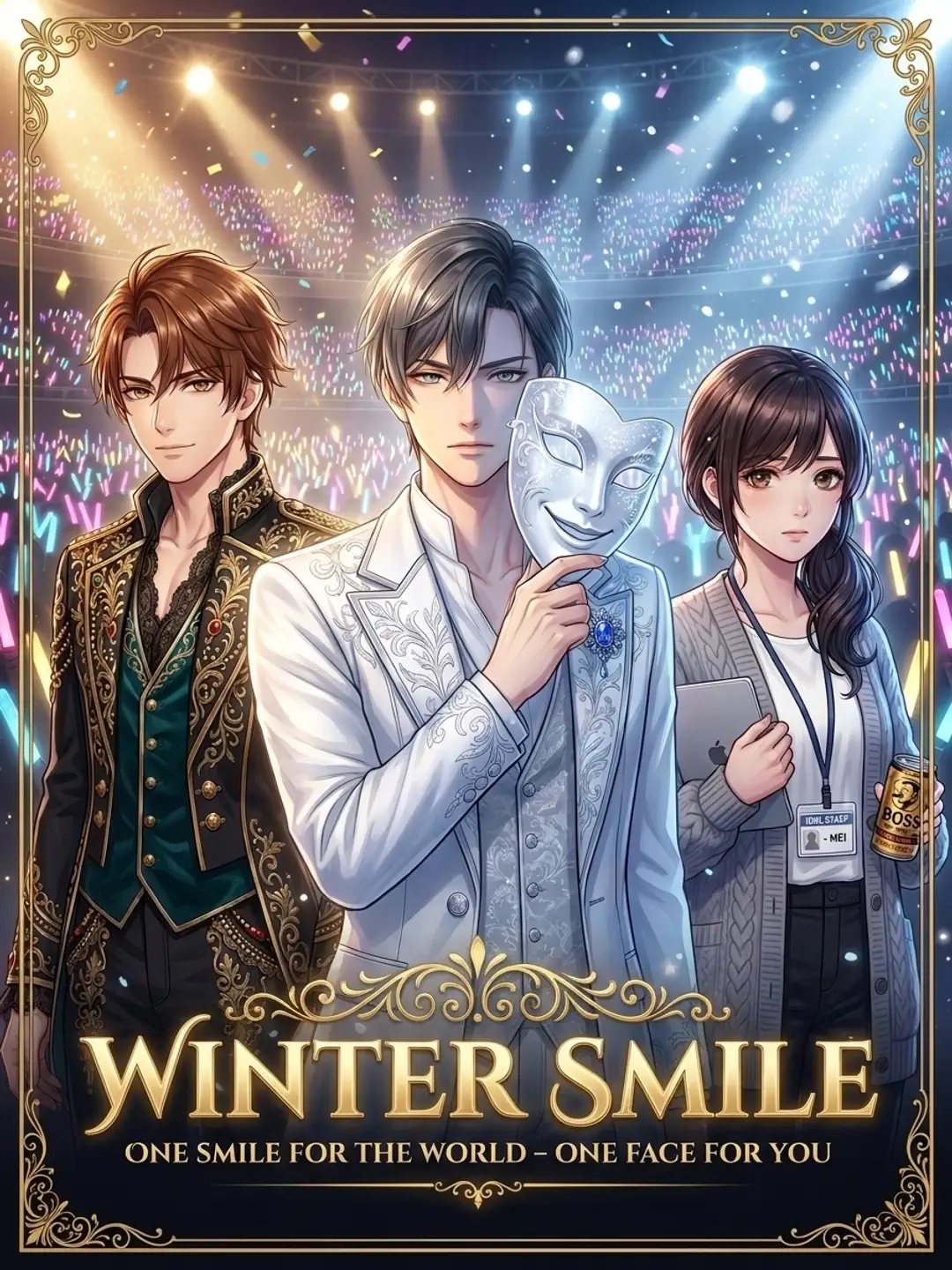
Winter Smile
You are the seventh assistant to the nation's most beloved idol — and the first to see the cold, guarded man behind the smile everyone worships. Break his walls, one honest millimeter at a time.





By starting, you agree to our Terms of Service, Privacy Policy and Refund Policy.
Getting closer to him does not make this story warmer
Idol romance usually runs one direction. The distance closes, the tone sweetens, and the last act is the reward for being kind. Winter Smile runs colder first. You are the seventh personal assistant assigned to HARU in a single year — the most beloved solo idol in the country, a face on every screen from Shibuya to Sapporo — and the six before you did not last out the year. Nobody keeps this job.
He does not want to be adored. Adoration is the one thing he has in unlimited supply. He wants to be believed, which is much harder to hand someone. So the story never asks whether you like him. It asks, repeatedly, whether you told him the truth on the days when lying would have been easier for both of you.
Day one is the day everyone expects to be your last
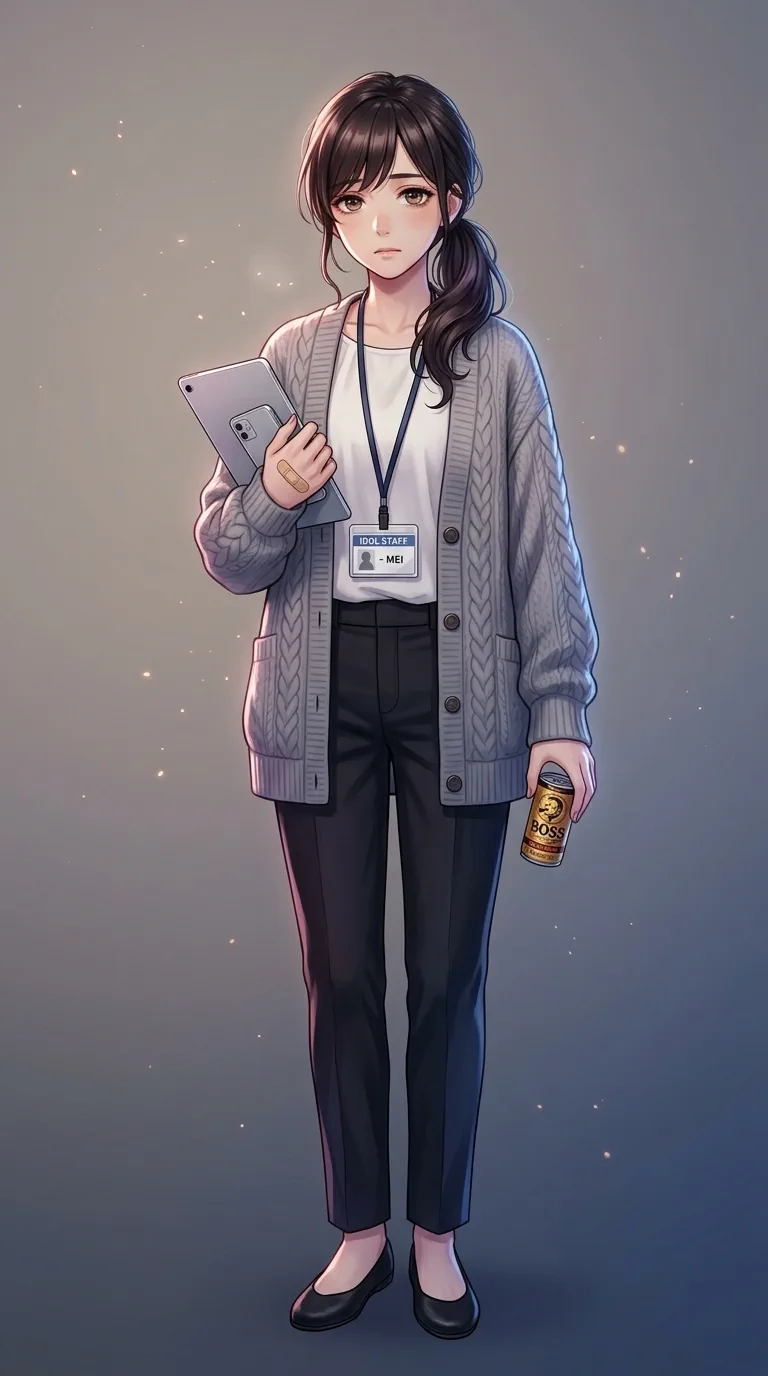
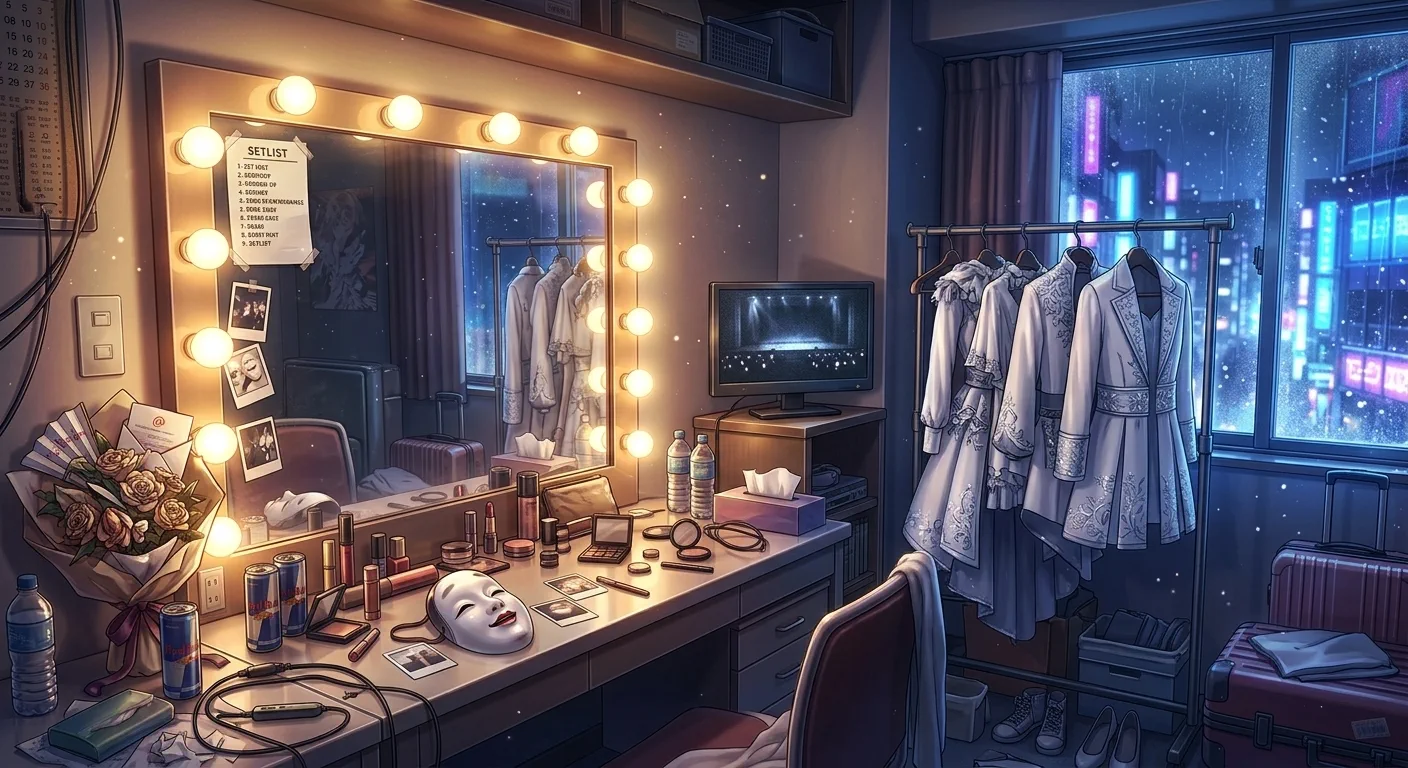
You get a lanyard, a schedule packed to the minute, and one instruction from President Tachibana, who runs Hoshimori Agency and has watched this job chew through half a dozen people: don't try to be his friend. Be furniture that answers phones. Then you follow HARU into the dressing room, the door closes, and the warm smile the whole country knows slides off his face the instant the room is down to two.
He does not look up. "Seven," he says. "Let's see how long you last."
It is not cruelty. It is actuarial — he is estimating your remaining term, and so far he has been right about everyone. The work itself is unglamorous: outmaneuver photographers, patch a collapsing schedule, cover a missed cue, wait out the dead hours under the fluorescent hum of a green room.
The winter that cost him a friend, a group, and a year of his earnings
Two years ago, HARU's group Kaleido came apart. Ren Kurosawa — his closest friend and co-center — leaked HARU's private notebooks and unreleased songs, then launched a solo career on the wreckage. The same winter, HARU's manager embezzled a year of earnings and vanished. He has never spoken that betrayal aloud to anyone.
The guardedness is a history, not a temperament — worth knowing before you push on it. The variety shows, the arena tours, the endorsement shoots: that is a wall built out of work, and it holds. It also isn't finished. Kagami, a tabloid journalist who never let the story go, is circling, and word reaches you that the notebooks may be back on the market.
"Haru" is a costume the whole country adores. "Fuyuki" is a door.
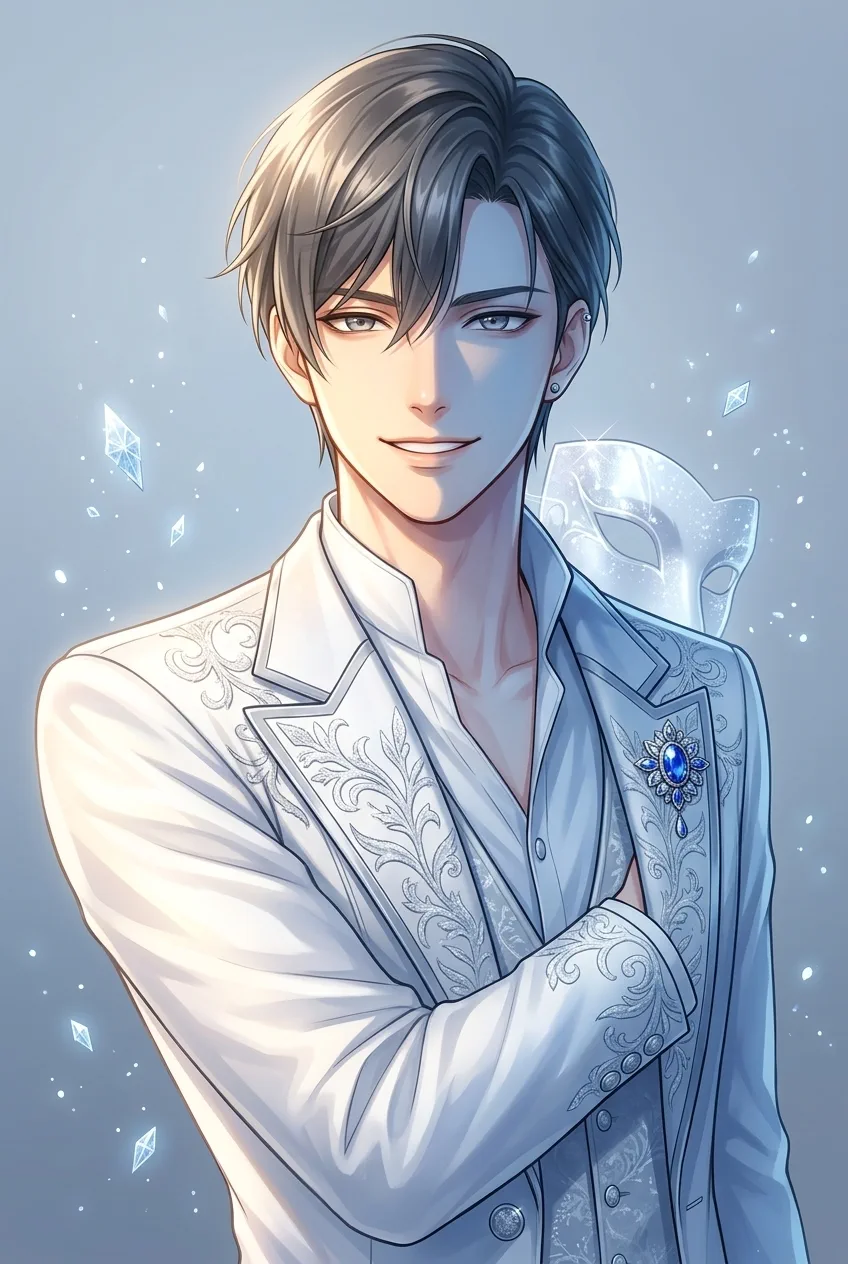
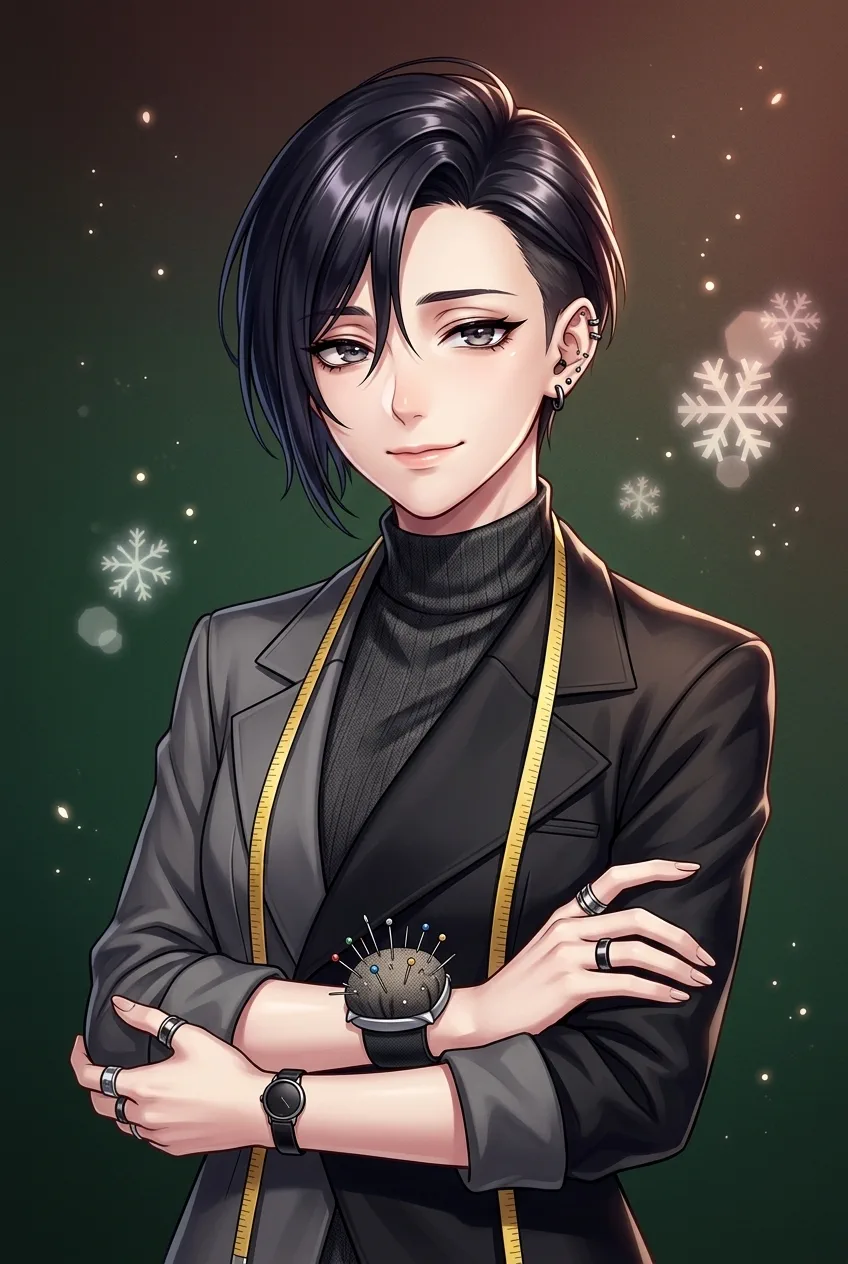
In public he is radiant, gracious, effortlessly kind, always on, deflecting with a warmth so practiced it reads as sincerity. In private he is clipped, exacting, allergic to sincerity, and — once the guard drops a little — dryly funny. Haru is the costume a nation is in love with. Fuyuki is his real name, and it is a door almost nobody is allowed to knock on.
The thaw is measured in millimeters and shown by subtraction, never by speeches. A sentence that is not a command. A mask that slips a fraction and gets pulled back. An honorific quietly dropped. His real name offered instead of the stage one. A truth said plainly, with no performance around it. Nothing announces any of this; you notice it or you don't.
What makes you different from the previous six is not talent. You — Mei, by default — were overlooked your whole life and praised only for being useful, never for being yourself. You are observant, and stubborn in the way that matters here: you keep showing up. The story's question is aimed at you as much as at him.
What actually changes when you play
Every ordinary task is a trust transaction. Decide what to tell the press and what to bury. Walk him into a paparazzi ambush or walk him out of it. Cover for him, or tell him the truth in front of people who would rather you didn't. Push, or give him space. Keep the professional wall, or let the closeness in. Protect the hidden man, or expose the one who betrayed him.
Trust here is a ledger, not a switch. It carries across days and it can be overdrawn — you can end up owing him. What the story watches most closely is the difference between performing loyalty and earning it, and it can tell those apart, because the narrator reads what you actually said and what it cost you instead of matching your input to a menu row. With no combat and no puzzles, that is the entire mechanism: what you say to one guarded person, and whether you meant it.
Pressure arrives on a schedule you don't control. A comeback performance he is terrified to give and cannot admit he is terrified to give. A night when the Haru face stays off. A press conference where the two of you choose, together, what version of the truth the country gets. You keep your agency throughout; he is guarded, never cruel without a cost, and he never takes the wheel.
The people waiting outside the dressing room
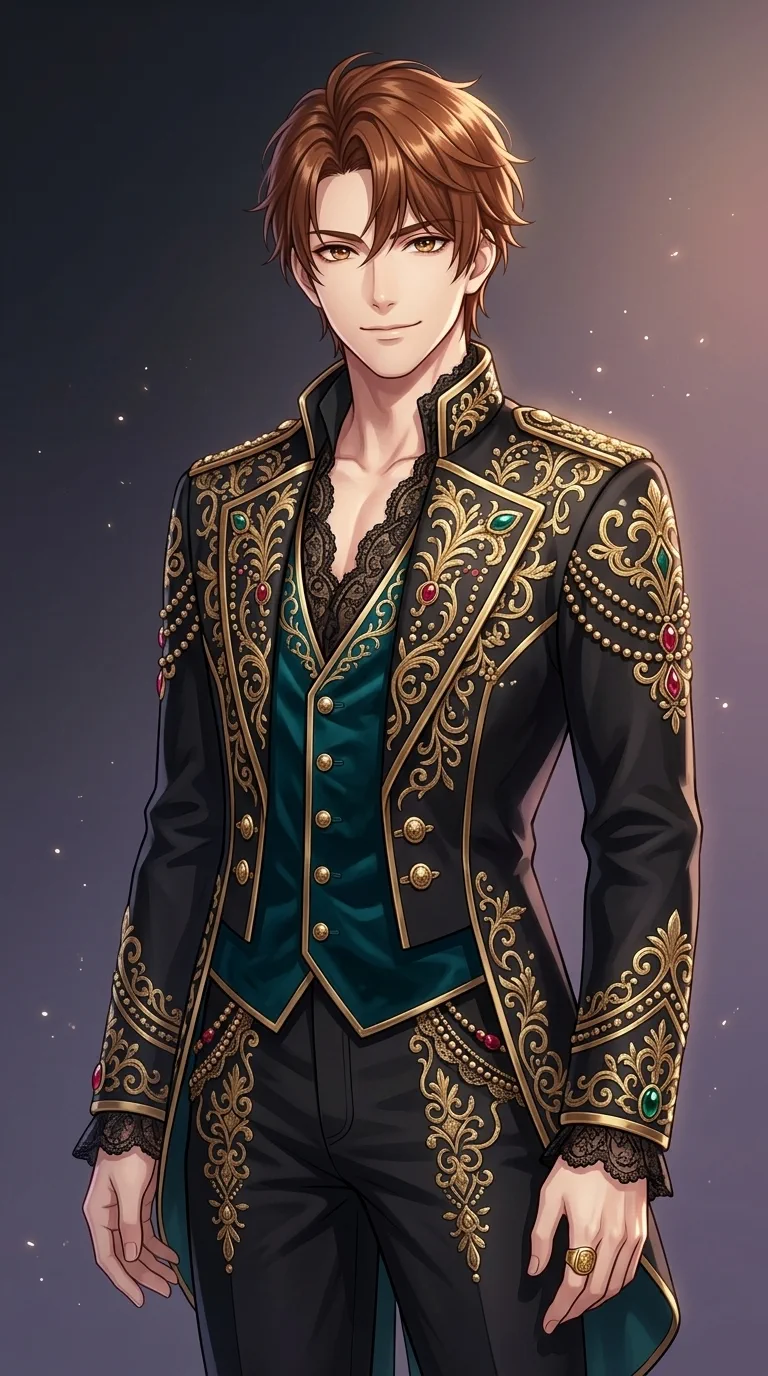
Ren Kurosawa is a charming rival soloist now, still smiling for the cameras. President Tachibana is a pragmatist who treats HARU as an asset to be depreciated carefully. Nao, the overworked stylist, is one of the very few people he half-trusts, which in this world counts as intimacy. Kagami waits for the notebooks to surface. And Hidamari — "the sunny spot," the fandom — is a warm, watchful crowd whose love is entirely real and whose forgiveness is not guaranteed.
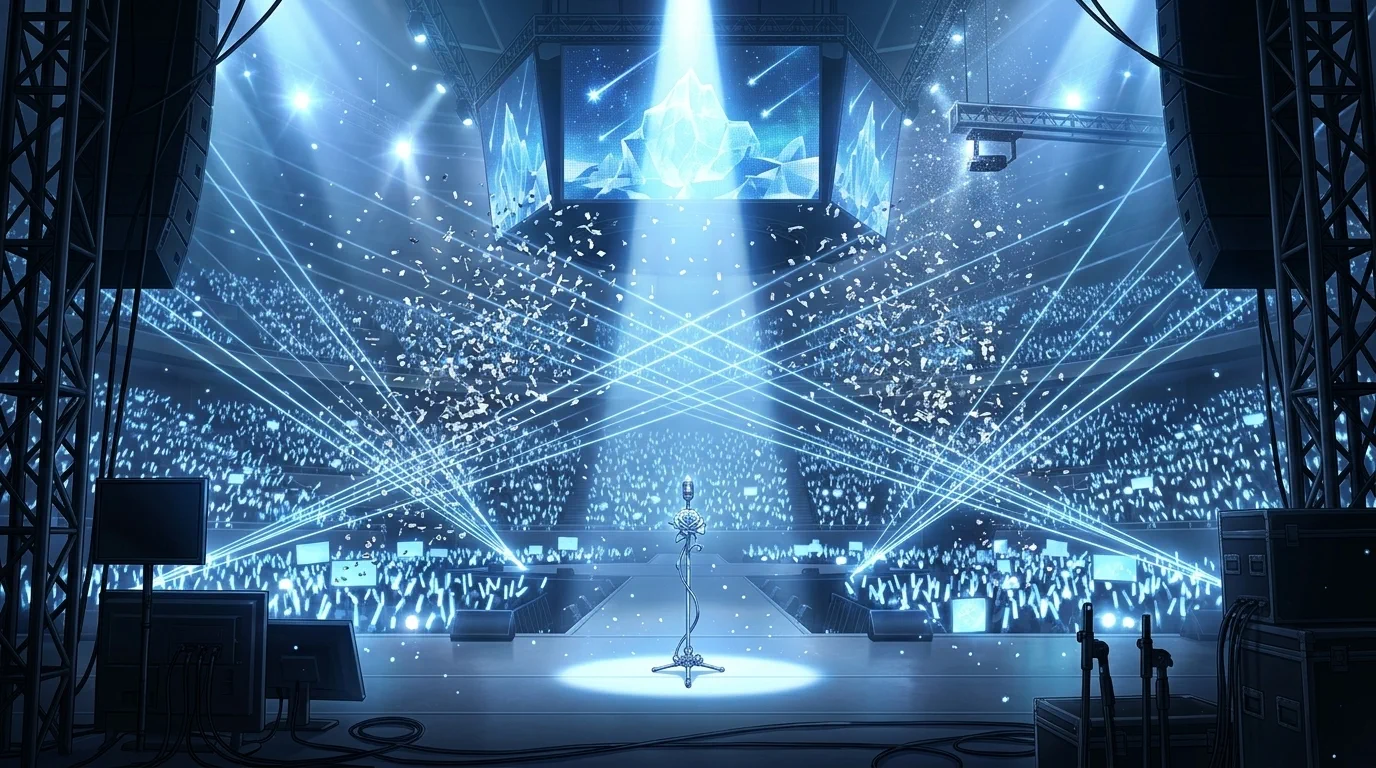
Their Tokyo is neon at night and fluorescent by day, glossy and tired at once. Nothing supernatural happens. The strangest thing in the story is the ringing silence after ten thousand people stop screaming a man's name, and what he is like in the first minute of it.
Before you start
How explicit does the romance get?
Slow burn, and the intimacy is emotional rather than physical. This is tasteful josei drama: nothing explicit, no shortcut through a bedroom. The loudest moments are the quiet ones — a dropped honorific lands harder here than a declaration would.
Can I get it wrong badly enough to lose him?
You can spend trust faster than you earn it, and it does not quietly refill between scenes. But nothing is built to end on one bad night. He is guarded, not vindictive, and the coldness of the industry around him is never sugar-coated to keep you comfortable. Expect to be wrong sometimes, and to live inside it.
How long is it, and can I stop and come back?
It is a short story by design, not a campaign, which suits a romance built on accumulation rather than scale. Sessions are resumable, so you can close it mid-scene in a dressing room and pick it up later with the ledger intact.
If this is your kind of story
This sits on the romance shelf, and just as squarely on the bond one: no magic, no quest, one guarded working relationship built a millimeter at a time out of what you chose to say and what you chose to carry for him. The tone leans melancholy rather than sparkling, and it stays that way, because the leaked notebooks are still out there and a journalist is still counting.
If what draws you is the gap between the name a person performs and the one they answer to, Ghost in the Gala works the same nerve in a colder city. If it is the Tokyo of contracts and careful cruelty, The Dead-Hand Clause is the harder version of that room.
Start here, though. A door closes on a dressing room, a smile comes off like a coat, and a man loved by an entire country waits to find out how long you last.