
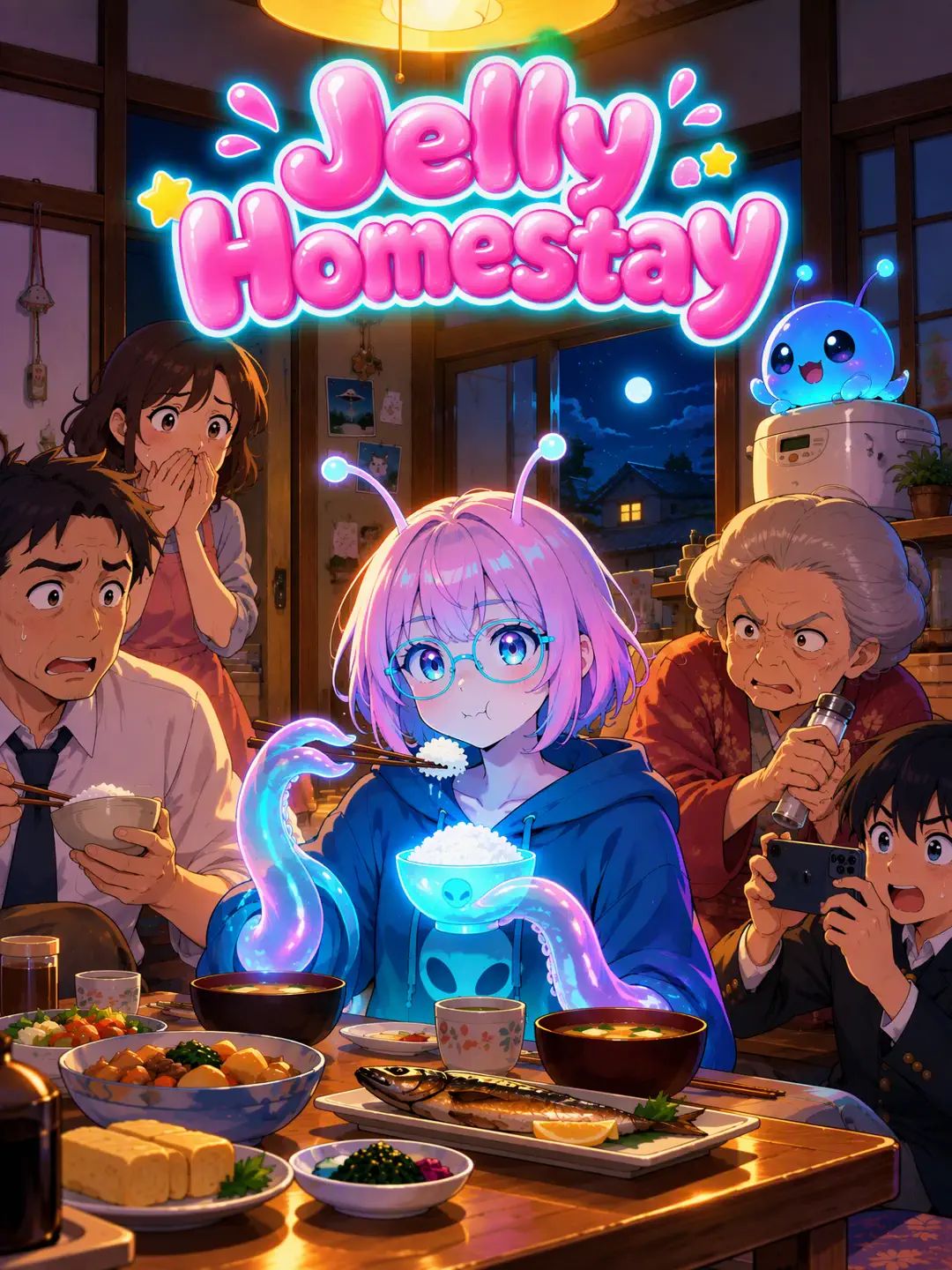
Jelly Homestay
A shy alien girl with glowing jelly tentacles comes to live with your family above a failing Tokyo bathhouse. Get her through one school term, past a frightened city and Grandma's salt shaker, before the ship in the sky decides.














By starting, you agree to our Terms of Service, Privacy Policy and Refund Policy.
An alien girl moves in above your family's bathhouse
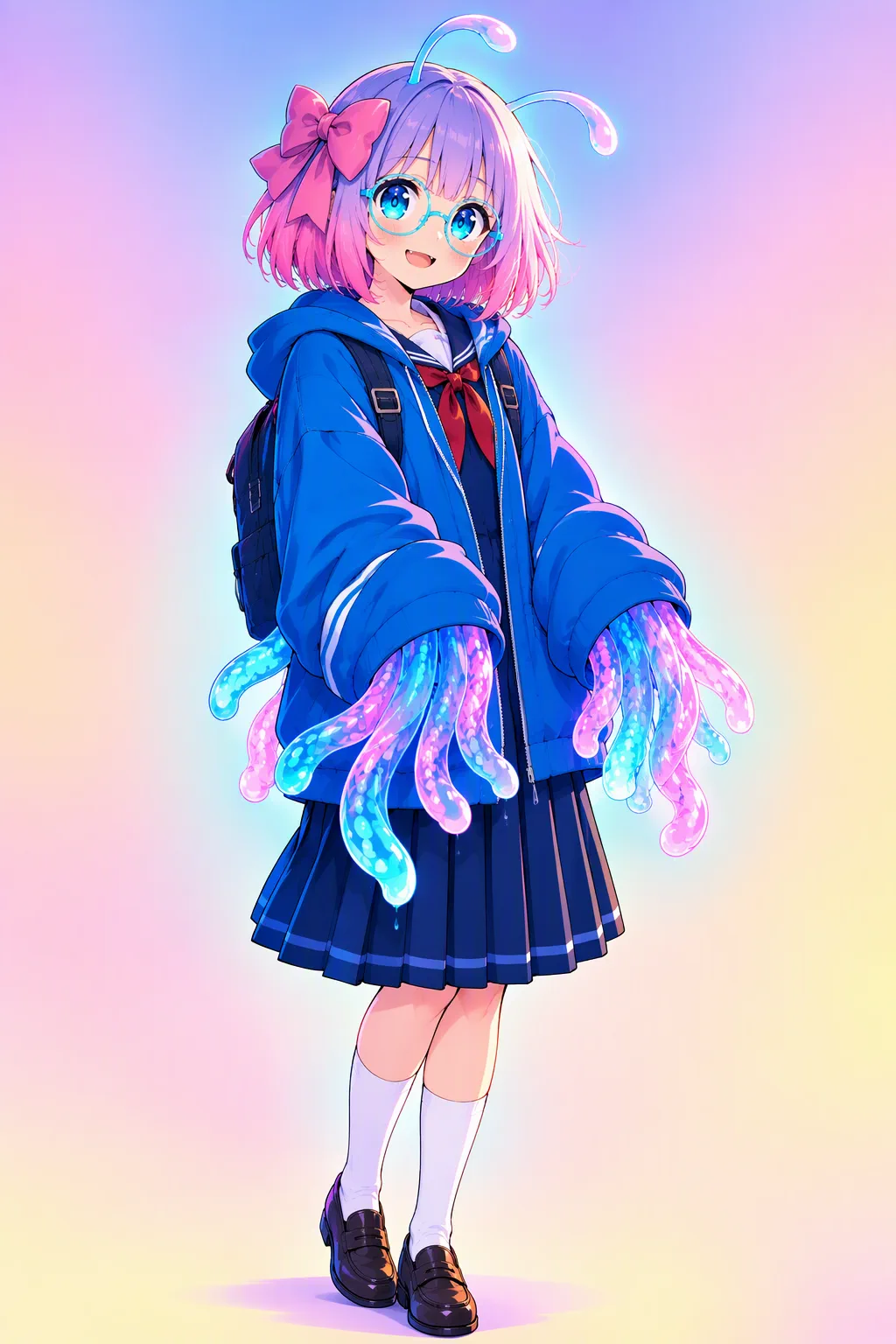
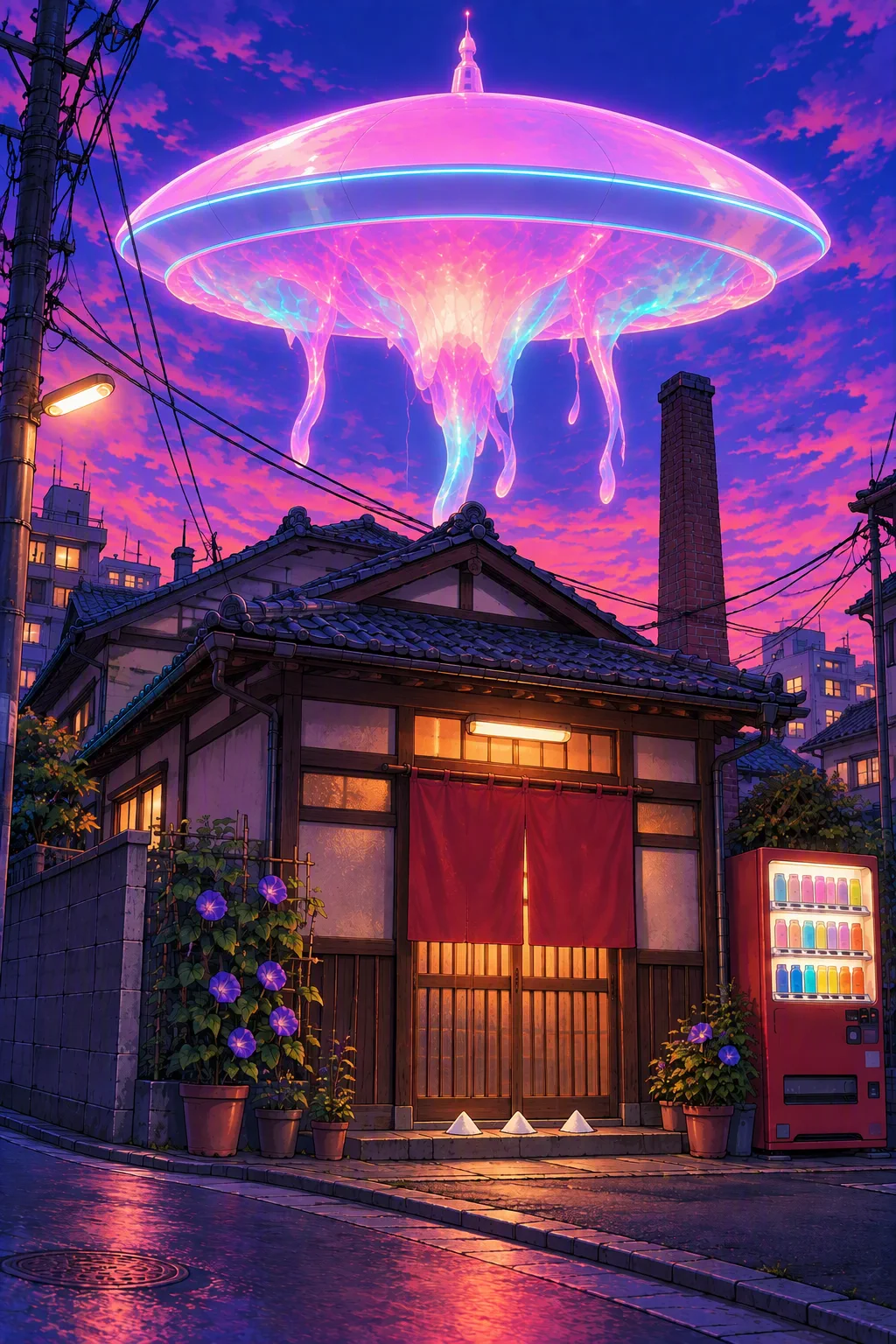
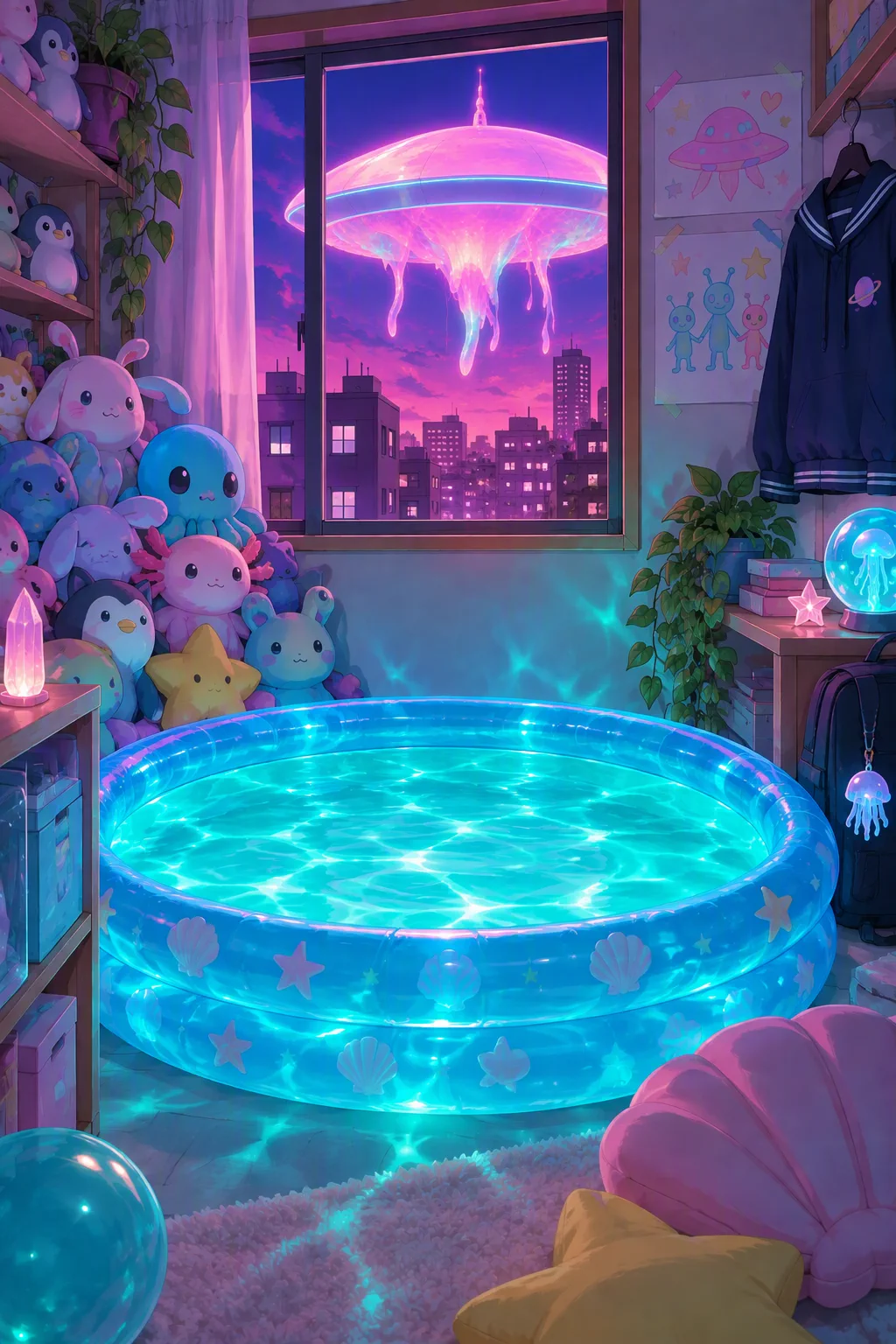
A year ago a second moon appeared over Tokyo Bay. It is a mothership the size of a mountain: a pearl-pink saucer with a glowing jelly skirt underneath, hanging silent above the water. Nobody has heard a word from it. Then, on the first day of the school year, it sends one passenger down: a shy exchange student with a lavender-to-pink bob, round cyan glasses, an oversized blue hoodie, and a dozen glowing jelly tentacles where her arms should end. Her name, as near as a human mouth can manage, is Kurara.
The government places her with an ordinary family who run a failing public bathhouse in a Tokyo backstreet. That family is yours. You are Haru Mizuno, seventeen, a second-year at Minato-Kita High, and you are suddenly the only person on Earth Kurara calls a friend.
Jelly Homestay is an AI text adventure: a funny, warm and quietly sad slice-of-life story with a sci-fi heart. You type what Haru says and does, and the story answers.
The first night
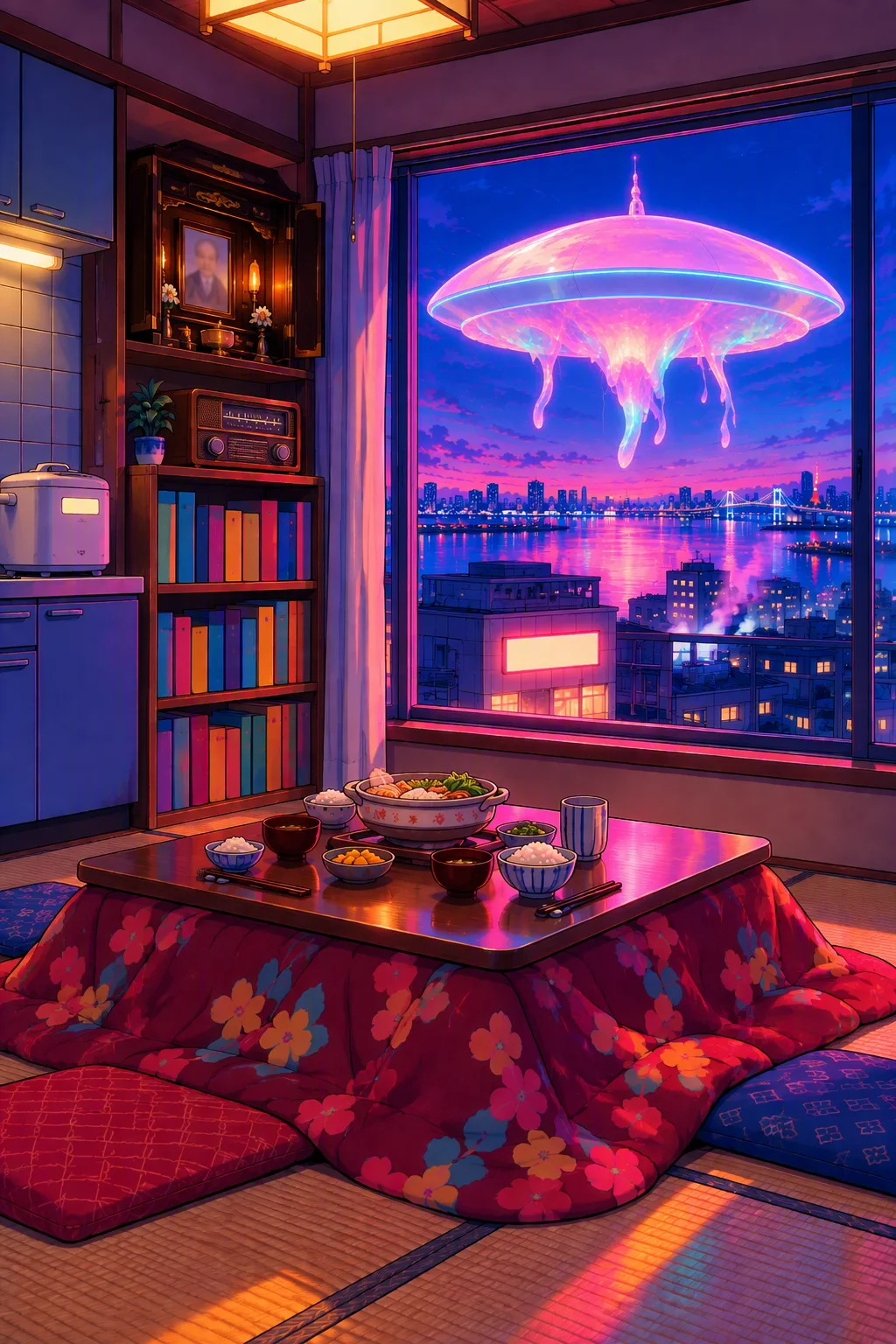
The story opens at the dinner table. Kurara arrived at noon with one suitcase full of seawater and Officer Sawamura from the government. Now she is too polite to start eating, and her tentacles are holding a rice bowl, chopsticks, a miso cup and the teapot all at once. Grandma Fumiko sits across from her gripping a salt shaker like a weapon. Your little brother is livestreaming from under the table. Dad is sweating and talking about the weather.
Kurara has practised one sentence for a year, from television. She stands, bows too deeply, knocks the teapot over, catches it with three tentacles and says it anyway. Then Grandma lifts the salt shaker an inch, and Kurara's glow flickers. Your first choice is already on the table.
One school term, two things to protect
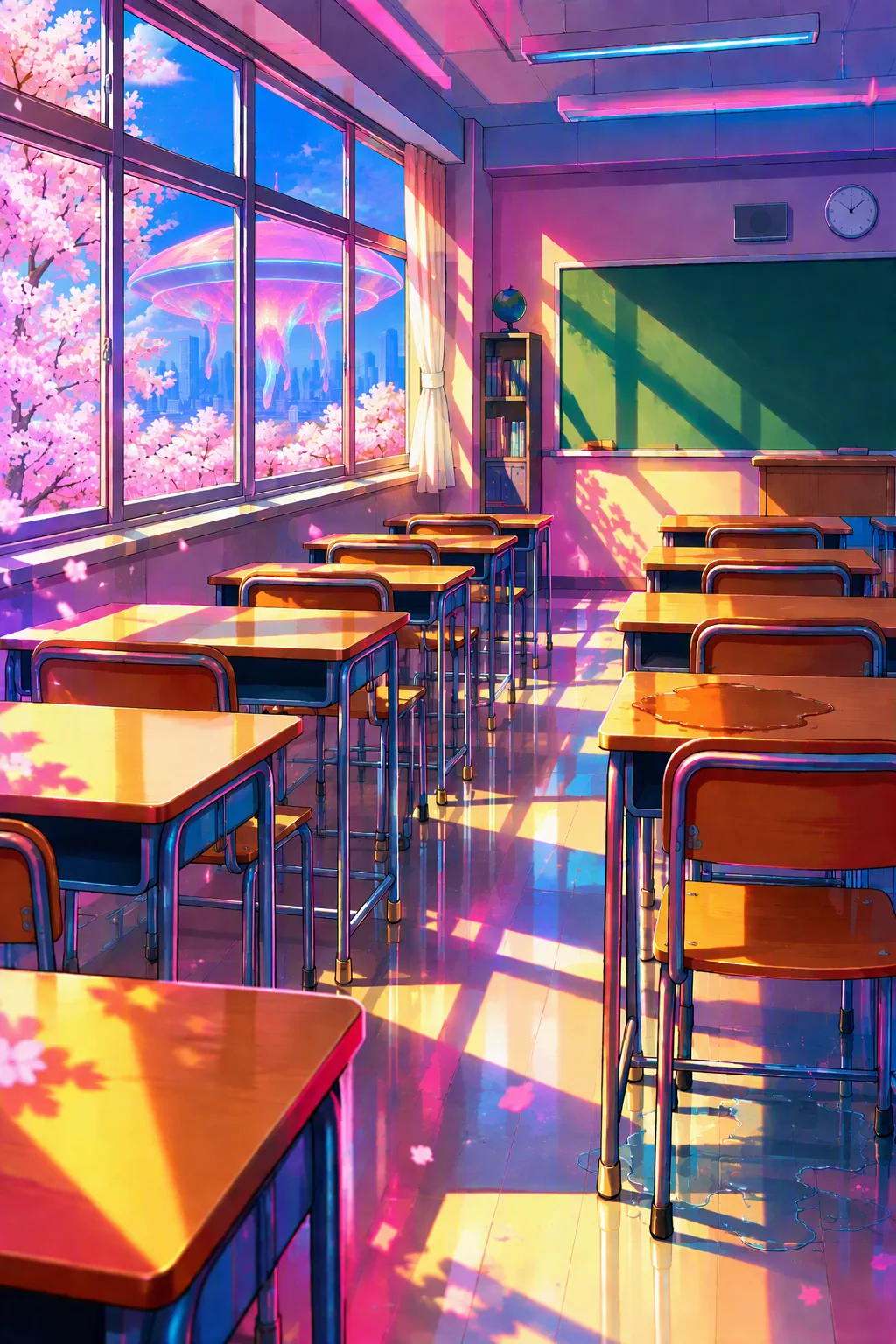
You have from cherry blossoms to the Tanabata star festival on 7 July, about fourteen weeks, to get Kurara through homeroom, PE, swim class, a city that is afraid of her and her own homesickness. Every choice moves two things at once.
- The Neighbor Index is a public poll on the giant screen at Shinagawa station: "Do you trust the visitor?" It starts at 38% and updates every Sunday night. Kindness caught on video raises it. Tentacles at the wrong moment, an accident or a panic headline drop it. When it's high, the shopping arcade sells Kurara merch. When it's low, the school board talks about expelling her.
- Kurara's Glow is her inner light, and you can see it. She glows when someone uses her name, shares food with her, keeps a promise to her or lets her be herself. She fades when she is hidden, talked about instead of talked to, or left out.
The catch is that these two pull against each other. Hiding her protects the Index but dims her. Letting her be fully herself makes her shine and frightens the city. Every day you decide which one to feed, and the ship in the sky is watching the light.
Days at school, nights at the bathhouse
Each day has a rhythm. In the morning you decide whether she wears gloves or lets her tentacles out, and what to tell the reporters at the gate. At school there is one problem a day: a dare, a teacher who hides behind the blackboard, a test she is far too good at, a swim captain who wants her for the relay because "you have twelve arms, that's like four people".
Evenings belong to Kame-no-yu (Turtle Bath), the family bathhouse, founded in 1951 and ¥1.8 million in debt. It is also the only place in Tokyo where Kurara can soak in enough warm water to stay herself. Skip her midnight bath and she wakes up small, pale and curled. Then you write the nightly report for the government officer living in your spare room. What goes in, and what stays out?
The people around her
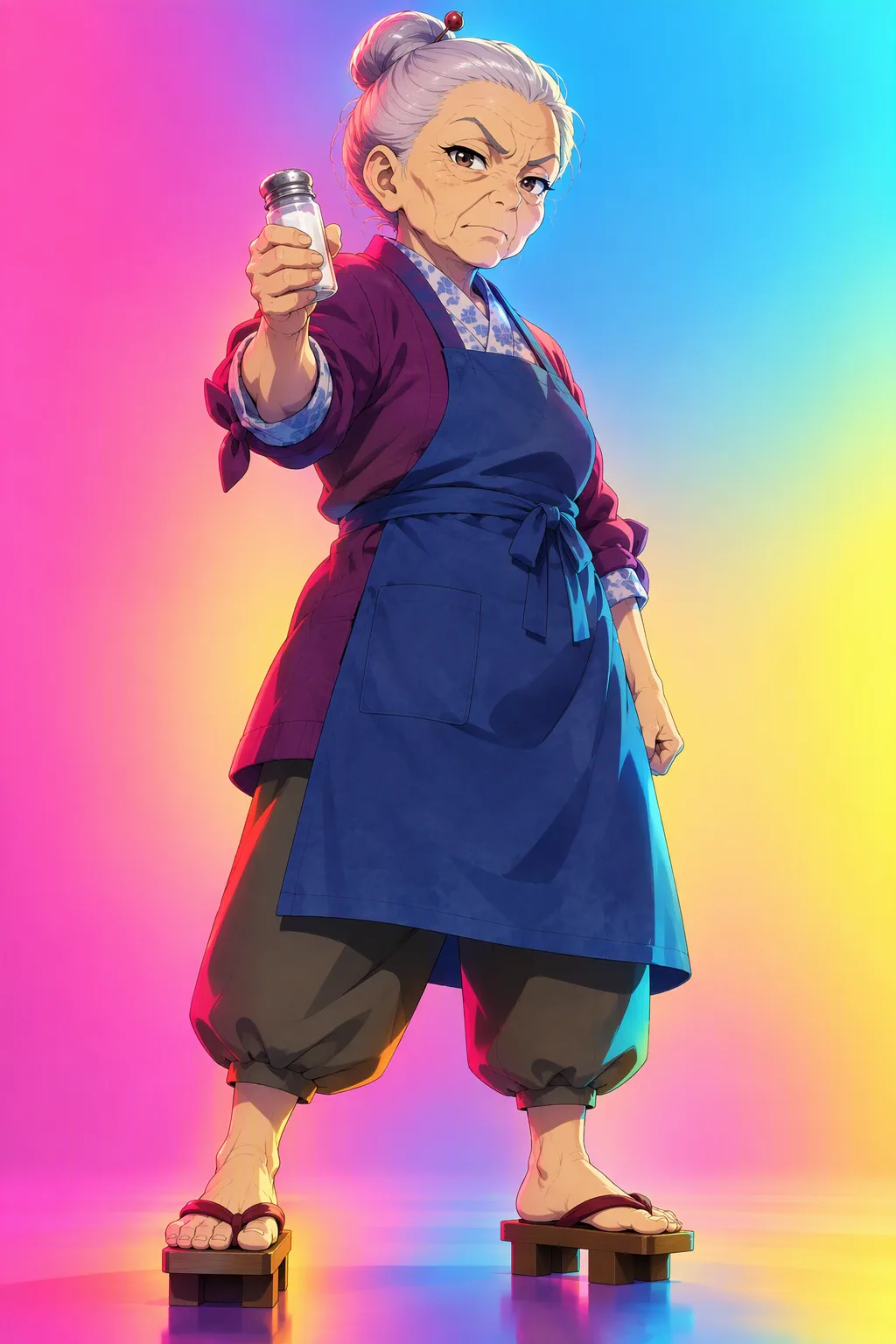
- Grandma Fumiko, 79, has kept the bathhouse counter for fifty years and sleeps with salt by her pillow. She is the hardest person in the story to win, and the one that matters most.
- Officer Sawamura of the Office of Neighborly Contact, a four-person government unit everyone laughs at. He is stern, by the book, grades your reports and is very secretly a lifelong sci-fi fan.
- Sota, your twelve-year-old brother, whose livestream clips can move the Index more than anything else, for good or bad.
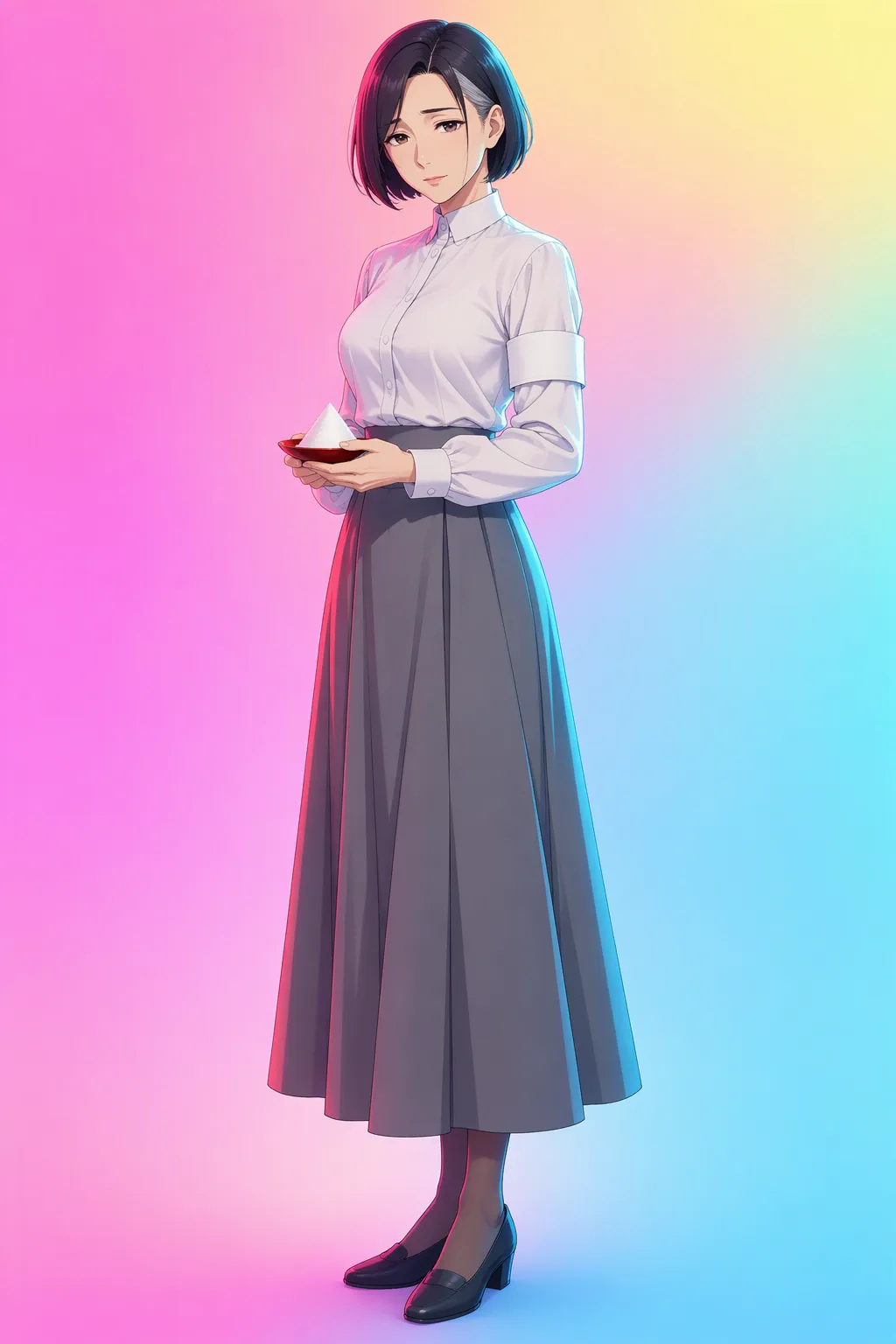
- Aoi Kanzaki, your class rep, polite and ice-cold. Her mother leads the Purity Society, the neighbours who leave cones of salt on doorsteps "to keep the sky out". They are grieving and frightened, not villains, and some of them can be reached.
- Mochi, a round blue blob with a fixed smile that came down with Kurara and sleeps on the rice cooker. Why the radio plays a wordless lullaby at one in the morning is something you can work out for yourself.
It is a found-family story above all: the family learns to live with an alien, and the alien learns the word "alone".
Tone and style
The comedy is loud and physical: tentacles in the lunch line, a crane game she can't lose, Dad's "Alien Bath Experience, ¥500!". Kurara learned Japanese from a year of television, so she talks like a weather forecast ("Today's mood: clear skies, with a 30% chance of hugging") and narrates herself like a nature documentary. After each joke the story leaves room for a quiet moment: Kurara on the bathhouse roof, looking up at the ship. It is a coming-of-age story on a deadline, and it asks what it costs to be loved by a place that isn't your home. Nobody dies on the page, there is no romance, and the closest thing to a villain is fear.
Questions before you play
Do I need to know anime or Japanese culture?
No. The setting is present-day Tokyo, and the few Japanese words that come up (sento, bento, taiyaki, Tanabata) are clear from context. Everything else is a family dinner, a school and a city deciding whether to be afraid.
Is there a "right" way to raise the Index?
No. You can play it safe and keep Kurara hidden, put her in front of every camera, or find something in between. The story follows what you do, and the ending on Tanabata night depends on where the Index and her Glow stand, and on what she means to you.
How long is a playthrough?
The story is built around one school term of about fourteen weeks. The narrator skips ahead through quiet days and stops for the ones that matter, so how long each week takes is up to you.
If this is your kind of story
For another cozy story about strangers becoming a household, try The Stray Familiar Café. For a sci-fi comedy where a whole ship's future rides on people learning to get along, try Three Brides of the Ark Meridian.