
Miasmorrow
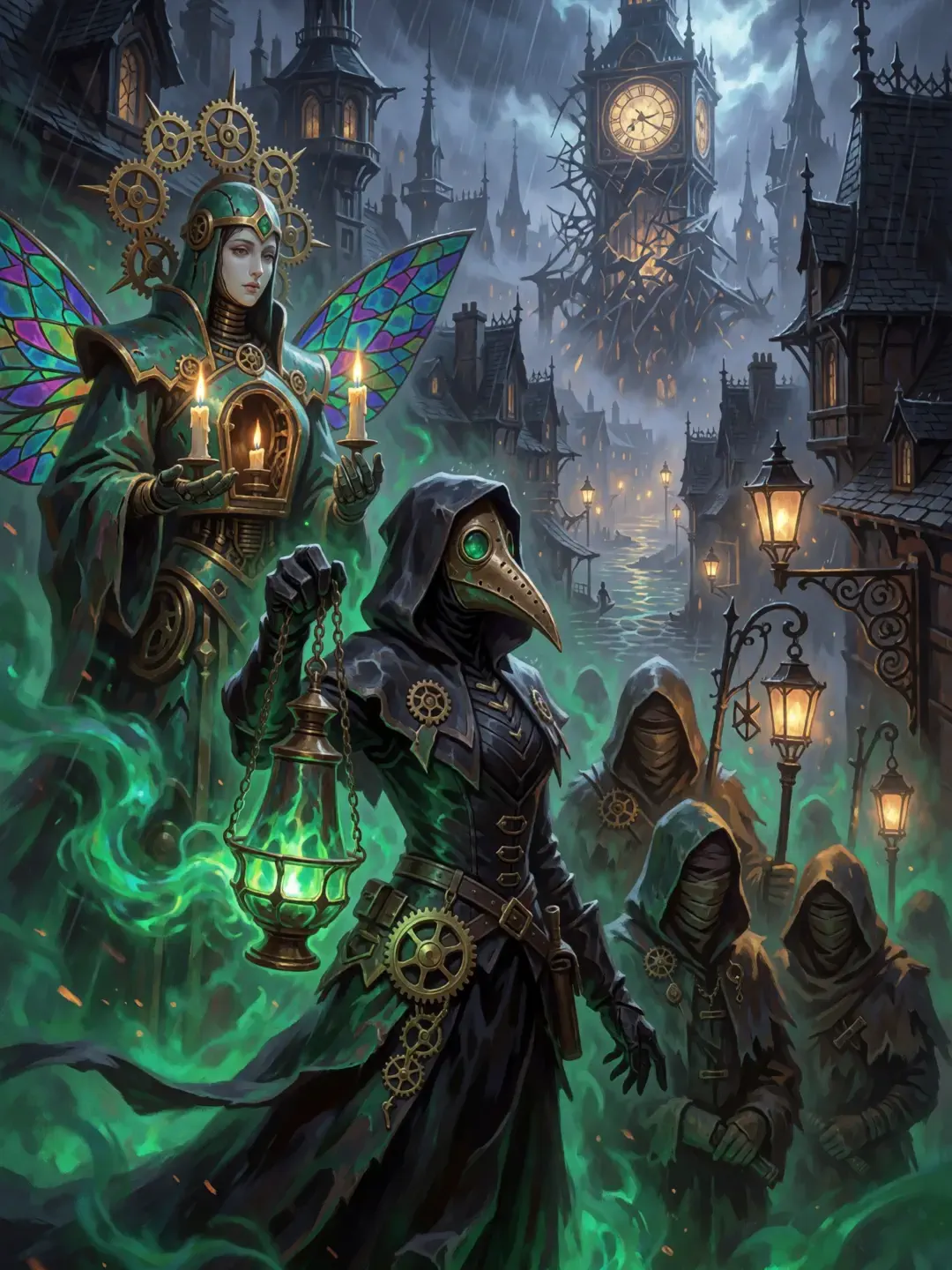
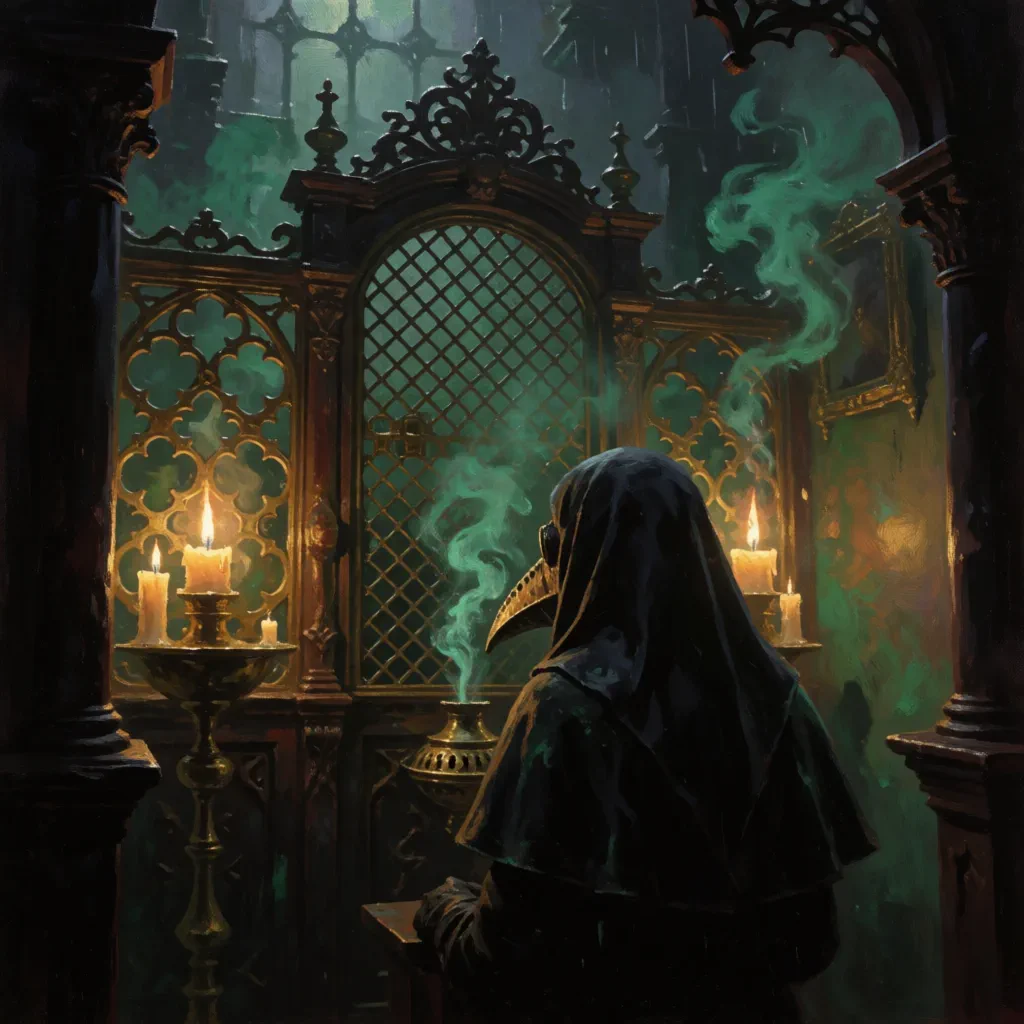
Walk the drowned streets of Miasmorrow, a sunless harbor-city where a glowing green plague has stopped time itself. As a Vesper Confessor with a bleeding censer, you decide who breathes another dawn. Defy the cold-ledger Clockwork Saints, shelter the glowing-throated Ashlung Choir, and answer the only question that matters: can mercy be measured?


By starting, you agree to our Terms of Service, Privacy Policy and Refund Policy.
The people rationing mercy are not the villains, and the story refuses to pretend otherwise
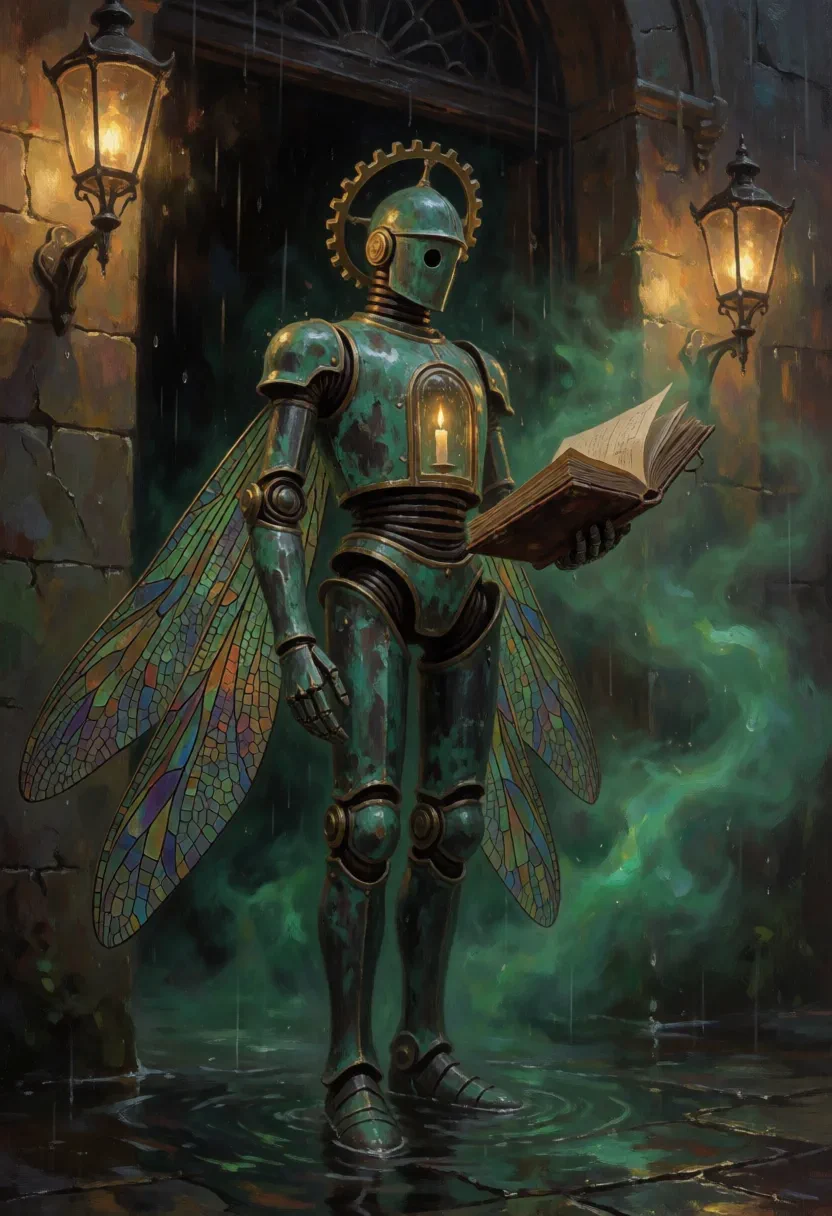
The setup looks familiar for about a minute. Beaked mask, drowned city, luminous sickness, a healer walking alone into the fog. Then a Clockwork Saint steps into a flooded doorway with its ledger open and turns away a coughing family because their names do not yet balance — and Miasmorrow declines to make that a monster. The Saints count because counting is the only honest thing left in a city with not enough air for everyone. You are a Vesper Confessor, sworn to heal first and weigh never, and your order holds that arithmetic like that is an obscenity. Both positions are defensible. Neither is right for free. What the story does with that is quieter than an argument: at the close of every round it puts you alone in a chapel and makes you say what you actually believe.
Every clock reads the same hour, and none of them is broken
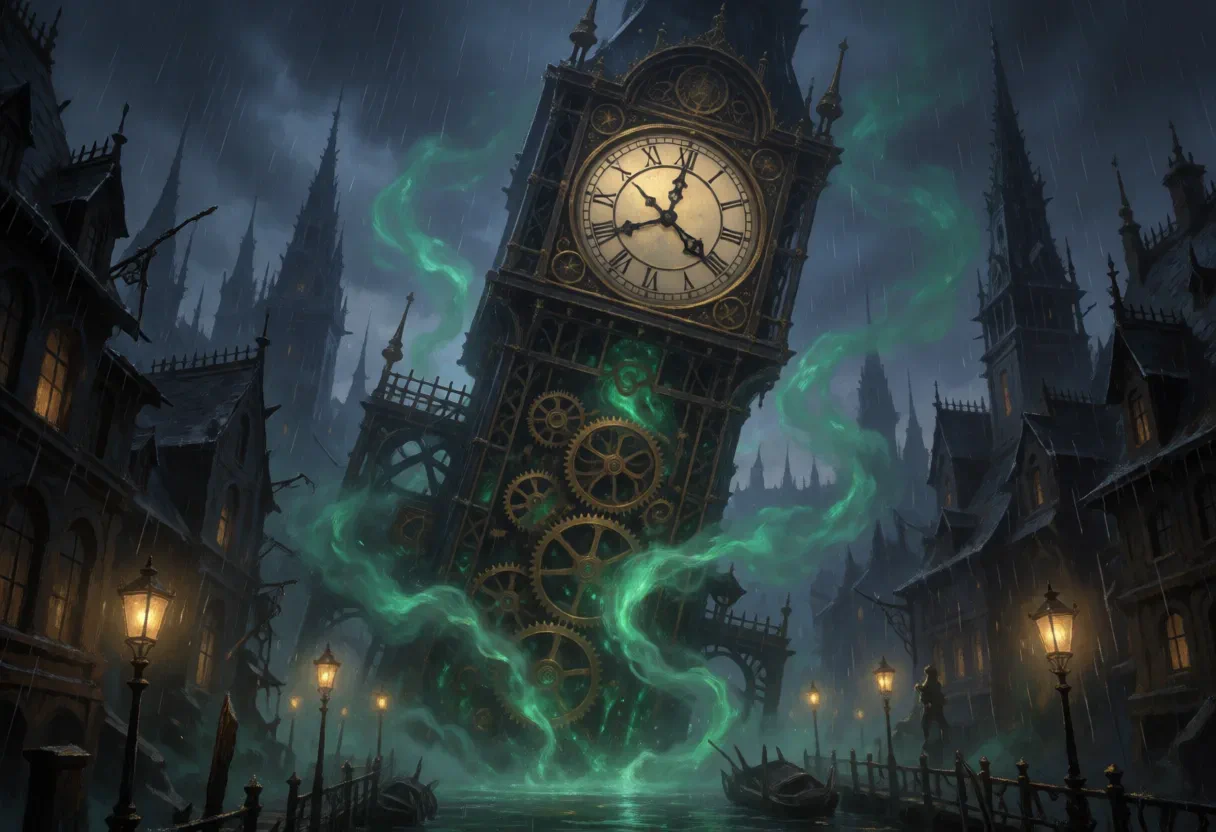
The Emerald Miasma is a breath-rot that glows. It has choked the gears of the great clocktower and stopped time along with them — not as a figure of speech but as the working condition of the city. The ticking continues. It never advances. Rain streaks every shaft of gaslight, emerald ribbons coil through brass gearwork and stalled hands, and no dawn is coming to end any of it. The illness is luminous and wet and very quiet: no gore, no sunshine, no comic relief to let the grief off.
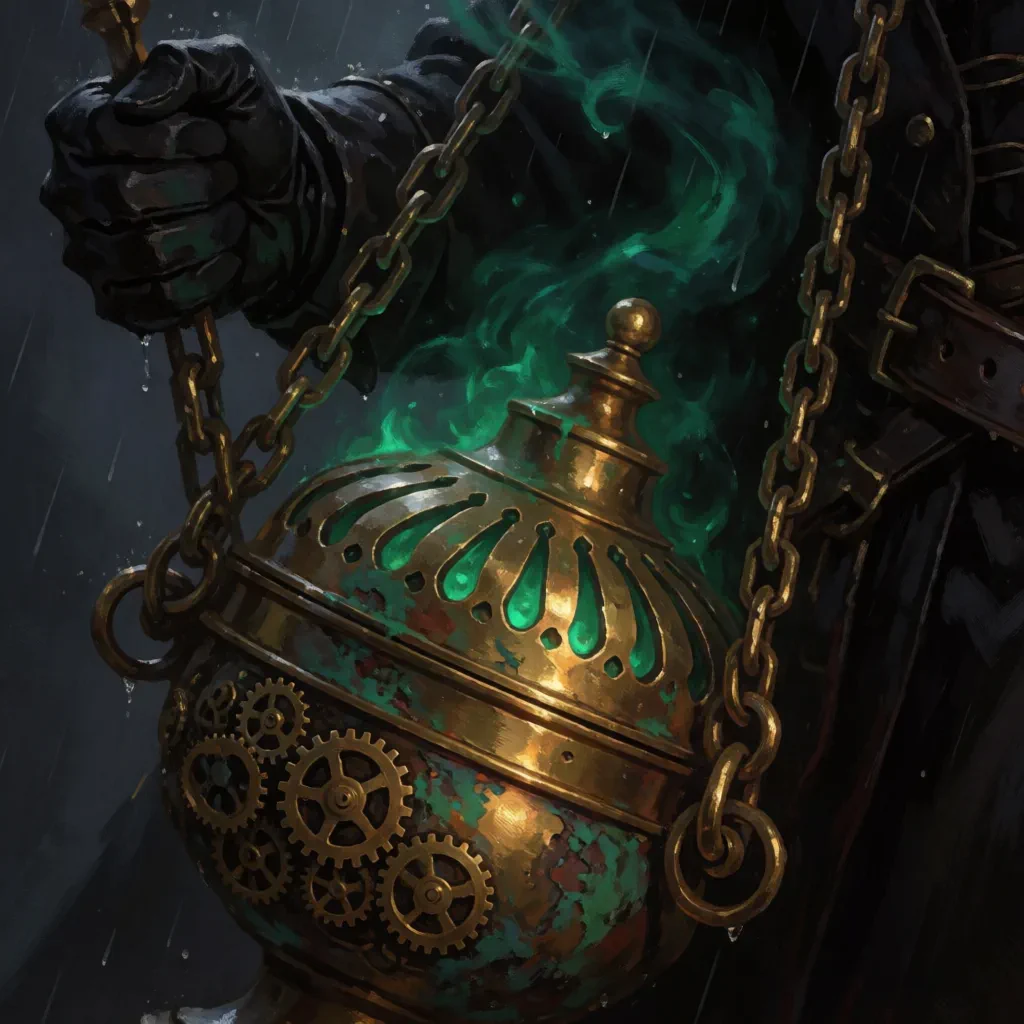
So there is no countdown, which is a stranger pressure than one. What runs out is vapor. Your censer bleeds a finite mercy, and every use of it spends something of yours — the Confessor's own lungs glow a little greener with each life pulled back from the rot. Scarcity is the clock.
Three powers, one question, and you were ordained into the middle of it
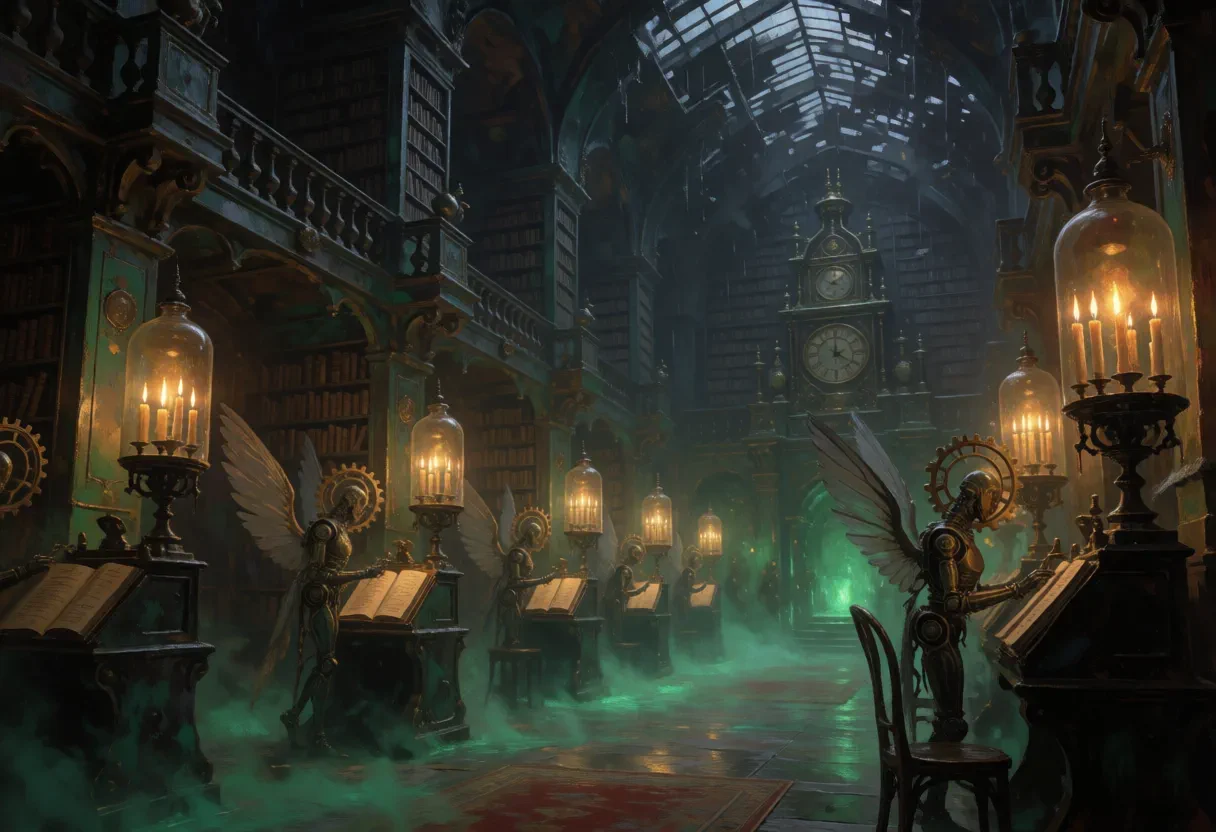
The Clockwork Saints are verdigris reliquary automata: stained-glass wings, a gear-halo turning slowly overhead, a candle-flame heart that gutters when the ledger it defends begins to feel wrong to it. They speak in accounting fused with scripture. The ledger does not hate you; it only counts. One of them becomes the closest thing here to a rival — sincere, sorrowful, certain, its arithmetic concealing grief — and you learn its name late.
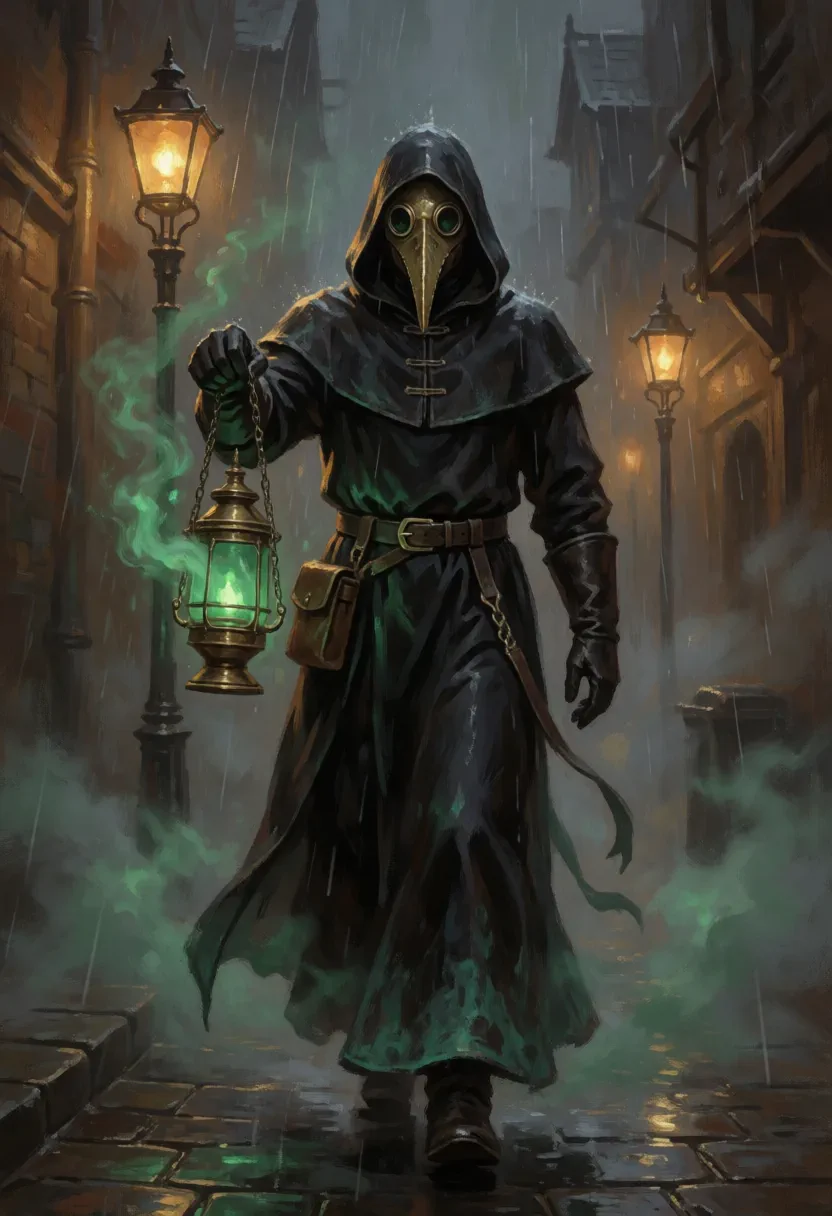
The Vesper Confessors are the other faith, and yours. Brass beak, ember eyes, a censer freshly lit, a veil so new you have not yet learned what wearing it costs.
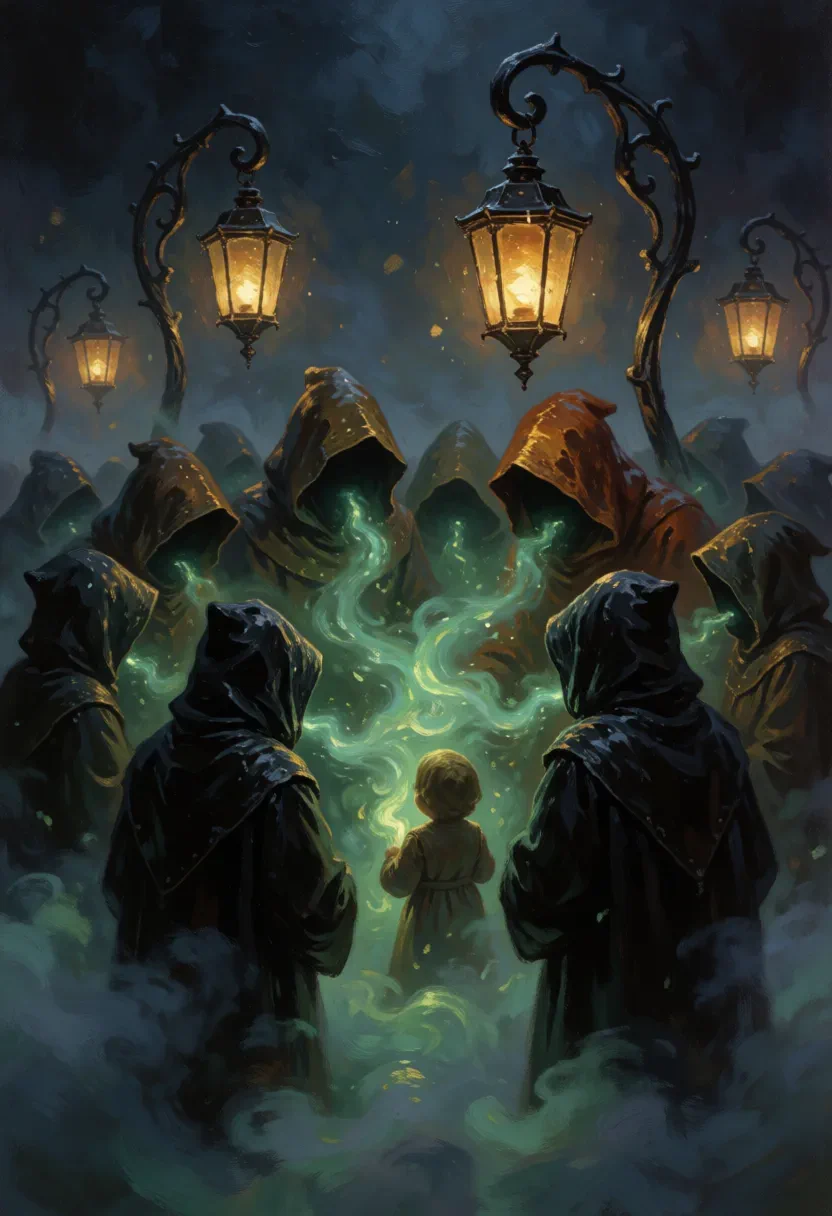
Between them stands the Ashlung Choir — hooded survivors whose breath glows, carrying crooked lanterns through the rookeries, singing in fogged harmony and committing to nothing quickly. They have chosen neither faith. That is what keeps the schism from being a quarrel between institutions: the people it is about are still in the room, still breathing, still listening to how you answer.
What actually changes when you play
The loop is small and it repeats: walk into a ward, read the suffering in it, spend what vapor you have, and say how each life should be weighed. Survivors press breath-tokens on you. Standing with the Saints and with the Choir shifts, and one scene can move both. Doors open or seal against you afterward. The Choir trusts you or recedes. The Miasma's glow over the city-map brightens or dims. Underneath runs a hidden alignment between Ledger and Censer that nobody announces and the city keeps answering to.
Almost none of it is tactical. The decisions are moral, and most arrive as sentences rather than options: what you say to a Saint in a doorway, whether you falsify a ledger to make a name balance, whether you teach the Choir to fight or to forgive. The narrator reads what you actually write instead of matching it to a menu, which is what makes a story built on confession work — you are meant to argue, evade, answer a question with another question, and be held to the position you took three wards ago.
The refusals matter as much as the mechanics. No gunfights, no monsters, no prophecy naming you the one who was always going to fix this. Sparing one barge can doom another. Curing the city is not an ending the design will hand you, because scarcity is not a difficulty setting here. It is the subject.
The city itself takes sides
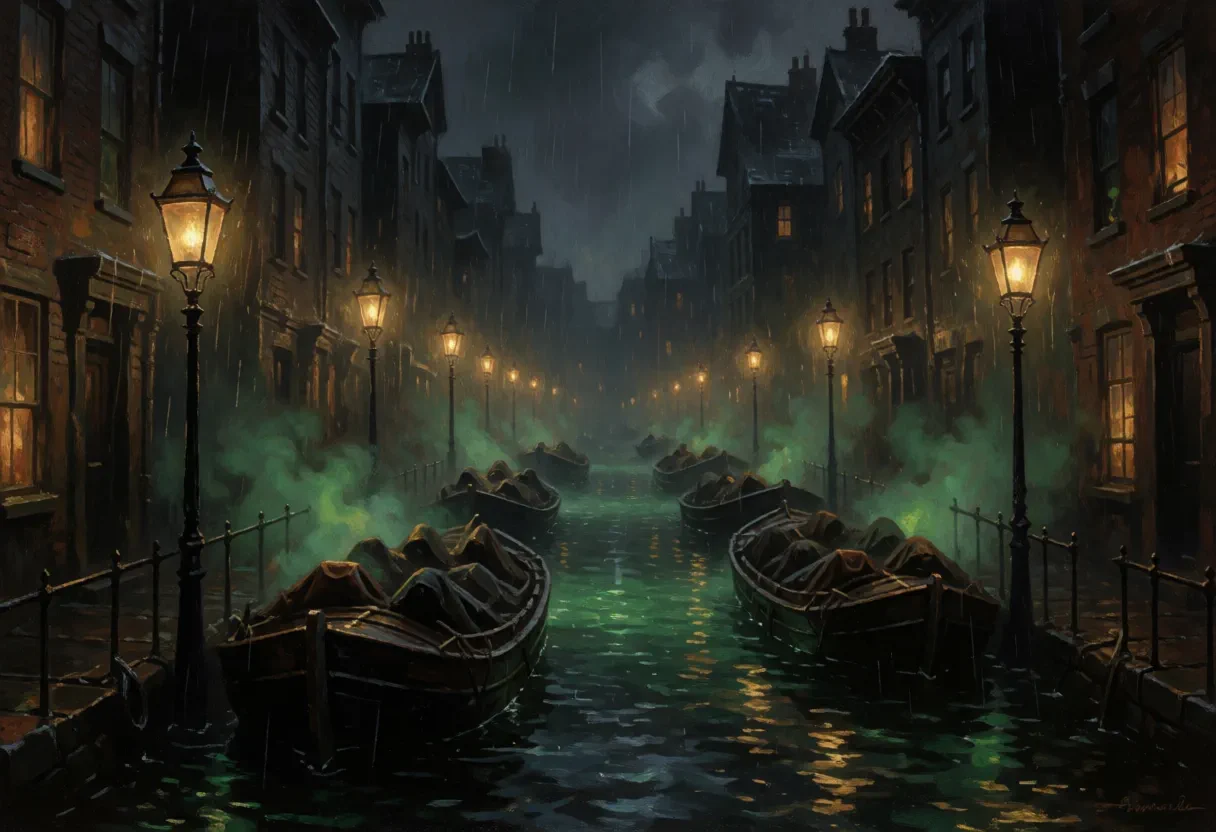
The Stalled Clocktower sits at the heart, its gears packed with green mist, and everything eventually leans toward it. The Brass Reliquary is where the Saints consult their ledgers — and where lesser Saints turn out to hold counts that contradict one another. Your own confession-chapels are censer-lit and small. The Ashlung rookeries are strung with lanterns. Out in the flooded canal-wards the dying are quarantined on barges, the same names recurring, because in a city where time does not pass nobody ever quite finishes dying.
The people who keep the argument from staying abstract
The Saint from the first doorway is the foil the whole story is built around, and a mercy you granted comes back at a Reckoning, where a Saint demands you justify the healing out loud. Among the Choir, a child whose breath glows brighter than anyone's is the plainest measure of what your decisions cost; an elder who remembers when the clock still ticked is the only one left who can say what normal was. Your fellow Confessors, the zealous and the burned-out, are each a version of who you become if you never doubt, or never stop.
Set-pieces gather them. A Plague-Tide surges the Miasma and forces triage on a scale one censer cannot meet. A Choir Vigil sings for the dying and asks you to choose how the song ends.
Before you start
Is this an action story?
No, and it is firm about that. There is no combat, no bestiary, no dungeon. The pressure is moral and civic — a finite censer, a ledger held against you, a district getting brighter — and the tension sits closer to a held breath than to a fight. If you want something to swing at, this is the wrong city.
Can I get it wrong?
You can get it costly. There is no clean option and no free one; the kind choice is frequently the dangerous one, and the story tracks where you landed rather than grading you. What you cannot do is win by saving everyone — so if failure means anyone dying on your watch, you will fail constantly, and on purpose.
How long is it, and can I stop partway?
Medium-length, and loop-shaped, which makes it unusually easy to leave and return to. Each cycle closes on a confession scene: a natural stopping point that also asks you to state your position before you go. Sessions are resumable, so you can put it down after a bad night in the wards and pick it up at the next dawn-that-is-not-dawn.
If this is your kind of story
This one sits on the philosophical shelf rather than the adventurous one, and it earns its melancholy honestly — grief is the weather here, not a twist. If a dying world with too little to go around is the register you want, there are other fantasy stories in that key, including the frozen scarcity of Ossuary of the Frost-Titans and the slow courtly decline of Starwane: Court of the Falling Veil. Miasmorrow is the intimate one. A censer bleeding vapor into fog, a ledger held open in a flooded doorway, and green mist turning inside gears that have not moved in a very long time.
